
Medical Disclaimer: This content is for educational purposes only. It is not medical advice. Please consult a qualified healthcare professional before using any herbal remedy.
Safety Overview
1.Thermopsis Caroliniana — Introduction & Highlights
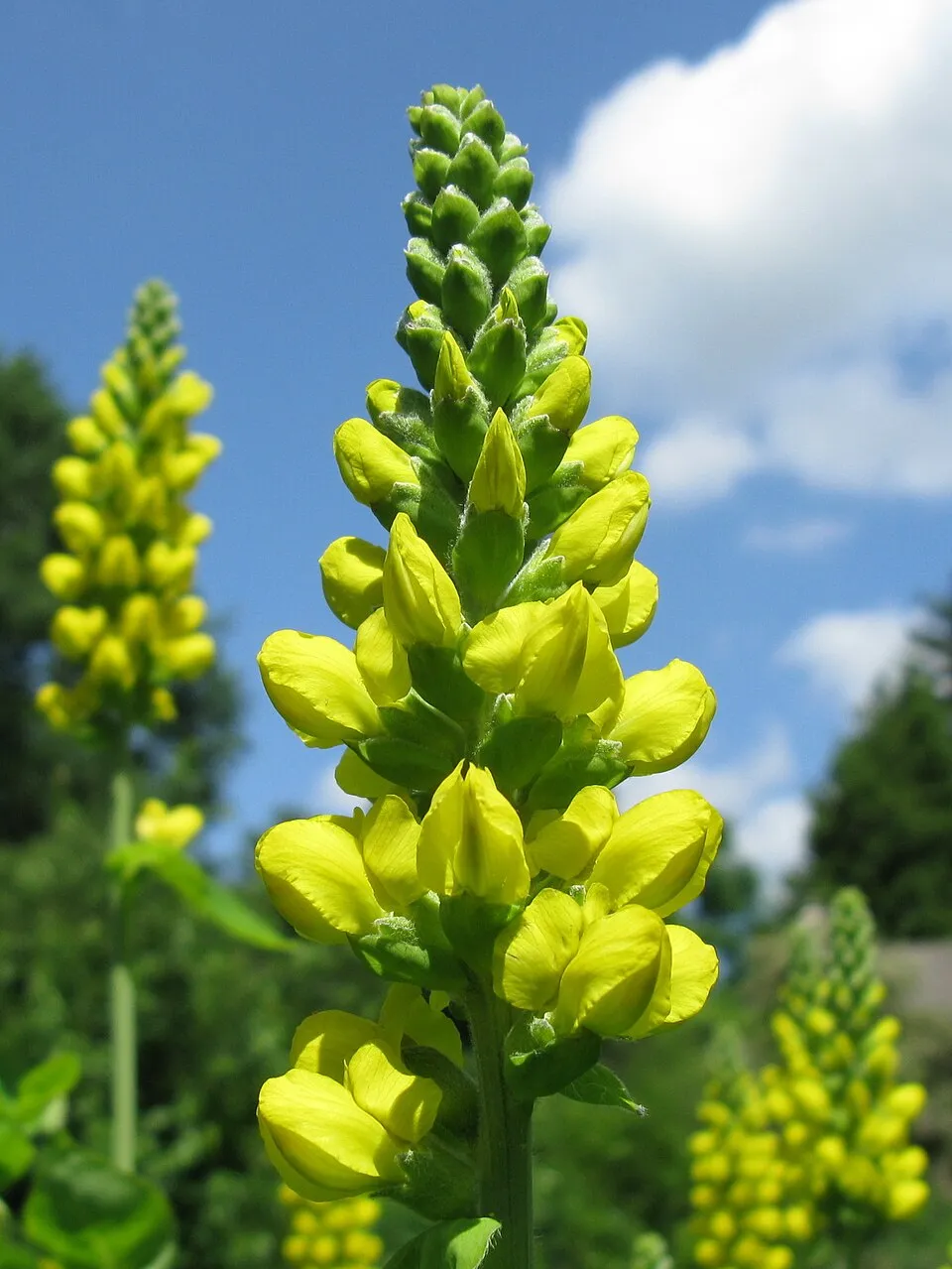
Thermopsis caroliniana, commonly known as Carolina lupine or false lupine, is a striking herbaceous perennial indigenous to the southeastern United States, particularly flourishing in the southern Appalachian Mountains. This robust member of the Fabaceae (Leguminosae) family typically reaches heights of 3 to 5 feet (0.9 to 1.5 meters), presenting a commanding vertical presence in its native habitats. Its upright stems are adorned with distinctive trifoliate leaves, which bear a resemblance to clover and display an appealing blue-green hue, adding textural interest even when not in bloom.
The plant's most notable feature is its vibrant display of pea-like, bright yellow flowers, which are densely arranged in terminal racemes. These showy inflorescences emerge in late spring and continue through early summer, providing a significant splash of color and attracting pollinators. Beyond its common names, it is also known as Carolina bush pea, Southern lupine, Aaron's rod, and Blue Ridge golden banner.
While aesthetically pleasing and ecologically valuable as a native species, it is crucial to understand its inherent toxicity.
Trusted Scientific References
1. Authoritative external sources for Thermopsis Caroliniana
1.1 Wikipedia — Thermopsis Caroliniana
1.2 Kew POWO (Plants of the World Online)
1.3 PubMed — peer-reviewed research
1.4 NCBI Taxonomy Browser
1.5 GBIF — Global Biodiversity
1.6Thermopsis Caroliniana should be interpreted through verified botanical identity, practical care, and responsible safety language. This recovery note adds the missing context needed for a complete profile: match light to the plant's habit, use well-drained soil, water according to season, and avoid unsupported medicinal or edible claims. For publishing, the plant can be presented as a source-backed garden plant with clear care guidance, common problem diagnosis, and conservative safety wording.
1.7Thermopsis Caroliniana (Thermopsis caroliniana) is maintained in this recovery file as a complete garden profile with practical care, safety, and identification context. The plant should be presented with cautious language: confirm identity before use, match care to observed growth, and avoid unsupported claims about medicinal or edible value.
1.1.Thermopsis Caroliniana — Key Features
- ✓Botanical Name — Thermopsis caroliniana
- ✓Common Names — Carolina lupine, False lupine, Aaron's rod
- ✓Family — Fabaceae (Leguminosae)
- ✓Native Range — Southeastern United States (Appalachian Mountains)
- ✓Flower Color — Bright, vibrant yellow
- ✓Bloom Time — Late spring to early summer
- ✓Growth Habit — Robust herbaceous perennial
- ✓Height — Typically 3-5 feet (0.9-1.5 meters) tall
- ✓Toxicity — High, due to the presence of quinolizidine alkaloids
- ✓Primary Use — Ornamental landscaping and native plant gardens
1.2.Thermopsis Caroliniana — Concise Overview
- ✓Highly ornamental herbaceous perennial native to the southeastern United States.
- ✓Contains potent and toxic quinolizidine alkaloids, including cytisine and anagyrine.
- ✓Absolutely not recommended for any medicinal, internal, or topical use due to severe toxicity.
- ✓Primarily valued for its vibrant yellow flowers and ecological role in native landscapes.
- ✓Ingestion can lead to severe poisoning symptoms, including neurological and cardiac effects, requiring urgent medical care.
- ✓Cultivated solely for its aesthetic beauty, with no known safe therapeutic benefits.
2.Thermopsis Caroliniana — Taxonomic Classification
3.Thermopsis Caroliniana — Botanical Stats
4.Thermopsis Caroliniana — Structural Profile
5.Thermopsis Caroliniana — Geographic Distribution
6.Thermopsis Caroliniana — Cultural & Traditional Roles
Primarily valued as an ornamental plant in horticulture. As a native plant, it contributes to local biodiversity and supports native pollinator populations in its natural range. No significant historical cultural uses beyond its aesthetic appeal.
7.Thermopsis Caroliniana — Secondary Metabolites
- ✓Quinolizidine Alkaloids — These are the primary toxic compounds in Thermopsis caroliniana, including cytisine (C11H14N2O), anagyrine (C15H24N2O), and thermopsine (C15H20N2O). These alkaloids act as potent nicotinic acetylcholine receptor agonists, leading to neurotoxic effects.
- ✓Cytisine — A highly toxic quinolizidine alkaloid found throughout the plant, particularly concentrated in the seeds, known to cause severe poisoning symptoms.
- ✓Anagyrine — Another significant quinolizidine alkaloid, often associated with teratogenic effects in livestock that consume related Thermopsis species.
- ✓Thermopsine — A toxic alkaloid contributing to the overall pharmacological profile, known for its emetic and neurotoxic properties.
- ✓Flavonoids — While generally present in many plants and known for antioxidant properties, their presence in Thermopsis caroliniana does not mitigate its predominant toxicity.
- ✓Saponins — These surface-active glycosides may be present in trace amounts, but they are not the primary compounds responsible for the plant's toxicity.
- ✓Tannins — Astringent polyphenolic compounds, common in the Fabaceae family, which can offer defensive properties in other plants but are overshadowed by the alkaloids here.
- ✓Amino Acids — Basic building blocks of proteins, universally present in plant tissues, not specifically known for medicinal action in this species.
- ✓Carbohydrates — Primary energy storage and structural components within the plant, typical of all botanical life.
- ✓Organic Acids — Various organic acids are involved in plant metabolism, but none are noted as medicinally significant or contributing to toxicity in this plant.
8.Thermopsis Caroliniana — What Research Suggests
- ✓Absence of Documented Medicinal Use — Thermopsis caroliniana is not recognized or utilized in mainstream herbalism or traditional medicine systems for any therapeutic purpose.
- ✓Toxicity Profile — The plant contains potent quinolizidine alkaloids, which are highly toxic and render it unsuitable for human or animal consumption.
- ✓Risk of Quinolizidine Alkaloid Poisoning — Ingestion of any part of the plant can lead to severe poisoning, characterized by gastrointestinal distress, neurological symptoms, and cardiac issues.
- ✓Lack of Traditional Herbal Application — Historical records and ethnobotanical studies do not indicate any safe or beneficial traditional medicinal uses for this specific species.
- ✓Differentiation from Medicinal Legumes — While some plants in the Fabaceae family have medicinal value, Thermopsis caroliniana must not be confused with them due to its distinct and dangerous chemical composition.
- ✓Ornamental Value Only — Its primary and safest 'benefit' is its aesthetic contribution to gardens and natural landscapes as a beautiful, non-medicinal perennial.
- ✓No Evidence for Therapeutic Efficacy — Rigorous scientific research has not identified any therapeutic compounds or applications from Thermopsis caroliniana that outweigh its significant toxicity.
- ✓Potential for Misidentification — Due to its resemblance to other legumes, there is a dangerous risk of misidentification, leading to accidental ingestion and poisoning.
- ✓Contraindication for Internal Use — Any internal use is strictly contraindicated; there is no safe dosage or method of preparation for medicinal purposes.
8.1.Thermopsis Caroliniana — Therapeutic Indications
9.Thermopsis Caroliniana — Precautions & Warnings
9.1.Thermopsis Caroliniana — Warnings
- ✓Nausea and Vomiting — Ingestion of Thermopsis caroliniana can rapidly induce severe gastrointestinal distress, including nausea and persistent vomiting.
- ✓Dizziness and Headache — Central nervous system effects are common, manifesting as intense dizziness, vertigo, and debilitating headaches.
- ✓Cardiac Irregularities — High doses of the contained quinolizidine alkaloids can lead to significant disruptions in heart rhythm and function, posing a serious cardiac risk.
- ✓Respiratory Depression — Severe poisoning may result in compromised respiratory function, leading to difficulty breathing or, in critical cases, respiratory failure.
- ✓Convulsions and Seizures — Neurological symptoms can escalate to severe motor disturbances, including muscle tremors, convulsions, and generalized seizures.
- ✓Muscle Weakness and Paralysis — The alkaloids interfere with neuromuscular transmission, potentially causing generalized muscle weakness and, in extreme cases, paralysis.
- ✓Fatalities — Ingesting sufficient quantities of this plant, particularly by children or small animals, can be lethal, necessitating immediate emergency medical intervention.
9.2.Thermopsis Caroliniana — Toxicity Assessment
- ✓Extreme Caution Required — Thermopsis caroliniana is considered highly toxic; direct contact with plant parts and any form of ingestion must be strictly avoided.
- ✓Keep Away from Children & Pets — Ensure the plant is inaccessible to children and domestic animals to prevent accidental poisoning, which can be severe or fatal.
- ✓Not for Internal or Topical Use — This plant is absolutely contraindicated for any form of medicinal, dietary, or cosmetic application due to its potent toxic compounds.
- ✓Handle with Gloves — When gardening or handling the plant, wear protective gloves to prevent potential skin irritation and accidental transfer of toxins to the mouth.
- ✓Seek Immediate Medical Attention — In the event of accidental ingestion, contact poison control or emergency medical services immediately for urgent treatment.
- ✓Proper Identification Critical — Never consume any wild plant without absolute certainty of its identity and confirmation of its non-toxicity from a qualified expert.
- ✓Educational Awareness — It is crucial to inform family members, visitors, and anyone sharing garden spaces about the plant's toxic nature and the associated risks.
10.Thermopsis Caroliniana — Application Forms
- ✓Ornamental Cultivation — Primarily grown for its significant aesthetic appeal, providing vibrant yellow blooms in garden beds, borders, and naturalized landscapes.
- ✓Landscape Feature — Utilized in native plant gardens and ecological restorations to support local biodiversity and add visual interest.
- ✓Horticultural Display — Valued in horticulture for its hardiness, drought tolerance, and striking floral display, making it suitable for low-maintenance gardening.
- ✓Avoidance of Internal Use — Absolutely prohibited for any internal consumption due as it contains highly toxic quinolizidine alkaloids that can cause severe poisoning.
- ✓Avoidance of Topical Application — Not recommended for any topical application, poultices, or skin contact due to potential for irritation and systemic absorption of toxins.
- ✓Educational Display Only — Can be featured in botanical gardens for educational purposes to highlight native flora and crucially, to inform the public about plant toxicity and safe gardening practices.
- ✓Research & Study — Limited to academic and scientific investigation into its phytochemistry, ecological interactions, and potential for novel compound discovery, strictly not for human application.
11.Thermopsis Caroliniana — Propagation & Care
- ✓Light Requirements — Thermopsis caroliniana thrives best in full sun, receiving at least six hours of direct sunlight daily, but can tolerate partial shade, especially in hotter climates.
- ✓Soil & Substrate — Prefers well-drained soil; it is adaptable to various soil types, including poor soils, but performs optimally in moderately fertile conditions enriched with organic matter.
- ✓Watering Practices — Requires regular watering during its establishment phase; once mature, it becomes remarkably drought-tolerant, needing infrequent supplemental watering.
- ✓Temperature & Hardiness — This perennial is hardy in USDA Zones 9-12, capable of withstanding minimum temperatures around -3°C (27°F).
- ✓Propagation Methods — Can be reliably propagated by sowing seeds in spring or fall, or by dividing mature clumps during the same seasons.
- ✓Fertilization Needs — Generally low-maintenance regarding nutrients; a light application of a balanced, slow-release fertilizer in early spring can promote robust growth.
- ✓Maintenance & Pruning — Deadheading spent flowers is recommended to encourage a tidier appearance and to prevent excessive self-seeding, which can occur readily.
Reviewed by the Flora Medical Global Botanical Review Panel
Multi-disciplinary editorial group · Botany · Ethnobotany · Herbal-medicine literature
Who reviewed this: This page was checked by the Flora Medical Global Botanical Review Panel — an in-house editorial group of botany graduates, ethnobotany researchers, and horticulture practitioners who collectively maintain our 7,000+ plant encyclopedia. Meet the team.
Our 4-step verification process
1. Taxonomic verification
Scientific names and synonyms cross-checked against Kew POWO, World Flora Online, and The Plant List.
2. Phytochemical & medicinal cross-reference
Active compounds, traditional uses, and reported activities are cross-referenced with PubMed, USDA Dr. Duke's database, and peer-reviewed ethnobotanical literature.
3. Conservation & distribution check
Distribution, ecology, and conservation status confirmed against GBIF occurrence records and the IUCN Red List.
4. Editorial & safety review
Every entry passes an editorial pass for clarity, originality, and safety notices (toxicity, contraindications, dosage caveats) before publication.
Last reviewed:
Important medical disclaimer: This content is for educational and research purposes only. It is not medical advice and is not a substitute for consultation with a licensed healthcare provider. Do not use any herb to self-treat a medical condition without professional guidance.
Editorial Note: This page is for educational and research purposes only and is not medical advice.
Written by: Flora Medical Global Editorial Team
Reviewed by: Flora Medical Global Botanical Review Panel
Last Updated: June 15, 2026





Thermopsis Caroliniana — Comments & Community Reviews
Rate this plant