
Medical Disclaimer: This content is for educational purposes only. It is not medical advice. Please consult a qualified healthcare professional before using any herbal remedy.
Safety Overview
1.Thunbergia Grandiflora — Plant Snapshot
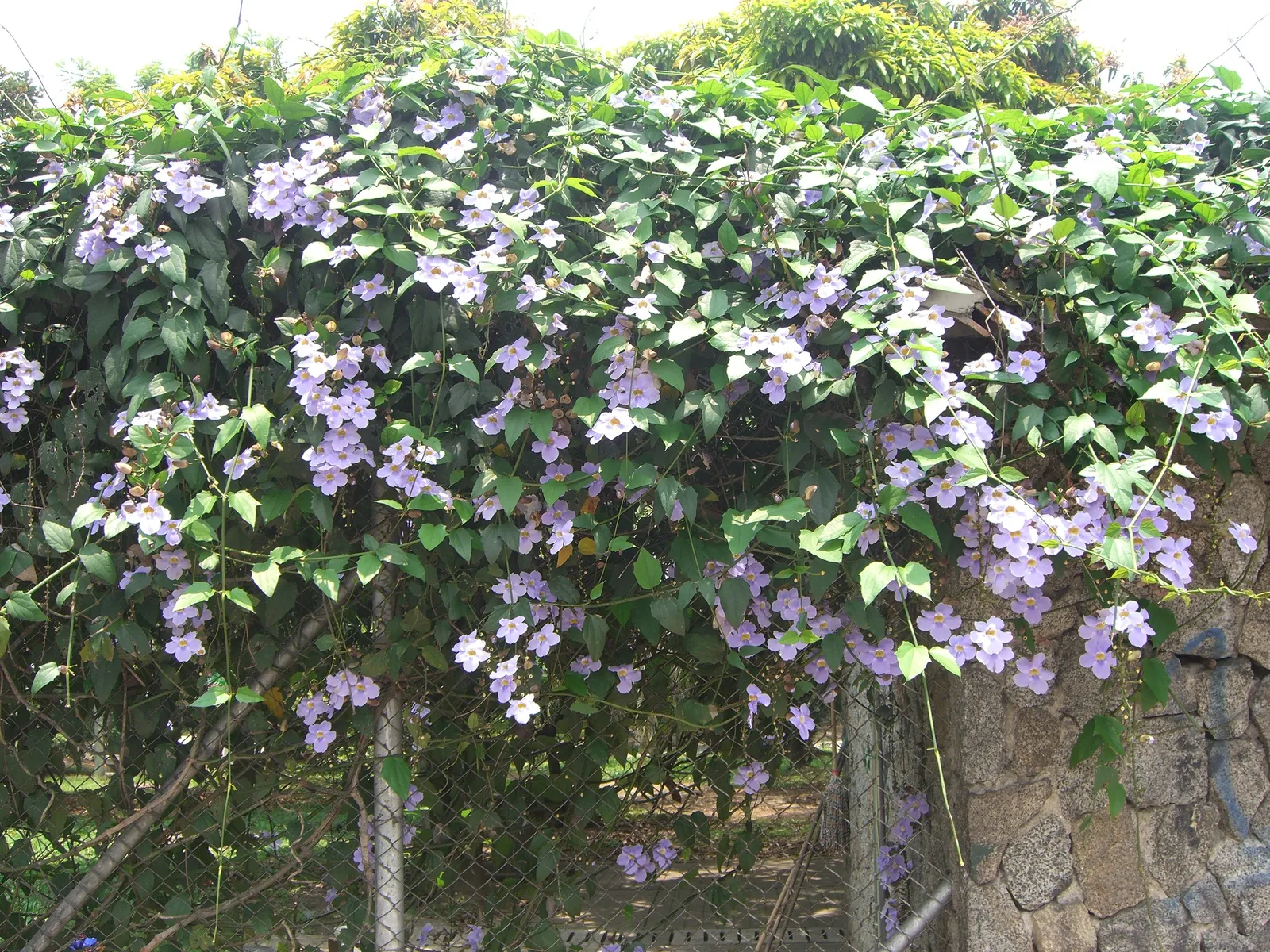
Thunbergia grandiflora, commonly known as the Bengal Clock Vine or Sky Vine, is a robust, evergreen perennial climber belonging to the Acanthaceae family. Native to the tropical and subtropical regions of India, particularly the Himalayan foothills, it has been widely naturalized across other warm climates globally due to its ornamental and purported medicinal value. This vigorous vine is characterized by its woody stems, which can ascend to impressive heights of 15-20 meters, sprawling over supporting structures with ease.
Its foliage consists of large, heart-shaped to triangular-ovate leaves, typically dark green, providing a dense, lush backdrop. The most striking feature of Thunbergia grandiflora is its spectacular, trumpet-shaped flowers, measuring up to 8 cm in diameter. These blossoms exhibit a captivating range of colors, from a vivid sky-blue to various shades of lavender-blue, often accentuated by a prominent yellow or cream-colored throat.
Flowering occurs profusely from late spring through autumn, and in consistently frost-free environments, it can bloom almost year-round, creating a breathtaking cascade of vibrant color and verdant foliage. The fruits are capsules containing seeds, though they are less commonly observed in cultivation compared to the prolific flowering.
Trusted Scientific References
1. Authoritative external sources for Thunbergia grandiflora
1.1 Wikipedia — Thunbergia grandiflora
1.2 Kew POWO (Plants of the World Online)
1.3 PubMed — peer-reviewed research
1.4 NCBI Taxonomy Browser
1.5 GBIF — Global Biodiversity
1.6Thunbergia Grandiflora should be interpreted through verified botanical identity, practical care, and responsible safety language. This recovery note adds the missing context needed for a complete profile: match light to the plant's habit, use well-drained soil, water according to season, and avoid unsupported medicinal or edible claims. For publishing, the plant can be presented as a source-backed garden plant with clear care guidance, common problem diagnosis, and conservative safety wording.
1.1.Thunbergia Grandiflora — Defining Traits
- ✓Botanical Name — Thunbergia grandiflora
- ✓Common Names — Bengal Clock Vine, Sky Vine, Blue Allamanda
- ✓Family — Acanthaceae
- ✓Native Region — Tropical India
- ✓Growth Habit — Vigorous perennial woody climber
- ✓Flower Characteristics — Large, trumpet-shaped, blue to lavender with yellow throat
- ✓Flowering Season — Summer to autumn, year-round in frost-free zones
- ✓Traditional Uses — Anti-inflammatory, analgesic, antipyretic, wound healing
- ✓Key Constituents — Flavonoids, iridoid glycosides (grandifloric acid), phenolic compounds
- ✓Cultivation — Full sun, well-draining soil, requires strong support
1.2.Thunbergia Grandiflora — Quick Summary
- ✓Vigorous evergreen vine with stunning blue-lavender flowers.
- ✓Native to tropical India, widely cultivated as an ornamental.
- ✓Traditionally used for anti-inflammatory, analgesic, and antipyretic purposes.
- ✓Rich in flavonoids, iridoid glycosides, and phenolic compounds.
- ✓Requires warm climate, full sun, and good drainage for cultivation.
- ✓Potential applications in wound healing, antioxidant support, and liver protection.
2.Thunbergia Grandiflora — Taxonomic Classification
3.Thunbergia Grandiflora — Botanical Stats
4.Thunbergia Grandiflora — Structural Profile
5.Thunbergia Grandiflora — Geographic Distribution
6.Thunbergia Grandiflora — Historical Applications
7.Thunbergia Grandiflora — Secondary Metabolites
- ✓Flavonoids — Compounds like apigenin, luteolin, and their glycosides contribute significantly to the plant's antioxidant, anti-inflammatory, and neuroprotective activities.
- ✓Phenolic Acids — Derivatives such as caffeic acid, ferulic acid, and gallic acid are present, acting as potent antioxidants and contributing to anti-inflammatory effects.
- ✓Iridoid Glycosides — Grandifloric acid is a notable example, often associated with anti-inflammatory, analgesic, and hepatoprotective properties.
- ✓Triterpenoids — Compounds like ursolic acid and oleanolic acid are found, known for their anti-inflammatory, anticancer, and hepatoprotective actions.
- ✓Sterols — Beta-sitosterol and stigmasterol are present, which may contribute to cholesterol-lowering and anti-inflammatory effects.
- ✓Alkaloids — While less prominent, some minor alkaloidal compounds might be present, potentially influencing neurological or antimicrobial activities.
- ✓Saponins — These glycosides can contribute to foaming properties and may have immunomodulatory and cholesterol-lowering effects.
- ✓Tannins — Astringent compounds that provide antioxidant and antimicrobial benefits, often used in traditional medicine for wound healing and diarrhea.
- ✓Coumarins — Identified in some plant species within Acanthaceae, potentially offering anticoagulant and anti-inflammatory properties.
8.Thunbergia Grandiflora — Research Insights
- ✓Anti-inflammatory Action — Traditionally used to mitigate inflammatory conditions like rheumatism, its compounds may modulate inflammatory pathways, reducing swelling and pain.
- ✓Analgesic Properties — Extracts have been employed to alleviate pain, potentially by interacting with pain receptors or inhibiting pain-mediating substances in the body.
- ✓Antipyretic Effects — Historically utilized to reduce fever, suggesting a capacity to help normalize elevated body temperature through systemic mechanisms.
- ✓Wound Healing Support — Topical applications of crushed leaves are used for minor cuts and abrasions, promoting tissue regeneration and protecting against infection.
- ✓Antioxidant Activity — Rich in phenolic compounds and flavonoids, Thunbergia grandiflora helps neutralize free radicals, protecting cells from oxidative damage.
- ✓Antimicrobial Potential — Some traditional uses and preliminary studies suggest its extracts possess inhibitory effects against certain bacteria and fungi.
- ✓Hepatoprotective Benefits — Emerging research indicates a potential role in protecting liver cells from damage, possibly through antioxidant and anti-inflammatory pathways.
- ✓Antidiabetic Properties — Traditional systems sometimes recommend it for blood sugar management, with early studies exploring its influence on glucose metabolism.
- ✓Immunomodulatory Effects — Compounds within the plant may help regulate immune responses, potentially enhancing the body's natural defense mechanisms.
- ✓Snake Venom Antidote — In some traditional practices, it has been used as a folk remedy for snake bites, although this specific application requires rigorous scientific validation.
- ✓Digestive Aid — Certain preparations are traditionally believed to support healthy digestion and alleviate minor gastrointestinal discomfort.
8.1.Thunbergia Grandiflora — Indications & Uses
9.Thunbergia Grandiflora — Adverse Effects
9.1.Thunbergia Grandiflora — Warnings
- ✓Allergic Reactions — Sensitive individuals may experience skin irritation or allergic contact dermatitis from topical application.
- ✓Gastrointestinal Upset — High doses or sensitive individuals may experience mild stomach discomfort or nausea when consumed orally.
- ✓Hypotension — Potential to lower blood pressure, especially in individuals already on antihypertensive medications.
- ✓Sedation — Some traditional uses suggest mild sedative effects, which could interact with central nervous system depressants.
- ✓Photosensitivity — Rarely, some botanical compounds can increase skin sensitivity to sunlight.
- ✓Drug Interactions — May interact with anticoagulants, antidiabetics, or anti-inflammatory drugs due as its compounds can affect similar physiological pathways.
9.2.Thunbergia Grandiflora — Toxicity Assessment
- ✓Pregnancy & Lactation — Avoid use during pregnancy and breastfeeding due to insufficient safety data and potential uterine stimulant effects.
- ✓Children — Not recommended for use in infants or young children without professional medical advice.
- ✓Pre-existing Conditions — Individuals with chronic health conditions, especially liver, kidney, or cardiovascular issues, should consult a healthcare provider.
- ✓Surgery — Discontinue use at least two weeks before scheduled surgery due to potential effects on blood clotting or blood sugar.
- ✓Allergic History — Individuals with known allergies to plants in the Acanthaceae family should exercise caution.
- ✓Dosage — Adhere strictly to recommended dosages from qualified herbalists, as excessive intake may lead to adverse effects.
- ✓Self-Medication — Avoid self-medicating serious conditions; always seek professional medical diagnosis and treatment.
10.Thunbergia Grandiflora — Application Forms
- ✓Decoction — Dried leaves or root pieces are boiled in water to extract water-soluble compounds, typically consumed orally for internal conditions like fever or inflammation.
- ✓Poultice — Fresh, crushed leaves are applied directly to the skin as a compress to alleviate pain, reduce inflammation, or aid in wound healing.
- ✓Tincture — Plant material is macerated in alcohol to create an extract, which can be taken orally in small doses or used topically.
- ✓Infusion — Fresh or dried leaves are steeped in hot water, similar to tea, for milder internal applications or as a soothing drink.
- ✓Herbal Oil — Plant parts can be infused into a carrier oil (e.g., coconut or sesame oil) for topical application, particularly for joint pain or skin conditions.
- ✓Bath Additive — Decoctions can be added to bathwater to help soothe widespread inflammatory skin conditions or muscular aches.
- ✓Paste — Ground root or leaf material mixed with a small amount of water to form a paste, applied topically for skin ailments or insect bites.
11.Thunbergia Grandiflora — Growing Guide
- ✓Climate — Thrives in warm, tropical to subtropical climates (USDA Zones 9-11), intolerant to frost.
- ✓Light — Prefers full sun to partial shade; full sun promotes more abundant flowering.
- ✓Soil — Requires well-draining, fertile soil with a slightly acidic to neutral pH (6.0-7.0).
- ✓Watering — Needs consistent moisture, especially during dry periods; avoid waterlogging.
- ✓Support — As a vigorous climber, it requires strong support structures like pergolas, trellises, or fences.
- ✓Pruning — Regular pruning is essential to manage its vigorous growth, maintain shape, and encourage bushier growth and more flowers.
- ✓Propagation — Easily propagated from semi-hardwood stem cuttings or by seed, with cuttings being a common method for faster establishment.
- ✓Fertilization — Benefits from a balanced, slow-release fertilizer during the growing season to support its prolific growth and flowering.
Reviewed by the Flora Medical Global Botanical Review Panel
Multi-disciplinary editorial group · Botany · Ethnobotany · Herbal-medicine literature
Who reviewed this: This page was checked by the Flora Medical Global Botanical Review Panel — an in-house editorial group of botany graduates, ethnobotany researchers, and horticulture practitioners who collectively maintain our 7,000+ plant encyclopedia. Meet the team.
Our 4-step verification process
1. Taxonomic verification
Scientific names and synonyms cross-checked against Kew POWO, World Flora Online, and The Plant List.
2. Phytochemical & medicinal cross-reference
Active compounds, traditional uses, and reported activities are cross-referenced with PubMed, USDA Dr. Duke's database, and peer-reviewed ethnobotanical literature.
3. Conservation & distribution check
Distribution, ecology, and conservation status confirmed against GBIF occurrence records and the IUCN Red List.
4. Editorial & safety review
Every entry passes an editorial pass for clarity, originality, and safety notices (toxicity, contraindications, dosage caveats) before publication.
Last reviewed:
Important medical disclaimer: This content is for educational and research purposes only. It is not medical advice and is not a substitute for consultation with a licensed healthcare provider. Do not use any herb to self-treat a medical condition without professional guidance.
Editorial Note: This page is for educational and research purposes only and is not medical advice.
Written by: Flora Medical Global Editorial Team
Reviewed by: Flora Medical Global Botanical Review Panel
Last Updated: June 15, 2026





Thunbergia Grandiflora — Comments & Community Reviews
Rate this plant