

Medical Disclaimer: This content is for educational purposes only. It is not medical advice. Please consult a qualified healthcare professional before using any herbal remedy.
Safety Overview
1.Tibouchina Indoor — Overview
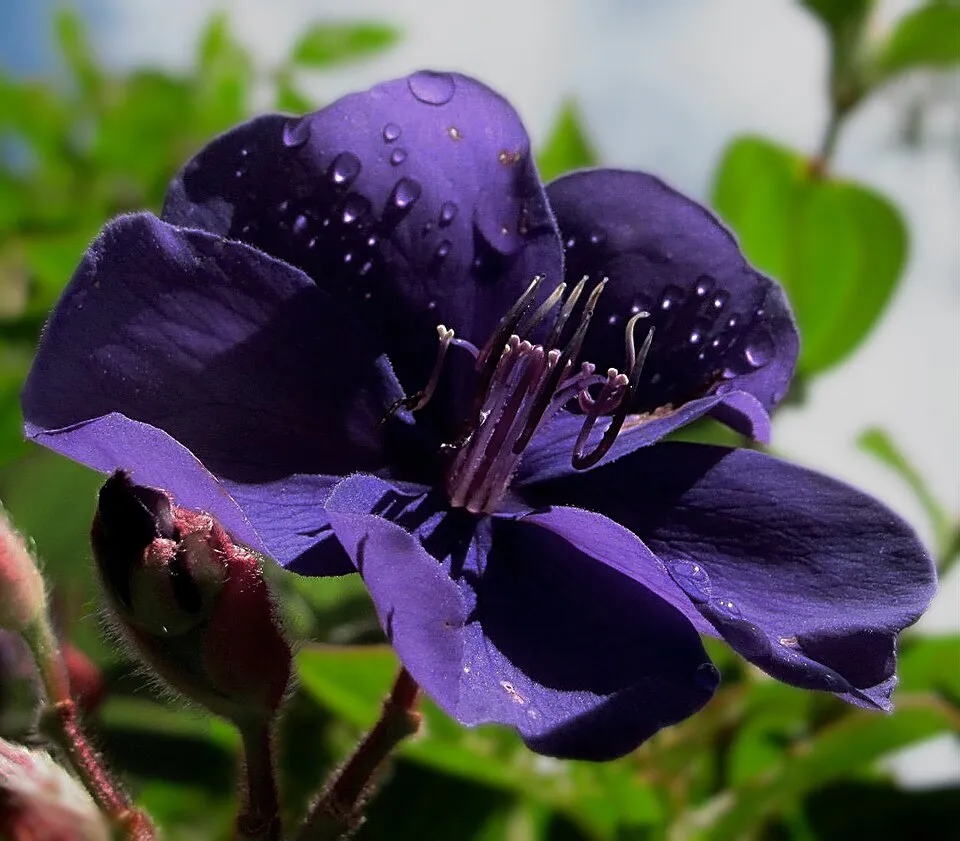
Tibouchina urvilleana, commonly known as the Princess Flower or Glory Bush, is a captivating perennial shrub belonging to the Melastomataceae family. This ornamental dicotyledonous plant is indigenous to the tropical and subtropical regions of Brazil, where it flourishes in warm, humid environments, often reaching impressive heights of 3 to 6 meters (10 to 20 feet) in its native outdoor setting.
When cultivated indoors, it typically maintains a more manageable size of 1 to 2 meters (3 to 6 feet).
Its striking foliage consists of large, ovate, grayish-green leaves, typically 5-10 cm long, characterized by prominent longitudinal veins and a soft, velvety texture due to fine hairs. The young stems exhibit a distinctive four-sided structure, also covered in soft hairs. The true spectacle of Tibouchina urvilleana lies in its magnificent flowers.
These large, saucer-shaped blossoms, measuring 8-13 cm across, display a vibrant royal purple to lavender hue, composed of five broad petals and five reddish sepals. The stamens are notably conspicuous, curving upwards horizontally. Flowers are borne in terminal clusters and, though individual blooms last only about a day, a continuous succession ensures a prolonged display from summer through to autumn.
Its fruit is a small, pale brownish, egg-shaped capsule, 8-14 mm long, containing numerous tiny, round seeds. This species is widely distributed globally as a garden plant, especially in regions with mild climates, and is also highly valued as an attractive indoor specimen.
Trusted Scientific References
1. Authoritative external sources for Tibouchina urvilleana
1.1 Wikipedia — Tibouchina urvilleana
1.2 Kew POWO (Plants of the World Online)
1.3 PubMed — peer-reviewed research
1.4 NCBI Taxonomy Browser
1.5 GBIF — Global Biodiversity
1.6Tibouchina Indoor should be interpreted through verified botanical identity, practical care, and responsible safety language. This recovery note adds the missing context needed for a complete profile: match light to the plant's habit, use well-drained soil, water according to season, and avoid unsupported medicinal or edible claims. For publishing, the plant can be presented as a source-backed indoor plant with clear care guidance, common problem diagnosis, and conservative safety wording.
1.1.Tibouchina Indoor — Standout Qualities
- ✓Striking Royal Purple Flowers — Large, showy blooms are its most distinctive ornamental feature.
- ✓Velvety, Hairy Leaves — Dark green, ovate leaves with prominent longitudinal veins and soft texture.
- ✓Four — Sided Young Stems — Characteristic square-shaped young stems.
- ✓Tropical Origin — Native to humid regions of Brazil.
- ✓Perennial Shrub — Long-lived plant, growing as a shrub or small tree.
- ✓Adaptable Growth — Can be grown outdoors in warm climates or indoors as a potted plant.
- ✓Rich Phytochemistry — Contains various bioactive compounds like flavonoids and triterpenes.
- ✓Ornamental Value — Highly prized for its aesthetic appeal in landscapes and homes.
- ✓Moderate Maintenance — Requires regular watering and pruning but is generally easy to care for.
- ✓Non — Toxic Classification — Considered safe for humans and common pets.
1.2.Tibouchina Indoor — In Brief
- ✓Tibouchina urvilleana is an ornamental shrub known for vibrant purple flowers.
- ✓Native to Brazil, cultivated globally for its beauty.
- ✓Contains flavonoids, anthocyanins, tannins, and triterpenes.
- ✓Possesses anti-inflammatory, antioxidant, and antinociceptive properties.
- ✓Generally considered non-toxic for humans and pets.
- ✓Requires well-draining soil and ample sunlight for optimal growth.
2.Tibouchina Indoor — Scientific Profile
3.Tibouchina Indoor — Quick Facts
4.Tibouchina Indoor — Structural Profile
5.Tibouchina Indoor — Where It Grows
6.Tibouchina Indoor — Ethnobotanical Uses
7.Tibouchina Indoor — Bioactive Constituents
- ✓Flavonoids — Includes flavonol glycosides and isoflavonoids, contributing to antioxidant, anti-inflammatory, and antidiabetic effects.
- ✓Anthocyanins — Pigments responsible for the purple flower color, specifically malvidin-3-(p-coumaroyl glucoside)-5-glucoside, known for antioxidant and potential food coloring properties.
- ✓Tannins — Polyphenolic compounds with astringent properties, contributing to antioxidant and antimicrobial activities.
- ✓Triterpenes — Such as arjunolic acid, glutinol, and ß-amyrin, which exhibit anti-inflammatory, antioxidant, anticholinesterase, antidiabetic, and cytotoxic activities.
- ✓Phenolic Derivatives — A broad class of compounds with significant antioxidant capacity, protecting against cellular damage.
- ✓Nobotanin B — A specific compound identified as a potent Poly(ADP-ribose) glycohydrolase (PARG) inhibitor, relevant in DNA repair mechanisms.
- ✓Sterols — Including ß-sitosterol, a phytosterol known for various health benefits such as cholesterol-lowering effects.
- ✓Organic Acids — Oxalate is involved in aluminum detoxification mechanisms within the plant's leaves.
8.Tibouchina Indoor — Modern Studies
- ✓Anti-inflammatory properties — Extracts from Tibouchina urvilleana leaves have shown potential in reducing inflammation, possibly due to the presence of triterpenes and flavonoids which inhibit inflammatory pathways.
- ✓Antioxidant activity — Rich in flavonoids, anthocyanins, and phenolic derivatives, the plant combats oxidative stress by neutralizing free radicals, protecting cells from damage.
- ✓Antinociceptive effects — Traditional uses and preliminary studies suggest its potential in pain relief, particularly chronic pain, by modulating pain perception pathways.
- ✓Antimicrobial actions — Leaf extracts demonstrate activity against various bacteria and fungi, offering a natural defense against certain microbial infections.
- ✓Antileishmanial potential — Specific compounds within the plant have shown efficacy against Leishmania parasites, indicating its use in treating leishmaniasis.
- ✓Anticancer properties — Certain isolated compounds, like glutinol, have exhibited cytotoxicity against human cancer cell lines in vitro, suggesting potential as an anticancer agent.
- ✓Antidiabetic effects — Compounds such as arjunolic acid and ß-amyrin have demonstrated antidiabetic potential, possibly by influencing glucose metabolism.
- ✓PARG inhibition — Nobotanin B, a compound found in Tibouchina species, acts as a potent inhibitor of Poly(ADP-ribose) glycohydrolase (PARG), which could be relevant in conditions involving extensive DNA damage.
- ✓Aluminum detoxification — The plant has shown an ability to accumulate and detoxify aluminum in its leaves, suggesting potential for phytoremediation or as a model for metal tolerance studies.
- ✓Natural food colorant — The anthocyanins extracted from its vibrant purple flowers, particularly malvidin derivatives, are stable under acidic conditions and show promise as natural food colorants.
8.1.Tibouchina Indoor — Reported Uses
9.Tibouchina Indoor — Adverse Effects
9.1.Tibouchina Indoor — Caution Notes
- ✓Allergic Reactions — Potential for skin irritation or respiratory issues in sensitive individuals upon contact or inhalation of pollen.
- ✓Gastrointestinal Upset — Ingestion of large quantities, though generally considered non-toxic, might cause mild stomach upset.
- ✓Choking Hazard — Small children may be at risk of choking on plant parts if ingested, despite low toxicity.
- ✓Vomiting — While not highly toxic, ingestion of plant material can occasionally induce vomiting.
- ✓Drug Interactions — Theoretical possibility of interaction with medications, especially those affecting inflammation or blood sugar, due to active compounds.
- ✓Photosensitivity — Rare instances of increased skin sensitivity to sunlight have been reported with some plant extracts.
- ✓Root Rot — Improper watering in cultivation leads to fungal root rot, impacting plant health.
9.2.Tibouchina Indoor — Safety Profile
- ✓Generally Non-Toxic — California Poison Control System lists Tibouchina spp. as non-toxic to humans, dogs, and cats.
- ✓External Use Caution — Always perform a patch test for topical applications to check for skin sensitivity or allergic reactions.
- ✓Internal Use Not Recommended — Due to lack of extensive human clinical trials, internal consumption directly from the plant is not advised.
- ✓Supervise Children and Pets — Though non-toxic, ensure children and pets do not ingest plant parts to avoid choking or mild upset.
- ✓Consult Healthcare Professional — Individuals with pre-existing conditions or on medication should consult a doctor before using any herbal preparations.
- ✓Pregnant/Lactating Women — Avoid use during pregnancy and lactation due to insufficient safety data.
- ✓Proper Identification — Ensure correct plant identification to prevent accidental ingestion of toxic look-alikes.
10.Tibouchina Indoor — Preparation & Dosage
- ✓Ornamental Display — Primarily cultivated for its striking purple flowers and lush foliage, enhancing gardens and indoor spaces.
- ✓Live Plant Cultivation — Grow as a potted plant indoors or a garden shrub in warm climates for aesthetic and air-purifying benefits.
- ✓Herbal Teas (Traditional) — Anecdotal use of leaf extracts for anti-inflammatory purposes; consult an expert before internal use.
- ✓Topical Applications (Traditional) — Poultices or washes from leaves for skin inflammation or minor ailments, though unvalidated scientifically.
- ✓Extract Preparation — Research focuses on solvent extracts (e.g., ethanol, n-hexane) to isolate specific compounds for study.
- ✓Food Colorant Research — Anthocyanins from flowers are being studied for potential use as natural, stable acidic food colorants.
- ✓Scientific Research — Plant parts are used in laboratory studies to isolate compounds and evaluate pharmacological activities.
- ✓Homeopathic Preparations — Some traditional systems might incorporate diluted forms, though specific preparations are not widely documented.
11.Tibouchina Indoor — Propagation & Care
- ✓Light — Prefers full sun (at least five hours direct sunlight) but tolerates partial shade, especially indoors or in hot climates.
- ✓Soil — Requires fertile, moist, well-draining soil with a slightly acidic pH; amend with peat moss if needed.
- ✓Watering — Water regularly to keep soil consistently moist but never waterlogged; drought tolerant to some extent but thrives with weekly watering.
- ✓Temperature and Humidity — Cannot tolerate frost; bring indoors during winter or protect. Prefers warm, humid environments.
- ✓Fertilization — Fertilize in spring, summer, and fall with a phosphorus-rich or acid-loving plant fertilizer; manure can also be beneficial.
- ✓Pruning — Prune after flowering to maintain shape, remove dead/damaged branches, or train as a standard; can be cut back to 8 inches for indoor wintering.
- ✓Propagation — Easiest via softwood cuttings: dip 4-inch cuttings in rooting hormone, plant in seed-starter mix, and cover with a plastic dome.
- ✓Pests and Diseases — Watch for scales and nematodes; susceptible to mushroom root rot in overly wet soil.
Reviewed by the Flora Medical Global Botanical Review Panel
Multi-disciplinary editorial group · Botany · Ethnobotany · Herbal-medicine literature
Who reviewed this: This page was checked by the Flora Medical Global Botanical Review Panel — an in-house editorial group of botany graduates, ethnobotany researchers, and horticulture practitioners who collectively maintain our 7,000+ plant encyclopedia. Meet the team.
Our 4-step verification process
1. Taxonomic verification
Scientific names and synonyms cross-checked against Kew POWO, World Flora Online, and The Plant List.
2. Phytochemical & medicinal cross-reference
Active compounds, traditional uses, and reported activities are cross-referenced with PubMed, USDA Dr. Duke's database, and peer-reviewed ethnobotanical literature.
3. Conservation & distribution check
Distribution, ecology, and conservation status confirmed against GBIF occurrence records and the IUCN Red List.
4. Editorial & safety review
Every entry passes an editorial pass for clarity, originality, and safety notices (toxicity, contraindications, dosage caveats) before publication.
Last reviewed:
Important medical disclaimer: This content is for educational and research purposes only. It is not medical advice and is not a substitute for consultation with a licensed healthcare provider. Do not use any herb to self-treat a medical condition without professional guidance.
Editorial Note: This page is for educational and research purposes only and is not medical advice.
Written by: Flora Medical Global Editorial Team
Reviewed by: Flora Medical Global Botanical Review Panel
Last Updated: June 15, 2026





Tibouchina Indoor — Comments & Community Reviews
Rate this plant