
Medical Disclaimer: This content is for educational purposes only. It is not medical advice. Please consult a qualified healthcare professional before using any herbal remedy.
Safety Overview
1.Tinisha — Botanical Snapshot
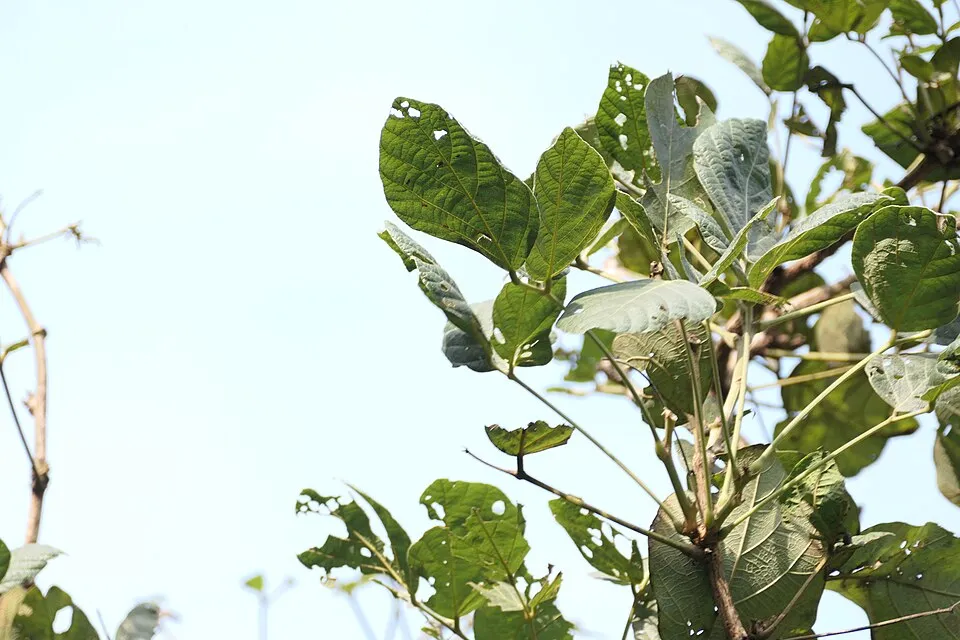
Ougeinia oojeinensis, commonly known as Tinisha or Sandan, is a medium-sized deciduous tree belonging to the Fabaceae family, not Combretaceae as sometimes misidentified. It typically reaches a height of 10 to 15 meters, characterized by its robust trunk and spreading canopy. The bark is distinctly rough, dark brown, and develops deep, longitudinal fissures with age, providing a textured appearance. Its leaves are alternate, simple, and elliptic to ovate, measuring between 7 to 15 cm in length.
They exhibit a glossy dark green surface, particularly vibrant during the monsoon season. The tree produces small, exquisitely fragrant flowers ranging from purple to pink, arranged in axillary racemes. These five-petaled blooms are a significant attractant for various pollinators, contributing to the local ecosystem. Tinisha thrives predominantly in dry deciduous forests across the Indian subcontinent, with a strong presence in central and northern regions, including states like Madhya Pradesh and Gujarat.
Its ecological role extends to soil stabilization and providing crucial habitat for indigenous fauna. The fruit is a distinctive woody capsule, typically yellowish-brown when mature, elongated, and containing one or two seeds, resembling a small, flattened pod.
Trusted Scientific References
1. Authoritative external sources for Ougeinia oojeinensis
1.1 Wikipedia — Ougeinia oojeinensis
1.2 Kew POWO (Plants of the World Online)
1.3 PubMed — peer-reviewed research
1.4 NCBI Taxonomy Browser
1.5 GBIF — Global Biodiversity
1.6Tinisha should be interpreted through verified botanical identity, practical care, and responsible safety language. This recovery note adds the missing context needed for a complete profile: match light to the plant's habit, use well-drained soil, water according to season, and avoid unsupported medicinal or edible claims. For publishing, the plant can be presented as a source-backed medicinal plant with clear care guidance, common problem diagnosis, and conservative safety wording.
1.1.Tinisha — Notable Characteristics
- ✓Deciduous Tree — Medium-sized tree native to the Indian subcontinent, shedding leaves annually.
- ✓Astringent Properties — Potent astringency from tannins, beneficial for various conditions.
- ✓Anti — inflammatory — Contains flavonoids and other compounds that reduce inflammation.
- ✓Antimicrobial Action — Effective against a range of microbes, supporting infection control.
- ✓Diabetes Management — Traditional use in regulating blood sugar levels.
- ✓Wound Healing — Promotes faster healing of cuts, ulcers, and skin lesions.
- ✓Ayurvedic Significance — A cornerstone herb in traditional Indian medicine.
- ✓Rich Phytochemistry — Abundant in isoflavonoids, flavonoids, tannins, and triterpenoids.
- ✓Soil Stabilization — Ecologically important for preventing soil erosion.
- ✓Characteristic Bark — Deeply fissured, dark brown bark used medicinally.
1.2.Tinisha — At-a-Glance Summary
- ✓Ougeinia oojeinensis, or Tinisha, is a deciduous tree from the Fabaceae family, native to India.
- ✓Revered in Ayurveda for its astringent, anti-inflammatory, and antimicrobial properties.
- ✓Traditionally used for digestive issues, wound healing, skin conditions, and diabetes management.
- ✓Rich in isoflavonoids, flavonoids, and tannins, contributing to its therapeutic actions.
- ✓Available as bark decoctions or topical pastes; requires careful dosage and professional consultation.
- ✓Generally safe when used appropriately, but cautions exist for pregnancy, children, and concurrent medication use.
2.Tinisha — Nomenclature & Classification
3.Tinisha — Fact Sheet
4.Tinisha — Botanical Description
5.Tinisha — Origin & Spread
6.Tinisha — Traditional Uses
7.Tinisha — Key Phytochemicals
- ✓Isoflavonoids — Key compounds like dalbergion, hemoferitin, urgenin, oujenin, and homoferreirin are found in the leaves and heartwood, contributing to antioxidant and anti-inflammatory actions.
- ✓Flavonoids — The leaves are particularly rich in flavonoids such as kaempferol, quercetin, and leuco pelargonidin, which impart significant antioxidant, anti-inflammatory, and protective cellular effects.
- ✓Tannins — Present in substantial quantities, especially in the bark (up to 7%), tannins are responsible for the plant's potent astringent properties, crucial for its use in digestive and wound healing applications.
- ✓Triterpenoids — Compounds like lupeol and betulin are identified in the stem bark, known for their anti-inflammatory, antioxidant, and potential anticancer activities.
- ✓Saponins — These phytochemicals contribute to the plant's foaming properties and may offer various therapeutic benefits, including immunomodulatory and hypocholesterolemic effects.
- ✓Phenolic Acids — Various phenolic acids contribute to the overall antioxidant capacity and may play a role in the plant's antimicrobial and anti-inflammatory actions.
- ✓Sterols — Plant sterols are present, which can contribute to anti-inflammatory effects and may have roles in cardiovascular health.
8.Tinisha — Scientific Evidence
- ✓Digestive Support — The bark and heartwood of Tinisha are renowned in traditional medicine for their astringent properties, effectively managing gastrointestinal disorders such as diarrhea and dysentery.
- ✓Anti-inflammatory Action — Rich in flavonoids and other phytochemicals, Ougeinia oojeinensis exhibits significant anti-inflammatory effects, beneficial for alleviating various inflammatory conditions.
- ✓Antimicrobial Properties — Extracts from the plant, particularly the leaves, demonstrate potent antimicrobial activity against a range of pathogens, aiding in infection control.
- ✓Wound Healing — The bark's paste is traditionally applied externally to accelerate the healing of non-healing wounds and ulcers, leveraging its antiseptic and regenerative qualities.
- ✓Diabetes Management — Decoctions of the heartwood have been historically used in Ayurvedic practices to help regulate blood sugar levels, showing promise in the management of diabetes.
- ✓Skin Health — Topical application of Tinisha bark paste is indicated for various skin ailments, including vitiligo and scabies, due to its healing and anti-inflammatory attributes.
- ✓Rejuvenative Tonic — Traditionally, Tinisha is considered a rejuvenator, contributing to overall vitality and strengthening the nervous system.
- ✓Fever Reduction — The heartwood decoction is administered to reduce fever and alleviate burning sensations associated with febrile conditions.
- ✓Anemia Treatment — In certain Ayurvedic formulations, Tinisha is included for its potential role in addressing conditions like anemia.
- ✓Respiratory Relief — Traditional healers utilize the fruit and other parts for their expectorant properties, aiding in the treatment of respiratory ailments.
- ✓Joint Pain Alleviation — External application of the bark paste can help reduce swelling and pain in inflamed joints.
8.1.Tinisha — Therapeutic Indications
9.Tinisha — Safety & Side Effects
9.1.Tinisha — Caution Notes
- ✓Constipation Risk — Due to its strong astringent properties, excessive or prolonged use of Tinisha may lead to constipation in some individuals.
- ✓Gastrointestinal Upset — Sensitive individuals might experience mild stomach discomfort, nausea, or indigestion, especially with high doses.
- ✓Allergic Reactions — As with any plant-derived product, there is a potential for allergic reactions, including skin rashes or respiratory symptoms, in susceptible individuals.
- ✓Drug Interactions — Tinisha may interact with conventional medications, particularly those for diabetes or blood clotting, necessitating medical consultation.
- ✓Not for Prolonged Unsupervised Use — Long-term use without professional guidance is generally not recommended due to the potential for systemic effects.
- ✓Liver or Kidney Strain — While not extensively studied, individuals with pre-existing liver or kidney conditions should exercise caution and consult a healthcare provider.
9.2.Tinisha — Safety Overview
- ✓Pregnancy and Lactation — Avoid use during pregnancy and breastfeeding due to insufficient safety data and potential effects on uterine contractions or infant health.
- ✓Pediatric Use — Not recommended for infants and young children without explicit guidance from a qualified pediatrician or herbalist.
- ✓Pre-existing Medical Conditions — Individuals with chronic health conditions, especially diabetes, bleeding disorders, or gastrointestinal sensitivities, should consult a healthcare professional before use.
- ✓Dosage Adherence — Strictly follow recommended dosages; exceeding them may increase the risk of adverse effects.
- ✓Allergy Awareness — Discontinue use immediately if any signs of allergic reaction, such as rash, itching, or difficulty breathing, occur.
- ✓Drug Interactions — Consult a physician or pharmacist if taking any prescription medications, particularly blood thinners, antidiabetics, or drugs for gastrointestinal motility, to avoid potential interactions.
- ✓Surgical Patients — Discontinue use at least two weeks prior to any scheduled surgery due to potential effects on blood clotting.
10.Tinisha — Preparation Methods
- ✓Bark Decoction for Internal Use — Prepare a decoction by boiling 40-50 grams of dried bark or heartwood in water until reduced. This is traditionally consumed in divided doses (e.g., 40-50 ml) for diarrhea, dysentery, diabetes, and fever.
- ✓External Bark Paste — Grind fresh or dried bark with a small amount of water to form a thick paste. This paste is applied topically to wounds, swollen joints, skin diseases like vitiligo, and scabies.
- ✓Leaf Extracts — Leaves can be processed to yield extracts for their antimicrobial and anti-inflammatory compounds, often used in topical preparations or specific internal formulations.
- ✓Powdered Heartwood — The dried heartwood can be powdered and used in various Ayurvedic formulations, often combined with other herbs for synergistic effects in conditions like anemia or as a rejuvenator.
- ✓Infusions for Respiratory Ailments — Infusions made from specific parts, particularly the fruit, are sometimes used to alleviate respiratory discomfort.
- ✓Combination Therapies — Tinisha is frequently an ingredient in complex Ayurvedic medicines, such as Asanadi Kashayam and Ayaskriti, for conditions like diabetes, skin diseases, and obesity.
- ✓Dosage Adherence — Always adhere to recommended dosages and preparation methods as prescribed by a qualified medical herbalist or Ayurvedic practitioner.
11.Tinisha — Cultivation & Care
- ✓Habitat Preference — Tinisha thrives in dry deciduous forests, preferring regions with distinct wet and dry seasons, common across central and northern India.
- ✓Soil Requirements — It adapts well to a variety of soil types, but ideally prefers well-drained, sandy-loam to loamy soils, often found in hilly tracts.
- ✓Sunlight Exposure — Requires full sun exposure for optimal growth, tolerating partial shade but with reduced vigor and flowering.
- ✓Water Management — Established trees are drought-tolerant, requiring minimal irrigation; young saplings benefit from regular watering during dry periods.
- ✓Propagation — Primarily propagated through seeds, which require pre-treatment (scarification or soaking) to enhance germination rates. Vegetative propagation through cuttings is also possible.
- ✓Growth Rate — Exhibits a moderate to fast growth rate under favorable conditions, reaching maturity within 10-15 years.
- ✓Resilience — Known for its hardiness, Tinisha can withstand varying environmental conditions, making it suitable for reforestation and agroforestry.
Reviewed by the Flora Medical Global Botanical Review Panel
Multi-disciplinary editorial group · Botany · Ethnobotany · Herbal-medicine literature
Who reviewed this: This page was checked by the Flora Medical Global Botanical Review Panel — an in-house editorial group of botany graduates, ethnobotany researchers, and horticulture practitioners who collectively maintain our 7,000+ plant encyclopedia. Meet the team.
Our 4-step verification process
1. Taxonomic verification
Scientific names and synonyms cross-checked against Kew POWO, World Flora Online, and The Plant List.
2. Phytochemical & medicinal cross-reference
Active compounds, traditional uses, and reported activities are cross-referenced with PubMed, USDA Dr. Duke's database, and peer-reviewed ethnobotanical literature.
3. Conservation & distribution check
Distribution, ecology, and conservation status confirmed against GBIF occurrence records and the IUCN Red List.
4. Editorial & safety review
Every entry passes an editorial pass for clarity, originality, and safety notices (toxicity, contraindications, dosage caveats) before publication.
Last reviewed:
Important medical disclaimer: This content is for educational and research purposes only. It is not medical advice and is not a substitute for consultation with a licensed healthcare provider. Do not use any herb to self-treat a medical condition without professional guidance.
Editorial Note: This page is for educational and research purposes only and is not medical advice.
Written by: Flora Medical Global Editorial Team
Reviewed by: Flora Medical Global Botanical Review Panel
Last Updated: June 15, 2026





Tinisha — Comments & Community Reviews
Rate this plant