
Medical Disclaimer: This content is for educational purposes only. It is not medical advice. Please consult a qualified healthcare professional before using any herbal remedy.
Safety Overview
1.Trachelospermum Jasminoides — At a Glance
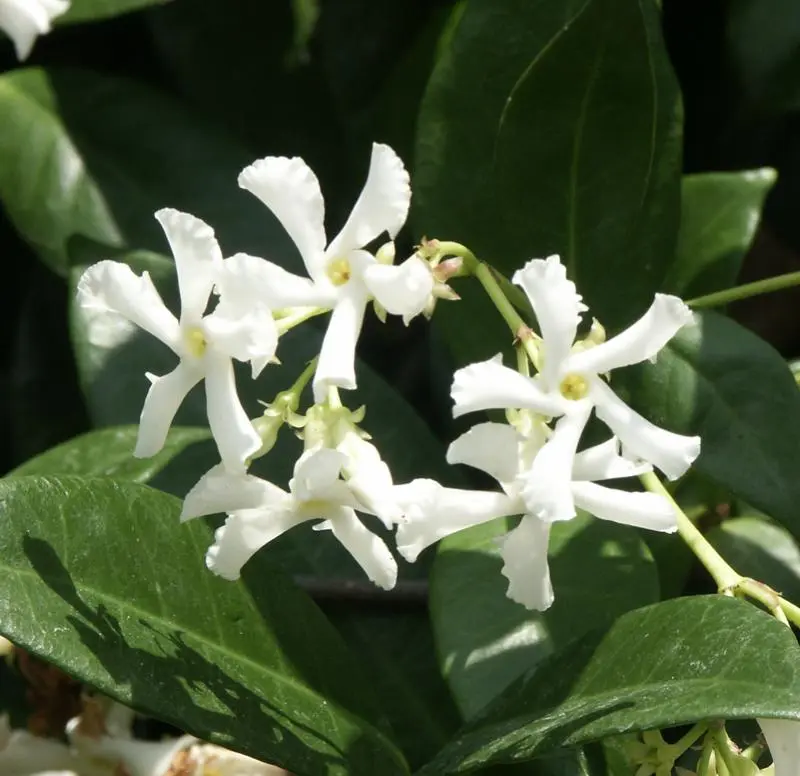
Trachelospermum jasminoides, universally recognized as Star Jasmine or Confederate Jasmine, is an elegant evergreen woody vine belonging to the Apocynaceae family. Native to East Asia, specifically China, Japan, Korea, and Vietnam, this species is renowned for its vigorous growth habit and aesthetic appeal. Morphologically, it features slender, twining stems that can ascend up to 20 feet (6 meters) with adequate support, or spread horizontally as a dense groundcover.
Its foliage consists of glossy, dark green, ovate to elliptic leaves, typically 2-4 inches long, which provide year-round visual interest and often acquire attractive bronze or reddish hues in cooler temperatures. The plant's most celebrated feature is its prolific display of highly fragrant, star-shaped white flowers, usually about 1 inch (2.5 cm) in diameter, which bloom from late spring through summer, releasing a sweet, pervasive aroma. These flowers are borne in loose cymes in the leaf axils.
The fruit is a slender, paired follicle containing numerous seeds, each with a tuft of silky hairs for wind dispersal. Adapted to warm temperate and subtropical climates, Trachelospermum jasminoides thrives in a variety of settings, from garden trellises to large-scale groundcover installations, making it a highly valued ornamental and, increasingly, a subject of medicinal research.
Trusted Scientific References
1. Authoritative external sources for Trachelospermum Jasminoides
1.1 Wikipedia — Trachelospermum Jasminoides
1.2 Kew POWO (Plants of the World Online)
1.3 PubMed — peer-reviewed research
1.4 NCBI Taxonomy Browser
1.5 GBIF — Global Biodiversity
1.6Trachelospermum Jasminoides should be interpreted through verified botanical identity, practical care, and responsible safety language. This recovery note adds the missing context needed for a complete profile: match light to the plant's habit, use well-drained soil, water according to season, and avoid unsupported medicinal or edible claims. For publishing, the plant can be presented as a source-backed garden plant with clear care guidance, common problem diagnosis, and conservative safety wording.
1.1.Trachelospermum Jasminoides — Notable Characteristics
- ✓Highly fragrant, star — shaped white flowers.
- ✓Glossy, dark green — Glossy, dark green evergreen foliage.
- ✓Versatile as a — Versatile as a climbing vine or dense groundcover.
- ✓Known for anti — inflammatory and analgesic properties.
- ✓Contains anxiolytic and — Contains anxiolytic and antioxidant compounds.
- ✓Thrives in warm climates (USDA Zones 8 — 11).
- ✓Attracts pollinators, enhancing — Attracts pollinators, enhancing garden biodiversity.
- ✓Moderate to fast — Moderate to fast growth rate.
- ✓Relatively easy to — Relatively easy to care for and waterwise once established.
- ✓Leaves turn bronze/red — Leaves turn bronze/red in colder temperatures.
1.2.Trachelospermum Jasminoides — Quick Summary
- ✓Fragrant evergreen vine with star-shaped white flowers.
- ✓Traditionally used for anti-inflammatory, analgesic, and calming effects.
- ✓Rich in beneficial compounds like alkaloids and flavonoids.
- ✓Valued for both its ornamental beauty and medicinal potential.
- ✓Requires careful usage and expert consultation for internal applications.
- ✓Offers natural solutions for pain, anxiety, and oxidative stress.
2.Trachelospermum Jasminoides — Scientific Identity
3.Trachelospermum Jasminoides — Key Data
4.Trachelospermum Jasminoides — Botanical Features
5.Trachelospermum Jasminoides — Native Range & Habitat
6.Trachelospermum Jasminoides — Folk Medicine Applications
Often associated with pleasant scents and beautiful gardens in warm regions. Its common name 'Confederate Jasmine' refers to its widespread use in the Southern United States.
7.Trachelospermum Jasminoides — Key Phytochemicals
- ✓Indole Alkaloids — Compounds like jasminoidine and trachelostatin are present, contributing to its analgesic and anti-inflammatory properties through interaction with neurotransmitter systems.
- ✓Flavonoids — Quercetin, kaempferol, and their glycosides are found, potent antioxidants that scavenge free radicals and support anti-inflammatory responses.
- ✓Phenolic Acids — Gallic acid, caffeic acid, and ferulic acid derivatives contribute to the plant's robust antioxidant capacity and exhibit protective effects against cellular damage.
- ✓Triterpenoids — Ursolic acid and oleanolic acid are present, known for their anti-inflammatory, hepatoprotective, and potential anticancer activities.
- ✓Saponins — Steroidal and triterpenoid saponins contribute to its expectorant and anti-inflammatory actions, also potentially affecting cholesterol metabolism.
- ✓Essential Oils — Volatile compounds like linalool, geraniol, and methyl benzoate are responsible for the distinctive fragrance and possess anxiolytic, sedative, and antimicrobial properties.
- ✓Coumarins — Simple coumarins and furanocoumarins may be present, contributing to anti-inflammatory and potentially anticoagulant effects.
- ✓Phytosterols — Beta-sitosterol and stigmasterol are found, known for their cholesterol-lowering and anti-inflammatory benefits.
- ✓Glycosides — Various glycosides, including cardiac glycosides in some Apocynaceae species (though less prominent in Trachelospermum jasminoides), contribute to its biological activities and require careful consideration.
8.Trachelospermum Jasminoides — Pharmacological Findings
- ✓Anti-inflammatory — Extracts contain specific alkaloids and flavonoids that help reduce systemic inflammation by modulating key cellular inflammatory pathways, potentially inhibiting prostaglandin and cytokine production.
- ✓Analgesic — Traditionally employed to alleviate various forms of pain, particularly rheumatic and muscular discomfort, possibly through interaction with opioid receptors and reduction of nociceptive signaling.
- ✓Antipyretic — Historical applications suggest its efficacy in reducing fever, likely due to a combination of its anti-inflammatory properties and its capacity to induce a mild cooling effect on the body.
- ✓Antioxidant — Rich in a diverse array of phenolic compounds, flavonoids, and triterpenoids, Star Jasmine effectively scavenges harmful free radicals, thereby protecting cells from oxidative stress and mitigating cellular damage.
- ✓Antimicrobial — Studies indicate that various extracts, particularly from the leaves and stems, possess inhibitory effects against certain strains of bacteria and fungi, supporting its traditional use in minor infections and skin conditions.
- ✓Cardioprotective — Some isolated components may support cardiovascular health by improving peripheral circulation, reducing oxidative damage within vascular tissues, and potentially contributing to arterial elasticity.
- ✓Hypotensive — Traditional medicine systems utilize it for its potential to gently lower elevated blood pressure, which may be attributed to its mild vasodilatory effects and influence on vascular smooth muscle.
- ✓Sedative/Anxiolytic — The plant's exquisitely fragrant essential oil, rich in compounds like linalool, is widely utilized in aromatherapy to induce profound relaxation, significantly reduce anxiety, and promote more restful and restorative sleep.
- ✓Wound Healing — Topical applications, particularly in traditional Asian medicine, suggest that its extracts can aid in the healing of minor cuts, abrasions, and superficial skin irritations by promoting tissue regeneration.
- ✓Rheumatic Pain Relief — Specifically noted in traditional Chinese medicine for its efficacy in alleviating chronic rheumatic pain and arthralgia, likely through its combined anti-inflammatory and analgesic actions.
8.1.Trachelospermum Jasminoides — Conditions Traditionally Used For
9.Trachelospermum Jasminoides — Cautions & Contraindications
9.1.Trachelospermum Jasminoides — Possible Adverse Reactions
- ✓Skin Irritation — Direct contact with the sap can cause skin irritation or dermatitis in sensitive individuals.
- ✓Allergic Reactions — May trigger allergic responses, including skin rashes or respiratory symptoms, in susceptible persons.
- ✓Drowsiness — The sedative properties, especially from essential oil inhalation or internal use, can cause drowsiness.
- ✓Gastrointestinal Upset — Oral ingestion of large quantities may lead to nausea, vomiting, or stomach discomfort.
- ✓Hypotension Risk — May lower blood pressure, posing a risk for individuals already on hypotensive medication or with naturally low blood pressure.
- ✓Potential Toxicity — Contains compounds that can be toxic if ingested in excessive amounts, particularly by children or pets.
- ✓Drug Interactions — May interact with sedatives, blood pressure medications, or anti-inflammatory drugs.
9.2.Trachelospermum Jasminoides — Clinical Safety Notes
- ✓Expert Consultation — Always consult a qualified healthcare professional or medical herbalist before using Trachelospermum jasminoides for medicinal purposes.
- ✓Pregnancy and Lactation — Contraindicated during pregnancy and breastfeeding due to insufficient safety data and potential effects on fetal development or infant health.
- ✓Children and Pets — Keep out of reach of children and pets, as ingestion can be harmful.
- ✓Internal Use Caution — Internal use should be strictly supervised by a professional due to the presence of potentially potent compounds.
- ✓Cardiac Conditions — Individuals with heart conditions or on cardiac medications should avoid use due to potential cardiotonic or hypotensive effects.
- ✓Surgery — Discontinue use at least two weeks before scheduled surgery due to potential effects on blood pressure or coagulation.
- ✓Dosage Adherence — Strict adherence to recommended dosages is crucial to avoid adverse effects.
10.Trachelospermum Jasminoides — Usage Guide
- ✓Aromatic Infusion — Dried flowers or leaves can be steeped in hot water to create a fragrant tea, traditionally used for calming and mild pain relief.
- ✓Essential Oil — Steam-distilled essential oil from the flowers is used in aromatherapy diffusers to promote relaxation, reduce stress, and improve sleep quality.
- ✓Topical Application — Infused oils or poultices made from leaves can be applied externally to minor cuts, skin irritations, or aching joints for soothing relief.
- ✓Tinctures — Alcohol-based tinctures of the leaves and stems are sometimes prepared for internal use, primarily for anti-inflammatory and analgesic effects, under expert guidance.
- ✓Decoction — Roots and tougher stem parts can be simmered to create a decoction, used traditionally for rheumatic conditions and fever reduction.
- ✓Liniments — Extracts can be incorporated into liniments or balms for topical massage to alleviate muscle soreness and joint pain.
- ✓Floral Water/Hydrosol — The gentle hydrosol from flower distillation can be used as a facial toner or calming body mist.
11.Trachelospermum Jasminoides — How to Grow
- ✓USDA Hardiness Zones — Thrives in zones 8-11, requiring protection in colder climates.
- ✓Light Requirements — Prefers full sun to partial sun for optimal growth and flowering.
- ✓Soil Conditions — Adaptable to average, well-draining soils; tolerates a range of soil types from sandy to clay.
- ✓Watering — Water deeply and regularly during the first growing season to establish a robust root system; tolerates dry spells once established.
- ✓Support and Training — As a vine, provide a trellis, arbor, or fence for support; can also be used as an evergreen groundcover.
- ✓Pruning — Prune after flowering to maintain desired size and shape, and to encourage denser growth.
- ✓Growth Rate — Exhibits a moderate to fast growth rate, quickly covering structures or spreading as groundcover.
- ✓Fertilization — Benefits from a balanced, slow-release fertilizer in spring to support vigorous growth and flowering.
Reviewed by the Flora Medical Global Botanical Review Panel
Multi-disciplinary editorial group · Botany · Ethnobotany · Herbal-medicine literature
Who reviewed this: This page was checked by the Flora Medical Global Botanical Review Panel — an in-house editorial group of botany graduates, ethnobotany researchers, and horticulture practitioners who collectively maintain our 7,000+ plant encyclopedia. Meet the team.
Our 4-step verification process
1. Taxonomic verification
Scientific names and synonyms cross-checked against Kew POWO, World Flora Online, and The Plant List.
2. Phytochemical & medicinal cross-reference
Active compounds, traditional uses, and reported activities are cross-referenced with PubMed, USDA Dr. Duke's database, and peer-reviewed ethnobotanical literature.
3. Conservation & distribution check
Distribution, ecology, and conservation status confirmed against GBIF occurrence records and the IUCN Red List.
4. Editorial & safety review
Every entry passes an editorial pass for clarity, originality, and safety notices (toxicity, contraindications, dosage caveats) before publication.
Last reviewed:
Important medical disclaimer: This content is for educational and research purposes only. It is not medical advice and is not a substitute for consultation with a licensed healthcare provider. Do not use any herb to self-treat a medical condition without professional guidance.
Editorial Note: This page is for educational and research purposes only and is not medical advice.
Written by: Flora Medical Global Editorial Team
Reviewed by: Flora Medical Global Botanical Review Panel
Last Updated: June 15, 2026





Trachelospermum Jasminoides — Comments & Community Reviews
Rate this plant