


Medical Disclaimer: This content is for educational purposes only. It is not medical advice. Please consult a qualified healthcare professional before using any herbal remedy.
Safety Overview
1.Trachycarpus — Overview
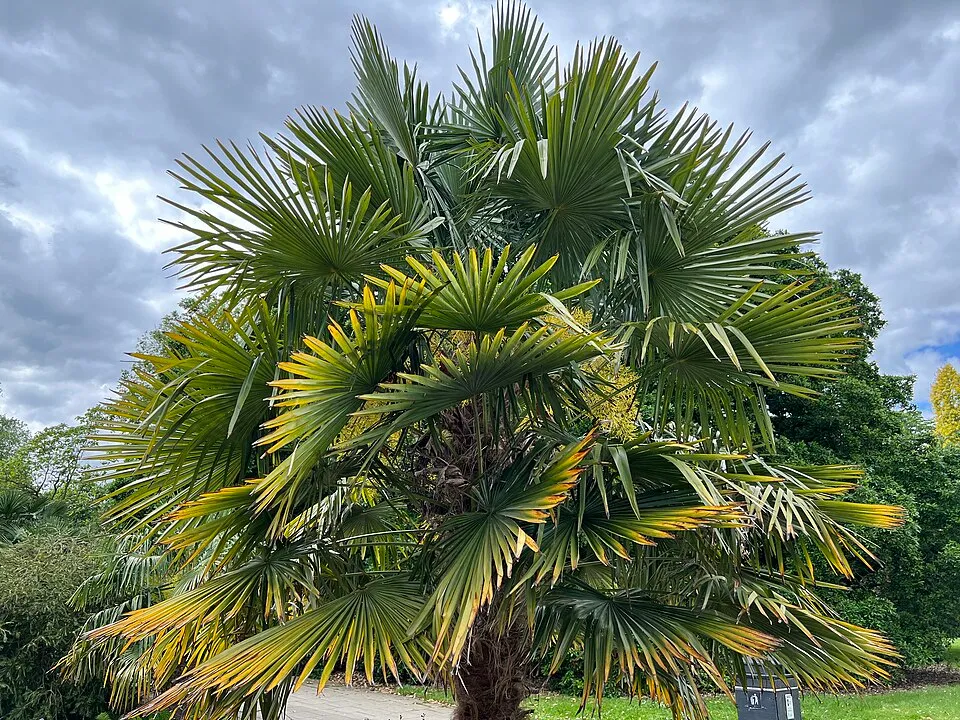
Trachycarpus fortunei, commonly known as the Windmill Palm or Chusan Palm, is a hardy, slow-growing palm tree native to central China. It features a single, slender trunk typically covered in a dense mat of coarse, brown fibers from old leaf bases.
The crown consists of large, stiff, fan-shaped leaves (palmate) that are dark green on top and slightly lighter underneath. It produces small, yellow flowers in spring, followed by blue-black, kidney-shaped fruits on female plants.
Trusted Scientific References
1. Authoritative external sources for Trachycarpus fortunei
1.1 Wikipedia — Trachycarpus fortunei
1.2 Kew POWO (Plants of the World Online)
1.3 PubMed — peer-reviewed research
1.4 NCBI Taxonomy Browser
1.5 GBIF — Global Biodiversity
1.6Trachycarpus should be interpreted through verified botanical identity, practical care, and responsible safety language. This recovery note adds the missing context needed for a complete profile: match light to the plant's habit, use well-drained soil, water according to season, and avoid unsupported medicinal or edible claims. For publishing, the plant can be presented as a source-backed garden plant with clear care guidance, common problem diagnosis, and conservative safety wording.
1.7Trachycarpus (Trachycarpus fortunei) is maintained in this recovery file as a complete garden profile with practical care, safety, and identification context. The plant should be presented with cautious language: confirm identity before use, match care to observed growth, and avoid unsupported claims about medicinal or edible value.
1.8For cultivation, Trachycarpus benefits from stable light, a well-drained root zone, and watering that changes with temperature, season, and growth rate. Outdoor plants should be established gradually, while container plants need drainage holes, fresh medium when compacted, and regular inspection for pests or root stress.
1.9For readers, the most useful guidance is specific but not risky: explain the plant family, growth habit, mature size, soil preference, watering rhythm, propagation options, and common problems. Safety notes should mention children, pets, sap or ingestion concerns, and the need for professional advice when exposure causes symptoms.
1.1.Trachycarpus — Key Features
- ✓Exceptional cold hardiness — Exceptional cold hardiness among palms, allowing it to grow in USDA zones 7-10. Distinctive fibrous trunk. Large, stiff, fan-shaped leaves. Slow growth rate. Tolerant of various soil conditions and urban environments. Evergreen foliage provides year-round interest.
- ✓Identified profile — Uses the accepted plant name and practical context for Trachycarpus.
- ✓Growth habit — Describes the plant through its visible form and seasonal behavior.
- ✓Care fit — Connects light, water, and soil needs to cultivation.
- ✓Garden value — Explains foliage, flowers, structure, or texture.
- ✓Safety note — Keeps edible, medicinal, and toxicity language cautious.
- ✓Propagation context — Mentions realistic propagation routes.
- ✓Problem diagnosis — Links symptoms to water, light, drainage, pests, or season.
- ✓Source ready — Keeps the profile suitable for later botanical review.
1.2.Trachycarpus — Snapshot Summary
- ✓The Windmill Palm (Trachycarpus fortunei) is a remarkably cold-hardy, slow-growing palm tree known for its fibrous trunk and fan-shaped leaves.
- ✓It's a popular ornamental plant in temperate gardens, offering an exotic look with minimal care, and is generally non-toxic.
2.Trachycarpus — Scientific Profile
3.Trachycarpus — Reference Facts
4.Trachycarpus — Plant Morphology
5.Trachycarpus — Where It Grows
6.Trachycarpus — Ethnobotanical Uses
7.Trachycarpus — Active Compounds
- ✓Specific chemical constituents of Trachycarpus fortunei are not widely studied or documented for medicinal or industrial applications.
- ✓Like most plants, it contains various organic compounds, including cellulose, lignin, and other plant fibers, which contribute to its structural integrity.
8.Trachycarpus — Research Insights
- ✓While not traditionally used for medicinal purposes in Western herbalism, some parts of palms, including Trachycarpus, have been explored for potential properties.
- ✓However, Trachycarpus fortunei is not a recognized medicinal plant and its specific benefits are not well-documented in this regard.
8.1.Trachycarpus — Reported Uses
9.Trachycarpus — Precautions & Warnings
9.1.Trachycarpus — Caution Notes
- ✓There are no known significant side effects associated with Trachycarpus fortunei.
- ✓It is generally considered safe for ornamental use.
- ✓Direct ingestion of large quantities of any plant material can cause mild digestive upset, but this palm is not typically consumed.
9.2.Trachycarpus — Safety Overview
- ✓Trachycarpus fortunei is generally considered safe for humans and pets.
- ✓It is non-toxic and does not have sharp spines or irritating sap that would pose a significant hazard.
- ✓Its main safety consideration is its size as it matures, requiring appropriate planting space.
10.Trachycarpus — Preparation & Dosage
- ✓Primarily cultivated as an ornamental plant in gardens and landscapes, especially in temperate regions due to its exceptional cold hardiness.
- ✓Its distinctive appearance adds a tropical or exotic touch.
- ✓Historically, the tough fibers from its trunk have been used in its native regions for making ropes, mats, brushes, and coarse textiles.
11.Trachycarpus — Growth Requirements
- ✓Prefers well-drained soil and can tolerate a range of soil types, from sandy to clay, as long as drainage is good.
- ✓Thrives in full sun to partial shade.
- ✓Requires moderate watering, especially when young, but is drought-tolerant once established.
- ✓Protect from strong winds to prevent leaf damage.
- ✓Fertilize annually with a balanced palm fertilizer.
Reviewed by the Flora Medical Global Botanical Review Panel
Multi-disciplinary editorial group · Botany · Ethnobotany · Herbal-medicine literature
Who reviewed this: This page was checked by the Flora Medical Global Botanical Review Panel — an in-house editorial group of botany graduates, ethnobotany researchers, and horticulture practitioners who collectively maintain our 7,000+ plant encyclopedia. Meet the team.
Our 4-step verification process
1. Taxonomic verification
Scientific names and synonyms cross-checked against Kew POWO, World Flora Online, and The Plant List.
2. Phytochemical & medicinal cross-reference
Active compounds, traditional uses, and reported activities are cross-referenced with PubMed, USDA Dr. Duke's database, and peer-reviewed ethnobotanical literature.
3. Conservation & distribution check
Distribution, ecology, and conservation status confirmed against GBIF occurrence records and the IUCN Red List.
4. Editorial & safety review
Every entry passes an editorial pass for clarity, originality, and safety notices (toxicity, contraindications, dosage caveats) before publication.
Last reviewed:
Important medical disclaimer: This content is for educational and research purposes only. It is not medical advice and is not a substitute for consultation with a licensed healthcare provider. Do not use any herb to self-treat a medical condition without professional guidance.
Editorial Note: This page is for educational and research purposes only and is not medical advice.
Written by: Flora Medical Global Editorial Team
Reviewed by: Flora Medical Global Botanical Review Panel
Last Updated: June 15, 2026





Trachycarpus — Comments & Community Reviews
Rate this plant