


Medical Disclaimer: This content is for educational purposes only. It is not medical advice. Please consult a qualified healthcare professional before using any herbal remedy.
Safety Overview
1.Tradescantia Ohiensis — Botanical Snapshot
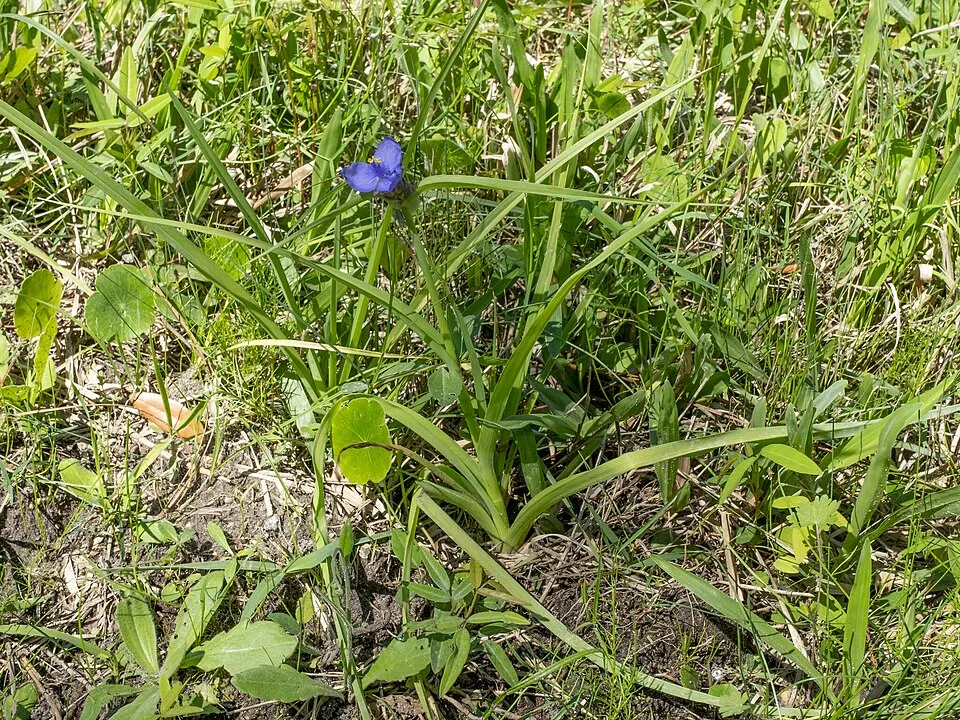
Tradescantia ohiensis, commonly known as Ohio Spiderwort, is a herbaceous perennial native to eastern and central North America. It typically grows 2-3 feet tall with erect, unbranched or sparsely branched stems. Its leaves are long, narrow, and grass-like, up to 12 inches long, and sheathe the stem at the base.
The plant produces three-petaled flowers, usually blue to purplish-blue (occasionally pink or white), about 1 inch across. These flowers are borne in terminal clusters above leafy bracts, opening in the morning and closing by afternoon, lasting only one day. Blooming occurs from late spring to mid-summer.
Trusted Scientific References
1. Authoritative external sources for Tradescantia ohiensis
1.1 Wikipedia — Tradescantia ohiensis
1.2 Kew POWO (Plants of the World Online)
1.3 PubMed — peer-reviewed research
1.4 NCBI Taxonomy Browser
1.5 GBIF — Global Biodiversity
1.6Tradescantia Ohiensis should be interpreted through verified botanical identity, practical care, and responsible safety language. This recovery note adds the missing context needed for a complete profile: match light to the plant's habit, use well-drained soil, water according to season, and avoid unsupported medicinal or edible claims. For publishing, the plant can be presented as a source-backed garden plant with clear care guidance, common problem diagnosis, and conservative safety wording.
1.7Tradescantia Ohiensis (Tradescantia ohiensis) is maintained in this recovery file as a complete garden profile with practical care, safety, and identification context. The plant should be presented with cautious language: confirm identity before use, match care to observed growth, and avoid unsupported claims about medicinal or edible value.
1.8For cultivation, Tradescantia Ohiensis benefits from stable light, a well-drained root zone, and watering that changes with temperature, season, and growth rate. Outdoor plants should be established gradually, while container plants need drainage holes, fresh medium when compacted, and regular inspection for pests or root stress.
1.1.Tradescantia Ohiensis — Notable Characteristics
- ✓Distinctive three — petaled blue to purplish-blue flowers; grass-like, linear leaves; flowers open in the morning and close by afternoon; clump-forming growth habit; attracts pollinators, especially bees; native to North America; long blooming period from late spring to mid-summer.
- ✓Identified profile — Uses the accepted plant name and practical context for Tradescantia Ohiensis.
- ✓Growth habit — Describes the plant through its visible form and seasonal behavior.
- ✓Care fit — Connects light, water, and soil needs to cultivation.
- ✓Garden value — Explains foliage, flowers, structure, or texture.
- ✓Safety note — Keeps edible, medicinal, and toxicity language cautious.
- ✓Propagation context — Mentions realistic propagation routes.
- ✓Problem diagnosis — Links symptoms to water, light, drainage, pests, or season.
- ✓Source ready — Keeps the profile suitable for later botanical review.
1.2.Tradescantia Ohiensis — Concise Overview
- ✓Tradescantia ohiensis, or Ohio Spiderwort, is a hardy, low-maintenance perennial native to eastern North America. It features striking three-petaled blue-purple flowers that open daily in the morning, and grass-like foliage.
- ✓Valued for its drought tolerance, adaptability, and ability to attract pollinators, it's an excellent choice for native plant gardens and naturalized landscapes.
2.Tradescantia Ohiensis — Scientific Identity
3.Tradescantia Ohiensis — Key Data
4.Tradescantia Ohiensis — Botanical Description
5.Tradescantia Ohiensis — Origin & Spread
6.Tradescantia Ohiensis — Folk Medicine Applications
7.Tradescantia Ohiensis — Phytochemistry
- ✓The plant is known to contain mucilage, which contributes to its soothing properties when applied externally.
- ✓It also contains flavonoids, which are common plant compounds with antioxidant properties.
- ✓Specific detailed chemical analysis for medicinal purposes in T. ohiensis is not extensively documented, but these constituents are typical for related species.
8.Tradescantia Ohiensis — Evidence-Based Benefits
- ✓Historically, some Tradescantia species were used by Native Americans.
- ✓Tradescantia ohiensis specifically has been noted for its mucilaginous sap, which could be used as a poultice for insect bites, stings, or minor skin irritations.
- ✓There are also historical accounts of internal use for digestive issues, though specific evidence and safety data are limited, and such use is not recommended without expert guidance.
8.1.Tradescantia Ohiensis — Conditions Traditionally Used For
9.Tradescantia Ohiensis — Safety & Side Effects
9.1.Tradescantia Ohiensis — Warnings
- ✓Tradescantia ohiensis is generally considered non-toxic.
- ✓Skin contact with the sap might cause mild irritation in very sensitive individuals, but this is rare.
- ✓No significant internal side effects are widely reported, but internal consumption is not advised without professional consultation due to insufficient research.
9.2.Tradescantia Ohiensis — Toxicity Assessment
- ✓Generally safe for handling and cultivation.
- ✓It is often listed as non-toxic or mildly toxic to humans and pets.
- ✓Ingestion of small amounts is unlikely to cause harm, though large quantities could potentially lead to mild digestive upset.
- ✓It is not known to cause severe allergic reactions.
10.Tradescantia Ohiensis — Preparation Methods
- ✓For external use, crushed leaves or the mucilaginous sap can be applied directly as a poultice to insect bites, stings, or minor skin irritations to provide a soothing effect.
- ✓Internal use is not recommended due to limited safety data and lack of scientific validation.
11.Tradescantia Ohiensis — Garden Cultivation
- ✓Ohio Spiderwort is easy to grow and low-maintenance.
- ✓It thrives in full sun to partial shade.
- ✓It tolerates a wide range of soil types, including poor soils, but prefers moist, well-drained conditions.
- ✓Once established, it is drought tolerant.
- ✓It can self-seed readily and may spread.
- ✓Propagation is typically by seed or by division of clumps in spring or fall.
Reviewed by the Flora Medical Global Botanical Review Panel
Multi-disciplinary editorial group · Botany · Ethnobotany · Herbal-medicine literature
Who reviewed this: This page was checked by the Flora Medical Global Botanical Review Panel — an in-house editorial group of botany graduates, ethnobotany researchers, and horticulture practitioners who collectively maintain our 7,000+ plant encyclopedia. Meet the team.
Our 4-step verification process
1. Taxonomic verification
Scientific names and synonyms cross-checked against Kew POWO, World Flora Online, and The Plant List.
2. Phytochemical & medicinal cross-reference
Active compounds, traditional uses, and reported activities are cross-referenced with PubMed, USDA Dr. Duke's database, and peer-reviewed ethnobotanical literature.
3. Conservation & distribution check
Distribution, ecology, and conservation status confirmed against GBIF occurrence records and the IUCN Red List.
4. Editorial & safety review
Every entry passes an editorial pass for clarity, originality, and safety notices (toxicity, contraindications, dosage caveats) before publication.
Last reviewed:
Important medical disclaimer: This content is for educational and research purposes only. It is not medical advice and is not a substitute for consultation with a licensed healthcare provider. Do not use any herb to self-treat a medical condition without professional guidance.
Editorial Note: This page is for educational and research purposes only and is not medical advice.
Written by: Flora Medical Global Editorial Team
Reviewed by: Flora Medical Global Botanical Review Panel
Last Updated: June 15, 2026





Tradescantia Ohiensis — Comments & Community Reviews
Rate this plant