
Medical Disclaimer: This content is for educational purposes only. It is not medical advice. Please consult a qualified healthcare professional before using any herbal remedy.
Safety Overview
1.Travelers Palm — Plant Snapshot
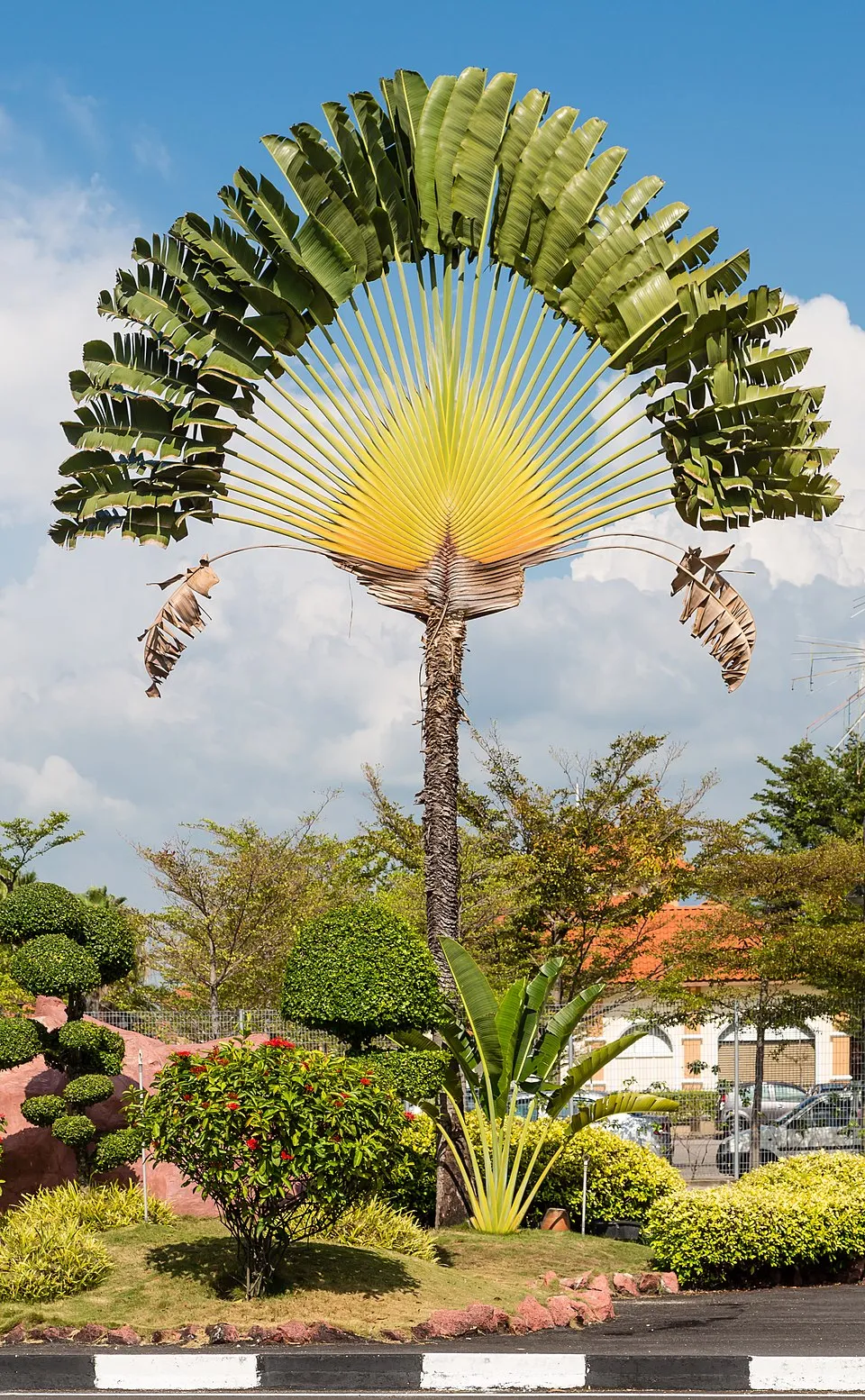
Ravenala madagascariensis, commonly known as the Travelers Palm or Travelers Tree, is an emblematic evergreen arborescent monocot native exclusively to the island of Madagascar. Despite its popular moniker and palm-like appearance, it is not a true palm but belongs to the Strelitziaceae family, sharing kinship with the vibrant bird-of-paradise flowers. Its most striking feature is the dramatic arrangement of colossal, paddle-shaped leaves, which can reach lengths of 3 to 4 meters, fanning out symmetrically in a single plane atop a robust, often unbranched trunk.
This trunk, typically growing 10 to 12 meters high, is characterized by distinct rings, the remnants of fallen leaves, lending it a rough, greyish texture. The impressive distichous array of leaves often aligns itself along an east-west axis, a characteristic that reputedly earned it the 'Travelers Palm' name, as it could serve as a rudimentary compass for those navigating its native landscapes. Crucially, the fused bases of these massive leaf petioles form natural cup-like structures capable of collecting and storing substantial amounts of rainwater, a vital resource for both the plant and various endemic fauna.
The Travelers Palm develops an extensive fibrous root system, providing strong anchorage in its preferred tropical habitats, thriving in open, sunny locations with consistently moist, well-drained soil, frequently found along riverbanks or within rainforest clearings. The plant's inflorescences are encased in large, boat-shaped bracts (spathes) emerging from the leaf axils, bearing numerous white to creamy-yellow tubular flowers, primarily pollinated by lemurs and bats in Madagascar. Post-pollination, woody, capsular fruits develop, splitting open to reveal distinctive, iridescent blue seeds.
Trusted Scientific References
1. Authoritative external sources for Ravenala madagascariensis
1.1 Wikipedia — Ravenala madagascariensis
1.2 Kew POWO (Plants of the World Online)
1.3 PubMed — peer-reviewed research
1.4 NCBI Taxonomy Browser
1.5 GBIF — Global Biodiversity
1.1.Travelers Palm — Defining Traits
- ✓Endemic to Madagascar, — Endemic to Madagascar, a national symbol of the island.
- ✓Strikingly symmetrical, fan — shaped crown of colossal leaves.
- ✓Leaf bases form — Leaf bases form natural reservoirs, collecting significant amounts of rainwater.
- ✓Produces unique, vibrant — Produces unique, vibrant iridescent blue seeds within woody capsules.
- ✓Closely related to the Bird — of-Paradise flower (Strelitzia).
- ✓A popular ornamental — A popular ornamental plant in tropical and subtropical landscapes worldwide.
- ✓Heart of the — Heart of the plant and young leaves are traditionally consumed as food.
- ✓Various plant parts — Various plant parts are utilized in traditional construction and crafts.
- ✓Pollination primarily carried — Pollination primarily carried out by lemurs and bats in its native habitat.
- ✓Possesses a robust, — Possesses a robust, unbranched trunk marked by distinctive leaf scars.
1.2.Travelers Palm — Snapshot Summary
- ✓Iconic arborescent monocot from Madagascar, not a true palm.
- ✓Large, fan-shaped leaves collect rainwater, inspiring its 'Travelers Tree' name.
- ✓Traditionally used for diabetes, kidney issues, stomachaches, and as food.
- ✓Rich in flavonoids, triterpenes, and fatty acids with documented bioactivities.
- ✓Scientific studies support its antioxidant, antidiabetic, hypolipidemic, and renoprotective properties.
- ✓Water collected in leaf bases is generally unsafe for direct human consumption due to contamination.
2.Travelers Palm — Systematic Position
3.Travelers Palm — Quick Facts
4.Travelers Palm — Plant Morphology
5.Travelers Palm — Where It Grows
6.Travelers Palm — Ethnobotanical Uses
7.Travelers Palm — Bioactive Constituents
- ✓Cycloartanol Triterpenes — Compounds like cycloartanol and novel derivatives such as (2E, 7R, 11R) phytyl-3, 7, 11, 15-tetramethylhexadec-2-enyl pentadecanoate and (24S, 31S)-cycloartan-31, 32-diol, isolated from leaves, are linked to antidiabetic activity.
- ✓Flavonoids — A diverse group including flavone glycosides, flavonol glycosides, and flavanol aglycones. Key identified compounds are narcissin, rutin, epiafzelechin, epicatechin, isorhamnetin 7-O-glucoside, kaempferol, and isorhamnetin-7-O-rutinoside, known for antioxidant and hyaluronidase inhibitory activities.
- ✓Phenolic Compounds — General phenolic compounds are present in leaf extracts, contributing to the plant's overall antioxidant capacity.
- ✓Tannins — Identified in leaf extracts, these compounds are known for their astringent properties, contributing to potential antidiarrheal effects.
- ✓Saponins — Present in the leaves, saponins are glycosides known for their detergent-like properties and various biological activities.
- ✓Alkaloids — Detected during phytochemical screening of the leaves, a class of nitrogen-containing organic compounds with diverse pharmacological actions.
- ✓Glycosides — Including cardiac glycosides and cyanogenic glycosides, found in leaf extracts, known for their specific physiological effects.
- ✓Anthraquinones — Present in leaf extracts, these compounds are often associated with laxative properties and antimicrobial activities.
- ✓Fatty Acids — The blue arils and seeds yield oils rich in fatty acids, including palmitic (up to 41%), oleic (up to 39%), stearic (14%), and linoleic (7%) acids, contributing to nutritional and potential antiseptic qualities.
- ✓Sterols — Seed oil contains various sterols, predominantly ß-sitosterol (65%), while aril oil features stigmasterol (18%), 24-methyl-5-α-cholest-7-en-3-ß-ol (16%), α-spinasterol (28%), and Δ7-avenasterol (19%).
- ✓Carbohydrates — The plant's structural composition includes cellulose (46.82%) and hemi-cellulose (25.70%), providing structural integrity.
- ✓Lignin — A complex polymer (22.46%) found in the plant's cell walls, contributing to its woody structure and rigidity.
8.Travelers Palm — Modern Studies
- ✓Antidiabetic Activity — Research indicates that extracts from the leaves and roots can significantly reduce blood glucose levels, potentially by inhibiting glucose diffusion and stimulating insulin release.
- ✓Antioxidant Properties — Leaf extracts demonstrate strong antioxidant activity, reducing oxidative stress and lipid peroxidation in diabetic models, and increasing endogenous antioxidant enzymes like catalase and glutathione.
- ✓Hypolipidemic Effects — Studies show that Ravenala madagascariensis extracts can significantly improve altered lipid profiles in diabetic subjects, decreasing total cholesterol, triglycerides, LDL, and VLDL while increasing beneficial HDL levels.
- ✓Renoprotective Action — The plant exhibits protective effects on kidney function, supported by histological examinations showing improved renal health in diabetic models, addressing kidney complications associated with the disease.
- ✓Hyaluronidase Inhibitory Activity — Flavonoids isolated from the leaves have been identified as potent inhibitors of hyaluronidase, an enzyme involved in hyaluronic acid degradation, suggesting potential for skin hydration and anti-aging applications.
- ✓Antithrombolytic Properties — Methanolic leaf extracts and aqueous fractions have shown notable clot lysis activity, indicating potential in preventing or dissolving blood clots.
- ✓Membrane Stabilizing Effects — Extracts from the leaves contribute to the stabilization of cell membranes, which is crucial for maintaining cellular integrity and function, particularly under stress conditions.
- ✓Insulin Secretagogue Effect — Root extracts have been observed to stimulate insulin release from pancreatic cells in a dose-dependent manner, even in the presence of varying glucose concentrations, supporting its antidiabetic potential.
- ✓Antiseptic Qualities — The seed oil of Travelers Palm is traditionally valued for its antiseptic properties, useful for topical application on minor wounds or skin irritations.
- ✓Gastrointestinal Relief — Young leaves are traditionally used to alleviate dizziness and stomachaches, and also for treating diarrhea, suggesting anti-spasmodic or anti-inflammatory effects.
- ✓Diuretic Action — The plant is traditionally employed for conditions like urinary retention and edema, indicating potential diuretic properties that assist in fluid balance and kidney stone management.
- ✓Appetite Stimulation — In certain regions of Madagascar, the pith of the shoot is cooked and consumed to help restore lost appetite, particularly in cases of anorexia.
8.1.Travelers Palm — Conditions Traditionally Used For
9.Travelers Palm — Risk Profile
9.1.Travelers Palm — Possible Adverse Reactions
- ✓Contaminated Water Risk — Water collected in the leaf bases is often contaminated with mosquito larvae, debris, and can ferment, making it generally unsafe for direct consumption and potentially causing gastrointestinal distress.
- ✓Allergic Reactions — As with many plants, individuals may experience allergic reactions to pollen or direct contact with plant parts, manifesting as skin irritation or respiratory issues.
- ✓Gastrointestinal Upset — Ingesting improperly prepared or contaminated plant parts, particularly the collected water, could lead to digestive discomfort, nausea, or diarrhea.
- ✓Potential Drug Interactions — Due to its antidiabetic and hypolipidemic properties, consuming Travelers Palm preparations might interact with medications for diabetes or cholesterol, potentially causing hypoglycemia or other adverse effects.
- ✓Bitterness of Leaves — Raw or improperly prepared young leaves can be quite bitter, which may deter consumption or cause mild discomfort.
- ✓Invasive Species Concern — In non-native tropical environments, Ravenala madagascariensis can become an invasive species, outcompeting native flora and disrupting ecosystems, which, while not a direct health side effect, is an ecological concern.
9.2.Travelers Palm — Risk Assessment
- ✓Professional Consultation — Always consult a healthcare professional before using Travelers Palm for medicinal purposes, especially for chronic conditions.
- ✓Pregnancy and Lactation — Pregnant and nursing women should avoid medicinal use due to insufficient safety data.
- ✓Children and Infants — Not recommended for use in children or infants without expert medical guidance.
- ✓Avoid Stagnant Water — Never consume the stagnant water collected in the leaf bases directly due to high risk of contamination and pathogens.
- ✓Diabetes and Lipid Management — Individuals on medication for diabetes or high cholesterol must exercise extreme caution and monitor blood levels closely if considering this plant, due to potential additive effects.
- ✓Allergic Sensitivity — Discontinue use if any signs of allergic reaction, such as skin rash, itching, or respiratory difficulties, occur.
- ✓Proper Preparation — Ensure any plant parts intended for consumption are properly identified, cleaned, and prepared according to safe methods.
10.Travelers Palm — Application Forms
- ✓Edible Heart — The heart of the Travelers Palm, particularly from the 'Bemavo' variety, is cooked and consumed as a vegetable by local communities in Madagascar.
- ✓Young Leaf Consumption — Young leaves are reported to be edible when cooked, though they possess a bitter taste.
- ✓Raw Arils — The vibrant blue arils encasing the seeds are edible when raw, although they are generally considered tasteless.
- ✓Sap Extraction — Sap can be tapped from the base of the leaf stalks and boiled down to produce a sweet syrup or sugar.
- ✓Seed Oil Application — The oil extracted from the seeds is used topically as an antiseptic for minor skin ailments and has also been explored for cooking.
- ✓Traditional Construction Material — Various parts of the plant are utilized in construction; leaves for roofing, petioles and trunk for walls and floors, and the trunk for posts and rafters.
- ✓Fodder for Livestock — The heart of the plant and the pith of the shoot are used as fodder for domestic animals like cattle and pigs to promote fattening.
- ✓Craft and Packing Material — The large, sturdy leaves are also used as packing material and in traditional crafts.
11.Travelers Palm — Growing Guide
- ✓Climate Preference — Thrives in tropical to subtropical climates, requiring high humidity and warm temperatures year-round, sensitive to frost.
- ✓Sunlight Requirements — Prefers full sun exposure for optimal growth, though young plants can tolerate partial shade.
- ✓Soil and Drainage — Needs well-drained, fertile soil rich in organic matter, with consistent moisture but not waterlogging.
- ✓Watering Regime — Requires regular and ample watering, especially during dry periods, to mimic its natural rainforest habitat.
- ✓Propagation — Primarily propagated by seeds, which should be fresh and pre-soaked, or by suckers that emerge from the base of mature plants.
- ✓Space and Growth — Due to its large size and expansive fan-like canopy, it requires significant space, making it suitable for large gardens or landscapes.
- ✓Container Growing — Young plants can be grown in large containers, but will eventually outgrow them and require transplanting to the ground.
- ✓Invasive Potential — In some regions outside its native range, such as Mauritius, it can be considered an invasive species, requiring careful management.
Reviewed by the Flora Medical Global Botanical Review Panel
Multi-disciplinary editorial group · Botany · Ethnobotany · Herbal-medicine literature
Who reviewed this: This page was checked by the Flora Medical Global Botanical Review Panel — an in-house editorial group of botany graduates, ethnobotany researchers, and horticulture practitioners who collectively maintain our 7,000+ plant encyclopedia. Meet the team.
Our 4-step verification process
1. Taxonomic verification
Scientific names and synonyms cross-checked against Kew POWO, World Flora Online, and The Plant List.
2. Phytochemical & medicinal cross-reference
Active compounds, traditional uses, and reported activities are cross-referenced with PubMed, USDA Dr. Duke's database, and peer-reviewed ethnobotanical literature.
3. Conservation & distribution check
Distribution, ecology, and conservation status confirmed against GBIF occurrence records and the IUCN Red List.
4. Editorial & safety review
Every entry passes an editorial pass for clarity, originality, and safety notices (toxicity, contraindications, dosage caveats) before publication.
Last reviewed:
Important medical disclaimer: This content is for educational and research purposes only. It is not medical advice and is not a substitute for consultation with a licensed healthcare provider. Do not use any herb to self-treat a medical condition without professional guidance.
Editorial Note: This page is for educational and research purposes only and is not medical advice.
Written by: Flora Medical Global Editorial Team
Reviewed by: Flora Medical Global Botanical Review Panel
Last Updated: June 15, 2026





Travelers Palm — Comments & Community Reviews
Rate this plant