


Medical Disclaimer: This content is for educational purposes only. It is not medical advice. Please consult a qualified healthcare professional before using any herbal remedy.
Safety Overview
1.Tree of Heaven — Plant Snapshot
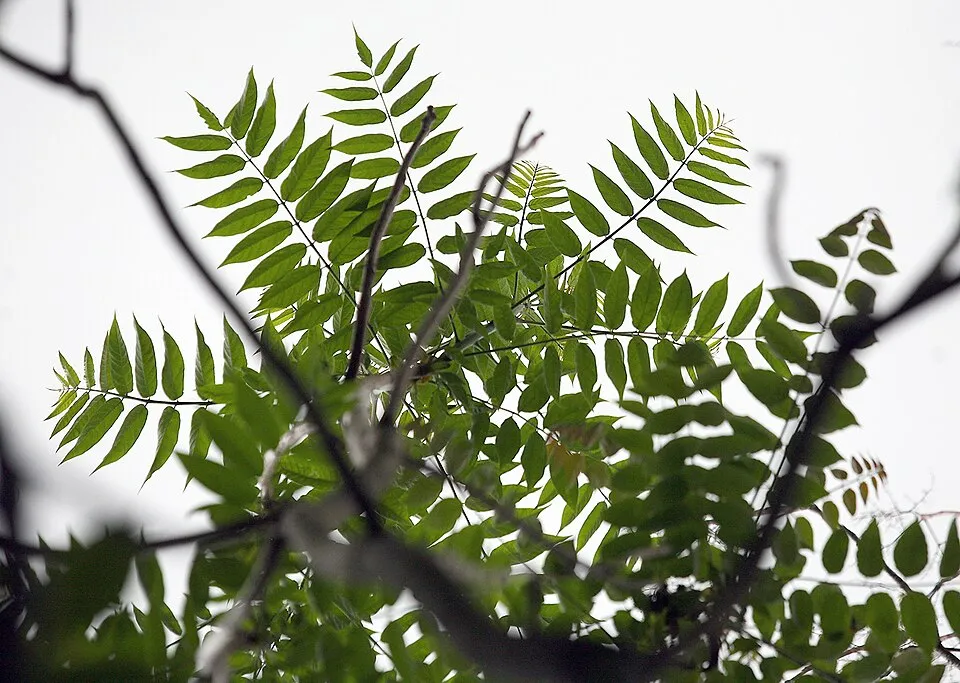
The Tree of Heaven, scientifically known as Ailanthus altissima, is a deciduous tree belonging to the Simaroubaceae family, native to northeastern and central China. It is characterized by its rapid growth, reaching heights of up to 25 meters, and its smooth, pale gray bark that often becomes furrowed with age. Its large, pinnately compound leaves, which can be up to 90 cm long, consist of numerous leaflets, each with one or more glandular teeth at the base.
When crushed, the leaves emit a distinctive, often unpleasant odor, leading to its common moniker, 'stink tree.' Small, greenish-yellow flowers are borne in large panicles in early summer, followed by abundant clusters of papery, winged fruits called samaras, which are typically reddish-brown. Ailanthus altissima is highly adaptable, thriving in a wide range of soil conditions and tolerating urban pollution, making it a pioneer species in disturbed areas. While valued in its native range for various purposes, it has become a highly invasive species in many parts of the world, including North America and Europe, where it outcompetes native vegetation due to its prolific seed production, rapid growth, and allelopathic properties.
Despite its ecological challenges, its long history in traditional Chinese medicine highlights its complex botanical significance.
Trusted Scientific References
1. Authoritative external sources for Ailanthus altissima
1.1 Wikipedia — Ailanthus altissima
1.2 Kew POWO (Plants of the World Online)
1.3 PubMed — peer-reviewed research
1.4 NCBI Taxonomy Browser
1.5 GBIF — Global Biodiversity
1.6Tree of Heaven should be interpreted through verified botanical identity, practical care, and responsible safety language. This recovery note adds the missing context needed for a complete profile: match light to the plant's habit, use well-drained soil, water according to season, and avoid unsupported medicinal or edible claims. For publishing, the plant can be presented as a source-backed medicinal plant with clear care guidance, common problem diagnosis, and conservative safety wording.
1.1.Tree of Heaven — Standout Qualities
- ✓Rapid Growth Rate — Known for exceptionally fast growth, quickly establishing itself in new environments.
- ✓Invasive Species — Highly invasive outside its native range, outcompeting local flora.
- ✓Allelopathic Properties — Produces compounds that inhibit the growth of nearby plants.
- ✓Traditional Medicinal Use — Long history in Traditional Chinese Medicine for various ailments.
- ✓Distinctive Odor — Leaves and flowers emit a strong, often unpleasant 'stink tree' aroma.
- ✓Prolific Seed Production — Produces vast quantities of winged seeds (samaras), aiding its spread.
- ✓Bioactive Compounds — Rich in quassinoids (e.g., ailanthone), flavonoids, and terpenes.
- ✓Adaptability — Thrives in diverse and disturbed habitats, including urban and polluted areas.
- ✓Deciduous Tree — Sheds its leaves annually, characteristic of temperate trees.
- ✓Pinnately Compound Leaves — Large, distinctive leaves composed of multiple leaflets.
1.2.Tree of Heaven — In Brief
- ✓Tree of Heaven (Ailanthus altissima) is a fast-growing, deciduous tree native to China.
- ✓Historically used in TCM for its anti-inflammatory, antioxidant, and antidiarrheal properties.
- ✓Contains potent compounds like ailanthone, flavonoids, and terpenes.
- ✓Known for its invasive nature in non-native ecosystems globally.
- ✓Caution is advised due to potential toxicity, side effects, and drug interactions, especially with blood thinners.
- ✓Lacks sufficient scientific evidence for many traditional uses; professional guidance is essential.
2.Tree of Heaven — Systematic Position
3.Tree of Heaven — Reference Facts
4.Tree of Heaven — Plant Morphology
5.Tree of Heaven — Geographic Distribution
6.Tree of Heaven — Cultural & Traditional Roles
7.Tree of Heaven — Active Compounds
- ✓Alkaloids — Ailanthone is a key quassinoid alkaloid known for its potent cytotoxic and potential anticancer activities, along with antimalarial properties.
- ✓Flavonoids — Compounds like quercetin, kaempferol, and their glycosides are present, contributing significantly to the plant's antioxidant and anti-inflammatory profile.
- ✓Terpenes — β-caryophyllene is a notable terpene identified, recognized for its anti-inflammatory and analgesic effects.
- ✓Phenolic Compounds — A diverse group including various phenolic acids, which collectively contribute to the plant's strong antioxidant capacity.
- ✓Tannins — Predominantly condensed tannins, responsible for the plant's astringent properties, contributing to its traditional use for diarrhea and other mucosal conditions.
- ✓Saponins — Triterpenoid saponins are found, also imparting astringent and potentially expectorant or anti-inflammatory effects.
- ✓Lignans — Present in smaller quantities, lignans are known for their diverse biological activities including antioxidant and anti-inflammatory properties.
- ✓Coumarins — Certain coumarin derivatives may be present, contributing to various pharmacological actions, though their specific roles in Ailanthus altissima are less studied.
- ✓Fatty Acids — The seeds contain various fatty acids, which could contribute to nutritional or emollient properties, though less relevant to its medicinal bark/root uses.
- ✓Steroids — Phytosterols are present, which can have anti-inflammatory and cholesterol-lowering effects.
8.Tree of Heaven — Research Insights
- ✓Immune Support — Contains compounds that may bolster the body's natural defense mechanisms, aiding in general resilience.
- ✓Anti-inflammatory Action — Flavonoids and terpenes like β-caryophyllene present in the plant may help reduce systemic inflammation.
- ✓Antioxidant Properties — Rich in phenolic compounds and flavonoids such as quercetin and kaempferol, which combat oxidative stress by neutralizing free radicals.
- ✓Digestive Health Promotion — Traditionally used to address various gastrointestinal complaints, including certain forms of diarrhea, potentially due to its astringent qualities.
- ✓Antimicrobial Effects — Research suggests that extracts possess properties that may inhibit the growth of certain bacteria and fungi, supporting its use in traditional remedies for infections.
- ✓Anthelmintic Activity — Some constituents are thought to possess properties that could help expel intestinal worms and parasites, a traditional application.
- ✓Antipyretic Potential — Historically employed to reduce fevers, indicating a potential role in modulating body temperature.
- ✓Antispasmodic Relief — Traditional uses point to its efficacy in alleviating muscle cramps and spasms, including those associated with menstrual discomfort.
- ✓Cardiotonic Uses — In some traditional contexts, it has been used to manage symptoms related to rapid heart rate, though scientific validation is limited.
- ✓Malaria Management — Certain quassinoids, such as ailanthone, have shown preliminary in vitro activity against malaria parasites, reflecting some traditional applications.
- ✓Astringent Effects — Tannins and saponins contribute to its drying and tightening effects on tissues, useful in managing conditions like diarrhea or excessive discharge.
- ✓Potential Anticancer Properties — Ailanthone, a prominent quassinoid, has demonstrated cytotoxic activity against various cancer cell lines in laboratory studies, warranting further research.
8.1.Tree of Heaven — Indications & Uses
9.Tree of Heaven — Risk Profile
9.1.Tree of Heaven — Warnings
- ✓Nausea and Queasiness — Oral consumption, especially in higher doses, may induce stomach upset and feelings of nausea.
- ✓Dizziness and Headache — Some individuals may experience dizziness or headaches following the ingestion of Tree of Heaven preparations.
- ✓Diarrhea — Paradoxically, while used for diarrhea, it can also cause or worsen digestive upset in sensitive individuals or at inappropriate dosages.
- ✓Increased Bleeding Risk — Constituents in Ailanthus altissima may slow blood clotting, increasing the risk of bruising and bleeding, particularly when combined with anticoagulant medications.
- ✓Allergic Reactions — Contact with the plant, especially the sap, can cause skin irritation or allergic dermatitis in susceptible individuals.
- ✓Gastrointestinal Discomfort — General abdominal discomfort, including cramping or bloating, has been reported.
- ✓Potential Liver Toxicity — Long-term or high-dose use may pose a risk of hepatotoxicity, though this requires further research.
9.2.Tree of Heaven — Safety Profile
- ✓Insufficient Reliable Information — There is a lack of sufficient scientific evidence to definitively determine the safety of oral Tree of Heaven use.
- ✓Pregnancy and Breastfeeding — Avoid use during pregnancy and breastfeeding due to insufficient safety data and potential abortifacient or toxic effects.
- ✓Anticoagulant Interactions — Use with caution if taking blood-thinning medications (e.g., aspirin, warfarin), as it may increase the risk of bleeding.
- ✓Dosage Criticality — Natural products are not always safe, and appropriate dosing is crucial; consult a healthcare professional for guidance.
- ✓Children and Elderly — Use in vulnerable populations like children and the elderly is not recommended due to heightened sensitivity and lack of safety data.
- ✓Allergic Sensitivity — Individuals with known allergies to plants in the Simaroubaceae family should avoid contact and ingestion.
- ✓Professional Consultation — Always consult a qualified physician or medical herbalist before using Tree of Heaven for medicinal purposes.
10.Tree of Heaven — Application Forms
- ✓Bark Decoction — Dried bark from the trunk or root is boiled in water to create a decoction, traditionally used for internal conditions like diarrhea or fever.
- ✓Root Extracts — Extracts prepared from the root bark, often in alcohol or water, are used for their concentrated phytochemicals, targeting specific ailments.
- ✓Powdered Bark — Dried and pulverized bark can be encapsulated or mixed with liquids for easier ingestion, particularly for its astringent properties.
- ✓Topical Applications — In some traditional practices, poultices or washes made from the bark may be applied externally for skin conditions or minor injuries.
- ✓Infusions — Leaves or young shoots can be infused, though this is less common for internal medicinal use due to higher potential toxicity.
- ✓Traditional Formulations — Often combined with other herbs in complex traditional Chinese medicine (TCM) formulas to balance its effects and enhance therapeutic outcomes.
- ✓Dosage Guidance — Always follow precise traditional or expert-recommended dosages, as improper use can lead to adverse effects; self-dosing is not advised.
11.Tree of Heaven — Growing Guide
- ✓Site Selection — Thrives in full sun to partial shade, showing remarkable adaptability to various light conditions.
- ✓Soil Requirements — Tolerates a wide range of soil types, from poor, rocky soils to rich loams, but prefers well-drained conditions.
- ✓Propagation — Primarily propagates via prolific seed production and extensive root suckers, making it highly invasive in non-native regions.
- ✓Watering — Highly drought-tolerant once established, requiring minimal supplemental watering except in extreme dry periods.
- ✓Climate Tolerance — Exhibits high tolerance to urban pollution, coastal conditions, and a broad range of temperatures, from cold winters to hot summers.
- ✓Management — Due to its invasive nature, cultivation in non-native areas is generally discouraged; removal often requires persistent effort to control root suckers.
- ✓Growth Rate — Known for its exceptionally fast growth rate, quickly establishing itself in disturbed sites and outcompeting native flora.
Reviewed by the Flora Medical Global Botanical Review Panel
Multi-disciplinary editorial group · Botany · Ethnobotany · Herbal-medicine literature
Who reviewed this: This page was checked by the Flora Medical Global Botanical Review Panel — an in-house editorial group of botany graduates, ethnobotany researchers, and horticulture practitioners who collectively maintain our 7,000+ plant encyclopedia. Meet the team.
Our 4-step verification process
1. Taxonomic verification
Scientific names and synonyms cross-checked against Kew POWO, World Flora Online, and The Plant List.
2. Phytochemical & medicinal cross-reference
Active compounds, traditional uses, and reported activities are cross-referenced with PubMed, USDA Dr. Duke's database, and peer-reviewed ethnobotanical literature.
3. Conservation & distribution check
Distribution, ecology, and conservation status confirmed against GBIF occurrence records and the IUCN Red List.
4. Editorial & safety review
Every entry passes an editorial pass for clarity, originality, and safety notices (toxicity, contraindications, dosage caveats) before publication.
Last reviewed:
Important medical disclaimer: This content is for educational and research purposes only. It is not medical advice and is not a substitute for consultation with a licensed healthcare provider. Do not use any herb to self-treat a medical condition without professional guidance.
Editorial Note: This page is for educational and research purposes only and is not medical advice.
Written by: Flora Medical Global Editorial Team
Reviewed by: Flora Medical Global Botanical Review Panel
Last Updated: June 15, 2026





Tree of Heaven — Comments & Community Reviews
Rate this plant