

Medical Disclaimer: This content is for educational purposes only. It is not medical advice. Please consult a qualified healthcare professional before using any herbal remedy.
Safety Overview
1.Trichocereus — At a Glance
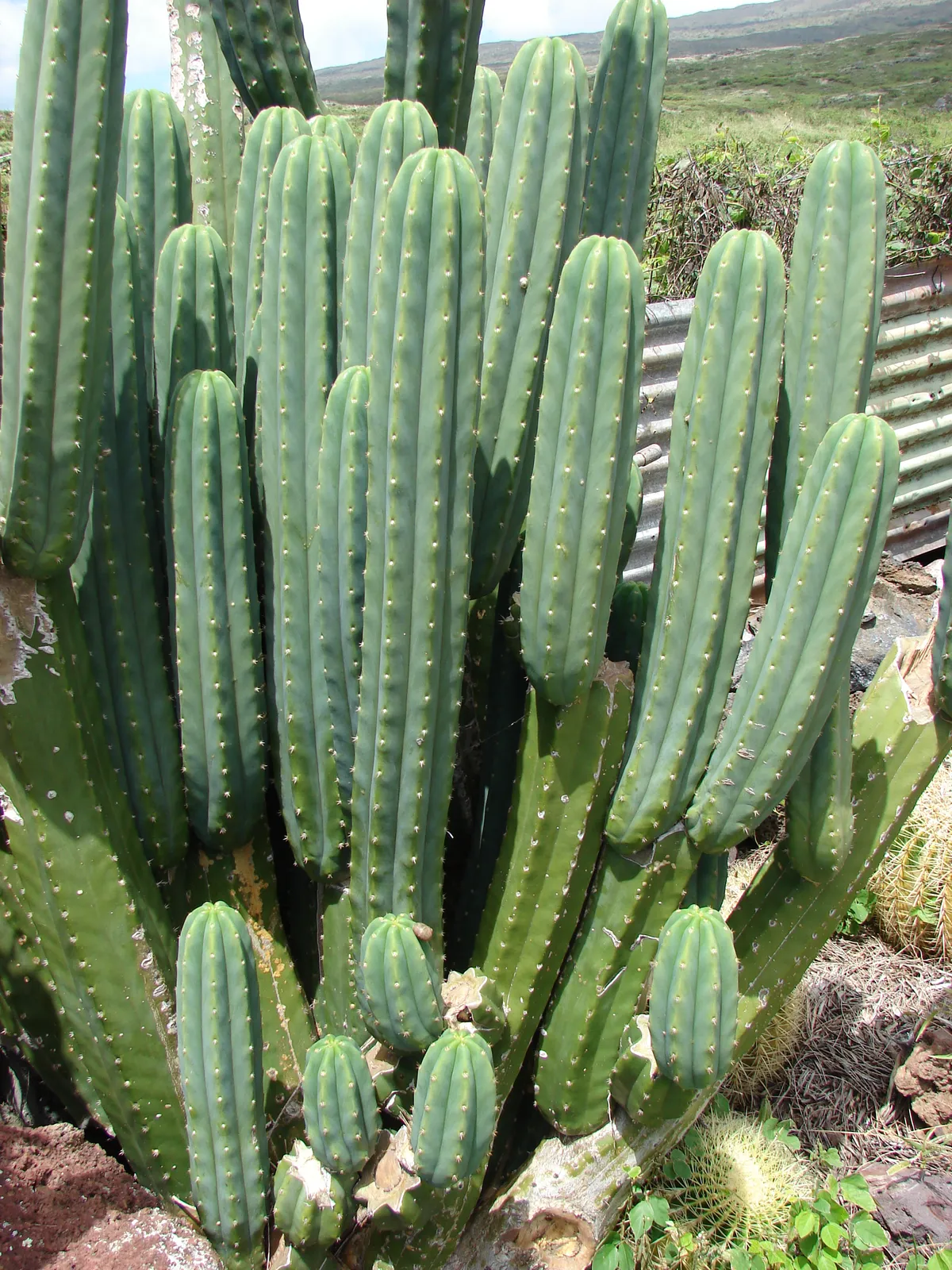
Trichocereus pachanoi, scientifically known as Echinopsis pachanoi and commonly referred to as the San Pedro Cactus, is a majestic, fast-growing columnar cactus belonging to the Cactaceae family. Native to the high-altitude Andes Mountains, its natural distribution spans Peru, Ecuador, Bolivia, and northern Argentina, thriving at elevations typically between 1,500 and 3,000 meters. This resilient species is well-adapted to harsh desert and montane environments, preferring full sun exposure and well-drained, sandy soils. Characteristically, San Pedro can reach impressive heights of 3 to 6 meters (10-20 feet) and diameters of 6 to 15 cm (2-6 inches).
Its stems exhibit a distinctive light green to blue-green hue, often covered with a glaucous, powdery coating that can be rubbed off. The cactus typically features 4 to 8 prominent, rounded ribs, giving it a star-like appearance when viewed from above. Areoles, small tufts of hair from which spines emerge, are spaced at regular intervals along these ribs. While some varieties are spineless, most bear small, inconspicuous spines, usually three to seven per areole, which are much shorter in cultivated specimens than in wild ones.
A defining feature is its nocturnal white flowers, which bloom during the summer months, often reaching up to 23 cm (9 inches) in length, emitting a beautiful aroma that fills the night air. These flowers are followed by edible, reddish fruits. For millennia, Trichocereus pachanoi has been revered by indigenous Andean cultures for its profound psychoactive properties, playing a central role in spiritual and healing ceremonies as an entheogen.
Trusted Scientific References
1. Authoritative external sources for Trichocereus pachanoi
1.1 Wikipedia — Trichocereus pachanoi
1.2 Kew POWO (Plants of the World Online)
1.3 PubMed — peer-reviewed research
1.4 NCBI Taxonomy Browser
1.5 GBIF — Global Biodiversity
1.6Trichocereus should be interpreted through verified botanical identity, practical care, and responsible safety language. This recovery note adds the missing context needed for a complete profile: match light to the plant's habit, use well-drained soil, water according to season, and avoid unsupported medicinal or edible claims. For publishing, the plant can be presented as a source-backed garden plant with clear care guidance, common problem diagnosis, and conservative safety wording.
1.1.Trichocereus — Highlights
- ✓Columnar Growth Habit — Distinctive tall, upright stems that can reach impressive heights.
- ✓Fast Growing — Exhibits rapid growth compared to many other cactus species.
- ✓Nocturnal White Flowers — Produces large, fragrant white flowers that bloom exclusively at night.
- ✓Minimal Spines — Generally features small, inconspicuous spines, with some spineless varieties.
- ✓Andean Native — Indigenous to the high-altitude regions of the Andes Mountains.
- ✓Drought Tolerant — Highly adapted to arid conditions, requiring minimal water.
- ✓High Mescaline Content — Known for its significant concentration of the psychoactive alkaloid mescaline.
- ✓Traditional Shamanic Use — Central to ancient spiritual and healing rituals in indigenous Andean cultures.
- ✓Ornamental Appeal — Valued for its unique architectural form and aesthetic beauty in cultivation.
- ✓Resilient and Hardy — Tolerates a wide range of environmental conditions once established.
1.2.Trichocereus — In Brief
- ✓Ancient Entheogen — Revered by Andean cultures for spiritual healing and divination for millennia.
- ✓Mescaline Content — Contains the primary psychoactive alkaloid mescaline, alongside other phenethylamines.
- ✓Ornamental Plant — Legally cultivated worldwide for its striking appearance and ease of care.
- ✓Resilient Cactus — Thrives in high-altitude, arid environments, demonstrating remarkable adaptability.
- ✓Research Interest — Modern science explores its potential therapeutic applications for mental health conditions.
- ✓Legal Restrictions — Psychoactive use is largely illegal and dangerous, emphasizing its ornamental purpose.
2.Trichocereus — Nomenclature & Classification
3.Trichocereus — Vital Statistics
4.Trichocereus — Botanical Description
5.Trichocereus — Origin & Spread
6.Trichocereus — Folk Medicine Applications
7.Trichocereus — Phytochemistry
- ✓Phenethylamine Alkaloids — Mescaline is the primary psychoactive compound, responsible for entheogenic effects; other phenethylamines include tyramine and hordenine, which can have sympathomimetic actions and act as weak MAO inhibitors.
- ✓Isoquinoline Alkaloids — This group includes anhalonidine, anhalonine, candicine, peliotine, and pellotine, which contribute to the overall pharmacological profile, often with sedative or mild psychoactive properties.
- ✓Flavonoids — These are plant secondary metabolites with known antioxidant, anti-inflammatory, and potentially neuroprotective activities.
- ✓Triterpenes — Compounds like saponins and other triterpenes are present, which may contribute to anti-inflammatory or antimicrobial effects.
- ✓Polysaccharides — Found in the mucilage, these can have immunomodulatory and demulcent properties.
- ✓Organic Acids — Various organic acids are present, playing roles in plant metabolism and potentially contributing to overall plant bioactivity.
- ✓Sterols — Plant sterols are structural components that may offer cholesterol-lowering or anti-inflammatory benefits.
- ✓Vitamins and Minerals — The cactus contains various essential vitamins and minerals, contributing to its overall nutritional profile in traditional contexts.
8.Trichocereus — Pharmacological Findings
- ✓Psychoactive & Entheogenic Properties — Primarily due to mescaline, San Pedro facilitates altered states of consciousness for spiritual introspection and connection.
- ✓Spiritual Healing & Divination — Traditionally used in Andean shamanic rituals for diagnosing illnesses, foresight, and restoring spiritual balance.
- ✓Introspection & Self-Reflection — The altered states can induce deep personal insights, aiding in understanding oneself and life challenges.
- ✓Anxiety Reduction (Potential) — Emerging research on mescaline suggests potential for reducing anxiety, similar to other psychedelic compounds.
- ✓Depression Management (Potential) — Studies are exploring mescaline's capacity to alleviate symptoms of depression by affecting neural pathways.
- ✓PTSD Therapy (Potential) — As with other psychedelics, mescaline is being investigated for its ability to help process trauma and reduce PTSD symptoms.
- ✓Addiction Treatment (Exploratory) — Some anecdotal evidence and preliminary studies suggest a role in breaking addictive patterns through profound experiences.
- ✓Neuroplasticity Enhancement (Hypothetical) — Psychedelics are thought to promote brain plasticity, potentially aiding in learning and behavioral change.
- ✓Emotional Processing — The entheogenic experience can facilitate the release and processing of suppressed emotions, leading to emotional catharsis.
- ✓Enhanced Creativity — Users often report increased creativity and novel thought patterns during and after the experience.
- ✓Anti-inflammatory Properties (Speculative) — Some non-mescaline alkaloids and other compounds in cacti may possess mild anti-inflammatory effects.
8.1.Trichocereus — Therapeutic Indications
9.Trichocereus — Cautions & Contraindications
9.1.Trichocereus — Caution Notes
- ✓Nausea and Vomiting — Common initial physical reactions to ingestion, often preceding the psychoactive effects.
- ✓Elevated Heart Rate and Blood Pressure — Mescaline can cause sympathomimetic effects, leading to cardiovascular stimulation.
- ✓Anxiety or Paranoia — Psychological distress, including fear, anxiety, or paranoid thoughts, can occur, especially in unprepared individuals.
- ✓Disorientation and Confusion — Altered states of consciousness can lead to difficulty with perception, judgment, and spatial orientation.
- ✓Gastrointestinal Discomfort — Stomach cramps, diarrhea, or general abdominal unease may accompany ingestion.
- ✓Pupil Dilation — A common physiological response to mescaline, affecting visual sensitivity.
- ✓Prolonged Hallucinations — The psychoactive effects can last for 8-12 hours or more, which may be challenging for some individuals.
9.2.Trichocereus — Clinical Safety Notes
- ✓Legal Status — Possession, cultivation, and consumption of Trichocereus pachanoi for its psychoactive properties are illegal in many countries due to its mescaline content.
- ✓Not for Ingestion — This plant is strictly for ornamental purposes; ingestion is dangerous, illegal, and can lead to severe adverse reactions.
- ✓Pregnancy and Lactation — Contraindicated for pregnant or breastfeeding individuals due to unknown effects on fetal development or infant health.
- ✓Psychiatric Conditions — Individuals with a history of psychosis, schizophrenia, or other severe mental health disorders should strictly avoid any ingestion.
- ✓Drug Interactions — Potentially dangerous interactions with pharmaceuticals, especially MAOIs, antidepressants, or other psychoactive substances.
- ✓Driving and Operating Machinery — Impairs cognitive function, judgment, and motor skills; never attempt these activities under its influence.
- ✓Keep Away from Children and Pets — The cactus is poisonous if ingested and should be kept out of reach of vulnerable individuals and animals.
10.Trichocereus — Usage Guide
- ✓Traditional Entheogenic Preparation — Historically, the cactus stem was peeled, chopped, and boiled for hours to create a bitter, psychoactive brew for ceremonial ingestion.
- ✓Shamanic Ritual Use — Consumed in controlled, sacred settings under the guidance of a curandero (healer) for spiritual journeys, healing, and divination.
- ✓Ornamental Cultivation — Widely grown legally worldwide as a striking, low-maintenance decorative plant in gardens, homes, and greenhouses.
- ✓Botanical Specimen — Maintained by collectors and botanical institutions for study, preservation, and display of its unique morphology.
- ✓Propagation for Growth — Cuttings are routinely taken and rooted to cultivate new plants, ensuring the species' continuation and distribution.
- ✓Landscaping Feature — Used in xeriscaping or arid garden designs to provide architectural interest and drought resilience.
- ✓Research Material — Specimens are cultivated for scientific analysis of their phytochemical composition and potential therapeutic applications.
- ✓Educational Display — Featured in botanical gardens and educational programs to teach about desert flora and ethnobotanical history.
11.Trichocereus — Garden Cultivation
- ✓Light Requirements — Provide at least 6 hours of bright, direct sun daily; gradually introduce to full sun after winter to prevent sunburn.
- ✓Soil Composition — Requires well-draining soil; a sandy cactus mix or a blend of potting soil, coarse sand, and perlite works best.
- ✓Watering Schedule — Drought-tolerant; water thoroughly only when soil is completely dry, reducing frequency significantly in winter months.
- ✓Temperature Range — Ideal temperatures are 18-27°C (64-81°F); can tolerate brief frosts if kept dry, but protect from prolonged cold.
- ✓Humidity Levels — Prefers moderate humidity levels between 40% to 60%; avoid excessively high humidity to prevent fungal issues.
- ✓Fertilization — Apply a balanced, water-soluble fertilizer every 2-3 weeks during spring and summer; reduce to monthly in fall and winter.
- ✓Propagation — Easily propagated from stem cuttings, which should be allowed to callous before planting, or from seeds.
- ✓Container Choice — Use wide, shallow pots with excellent drainage to accommodate its fast growth and prevent root rot.
Reviewed by the Flora Medical Global Botanical Review Panel
Multi-disciplinary editorial group · Botany · Ethnobotany · Herbal-medicine literature
Who reviewed this: This page was checked by the Flora Medical Global Botanical Review Panel — an in-house editorial group of botany graduates, ethnobotany researchers, and horticulture practitioners who collectively maintain our 7,000+ plant encyclopedia. Meet the team.
Our 4-step verification process
1. Taxonomic verification
Scientific names and synonyms cross-checked against Kew POWO, World Flora Online, and The Plant List.
2. Phytochemical & medicinal cross-reference
Active compounds, traditional uses, and reported activities are cross-referenced with PubMed, USDA Dr. Duke's database, and peer-reviewed ethnobotanical literature.
3. Conservation & distribution check
Distribution, ecology, and conservation status confirmed against GBIF occurrence records and the IUCN Red List.
4. Editorial & safety review
Every entry passes an editorial pass for clarity, originality, and safety notices (toxicity, contraindications, dosage caveats) before publication.
Last reviewed:
Important medical disclaimer: This content is for educational and research purposes only. It is not medical advice and is not a substitute for consultation with a licensed healthcare provider. Do not use any herb to self-treat a medical condition without professional guidance.
Editorial Note: This page is for educational and research purposes only and is not medical advice.
Written by: Flora Medical Global Editorial Team
Reviewed by: Flora Medical Global Botanical Review Panel
Last Updated: June 15, 2026





Trichocereus — Comments & Community Reviews
Rate this plant