
Medical Disclaimer: This content is for educational purposes only. It is not medical advice. Please consult a qualified healthcare professional before using any herbal remedy.
Safety Overview
1.Trimezia Steyermarkii — Botanical Snapshot
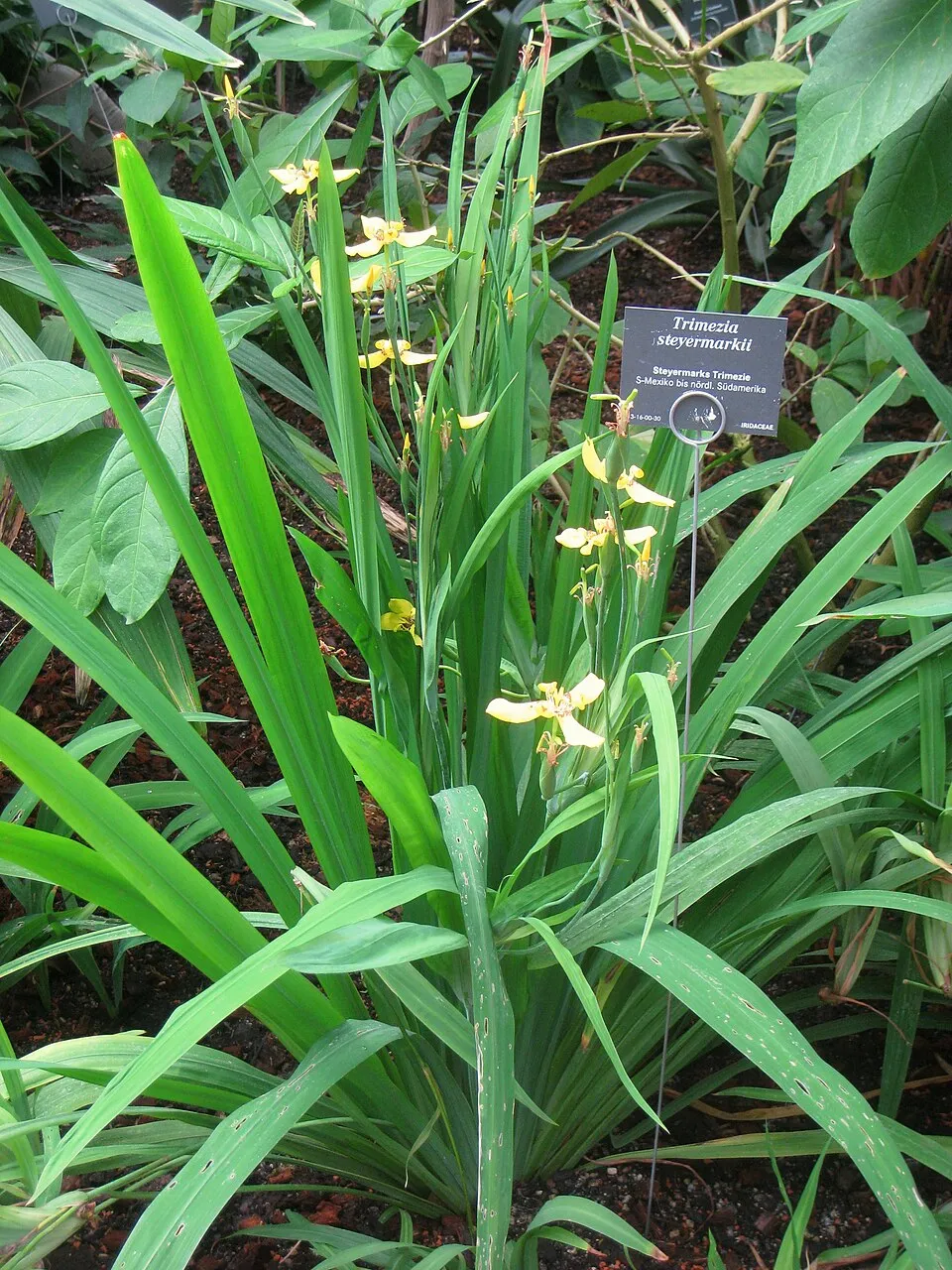
Trimezia Steyermarkii, commonly recognized as Steyermark's Yellow Iris or the Tropical Starflower, is an exquisite perennial herbaceous plant that forms part of the diverse Iridaceae family, though its specific placement highlights unique evolutionary traits. This elegant species is typically found flourishing in the moist, semi-shaded undergrowth of tropical and subtropical regions, predominantly across South and Central America, including its native Venezuela. The plant often develops into dense clumps, reaching a mature height of 45 to 90 centimeters, characterized by its upright, sword-shaped, basal leaves that can extend up to 60 cm in length. The foliage presents a rich, glossy green hue, creating a lush backdrop for its captivating inflorescence.
Trimezia Steyermarkii produces delicate, vibrant yellow to pale orange flowers, each approximately 5-7 cm in diameter, borne on slender, erect scapes. These ephemeral blooms, reminiscent of small irises or orchids, typically unfurl in succession during the morning and gracefully fade by late afternoon, with peak flowering occurring from late spring through early autumn. Its unique 'walking' characteristic refers to its propagation via plantlets that form on the flower stalks, which eventually root when they touch the ground. The plant thrives in well-drained, humus-rich soils and a humid environment, often colonizing forest margins, stream banks, or open clearings.
Its rhizomatous root system facilitates gradual spread and contributes to soil stabilization, playing an ecological role in its natural habitats. Beyond its ornamental appeal, its botanical significance lies in its distinct characteristics within the broader Trimezia genus.
Trusted Scientific References
1. Authoritative external sources for Trimezia Steyermarkii
1.1 Wikipedia — Trimezia Steyermarkii
1.2 Kew POWO (Plants of the World Online)
1.3 PubMed — peer-reviewed research
1.4 NCBI Taxonomy Browser
1.5 GBIF — Global Biodiversity
1.6Trimezia Steyermarkii should be interpreted through verified botanical identity, practical care, and responsible safety language. This recovery note adds the missing context needed for a complete profile: match light to the plant's habit, use well-drained soil, water according to season, and avoid unsupported medicinal or edible claims. For publishing, the plant can be presented as a source-backed garden plant with clear care guidance, common problem diagnosis, and conservative safety wording.
1.1.Trimezia Steyermarkii — Distinguishing Points
- ✓Common Names — Steyermark's Yellow Iris, Yellow Walking Iris, Tropical Starflower.
- ✓Botanical Family — Iridaceae, known for its iris-like flowers.
- ✓Native Range — Tropical and subtropical regions of South and Central America, notably Venezuela.
- ✓Flower Color — Striking vibrant yellow to pale orange, with ephemeral blooms.
- ✓Leaf Morphology — Distinctive sword-shaped, glossy green basal leaves.
- ✓Growth Habit — Forms dense, clump-forming perennials, typically 45-90 cm tall.
- ✓Propagation Method — Unique 'walking' behavior via plantlets that develop on inflorescences.
- ✓Medicinal Potential — Suggested anti-inflammatory, antioxidant, and digestive support properties.
- ✓Key Compounds — Contains beneficial flavonoids, terpenoids, and various polyphenols.
- ✓Ornamental Value — Highly prized for its aesthetic appeal in tropical and subtropical gardens.
1.2.Trimezia Steyermarkii — Concise Overview
- ✓Ornamental perennial with vibrant yellow to pale orange flowers, known as Yellow Walking Iris.
- ✓Native to tropical South and Central America, thriving in humid, semi-shaded environments.
- ✓Potential medicinal properties include anti-inflammatory, antioxidant, and digestive support.
- ✓Rich in diverse phytochemicals such as flavonoids, terpenoids, and polyphenolic compounds.
- ✓Unique 'walking' propagation method through plantlets forming on flower stalks.
- ✓Requires moderate care, preferring warmth, consistent moisture, and well-drained soil.
2.Trimezia Steyermarkii — Scientific Identity
3.Trimezia Steyermarkii — Key Data
4.Trimezia Steyermarkii — Botanical Features
5.Trimezia Steyermarkii — Origin & Spread
6.Trimezia Steyermarkii — Folk Medicine Applications
7.Trimezia Steyermarkii — Phytochemistry
- ✓Flavonoids — Key compounds include quercetin, kaempferol, and their glycosides, which contribute significantly to the plant's antioxidant and anti-inflammatory activities by inhibiting enzymes and neutralizing free radicals.
- ✓Terpenoids — A diverse group encompassing monoterpenes and sesquiterpenes, these compounds are responsible for some of the plant's aromatic qualities and are implicated in anti-inflammatory and potential antimicrobial effects.
- ✓Polyphenols — A broad category including phenolic acids (e.g., caffeic acid, gallic acid) and tannins, which collectively provide robust antioxidant protection and contribute to astringent properties.
- ✓Saponins — These natural glycosides produce a characteristic foam when agitated in water and may possess immune-modulating and expectorant properties, though specific roles require further research.
- ✓Alkaloids — Nitrogen-containing organic compounds that can have diverse pharmacological effects, though specific alkaloids in Trimezia Steyermarkii and their actions are less characterized.
- ✓Glycosides — Various compounds linked to sugar molecules, influencing their solubility, absorption, and bioavailability, thereby affecting their overall biological activity.
- ✓Fatty Acids — Essential fatty acids and other lipid components found in the plant contribute to cell membrane integrity and may offer some anti-inflammatory benefits.
- ✓Volatile Oils — A complex mixture of aromatic compounds that can contribute to the plant's scent and may possess antimicrobial, antispasmodic, or calming effects.
- ✓Phytosterols — Plant sterols such as beta-sitosterol are present, known for their potential to support cardiovascular health and reduce inflammation.
- ✓Carbohydrates — Polysaccharides and mucilage contribute to the plant's structure and may offer demulcent properties, soothing mucous membranes and supporting digestive health.
8.Trimezia Steyermarkii — Evidence-Based Benefits
- ✓Anti-inflammatory Properties — Trimezia Steyermarkii is believed to contain potent flavonoids and terpenoids that may modulate inflammatory pathways, potentially reducing swelling and discomfort associated with conditions like arthritis and muscular pain.
- ✓Antioxidant Activity — Rich in polyphenolic compounds, this plant is thought to scavenge free radicals, thereby protecting cellular structures from oxidative damage and contributing to overall cellular health.
- ✓Digestive Support — Traditional observations of related species suggest potential mild carminative or digestive aid properties, which could help soothe minor gastrointestinal discomfort.
- ✓Antimicrobial Potential — Various phytochemicals present in the plant may exhibit antimicrobial actions, potentially inhibiting the growth of certain bacteria or fungi.
- ✓Skin Health Enhancement — Its antioxidant and anti-inflammatory constituents could support skin health, aiding in the management of minor irritations and promoting a healthy complexion.
- ✓Cardioprotective Effects — Flavonoids and other phenolic compounds are often associated with supporting cardiovascular health by improving circulation and protecting blood vessels.
- ✓Immune System Modulation — Certain plant compounds may interact with the immune system, offering a gentle adaptogenic or supportive effect on immune responses.
- ✓Analgesic Effects — Linked to its anti-inflammatory actions, the plant may offer mild pain-relieving properties, particularly for conditions involving inflammation.
- ✓Diuretic Action — Some members of the Iridaceae family are known for mild diuretic properties, which could assist in fluid balance and kidney function support.
- ✓Wound Healing Support — The combination of antioxidant and anti-inflammatory properties may contribute to faster and more efficient tissue repair in minor cuts and abrasions.
- ✓Mood and Well-being — While not directly studied, the general adaptogenic potential of some plant compounds can contribute to a sense of well-being and stress reduction.
- ✓Edible Bulbs — Historically, the bulbs of Trimezia Steyermarkii have been noted as an edible food source in some South American regions when properly prepared, offering nutritional value.
8.1.Trimezia Steyermarkii — Reported Uses
9.Trimezia Steyermarkii — Safety & Side Effects
9.1.Trimezia Steyermarkii — Warnings
- ✓Allergic Reactions — Sensitive individuals may experience skin irritation, contact dermatitis, or respiratory issues upon direct contact with the plant or its pollen.
- ✓Digestive Upset — Ingestion, especially of raw or improperly prepared parts, may lead to gastrointestinal discomfort, including nausea, vomiting, or diarrhea.
- ✓Toxicity Concerns — The plant's exact toxicity profile is not fully established; improper preparation or excessive dosage could potentially lead to adverse effects due to unknown compounds.
- ✓Drug Interactions — Active phytochemicals might interact with prescription medications, particularly blood thinners, anti-inflammatories, or medications metabolized by the liver.
- ✓Pregnancy and Lactation — Due to insufficient safety data, pregnant and breastfeeding individuals should strictly avoid the use of Trimezia Steyermarkii.
- ✓Children and Infants — There is a lack of safety information regarding its use in children, thus internal administration is not recommended for this age group.
- ✓Photosensitivity — Some plant compounds can increase skin sensitivity to sunlight, potentially leading to phototoxic reactions in susceptible individuals.
9.2.Trimezia Steyermarkii — Safety Profile
- ✓Expert Consultation — Always seek guidance from a qualified medical herbalist or healthcare professional before internal use of Trimezia Steyermarkii, especially for medicinal purposes.
- ✓Patch Test — Before topical application, perform a small skin patch test to check for any allergic reactions or sensitivities.
- ✓Avoid during Pregnancy/Lactation — Due to the absence of comprehensive safety data, use is contraindicated for pregnant and breastfeeding women.
- ✓Children & Infants — Not recommended for internal use in children due to limited safety research and potential unknown effects.
- ✓Pre-existing Conditions — Individuals with chronic health conditions, particularly liver or kidney impairments, should exercise extreme caution and consult a doctor prior to use.
- ✓Proper Identification & Preparation — Ensure correct plant identification to avoid confusion with potentially toxic species, and follow precise preparation guidelines, especially for edible parts.
- ✓Culinary Use Caution — While bulbs are edible when cooked, raw consumption should be strictly avoided due to potential irritants or toxins.
10.Trimezia Steyermarkii — Preparation Methods
- ✓Decoction (Rhizome/Root) — For potential internal benefits, a decoction can be prepared by simmering the cleaned rhizomes in water, traditionally used for anti-inflammatory or digestive support, always with expert guidance.
- ✓Tincture (Aerial Parts) — An alcoholic extract of the leaves and flowers can be made to concentrate the phytochemicals, intended for internal use in small, diluted doses under professional supervision.
- ✓Poultice (Crushed Leaves) — Freshly crushed leaves can be applied topically as a poultice to areas of muscular pain, swelling, or skin irritation for localized relief.
- ✓Infusion (Leaves/Flowers) — A mild infusion of the leaves and flowers can be prepared for external washes to soothe skin conditions or as a gargle, if deemed safe.
- ✓Culinary Use (Cooked Bulbs) — The bulbs are edible in some regions; they must be cooked thoroughly to neutralize any potential irritants or toxins before consumption, never eaten raw.
- ✓Topical Oil Infusion — Dried leaves and flowers can be infused into a carrier oil (e.g., olive, almond) for a soothing topical application to massage aching muscles or moisturize irritated skin.
- ✓Herbal Bath — A strong infusion or decoction can be added to bathwater for a relaxing soak, potentially aiding in skin soothing and overall muscle relaxation.
11.Trimezia Steyermarkii — Cultivation & Care
- ✓Light Requirements — Trimezia Steyermarkii thrives in bright, indirect light to part shade; direct, intense sunlight can scorch its delicate leaves.
- ✓Soil Preferences — Prefers well-drained, humus-rich soils, but is adaptable to various soil types, including low-nutrient and a wide pH range.
- ✓Watering Schedule — Requires moderate watering; allow the soil to dry slightly between watering sessions, though it tolerates waterlogged conditions once established.
- ✓Temperature & Humidity — Best grown in warm temperatures between 60°F and 75°F (15°C and 24°C) with moderate to high humidity levels.
- ✓Propagation Methods — Can be effectively propagated by division of its rhizomatous clumps or by planting the unique off-sets (plantlets) that develop from its spent inflorescences.
- ✓Fertilization & Pruning — Needs regular feeding with a balanced fertilizer during its active growing season (spring to fall), reducing or stopping during dormancy; remove dead or damaged leaves as needed, and cut back foliage to the ground after it dies back in fall.
- ✓Hardiness Zones — Not frost-tolerant, this plant is best suited for outdoor cultivation in USDA hardiness zones 8 through 11.
Reviewed by the Flora Medical Global Botanical Review Panel
Multi-disciplinary editorial group · Botany · Ethnobotany · Herbal-medicine literature
Who reviewed this: This page was checked by the Flora Medical Global Botanical Review Panel — an in-house editorial group of botany graduates, ethnobotany researchers, and horticulture practitioners who collectively maintain our 7,000+ plant encyclopedia. Meet the team.
Our 4-step verification process
1. Taxonomic verification
Scientific names and synonyms cross-checked against Kew POWO, World Flora Online, and The Plant List.
2. Phytochemical & medicinal cross-reference
Active compounds, traditional uses, and reported activities are cross-referenced with PubMed, USDA Dr. Duke's database, and peer-reviewed ethnobotanical literature.
3. Conservation & distribution check
Distribution, ecology, and conservation status confirmed against GBIF occurrence records and the IUCN Red List.
4. Editorial & safety review
Every entry passes an editorial pass for clarity, originality, and safety notices (toxicity, contraindications, dosage caveats) before publication.
Last reviewed:
Important medical disclaimer: This content is for educational and research purposes only. It is not medical advice and is not a substitute for consultation with a licensed healthcare provider. Do not use any herb to self-treat a medical condition without professional guidance.
Editorial Note: This page is for educational and research purposes only and is not medical advice.
Written by: Flora Medical Global Editorial Team
Reviewed by: Flora Medical Global Botanical Review Panel
Last Updated: June 15, 2026





Trimezia Steyermarkii — Comments & Community Reviews
Rate this plant