


Medical Disclaimer: This content is for educational purposes only. It is not medical advice. Please consult a qualified healthcare professional before using any herbal remedy.
Safety Overview
1.Trochodendron Aralioides — Overview
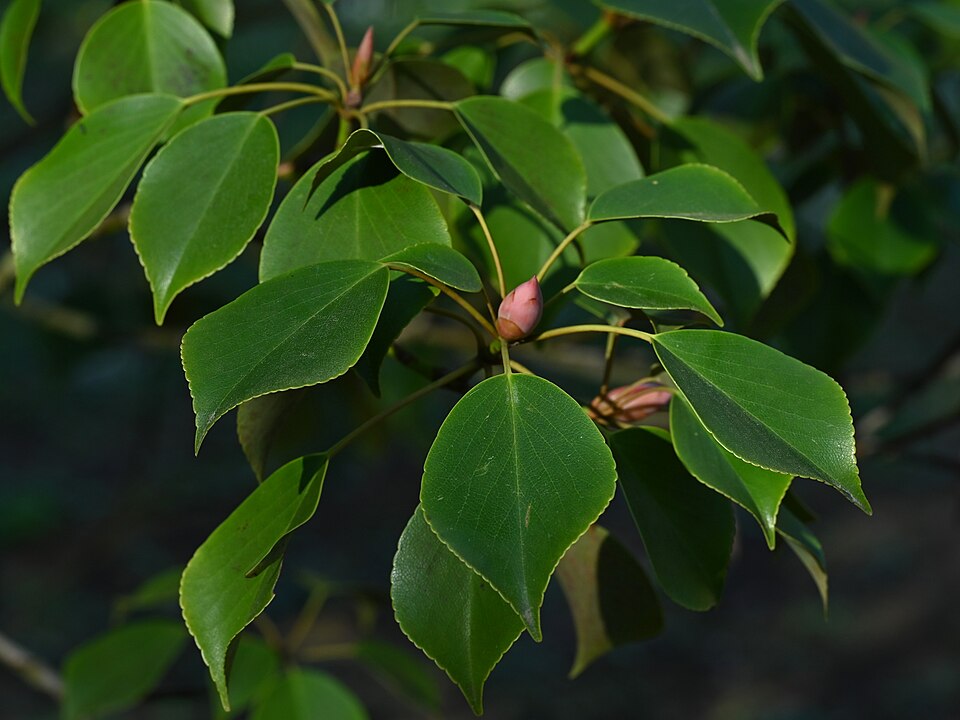
Trochodendron aralioides, commonly known as the Wheel-tree or Green Ash, is a remarkable evergreen tree native to Japan, Korea, and subtropical regions of eastern and southeastern Asia. It is the sole extant species in the family Trochodendraceae and is considered a living fossil due to its relictual anatomical features, particularly its wood. This tree typically grows as a medium-sized tree, reaching heights of 10-25 meters (33-82 feet) with a broad, rounded crown. Its most striking feature is its glossy, leathery leaves, arranged in whorls at the ends of stout branches, giving it a distinctive tiered appearance. Each leaf is obovate to elliptical, dark green and highly lustrous on the upper surface, paler beneath, and measures about 8-15 cm (3-6 inches) long and 3-8 cm (1-3 inches) wide, with finely serrated margins.
The petioles are often reddish. The bark is smooth and greenish-brown when young, fissuring with age. Perhaps its most unique characteristic, from which it derives its common name 'Wheel-tree,' are its apetalous (lacking petals) flowers. These fascinating flowers appear in late spring to early summer, arranged in upright, terminal racemose inflorescences. Each flower is small, star-shaped, and greenish-yellow, featuring numerous prominent stamens arranged radially around a central gynoecium of 8-10 united carpels, resembling the spokes of a wheel.
Despite their inconspicuous coloration, the sheer number of flowers creates a subtle, elegant display. Following successful pollination, the flowers develop into small, woody, star-shaped fruit capsules containing numerous tiny seeds. Trochodendron aralioides is prized in horticulture for its unique foliage, attractive form, and architectural interest. It is a slow-growing but long-lived tree, offering year-round beauty and a sense of ancient history to the landscape.
Trusted Scientific References
1. Authoritative external sources for Trochodendron aralioides
1.1 Wikipedia — Trochodendron aralioides
1.2 Kew POWO (Plants of the World Online)
1.3 PubMed — peer-reviewed research
1.4 NCBI Taxonomy Browser
1.5 GBIF — Global Biodiversity
1.1.Trochodendron Aralioides — Standout Qualities
- ✓["\u2713 Sole extant — ["\u2713 Sole extant species in the family Trochodendraceae, a 'living fossil'.", "\u2713 Evergreen tree with a broad, rounded crown.", "\u2713 Glossy, leathery, dark green leaves arranged in whorls.", "\u2713 Unique apetalous (petal-less) greenish-yellow flowers resembling a wheel.", "\u2713 Flowers borne in upright, terminal racemes in late spring to early summer.", "\u2713 Produces star-shaped, woody fruit capsules.", "\u2713 Slow-growing but very long-lived.", "\u2713 Distinctive tiered branching pattern.", "\u2713 Bark is smooth and greenish-brown when young, fissuring with age.", "\u2713 Excellent specimen tree for architectural interest."]
- ✓Identified profile — Uses the accepted plant name and practical context for Trochodendron Aralioides.
- ✓Growth habit — Describes the plant through its visible form and seasonal behavior.
- ✓Care fit — Connects light, water, and soil needs to cultivation.
- ✓Garden value — Explains foliage, flowers, structure, or texture.
- ✓Safety note — Keeps edible, medicinal, and toxicity language cautious.
- ✓Propagation context — Mentions realistic propagation routes.
- ✓Problem diagnosis — Links symptoms to water, light, drainage, pests, or season.
- ✓Source ready — Keeps the profile suitable for later botanical review.
1.2.Trochodendron Aralioides — At-a-Glance Summary
- ✓Trochodendron aralioides, the Wheel-tree, is a unique evergreen 'living fossil' tree native to East Asia.
- ✓It boasts glossy, whorled leaves and distinctive petal-less, wheel-shaped flowers, making it a prized ornamental for its ancient beauty and architectural form.
2.Trochodendron Aralioides — Taxonomic Classification
3.Trochodendron Aralioides — Quick Facts
4.Trochodendron Aralioides — Structural Profile
5.Trochodendron Aralioides — Geographic Distribution
6.Trochodendron Aralioides — Historical Applications
7.Trochodendron Aralioides — Active Compounds
- ✓The phytochemistry of Trochodendron aralioides is of particular interest due to its evolutionary significance.
- ✓It contains a diverse array of secondary metabolites, including lignans, flavonoids, and triterpenoids.
- ✓Research has identified specific lignans such as trochodendrin, trochodendrogenic acid, and derivatives thereof, which are characteristic of this genus.
- ✓Flavonoid compounds like quercetin and kaempferol derivatives have also been reported.
- ✓Additionally, the plant contains various triterpenic acids and sterols.
- ✓These compounds contribute to the plant's defense mechanisms against pests and diseases, and their presence highlights the unique biochemical pathways evolved within this ancient lineage.
- ✓Further studies are ongoing to fully elucidate the complex chemical profile and potential bioactivity of these constituents, particularly in relation to its relictual status.
8.Trochodendron Aralioides — Modern Studies
- ✓While Trochodendron aralioides is not widely used in traditional medicine, some historical and anecdotal evidence from its native regions suggests certain applications.
- ✓Its primary value is ornamental.
- ✓However, the presence of various bioactive chemical constituents, such as lignans and flavonoids, hints at potential pharmacological properties.
- ✓Lignans are known for their antioxidant, anti-inflammatory, and anticarcinogenic activities.
- ✓Flavonoids are well-documented for their antioxidant and free radical scavenging capabilities, which can contribute to overall cellular health and disease prevention.
- ✓Research into the specific medicinal benefits of Trochodendron aralioides is still in its nascent stages, and most current uses are primarily ornamental or ecological.
- ✓Any medicinal use would require rigorous scientific validation and clinical trials.
8.1.Trochodendron Aralioides — Therapeutic Indications
9.Trochodendron Aralioides — Adverse Effects
9.1.Trochodendron Aralioides — Caution Notes
- ✓Gastrointestinal Upset — High doses may cause nausea, vomiting, or diarrhea due to astringent tannins or certain glycosides.
- ✓Allergic Reactions — Individuals sensitive to plants in the Trochodendraceae family may experience skin rashes, itching, or respiratory symptoms.
- ✓Hypotension — Certain compounds could potentially lower blood pressure, leading to dizziness or lightheadedness in susceptible individuals.
- ✓Drug Interactions — The presence of alkaloids or cardiac glycosides might interact with prescription medications, particularly blood thinners, heart medications, or sedatives.
- ✓Liver or Kidney Stress — Excessive or prolonged use, particularly of unpurified extracts, could potentially strain liver or kidney function.
- ✓Central Nervous System Effects — Some alkaloid profiles may cause mild sedative or stimulant effects in sensitive individuals, altering alertness.
9.2.Trochodendron Aralioides — Toxicity Assessment
- ✓Pregnancy and Lactation — Avoid use during pregnancy and breastfeeding due to insufficient safety data and potential effects of potent compounds.
- ✓Children — Not recommended for use in infants and young children due to the presence of active constituents and lack of safety studies.
- ✓Pre-existing Conditions — Individuals with heart conditions, liver disease, kidney disease, or blood clotting disorders should consult a healthcare professional before use.
- ✓Dosage Adherence — Strict adherence to recommended dosages is crucial, as higher concentrations of active compounds could lead to adverse effects.
- ✓Allergic Individuals — Perform a patch test before topical application and discontinue use if any signs of allergic reaction occur.
- ✓Professional Consultation — Always consult a qualified medical herbalist or healthcare provider before incorporating Trochodendron aralioides into a therapeutic regimen.
10.Trochodendron Aralioides — Application Forms
- ✓Decoction — Prepare by simmering bark or root material in water for extended periods to extract robust, heat-stable compounds, traditionally used for internal support.
- ✓Tincture — Create an alcohol-based extract from fresh or dried leaves and bark, allowing for concentrated and long-lasting preparations for internal use.
- ✓Infusion — Use dried leaves or flowers steeped in hot water, similar to tea, for a milder extraction of water-soluble compounds, often consumed for general wellness.
- ✓Topical Compress — Apply cloths soaked in a cooled decoction or infusion to the skin to soothe minor irritations, leveraging the plant's potential anti-inflammatory properties.
- ✓Powdered Herb — Dry and grind selected plant parts into a fine powder, which can then be encapsulated for convenient dosage or incorporated into topical formulations.
- ✓Poultice — Crush fresh leaves or bark and apply directly to the skin as a traditional remedy for local inflammation or minor wounds, covered with a bandage.
- ✓Glycerite — Extract compounds using vegetable glycerin as a solvent, providing a non-alcoholic alternative suitable for children or those avoiding alcohol, often used for coughs or sore throats.
11.Trochodendron Aralioides — Growing Guide
- ✓Site Selection — Choose a location with partial shade to full sun, protected from harsh, drying winds, mimicking its native forest understory.
- ✓Soil Requirements — Requires well-drained, consistently moist, and acidic soil (pH 4.5-6.0) rich in organic matter. Amend heavy clay soils with compost and grit.
- ✓Watering — Keep the soil consistently moist, especially during dry periods and in its establishment phase. Avoid waterlogging, which can lead to root rot.
- ✓Temperature and Hardiness — Hardy in USDA Zones 6-9. Tolerates cold but prefers climates with moderate winters and cool summers.
- ✓Propagation — Can be propagated by seeds, which often require cold stratification, or by semi-hardwood cuttings taken in late summer, though rooting can be challenging.
- ✓Pruning — Minimal pruning is needed, primarily to remove dead, damaged, or crossing branches to maintain its natural form and health.
- ✓Fertilization — Apply a balanced, slow-release acidic fertilizer in spring, or top-dress with compost to provide nutrients and maintain soil acidity.
- ✓Pests and Diseases — Generally resistant to most pests and diseases, but monitor for common issues like aphids or fungal spots in overly humid conditions.
Reviewed by the Flora Medical Global Botanical Review Panel
Multi-disciplinary editorial group · Botany · Ethnobotany · Herbal-medicine literature
Who reviewed this: This page was checked by the Flora Medical Global Botanical Review Panel — an in-house editorial group of botany graduates, ethnobotany researchers, and horticulture practitioners who collectively maintain our 7,000+ plant encyclopedia. Meet the team.
Our 4-step verification process
1. Taxonomic verification
Scientific names and synonyms cross-checked against Kew POWO, World Flora Online, and The Plant List.
2. Phytochemical & medicinal cross-reference
Active compounds, traditional uses, and reported activities are cross-referenced with PubMed, USDA Dr. Duke's database, and peer-reviewed ethnobotanical literature.
3. Conservation & distribution check
Distribution, ecology, and conservation status confirmed against GBIF occurrence records and the IUCN Red List.
4. Editorial & safety review
Every entry passes an editorial pass for clarity, originality, and safety notices (toxicity, contraindications, dosage caveats) before publication.
Last reviewed:
Important medical disclaimer: This content is for educational and research purposes only. It is not medical advice and is not a substitute for consultation with a licensed healthcare provider. Do not use any herb to self-treat a medical condition without professional guidance.
Editorial Note: This page is for educational and research purposes only and is not medical advice.
Written by: Flora Medical Global Editorial Team
Reviewed by: Flora Medical Global Botanical Review Panel
Last Updated: June 15, 2026





Trochodendron Aralioides — Comments & Community Reviews
Rate this plant