
Medical Disclaimer: This content is for educational purposes only. It is not medical advice. Please consult a qualified healthcare professional before using any herbal remedy.
Safety Overview
1.Turmeric Root — Essential Profile
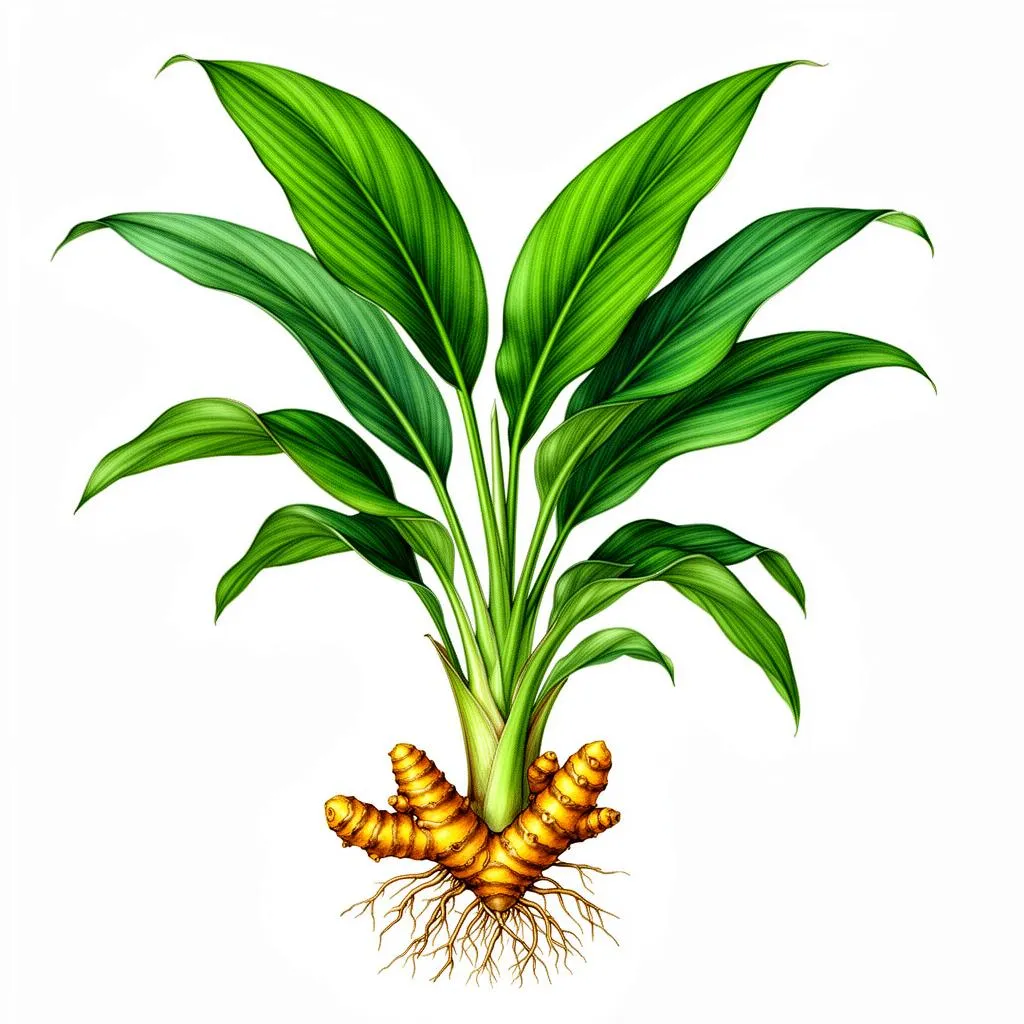
Turmeric Root, scientifically known as Curcuma aromatica, is a distinctive herbaceous perennial belonging to the ginger family, Zingiberaceae. Often referred to as Wild Turmeric or Aromatic Turmeric, this plant is native to tropical South Asia, thriving particularly in regions of India and Southeast Asia. Morphologically, Curcuma aromatica develops robust, tuberous rhizomes that are yellowish-brown externally and possess a dull orange interior, distinct from the deeper orange of Curcuma longa.
The plant typically grows to about one meter in height, featuring large, oblong leaves that are often paler green than other Curcuma species. Its inflorescence is a striking spike of pale yellow flowers with pinkish bracts, emerging directly from the rhizome. It prefers warm temperatures between 20°C and 30°C and requires a substantial amount of annual rainfall, ideally in well-drained, fertile soil with partial shade.
While sharing the 'turmeric' name, Curcuma aromatica distinguishes itself through its unique aromatic profile and a chemical composition that leans more towards volatile oils rather than the high curcumin content found in culinary turmeric.
Trusted Scientific References
1. Authoritative external sources for Curcuma aromatica
1.1 Wikipedia — Curcuma aromatica
1.2 Kew POWO (Plants of the World Online)
1.3 PubMed — peer-reviewed research
1.4 NCBI Taxonomy Browser
1.5 GBIF — Global Biodiversity
1.6Turmeric Root should be interpreted through verified botanical identity, practical care, and responsible safety language. This recovery note adds the missing context needed for a complete profile: match light to the plant's habit, use well-drained soil, water according to season, and avoid unsupported medicinal or edible claims. For publishing, the plant can be presented as a source-backed medicinal plant with clear care guidance, common problem diagnosis, and conservative safety wording.
1.7Turmeric Root (Curcuma aromatica) is maintained in this recovery file as a complete medicinal profile with practical care, safety, and identification context. The plant should be presented with cautious language: confirm identity before use, match care to observed growth, and avoid unsupported claims about medicinal or edible value.
1.1.Turmeric Root — Notable Characteristics
- ✓Scientific Name — Curcuma aromatica, also known as Wild Turmeric.
- ✓Family — Zingiberaceae, the ginger family.
- ✓Primary Use — Renowned for dermatological and anti-inflammatory benefits.
- ✓Chemical Profile — High in volatile oils; lower in curcuminoids compared to C. longa.
- ✓Traditional Medicine — Integral to Ayurvedic and folk remedies, especially for skin care.
- ✓Habitat — Native to tropical South Asia, requiring warm, humid conditions.
- ✓Propagation — Primarily through rhizome division.
- ✓Rhizome Appearance — Yellowish-brown exterior with a dull orange interior.
- ✓Aromatic Quality — Possesses a distinct, pleasant camphoraceous aroma.
- ✓Antioxidant Power — Provides protection against cellular damage from free radicals.
1.2.Turmeric Root — Snapshot Summary
- ✓Wild Turmeric (Curcuma aromatica) is distinct from culinary turmeric (C. longa).
- ✓Renowned for its potent skin-benefiting, anti-inflammatory, and antimicrobial properties.
- ✓Rich in volatile oils like ar-turmerone and lower levels of curcuminoids.
- ✓Primarily used topically in traditional medicine for complexion and wound healing.
- ✓Requires tropical climate, well-drained soil, and rhizome propagation.
- ✓Caution advised for pregnancy, gallstones, and interactions with blood-thinning medications.
2.Turmeric Root — Nomenclature & Classification
3.Turmeric Root — Key Data
4.Turmeric Root — Botanical Features
5.Turmeric Root — Ecological Habitat
6.Turmeric Root — Heritage Uses
7.Turmeric Root — Phytochemistry
- ✓Volatile Oils — Predominantly feature ar-turmerone, xanthorrhizol, camphor, camphene, borneol, cineol, p-cymene, and limonene, contributing to its distinct aroma and antimicrobial activity.
- ✓Curcuminoids — While present in lower concentrations than Curcuma longa, Curcuma aromatica contains curcumin, demethoxycurcumin, and bisdemethoxycurcumin, which provide antioxidant and anti-inflammatory benefits.
- ✓Flavonoids — A diverse group of plant pigments that act as powerful antioxidants, supporting cellular health and modulating immune responses.
- ✓Terpenoids — Including sesquiterpenes and monoterpenes, these compounds contribute to the plant's aromatic profile and exhibit various pharmacological activities, such as anti-inflammatory and antimicrobial effects.
- ✓Saponins — Natural detergents that can have expectorant, anti-inflammatory, and cholesterol-lowering properties.
- ✓Tannins — Astringent compounds known for their antimicrobial, antioxidant, and wound-healing capabilities, often used topically.
- ✓Phenolic Compounds — A broad class of bioactive compounds, including phenolic acids, which contribute significantly to the plant's overall antioxidant capacity.
- ✓Alkaloids — Nitrogen-containing organic compounds that can exert diverse pharmacological effects, though typically in minor amounts in Curcuma species.
- ✓Resins — Contribute to the plant's protective mechanisms and can have mild antiseptic and anti-inflammatory properties.
8.Turmeric Root — Pharmacological Findings
- ✓Anti-inflammatory Support — Curcuma aromatica possesses compounds that help modulate inflammatory pathways, offering relief from minor aches and discomfort, particularly beneficial for skin conditions.
- ✓Antioxidant Protection — Rich in phenolic compounds and volatile oils, it helps combat oxidative stress by neutralizing free radicals, thus protecting cellular integrity.
- ✓Antimicrobial Action — Extracts demonstrate inhibitory effects against various bacteria and fungi, making it useful in preventing and treating minor skin infections.
- ✓Skin Health Enhancement — Traditionally used for brightening complexion, reducing blemishes, and promoting a healthy glow due to its antiseptic and anti-inflammatory properties.
- ✓Wound Healing Acceleration — Applied topically, it aids in faster recovery of minor cuts, scrapes, and bruises by reducing inflammation and preventing infection.
- ✓Digestive Aid — In traditional systems, it is sometimes used to soothe mild digestive discomfort and support gut health, though less commonly than Curcuma longa.
- ✓Antiseptic Properties — Its natural compounds provide a protective barrier against pathogens, making it a valuable ingredient in natural antiseptic preparations.
- ✓Respiratory Comfort — Employed in some folk remedies for alleviating symptoms of colds and coughs, potentially due to its warming and expectorant qualities.
- ✓Pain Management — Offers mild analgesic effects, primarily when applied topically for localized pain and swelling.
- ✓Immune System Modulation — Contributes to general wellness by supporting a balanced immune response, helping the body defend against common ailments.
8.1.Turmeric Root — Therapeutic Indications
9.Turmeric Root — Safety Considerations
9.1.Turmeric Root — Side Effects & Warnings
- ✓Skin Irritation — Topical application may cause mild irritation or allergic reactions in sensitive individuals, especially if used in high concentrations.
- ✓Photosensitivity — Some individuals may experience increased skin sensitivity to sunlight after topical application.
- ✓Digestive Upset — High internal doses can occasionally lead to mild stomach upset, nausea, or diarrhea.
- ✓Allergic Reactions — Rare cases of systemic allergic reactions, including rash or difficulty breathing, have been reported.
- ✓Blood Thinning — While less pronounced than Curcuma longa, high internal doses might theoretically interact with blood-thinning medications.
- ✓Uterine Contractions — Very high doses are traditionally believed to stimulate uterine contractions, hence caution during pregnancy.
9.2.Turmeric Root — Clinical Safety Notes
- ✓Pregnancy and Lactation — Should be used with caution or avoided during pregnancy and breastfeeding, particularly in medicinal quantities, due to potential emmenagogue effects.
- ✓Drug Interactions — May interact with anticoagulant medications, antiplatelet drugs, and possibly certain diabetes medications, potentially increasing their effects.
- ✓Gallstones and Bile Duct Obstruction — Individuals with gallstones or bile duct obstructions should consult a healthcare professional before internal use, as it can stimulate bile production.
- ✓Surgery — Discontinue use at least two weeks prior to any scheduled surgery due to potential effects on blood clotting.
- ✓Topical Sensitivity — Always perform a patch test before extensive topical application to check for skin sensitivity or allergic reactions.
- ✓Children and Infants — Internal use in young children and infants is generally not recommended without medical supervision.
- ✓Dosage — Adhere to recommended dosages; excessive intake may lead to adverse effects.
10.Turmeric Root — Usage Guide
- ✓Topical Paste — Fresh or dried rhizome powder is mixed with water, milk, or rosewater to create a paste for skin application, targeting blemishes, inflammation, and enhancing complexion.
- ✓Decoction — Sliced or crushed rhizome is boiled in water to extract beneficial compounds, used as a traditional tonic or for internal complaints like digestive issues.
- ✓Poultice — Crushed fresh rhizome or powder mixed with a carrier (e.g., oil) is applied directly to wounds, bruises, or inflamed joints for antiseptic and anti-inflammatory effects.
- ✓Infused Oil — Rhizome pieces are steeped in a carrier oil (like coconut or sesame oil) over low heat, creating an oil for massages or skin care.
- ✓Powdered Supplement — Dried and ground rhizome can be encapsulated or mixed into beverages for internal consumption, though specific dosages require expert guidance.
- ✓Herbal Tea — Dried pieces can be steeped in hot water to make an aromatic tea, often combined with other herbs for taste and synergistic effects.
- ✓Cosmetic Ingredient — Incorporated into traditional face masks, scrubs, and soaps for its skin-benefiting properties, often labeled as 'Kasturi Manjal'.
11.Turmeric Root — How to Grow
- ✓Climate Requirement — Thrives in tropical and subtropical climates with temperatures between 20°C and 30°C.
- ✓Soil Preference — Requires well-drained, fertile loamy soil rich in organic matter, with a pH range of 4.5 to 7.5.
- ✓Light Conditions — Prefers partial shade, especially during the hottest parts of the day, though it can tolerate full sun in cooler tropical regions.
- ✓Propagation Method — Primarily propagated through rhizome cuttings; small pieces of mature rhizome with at least one bud are planted.
- ✓Watering Needs — Requires consistent moisture, especially during the growing season, but avoid waterlogging to prevent rhizome rot.
- ✓Harvesting — Rhizomes are typically harvested 7-9 months after planting when the leaves start to yellow and dry.
- ✓Fertilization — Benefits from organic fertilizers like compost or well-rotted manure applied at planting and during active growth.
- ✓Pest and Disease Management — Generally robust, but can be susceptible to rhizome rot in poorly drained soils and occasional leaf spot diseases.
Reviewed by the Flora Medical Global Botanical Review Panel
Multi-disciplinary editorial group · Botany · Ethnobotany · Herbal-medicine literature
Who reviewed this: This page was checked by the Flora Medical Global Botanical Review Panel — an in-house editorial group of botany graduates, ethnobotany researchers, and horticulture practitioners who collectively maintain our 7,000+ plant encyclopedia. Meet the team.
Our 4-step verification process
1. Taxonomic verification
Scientific names and synonyms cross-checked against Kew POWO, World Flora Online, and The Plant List.
2. Phytochemical & medicinal cross-reference
Active compounds, traditional uses, and reported activities are cross-referenced with PubMed, USDA Dr. Duke's database, and peer-reviewed ethnobotanical literature.
3. Conservation & distribution check
Distribution, ecology, and conservation status confirmed against GBIF occurrence records and the IUCN Red List.
4. Editorial & safety review
Every entry passes an editorial pass for clarity, originality, and safety notices (toxicity, contraindications, dosage caveats) before publication.
Last reviewed:
Important medical disclaimer: This content is for educational and research purposes only. It is not medical advice and is not a substitute for consultation with a licensed healthcare provider. Do not use any herb to self-treat a medical condition without professional guidance.
Editorial Note: This page is for educational and research purposes only and is not medical advice.
Written by: Flora Medical Global Editorial Team
Reviewed by: Flora Medical Global Botanical Review Panel
Last Updated: June 15, 2026





Turmeric Root — Comments & Community Reviews
Rate this plant