


Medical Disclaimer: This content is for educational purposes only. It is not medical advice. Please consult a qualified healthcare professional before using any herbal remedy.
Safety Overview
1.Typhonium — Introduction & Highlights
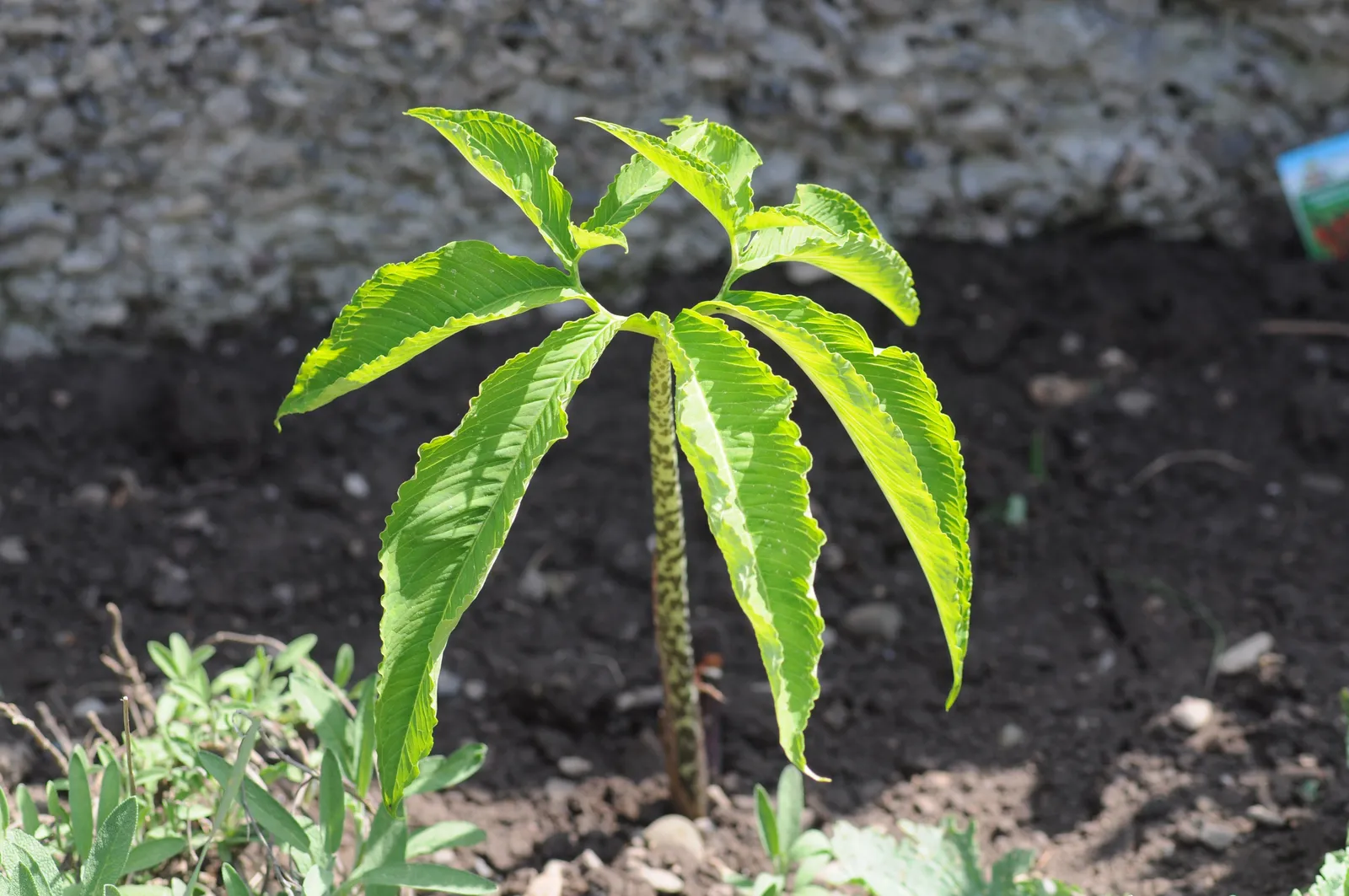
Typhonium venosum, widely recognized as the Voodoo Lily, Aroid Lily, or sometimes the Snakemilk plant, is a captivating and distinctive perennial herb within the Araceae family. This unique species is indigenous to tropical and subtropical regions of Asia, with a notable presence across India and Southeast Asia. It originates from a subterranean tuber, which acts as a vital energy reservoir, enabling the plant to endure unfavorable conditions through dormancy. Upon the return of optimal growing conditions, the tuber produces a single, dramatically large inflorescence.
This structure consists of a striking spathe—a modified leaf-like bract—that unfurls to reveal a dark, club-shaped spadix. The spathe's coloration varies from greenish-brown to deep purple or black, often adorned with intricate patterns that eerily mimic decaying flesh. This macabre appearance, combined with the plant's strong, unpleasant odor reminiscent of rotting meat or feces, serves a crucial ecological purpose: to attract carrion-feeding insects for pollination during its brief flowering period. Following the inflorescence, a solitary, deeply lobed or palmate leaf emerges, which can grow quite large, adding a tropical aesthetic.
The petiole, or leaf stalk, frequently displays a mottled pattern, enhancing its striking appeal. As a deciduous plant, Typhonium venosum retreats back into its tuber during colder months, awaiting the next growth cycle. Taxonomically, it belongs to the Plantae kingdom, Angiosperms clade, Monocots, Order Alismatales, Family Araceae, Genus Typhonium, and Species Typhonium venosum, underscoring its place within one of the most morphologically diverse plant families.
Trusted Scientific References
1. Authoritative external sources for Typhonium venosum
1.1 Wikipedia — Typhonium venosum
1.2 Kew POWO (Plants of the World Online)
1.3 PubMed — peer-reviewed research
1.4 NCBI Taxonomy Browser
1.5 GBIF — Global Biodiversity
1.6Typhonium should be interpreted through verified botanical identity, practical care, and responsible safety language. This recovery note adds the missing context needed for a complete profile: match light to the plant's habit, use well-drained soil, water according to season, and avoid unsupported medicinal or edible claims. For publishing, the plant can be presented as a source-backed garden plant with clear care guidance, common problem diagnosis, and conservative safety wording.
1.1.Typhonium — Standout Qualities
- ✓Common Name — Known as Voodoo Lily, Aroid Lily, or Snakemilk plant.
- ✓Botanical Family — Member of the Araceae family, characterized by spathe and spadix inflorescences.
- ✓Growth Habit — Deciduous, tuberous perennial herb.
- ✓Inflorescence — Features a large, often mottled or striped spathe enclosing a dark, club-shaped spadix.
- ✓Distinctive Odor — Emits a strong, carrion-like smell during flowering to attract pollinators.
- ✓Leaf Morphology — Produces a single, large, deeply lobed or palmate leaf after flowering.
- ✓Native Range — Indigenous to tropical and subtropical regions of Asia, including India and Southeast Asia.
- ✓Traditional Uses — Utilized in Ayurvedic and Traditional Chinese Medicine for various ailments.
- ✓Toxicity — Contains calcium oxalate raphides, making it toxic if ingested raw or improperly handled.
- ✓Ornamental Value — Cultivated for its unique and dramatic appearance in tropical gardens.
1.2.Typhonium — At-a-Glance Summary
- ✓Typhonium venosum is a tuberous perennial known for its dramatic, foul-smelling inflorescence.
- ✓Traditionally used in Ayurveda and TCM for anti-inflammatory, digestive, and skin-soothing properties.
- ✓Contains toxic calcium oxalate crystals, requiring extreme caution and proper processing.
- ✓Native to tropical Asia, prized for its unique ornamental and medicinal potential.
- ✓Cultivation requires warm, humid conditions and careful management during dormancy.
- ✓Always prioritize safety and consult experts before any medicinal application.
2.Typhonium — Systematic Position
3.Typhonium — Botanical Stats
4.Typhonium — Plant Morphology
5.Typhonium — Geographic Distribution
6.Typhonium — Historical Applications
7.Typhonium — Secondary Metabolites
- ✓Flavonoids — Compounds like quercetin, kaempferol, and their glycosides are present, contributing to antioxidant, anti-inflammatory, and potentially antimicrobial activities.
- ✓Phenolic Acids — Includes caffeic acid, gallic acid, and ferulic acid, which are powerful antioxidants and contribute to the plant's protective effects against oxidative stress.
- ✓Alkaloids — Various nitrogen-containing compounds may be present, which often exhibit diverse pharmacological activities, although specific alkaloids for Typhonium venosum require further isolation and characterization.
- ✓Saponins — These glycosides can have detergent-like properties, contributing to expectorant effects and potentially influencing membrane permeability.
- ✓Glycosides — A broad category including cardiac glycosides or other sugar-bound compounds that can have specific biological actions, though their precise role in Typhonium venosum is still under investigation.
- ✓Terpenoids — Volatile organic compounds that contribute to the plant's unique aroma and may possess anti-inflammatory or antimicrobial properties.
- ✓Calcium Oxalate Raphides — Needle-shaped crystals of calcium oxalate are abundant in the tissues, serving as a primary defense mechanism against herbivory and causing severe irritation upon contact or ingestion.
- ✓Steroids — Plant sterols and triterpenoids can be found, which may contribute to anti-inflammatory or hormone-modulating effects.
- ✓Volatile Organic Compounds — Responsible for the characteristic foul odor of the inflorescence, these compounds are crucial for attracting carrion-feeding insect pollinators.
- ✓Polysaccharides — Complex carbohydrates that can have immunomodulatory or prebiotic effects, supporting gut health.
- ✓Amino Acids — Essential building blocks of proteins, present throughout the plant, vital for metabolic processes.
- ✓Proteins — Including lectins or enzymes, which can play roles in defense or signaling pathways within the plant and may have biological activity if ingested.
8.Typhonium — What Research Suggests
- ✓Anti-inflammatory Properties — Traditionally, extracts of Typhonium venosum are utilized to mitigate inflammation, particularly in Ayurvedic practices for supporting joint health and reducing localized swelling, likely attributable to the presence of potent phenolic compounds and flavonoids.
- ✓Digestive Health Support — In Traditional Chinese Medicine (TCM), the rhizomes are believed to possess detoxifying qualities that can improve digestive function and alleviate symptoms of stomach ailments, potentially by soothing the gastrointestinal tract and aiding in toxin elimination.
- ✓Topical Skin Soother — The sap from Typhonium venosum has been historically applied externally to treat various skin irritations, minor wounds, and insect bites, suggesting antiseptic and anti-pruritic actions to calm discomfort.
- ✓Antimicrobial Activity — Preliminary research on various Araceae species indicates potential antimicrobial properties, which could contribute to the traditional use of Typhonium venosum in treating infections or preventing microbial growth on wounds.
- ✓Analgesic Effects — Due to its traditional application in reducing pain associated with inflammation, Typhonium venosum may possess compounds that exert mild analgesic effects, complementing its anti-inflammatory actions.
- ✓Antioxidant Capacity — The rich profile of phenolic compounds and flavonoids within the plant suggests significant antioxidant activity, helping to neutralize free radicals and protect cellular integrity.
- ✓Immunomodulatory Potential — Some traditional uses hint at the plant's ability to influence immune responses, potentially enhancing the body's defense mechanisms against various pathogens or imbalances.
- ✓Respiratory Support — In certain folk medicine systems, preparations from related Araceae plants have been used to address respiratory complaints such as coughs and asthma, suggesting a potential role for Typhonium venosum in soothing airways.
- ✓Diuretic Action — Traditional applications for reducing edema or fluid retention imply a diuretic effect, aiding the body in expelling excess water and supporting kidney function.
- ✓Anthelmintic Properties — Certain Araceae species are traditionally employed for their ability to combat intestinal parasites, suggesting that Typhonium venosum might also possess anthelmintic compounds.
- ✓Wound Healing Promotion — Beyond soothing minor irritations, the plant's components may actively promote the regeneration of skin tissue and accelerate the healing process for superficial wounds.
- ✓Detoxification Support — The traditional belief in its detoxifying qualities in TCM suggests that it may support the body's natural processes for eliminating metabolic waste and environmental toxins.
8.1.Typhonium — Indications & Uses
9.Typhonium — Risk Profile
9.1.Typhonium — Warnings
- ✓Oral and Pharyngeal Irritation — Ingestion of raw or improperly prepared plant material causes immediate, intense burning, swelling, and pain in the mouth, throat, and esophagus due to calcium oxalate raphides.
- ✓Dermatitis and Skin Irritation — Direct contact with the sap or raw plant tissues can lead to skin redness, itching, burning, and blistering, known as contact dermatitis.
- ✓Gastrointestinal Upset — If ingested, symptoms can include nausea, vomiting, abdominal pain, and diarrhea, resulting from the irritant effects on the digestive lining.
- ✓Swelling and Dysphagia — Severe swelling of the tongue, lips, and throat can lead to difficulty breathing and swallowing (dysphagia), posing a serious choking hazard.
- ✓Ocular Irritation — Contact with the eyes can cause severe pain, redness, irritation, and potential corneal damage.
- ✓Allergic Reactions — Sensitive individuals may experience allergic reactions, including hives, rash, or, in rare severe cases, anaphylaxis.
- ✓Systemic Toxicity — Although rare from typical exposure, large ingestions could potentially lead to more systemic effects due to the absorption of irritants, impacting kidney function over time.
9.2.Typhonium — Toxicity Assessment
- ✓Do Not Ingest Raw — Typhonium venosum is highly toxic when raw due to calcium oxalate crystals; ingestion can cause severe irritation and swelling of mucous membranes.
- ✓Pregnant and Lactating Women — Avoid use in pregnant or breastfeeding individuals due to insufficient safety data and potential toxic effects.
- ✓Children — Keep this plant strictly out of reach of children and pets, as accidental ingestion can be life-threatening.
- ✓Individuals with Kidney Stones — Due to oxalate content, individuals prone to kidney stones should avoid any internal use, even processed forms.
- ✓Skin Sensitivity — Always perform a patch test before topical application to check for allergic reactions or contact dermatitis.
- ✓Consult Healthcare Professional — Any internal use, even traditionally processed forms, must be under the strict supervision of a qualified medical herbalist or healthcare practitioner.
- ✓Proper Processing Required — Traditional methods for detoxifying the plant are complex and crucial; never attempt internal use without expert knowledge and preparation.
10.Typhonium — Application Forms
- ✓Topical Poultice/Paste — Historically, crushed tubers or leaves, after careful processing to mitigate irritants, have been applied as a poultice to reduce swelling, inflammation, and treat skin irritations externally.
- ✓Decoction for External Wash — A decoction made from the tuber, once properly prepared and strained, can be used as an external wash for skin conditions, minor wounds, or insect bites, ensuring no internal consumption.
- ✓Ointment or Salve Formulation — Processed extracts from the plant can be incorporated into topical ointments or salves for localized application, providing a soothing effect for skin ailments.
- ✓Infusion for Compresses — An infusion, typically prepared from dried or carefully processed leaves, can be used to soak compresses for application on affected areas, offering relief from inflammation.
- ✓Traditional Fermentation/Processing — In some traditional systems, tubers undergo specific fermentation or detoxification processes (e.g., boiling, soaking in limewater) to neutralize calcium oxalate before any form of use, primarily for external applications.
- ✓Powdered Tuber for External Dusting — Dried and finely powdered tuber, after detoxification, may be used as a dusting powder for certain skin conditions, though extreme caution is advised due to potential irritation.
- ✓Tincture for Diluted Topical Use — A highly diluted tincture, prepared under expert guidance, may be used externally for specific conditions, but internal use is generally contraindicated due to toxicity.
- ✓Ayurvedic and TCM Preparations — Only under the strict guidance of trained practitioners, specific traditional formulations might involve highly processed and combined forms for internal use, emphasizing the critical need for professional oversight due to inherent toxicity.
11.Typhonium — Growing Guide
- ✓Soil Requirements — Prefers well-draining, rich, organic soil with a slightly acidic to neutral pH (6.0-7.0).
- ✓Light Conditions — Thrives in partial shade to dappled sunlight; direct intense sun can scorch leaves, especially in hotter climates.
- ✓Watering Schedule — Keep soil consistently moist during the active growing season, but allow it to dry out slightly between waterings; reduce watering significantly during dormancy.
- ✓Temperature and Humidity — Best grown in warm, humid conditions, ideally between 20-30°C (68-86°F); minimum temperature tolerance is around 5°C (41°F).
- ✓Dormancy Care — During its dormant period, typically in cooler months, the tuber should be kept dry in a cool, dark place to prevent rot.
- ✓Fertilization — Feed with a balanced liquid fertilizer every 2-4 weeks during the active growth phase, reducing frequency as dormancy approaches.
- ✓Pest and Disease Management — Generally robust, but watch for common pests like spider mites or mealybugs; ensure good air circulation to prevent fungal issues.
- ✓Propagation — Easily propagated by dividing mature tubers, or from fresh seeds sown on a moist substrate at 22–28°C.
Reviewed by the Flora Medical Global Botanical Review Panel
Multi-disciplinary editorial group · Botany · Ethnobotany · Herbal-medicine literature
Who reviewed this: This page was checked by the Flora Medical Global Botanical Review Panel — an in-house editorial group of botany graduates, ethnobotany researchers, and horticulture practitioners who collectively maintain our 7,000+ plant encyclopedia. Meet the team.
Our 4-step verification process
1. Taxonomic verification
Scientific names and synonyms cross-checked against Kew POWO, World Flora Online, and The Plant List.
2. Phytochemical & medicinal cross-reference
Active compounds, traditional uses, and reported activities are cross-referenced with PubMed, USDA Dr. Duke's database, and peer-reviewed ethnobotanical literature.
3. Conservation & distribution check
Distribution, ecology, and conservation status confirmed against GBIF occurrence records and the IUCN Red List.
4. Editorial & safety review
Every entry passes an editorial pass for clarity, originality, and safety notices (toxicity, contraindications, dosage caveats) before publication.
Last reviewed:
Important medical disclaimer: This content is for educational and research purposes only. It is not medical advice and is not a substitute for consultation with a licensed healthcare provider. Do not use any herb to self-treat a medical condition without professional guidance.
Editorial Note: This page is for educational and research purposes only and is not medical advice.
Written by: Flora Medical Global Editorial Team
Reviewed by: Flora Medical Global Botanical Review Panel
Last Updated: June 15, 2026





Typhonium — Comments & Community Reviews
Rate this plant