
Medical Disclaimer: This content is for educational purposes only. It is not medical advice. Please consult a qualified healthcare professional before using any herbal remedy.
Safety Overview
1.Usnea — Plant Snapshot
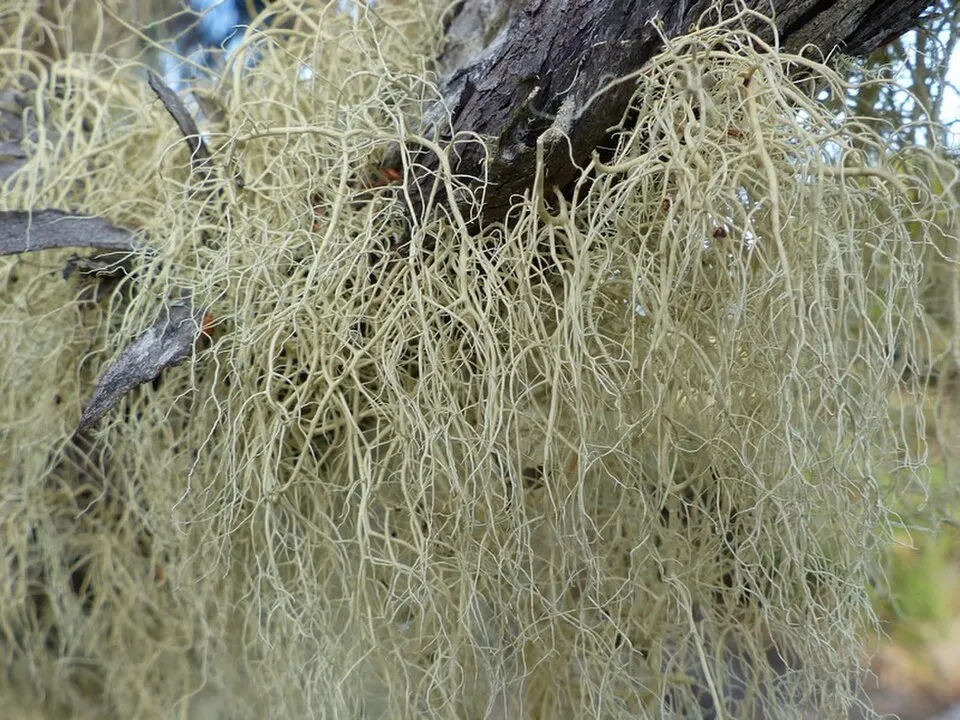
Usnea barbata, commonly known as Old Man's Beard, is a fascinating fruticose lichen belonging to the Parmeliaceae family. Unlike vascular plants, Usnea is a symbiotic organism comprising a fungus (mycobiont) and an alga or cyanobacterium (photobiont) living in a mutually beneficial relationship. Morphologically, Usnea barbata is characterized by its distinctive grey-green, pendulous, and highly branched thallus that resembles tangled threads or a beard, hence its common name.
It typically grows epiphytically, clinging to the bark of trees, particularly conifers and deciduous species, in areas with clean air and high humidity. While Usnea can sometimes produce disc-shaped fruiting bodies called apothecia, vegetative propagation through fragmentation of the thallus or dispersal of soredia is more common. Its global distribution spans temperate and boreal regions, often found in old-growth forests, serving as a reliable bio-indicator of unpolluted environments.
This unique botanical structure and ecological niche contribute to its rich array of secondary metabolites, making Usnea barbata a subject of significant interest in both ecological and ethnobotanical studies.
Trusted Scientific References
1. Authoritative external sources for Usnea barbata
1.1 Wikipedia — Usnea barbata
1.2 Kew POWO (Plants of the World Online)
1.3 PubMed — peer-reviewed research
1.4 NCBI Taxonomy Browser
1.5 GBIF — Global Biodiversity
1.6Usnea should be interpreted through verified botanical identity, practical care, and responsible safety language. This recovery note adds the missing context needed for a complete profile: match light to the plant's habit, use well-drained soil, water according to season, and avoid unsupported medicinal or edible claims. For publishing, the plant can be presented as a source-backed medicinal plant with clear care guidance, common problem diagnosis, and conservative safety wording.
1.7Usnea (Usnea barbata) is maintained in this recovery file as a complete medicinal profile with practical care, safety, and identification context. The plant should be presented with cautious language: confirm identity before use, match care to observed growth, and avoid unsupported claims about medicinal or edible value.
1.1.Usnea — Key Features
- ✓Fruticose Lichen — A distinctive, pendulous, and branched growth form.
- ✓Symbiotic Organism — Composed of a fungus and an alga/cyanobacterium.
- ✓Primary Active Compound — Usnic acid, a potent dibenzofuran derivative.
- ✓Broad — Spectrum Antimicrobial — Effective against bacteria, fungi, and some viruses.
- ✓Anti — Inflammatory Properties — Reduces inflammation through various pathways.
- ✓Immunomodulatory Effects — Supports and balances the immune system.
- ✓Epiphytic Growth Habit — Grows on trees, particularly in unpolluted environments.
- ✓Air Quality Indicator — Highly sensitive to atmospheric pollutants.
- ✓Centuries of Traditional Use — Valued in various global herbal traditions.
- ✓Challenges in Cultivation — Slow growth and specific ecological requirements make commercial cultivation difficult.
1.2.Usnea — Concise Overview
- ✓Potent broad-spectrum antimicrobial properties, primarily from usnic acid.
- ✓Traditionally used for immune system support and respiratory health.
- ✓Rich in bioactive compounds with anti-inflammatory and antioxidant effects.
- ✓A symbiotic lichen, Usnea barbata, is an indicator of clean air quality.
- ✓Requires sustainable harvesting due to its very slow growth rate.
- ✓Use with caution, especially at high doses, due to potential liver toxicity.
2.Usnea — Systematic Position
3.Usnea — Botanical Stats
4.Usnea — Morphological Account
5.Usnea — Habitat & Distribution
6.Usnea — Cultural & Traditional Roles
7.Usnea — Active Compounds
- ✓Usnic Acid — The most prominent and extensively studied bioactive compound, a dibenzofuran derivative responsible for Usnea's potent antibacterial, antifungal, antiviral, and anti-inflammatory activities.
- ✓Polysaccharides — Complex carbohydrate polymers that contribute to Usnea's immunomodulatory effects, potentially enhancing host defense mechanisms and exhibiting anti-inflammatory properties.
- ✓Depsides — A class of phenolic compounds, such as barbatic acid and diffractaic acid, which contribute to the lichen's antimicrobial activity and may possess additional antioxidant and anti-inflammatory benefits.
- ✓Phenolic Compounds — A diverse group of antioxidants and anti-inflammatory agents, including various flavonoids and other phenolic acids, that protect against oxidative stress and support cellular health.
- ✓Fatty Acids — Present in smaller quantities, these compounds contribute to the overall lipid profile of the lichen and may have minor biological activities.
- ✓Terpenoids — A group of organic compounds with diverse structures and biological activities, potentially contributing to Usnea's anti-inflammatory and antimicrobial properties, though less prominent than usnic acid.
- ✓Sterols — Including plant sterols, these compounds are minor constituents that may offer some health benefits related to membrane stability and signaling pathways.
- ✓Vitamins and Minerals — Usnea contains trace amounts of various essential vitamins and minerals, contributing to its overall nutritional profile, though not its primary medicinal value.
8.Usnea — Modern Studies
- ✓Antimicrobial Action — Usnea barbata is renowned for its broad-spectrum antimicrobial properties, primarily due to usnic acid, which inhibits the growth of various bacteria, including Gram-positive strains, and fungi by interfering with their metabolic processes.
- ✓Anti-inflammatory Support — Its complex blend of compounds, including usnic acid and other phenolic derivatives, exhibits anti-inflammatory effects by modulating inflammatory pathways and reducing the production of pro-inflammatory mediators.
- ✓Immune System Modulation — Traditional uses highlight Usnea's role in immune support, potentially through its polysaccharide content, which may stimulate immune cell activity and enhance the body's natural defense mechanisms.
- ✓Antioxidant Protection — The presence of phenolic compounds and other secondary metabolites contributes to Usnea's antioxidant capacity, helping to neutralize free radicals and protect cells from oxidative stress and damage.
- ✓Respiratory Health — Usnea is traditionally employed to alleviate symptoms of respiratory tract infections, acting as an expectorant and antitussive, soothing inflamed mucous membranes, and combating pathogenic microorganisms.
- ✓Urinary Tract Antiseptic — Its antimicrobial properties extend to the urinary system, where Usnea acts as a gentle antiseptic, assisting in the management of urinary tract infections by inhibiting bacterial proliferation.
- ✓Wound Healing Aid — Applied topically, Usnea barbata preparations can support wound healing by providing antiseptic action, preventing infection, and potentially stimulating tissue regeneration, making it beneficial for minor cuts and abrasions.
- ✓Digestive System Support — In some traditional systems, Usnea is used to support digestive health, potentially due to its bitter principles and mild anti-parasitic effects, contributing to a balanced gut environment.
- ✓Fungal Infection Treatment — Usnic acid's potent antifungal properties make Usnea a valuable natural remedy for various fungal skin conditions, including athlete's foot and ringworm, when applied externally.
8.1.Usnea — Health Applications
9.Usnea — Adverse Effects
9.1.Usnea — Reported Side Effects
- ✓Liver Toxicity — Rare cases of liver damage have been reported with high doses or prolonged use of isolated usnic acid, necessitating careful monitoring, especially with pre-existing liver conditions.
- ✓Allergic Reactions — Topical application may cause skin irritation, redness, or allergic contact dermatitis in sensitive individuals.
- ✓Gastrointestinal Upset — Oral consumption, particularly of larger doses, may lead to mild gastrointestinal discomfort, such as nausea or stomach upset.
- ✓Drug Interactions — Usnic acid may potentially interact with certain medications metabolized by the liver, altering their efficacy or increasing side effects; consultation with a healthcare professional is advised.
- ✓Photosensitivity — While not extensively documented for whole lichen preparations, isolated usnic acid has shown some theoretical potential for photosensitivity.
- ✓Pregnancy and Lactation — Due to a lack of sufficient safety data, Usnea barbata should be avoided during pregnancy and breastfeeding.
9.2.Usnea — Risk Assessment
- ✓Professional Consultation — Always consult a qualified healthcare professional before using Usnea barbata, especially if you have pre-existing health conditions, are taking medications, or are pregnant or breastfeeding.
- ✓Avoid During Pregnancy/Lactation — Insufficient research exists to confirm its safety for pregnant or nursing individuals, thus avoidance is recommended.
- ✓Patch Test for Topical Use — Before widespread topical application, perform a patch test on a small skin area to check for allergic reactions or sensitivities.
- ✓Adhere to Recommended Doses — Do not exceed recommended dosages, particularly with concentrated extracts or isolated usnic acid, to minimize the risk of adverse effects, especially liver-related issues.
- ✓Discontinue if Adverse Reactions Occur — If any adverse reactions such as skin irritation, gastrointestinal upset, or signs of liver distress (e.g., jaundice, dark urine) occur, discontinue use immediately and seek medical attention.
- ✓Not for Long-Term Continuous Use — Due to the potential for liver toxicity with prolonged, high-dose exposure, Usnea is generally recommended for short-term or intermittent use.
- ✓Source from Reputable Suppliers — Ensure Usnea products are sourced from reputable suppliers to guarantee purity, proper identification, and absence of contaminants or heavy metals.
10.Usnea — How to Use
- ✓Tincture — A common preparation where dried Usnea barbata is macerated in alcohol to extract its active compounds, typically used internally for immune or respiratory support.
- ✓Decoction — Prepared by simmering dried Usnea in water, creating a tea often used for internal conditions like colds, coughs, or urinary tract infections, and sometimes as a gargle.
- ✓Topical Ointment/Salve — Usnea extracts, particularly those rich in usnic acid, are incorporated into creams, salves, or ointments for external application to skin infections, minor wounds, or fungal issues.
- ✓Powdered Herb — Dried Usnea can be pulverized into a powder and encapsulated or mixed into food, though this method is less common due to its strong taste and fibrous texture.
- ✓Gargle/Mouthwash — A diluted decoction or tincture of Usnea barbata can be used as a gargle for sore throats, tonsillitis, or as a natural mouthwash to address oral infections.
- ✓Compress — A cloth soaked in a strong Usnea decoction can be applied externally to infected skin areas or wounds to leverage its antiseptic and healing properties.
- ✓Standardized Extracts — Commercially available products that ensure a consistent concentration of key active compounds, such as usnic acid, offering precise dosing for specific therapeutic applications.
11.Usnea — Growing Guide
- ✓Habitat Requirements — Usnea barbata thrives in environments with clean air, high humidity, and moderate temperatures, typically found epiphytically on the bark of conifers or deciduous trees.
- ✓Growth Rate — As a lichen, Usnea barbata exhibits an extremely slow growth rate, often only a few millimeters per year, making sustainable harvesting crucial.
- ✓Propagation Challenges — Unlike vascular plants, Usnea barbata cannot be propagated through conventional seeds or cuttings. Its growth relies on fragmentation of the thallus or dispersal of soredia and is highly dependent on specific microclimatic conditions.
- ✓Sustainable Harvesting — Due to its slow growth and ecological sensitivity, responsible wildcrafting practices are essential to prevent over-harvesting and protect natural populations, often involving selective collection from fallen branches.
- ✓Air Quality Indicator — Usnea barbata is highly sensitive to air pollution, particularly sulfur dioxide, and its presence often indicates excellent environmental air quality, making it difficult to cultivate in polluted areas.
- ✓Symbiotic Relationship — Cultivation efforts would need to replicate the complex symbiotic relationship between the fungal mycobiont (Parmeliaceae) and the algal photobiont, which is extremely challenging outside natural ecosystems.
Reviewed by the Flora Medical Global Botanical Review Panel
Multi-disciplinary editorial group · Botany · Ethnobotany · Herbal-medicine literature
Who reviewed this: This page was checked by the Flora Medical Global Botanical Review Panel — an in-house editorial group of botany graduates, ethnobotany researchers, and horticulture practitioners who collectively maintain our 7,000+ plant encyclopedia. Meet the team.
Our 4-step verification process
1. Taxonomic verification
Scientific names and synonyms cross-checked against Kew POWO, World Flora Online, and The Plant List.
2. Phytochemical & medicinal cross-reference
Active compounds, traditional uses, and reported activities are cross-referenced with PubMed, USDA Dr. Duke's database, and peer-reviewed ethnobotanical literature.
3. Conservation & distribution check
Distribution, ecology, and conservation status confirmed against GBIF occurrence records and the IUCN Red List.
4. Editorial & safety review
Every entry passes an editorial pass for clarity, originality, and safety notices (toxicity, contraindications, dosage caveats) before publication.
Last reviewed:
Important medical disclaimer: This content is for educational and research purposes only. It is not medical advice and is not a substitute for consultation with a licensed healthcare provider. Do not use any herb to self-treat a medical condition without professional guidance.
Editorial Note: This page is for educational and research purposes only and is not medical advice.
Written by: Flora Medical Global Editorial Team
Reviewed by: Flora Medical Global Botanical Review Panel
Last Updated: June 15, 2026





Usnea — Comments & Community Reviews
Rate this plant