

Medical Disclaimer: This content is for educational purposes only. It is not medical advice. Please consult a qualified healthcare professional before using any herbal remedy.
Safety Overview
1.Utpala — Essential Profile
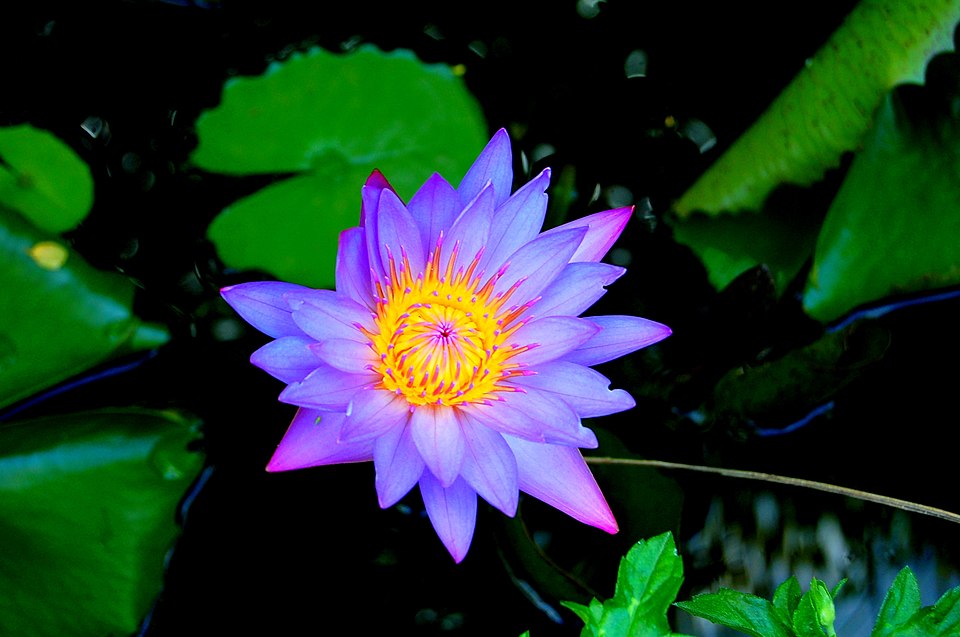
Nymphaea stellata, widely recognized as Utpala or the blue water lily, is a captivating aquatic perennial thriving in serene freshwater ecosystems such as ponds, lakes, and slow-moving rivers. This species typically establishes itself at depths where its flexible stems and petioles allow its glossy, heart-shaped leaves to float gracefully on the water's surface, often reaching 30-40 cm in diameter. The plant's most striking feature is its vibrant flowers, which can span 10-20 cm across and display brilliant blue to lilac petals, encircling a prominent cluster of golden-yellow stamens.
These magnificent blooms generally appear during the warmer months, contributing significantly to its ornamental appeal. Geographically, Nymphaea stellata is broadly distributed across tropical and subtropical regions of Asia, with significant prevalence in countries like India, Bangladesh, Myanmar, and Vietnam. Taxonomically, it belongs to the Nymphaeaceae family, an ancient lineage of flowering plants known for their large, showy aquatic flowers and unique adaptations for survival in water.
While highly valued for its aesthetic beauty, Nymphaea stellata also holds profound significance in traditional medicine, where it is revered for its diverse therapeutic properties, often interchangeably referred to as Nymphaea nouchali in some botanical contexts, though some taxonomists maintain distinctions.
Trusted Scientific References
1. Authoritative external sources for Nymphaea stellata
1.1 Wikipedia — Nymphaea stellata
1.2 Kew POWO (Plants of the World Online)
1.3 PubMed — peer-reviewed research
1.4 NCBI Taxonomy Browser
1.5 GBIF — Global Biodiversity
1.6Utpala should be interpreted through verified botanical identity, practical care, and responsible safety language. This recovery note adds the missing context needed for a complete profile: match light to the plant's habit, use well-drained soil, water according to season, and avoid unsupported medicinal or edible claims. For publishing, the plant can be presented as a source-backed medicinal plant with clear care guidance, common problem diagnosis, and conservative safety wording.
1.1.Utpala — Distinguishing Points
- ✓Aquatic Perennial — Flourishes in freshwater habitats like ponds and slow-moving rivers.
- ✓Striking Blue Flowers — Features vibrant blue to lilac flowers with yellow stamens, highly ornamental.
- ✓Ayurvedic Bitter Tonic — Central to traditional Indian medicine for balancing Pitta and detoxifying.
- ✓Antidiabetic Potential — Contains Nymphayol, a steroid known to stimulate insulin secretion.
- ✓Anti — inflammatory Action — Exhibits properties that help reduce bodily inflammation.
- ✓Hepatoprotective Benefits — Supports liver health and aids in its detoxification processes.
- ✓Digestive Stimulant — Enhances gastric reflexes and promotes efficient nutrient assimilation.
- ✓Widespread Distribution — Native to tropical and subtropical regions across Asia.
- ✓Traditional Aphrodisiac — Historically used to support libido and reproductive vitality.
- ✓Adaptable Morphology — Flexible stems and petioles allow leaves and flowers to float at varying water levels.
1.2.Utpala — Quick Summary
- ✓Nymphaea stellata, or Utpala, is a beautiful blue water lily with significant medicinal value.
- ✓Esteemed in Ayurveda and Siddha as a bitter tonic for cooling Pitta and various ailments.
- ✓Research indicates antidiabetic, anti-inflammatory, and hepatoprotective properties, notably via Nymphayol.
- ✓Used to support digestion, regulate blood sugar, and reduce stress and anxiety.
- ✓Available in decoctions, powders, and traditional formulations, with specific preparation methods.
- ✓Requires careful use, particularly for diabetics, pregnant women, and those on other medications.
2.Utpala — Nomenclature & Classification
3.Utpala — Fact Sheet
4.Utpala — Physical Description
5.Utpala — Native Range & Habitat
6.Utpala — Heritage Uses
7.Utpala — Key Phytochemicals
- ✓Steroids — Nymphayol, a prominent steroid isolated from the flowers, is scientifically linked to the antidiabetic activity by stimulating insulin secretion; other pregnane-type steroids contribute to its therapeutic profile.
- ✓Alkaloids — These nitrogen-containing compounds impart a significant bitter taste and are responsible for various physiological effects, including potential impacts on nerve tone and digestive processes.
- ✓Monoterpenes — Encompassing iridoid and secoiridoid types, these constituents contribute to the plant's bitterness and often exhibit anti-inflammatory and digestive stimulant properties.
- ✓Sesquiterpene Lactones — Known for their intense bitterness, these compounds are frequently associated with anti-inflammatory, antimicrobial, and potent digestive-enhancing actions.
- ✓Diterpenes — A diverse class of compounds with potential anti-inflammatory, antimicrobial, and other therapeutic benefits, contributing to the comprehensive medicinal efficacy of the plant.
- ✓Triterpenes — Often linked to adaptogenic, anti-inflammatory, and hepatoprotective effects, these compounds support liver function and modulate immune responses.
- ✓Flavanones — A subclass of flavonoids, these possess significant antioxidant and anti-inflammatory properties, providing cellular protection and contributing to overall health benefits.
- ✓Acyl Phloroglucides — These compounds contribute to the plant's characteristic bitter taste and may exhibit various biological activities, including antimicrobial and anti-inflammatory actions.
- ✓Tannins — Astringent polyphenolic compounds that can help reduce inflammation, provide antioxidant defense, and support tissue integrity.
- ✓Saponins — Recognized for their foam-forming properties, saponins may contribute to cholesterol-lowering effects, immune modulation, and expectorant actions.
8.Utpala — Pharmacological Findings
- ✓Antidiabetic Support — Contains Nymphayol, a steroid isolated from its flowers, which has been shown to stimulate insulin secretion from pancreatic beta-cells and potentially reverse damaged endocrine tissue, supporting blood sugar management.
- ✓Anti-inflammatory Properties — Traditionally used to alleviate inflammatory conditions, with experimental observations supporting its capacity to modulate inflammatory responses in the body.
- ✓Hepatoprotective Action — Recognized in traditional systems for its liver-protective qualities, aiding in detoxification processes and supporting overall hepatic health.
- ✓Digestive Aid — Functions as a potent bitter tonic, stimulating gastric reflexes, enhancing the secretion of digestive juices from the pancreas and duodenum, and improving nutrient assimilation.
- ✓Urinary Health — Employed in traditional medicine to address various urinary disorders, potentially due to its diuretic and anti-inflammatory effects on the urinary tract.
- ✓Menstrual Regulation — Historically utilized to manage menstrual irregularities, including menorrhagia (heavy bleeding) and general menstruation problems, contributing to reproductive health.
- ✓Aphrodisiac Qualities — Valued in traditional practices as an aphrodisiac, believed to enhance vitality and support reproductive function.
- ✓Stress and Anxiety Reduction — As a bitter, it is thought to possess properties that can help sedate and regenerate the nervous system, assisting in reducing stress and anxiety.
- ✓Bitter Tonic — Acts as a strong bitter, particularly effective in cooling Pitta dosha, detoxifying the liver, and reducing deep-seated heat or fever within the body.
- ✓Diuretic Effect — Promotes increased urine output, which can be beneficial in flushing toxins and managing fluid balance.
- ✓Blood Sugar Regulation — Beyond direct insulin stimulation, its bitter compounds help regulate pancreatic hormones, contributing to stable blood sugar levels.
- ✓Fever Reduction — Traditionally used for high heat and fever conditions, reflecting its 'fire purging' and 'heat dispelling' properties.
8.1.Utpala — Health Applications
9.Utpala — Safety Considerations
9.1.Utpala — Possible Adverse Reactions
- ✓Gastrointestinal Upset — High doses may lead to stomach discomfort, nausea, or diarrhea due to its potent bitter constituents.
- ✓Allergic Reactions — Sensitive individuals might experience skin rashes, itching, or respiratory symptoms upon contact or ingestion.
- ✓Hypoglycemia Risk — Due to its established antidiabetic potential, it may cause excessively low blood sugar, especially when combined with antidiabetic medications.
- ✓Hypotension — There is a theoretical risk of lowering blood pressure, which warrants caution for individuals already on hypotensive drugs.
- ✓Drug Interactions — Potential to interact with various medications, particularly those for diabetes, blood pressure, sedatives, or blood thinners, altering their therapeutic effects.
- ✓Pregnancy and Lactation — Insufficient safety data advises against its use during pregnancy and breastfeeding periods.
- ✓Sedative Effects — Large quantities might induce drowsiness, particularly if consumed alongside other central nervous system depressants.
9.2.Utpala — Toxicity Assessment
- ✓Consult Healthcare Professional — Always seek medical advice from a qualified practitioner before using Nymphaea stellata, especially if you have pre-existing health conditions or are on medication.
- ✓Avoid During Pregnancy/Lactation — Due to limited safety research, pregnant and breastfeeding women should strictly avoid using this plant.
- ✓Monitor Blood Sugar — Individuals with diabetes must closely monitor their blood glucose levels if using Utpala, to prevent hypoglycemia and adjust medication as necessary.
- ✓Discontinue if Adverse Reactions — Cease use immediately if any signs of allergic reactions, severe gastrointestinal upset, or other adverse effects appear.
- ✓Not for Children — Usage in infants and young children is not recommended due to a lack of specific safety studies in this demographic.
- ✓Avoid Prior to Surgery — Discontinue consumption at least two weeks before any scheduled surgery due to potential interactions with anesthesia or effects on blood clotting.
- ✓Proper Identification — Ensure absolute certainty of plant identification to avoid accidental consumption of misidentified or toxic species.
10.Utpala — Usage Guide
- ✓Herbal Decoction — Dried rhizomes or flowers can be simmered in water to create a potent decoction, often consumed to address specific internal ailments or as a bitter tonic.
- ✓Infusion (Tea) — Fresh or dried flowers and leaves can be steeped in hot water to prepare a mild, soothing infusion, traditionally used for stress relief or general wellness.
- ✓Powdered Form — Dried plant parts, particularly the rhizomes and flowers, are finely ground into a powder, which can be encapsulated, mixed with honey, or blended into traditional Ayurvedic preparations.
- ✓Traditional Pastes — Fresh leaves or flowers are crushed and mixed with a carrier to form a paste, applied topically for skin conditions or localized inflammation in traditional remedies.
- ✓Tincture — An alcoholic extract of the plant, providing a concentrated form for convenient dosing and extended shelf life, typically taken in drops.
- ✓Syrups — Infusions or decoctions can be sweetened with honey or jaggery to create palatable syrups, especially useful for administering to individuals sensitive to bitter tastes.
- ✓Ayurvedic Formulations — Utpala is a significant ingredient in numerous polyherbal Ayurvedic and Siddha formulations targeting conditions such as diabetes, liver disorders, and menstrual issues.
- ✓Edible Use — In certain cultures, the young leaves, flower stalks, and rhizomes are cooked and consumed as nutritious vegetables.
11.Utpala — Garden Cultivation
- ✓Ideal Habitat — Thrives best in still or slow-moving freshwater environments such as garden ponds, lakes, and water features.
- ✓Climate Preference — Requires tropical and subtropical climates with consistently warm temperatures for robust growth and prolific flowering.
- ✓Sun Exposure — Needs full sun, ideally 6-8 hours daily, to ensure vibrant blooms and healthy foliage development.
- ✓Planting Medium — Plant rhizomes or tubers in heavy loam soil or specialized aquatic planting baskets, ensuring good nutrient retention.
- ✓Water Depth — Maintain a water depth of 30-60 cm (12-24 inches) over the crown of the planted rhizome, adjusting as the plant matures.
- ✓Propagation — Primarily propagated through rhizome division in late spring or early summer, or by sowing seeds directly into the muddy substrate.
- ✓Maintenance — Regular removal of spent flowers and yellowing leaves is crucial to encourage continuous blooming and prevent water quality issues.
- ✓Fertilization — Benefits from slow-release aquatic fertilizer tablets inserted into the planting medium near the roots during the active growing season.
Reviewed by the Flora Medical Global Botanical Review Panel
Multi-disciplinary editorial group · Botany · Ethnobotany · Herbal-medicine literature
Who reviewed this: This page was checked by the Flora Medical Global Botanical Review Panel — an in-house editorial group of botany graduates, ethnobotany researchers, and horticulture practitioners who collectively maintain our 7,000+ plant encyclopedia. Meet the team.
Our 4-step verification process
1. Taxonomic verification
Scientific names and synonyms cross-checked against Kew POWO, World Flora Online, and The Plant List.
2. Phytochemical & medicinal cross-reference
Active compounds, traditional uses, and reported activities are cross-referenced with PubMed, USDA Dr. Duke's database, and peer-reviewed ethnobotanical literature.
3. Conservation & distribution check
Distribution, ecology, and conservation status confirmed against GBIF occurrence records and the IUCN Red List.
4. Editorial & safety review
Every entry passes an editorial pass for clarity, originality, and safety notices (toxicity, contraindications, dosage caveats) before publication.
Last reviewed:
Important medical disclaimer: This content is for educational and research purposes only. It is not medical advice and is not a substitute for consultation with a licensed healthcare provider. Do not use any herb to self-treat a medical condition without professional guidance.
Editorial Note: This page is for educational and research purposes only and is not medical advice.
Written by: Flora Medical Global Editorial Team
Reviewed by: Flora Medical Global Botanical Review Panel
Last Updated: June 15, 2026





Utpala — Comments & Community Reviews
Rate this plant