
Medical Disclaimer: This content is for educational purposes only. It is not medical advice. Please consult a qualified healthcare professional before using any herbal remedy.
Safety Overview
1.Uvularia — Introduction & Highlights
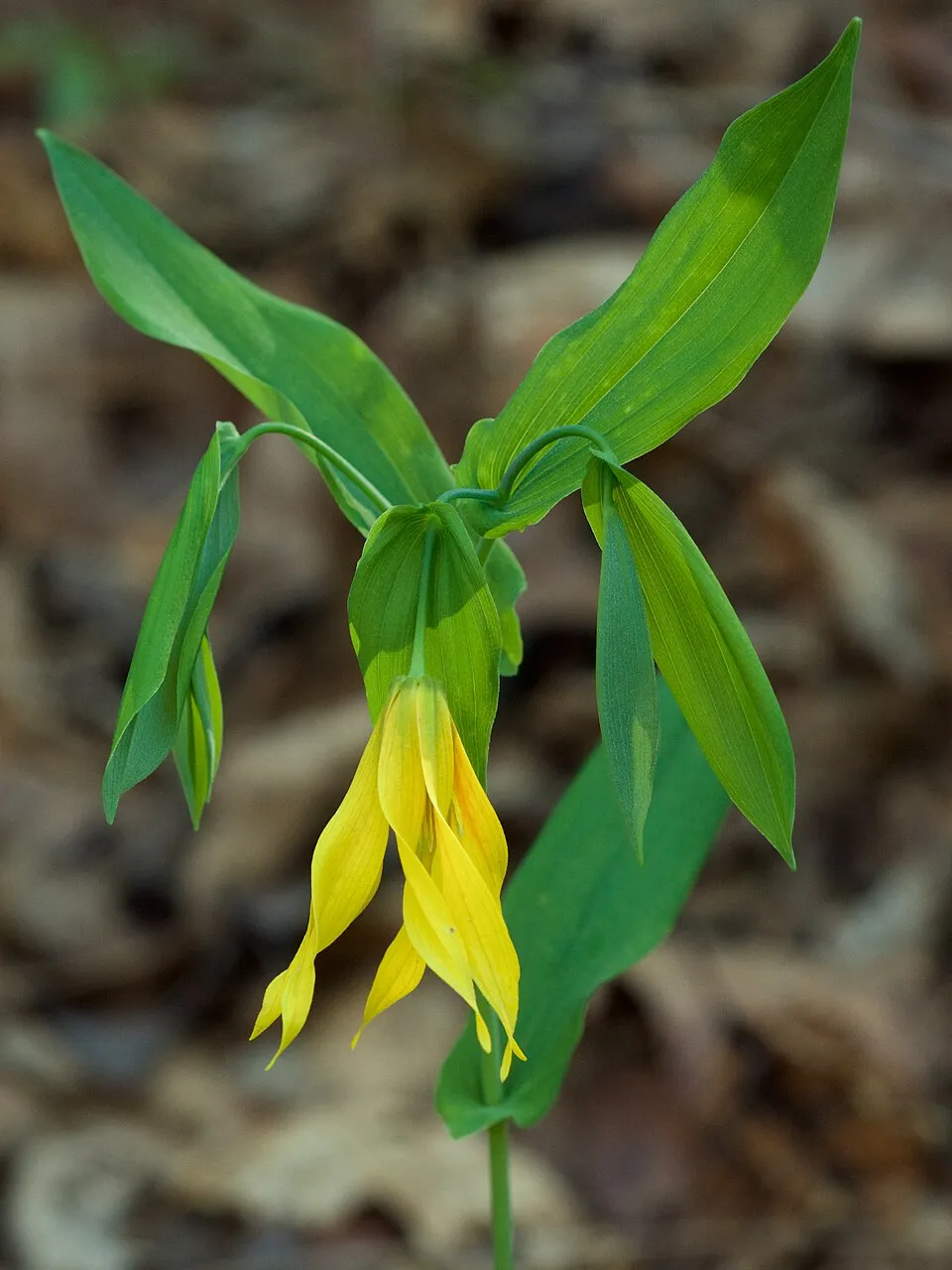
Uvularia grandiflora, commonly known as Large-flowered Bellwort or Merrybells, is an enchanting herbaceous perennial belonging to the Colchicaceae family, native to the rich deciduous woodlands of eastern and central North America. This species is characterized by its unique morphological features, standing approximately 1 to 2 feet (30-60 cm) tall. A distinctive characteristic is its perfoliate leaves, where the stem appears to pierce through the leaf blade, creating a visually striking effect.
In early spring, Uvularia grandiflora unfurls delicate, nodding, bell-shaped flowers of a vibrant yellow hue, gracefully suspended from the upper leaf axils. These solitary blooms add a touch of elegance to the woodland understory. The plant propagates slowly through rhizomes, gradually forming modest clumps, making it an ideal choice for shaded garden areas, naturalized settings, and woodland gardens where its subtle beauty can be appreciated.
Its ecological role includes providing early spring nectar for pollinators. Taxonomically, it sits within the order Liliales, a group known for many geophytes and plants with prominent flowers. Its distribution spans from the Great Lakes region south to Georgia and west to Oklahoma, thriving in habitats rich in organic matter and consistent moisture.
Trusted Scientific References
1. Authoritative external sources for Uvularia grandiflora
1.1 Wikipedia — Uvularia grandiflora
1.2 Kew POWO (Plants of the World Online)
1.3 PubMed — peer-reviewed research
1.4 NCBI Taxonomy Browser
1.5 GBIF — Global Biodiversity
1.6Uvularia should be interpreted through verified botanical identity, practical care, and responsible safety language. This recovery note adds the missing context needed for a complete profile: match light to the plant's habit, use well-drained soil, water according to season, and avoid unsupported medicinal or edible claims. For publishing, the plant can be presented as a source-backed garden plant with clear care guidance, common problem diagnosis, and conservative safety wording.
1.1.Uvularia — Key Features
- ✓Native to Eastern and Central North America — Indigenous woodland plant.
- ✓Perfoliate Leaves — Unique stem-piercing leaf morphology.
- ✓Bell — Shaped Yellow Flowers — Distinctive nodding spring blooms.
- ✓Rhizomatous Spread — Forms slow-growing clumps.
- ✓Traditional Native American Medicine — Historical ethnobotanical uses.
- ✓Contains Saponins and Alkaloids — Active phytochemical compounds.
- ✓Anti — inflammatory and Analgesic Properties — Key traditional actions.
- ✓Shade — Loving Woodland Plant — Ideal for dappled light environments.
- ✓Low Maintenance Once Established — Resilient in suitable conditions.
- ✓Ornamental and Medicinal Value — Valued for both beauty and historical use.
1.2.Uvularia — Concise Overview
- ✓Uvularia grandiflora is a native North American perennial known for its distinctive perfoliate leaves and bell-shaped yellow flowers.
- ✓Traditionally used by Native Americans for anti-inflammatory, pain-relieving, and febrifuge properties.
- ✓Contains saponins and alkaloids, including uvularine, which contribute to its medicinal effects but also potential toxicity.
- ✓Primarily used for ailments such as sore throats, coughs, rheumatism, and topical skin irritations.
- ✓Cultivation requires shade, moist, well-drained soil, and slow propagation via rhizomes.
- ✓Not recommended for self-medication due to limited modern research and potential adverse effects.
2.Uvularia — Taxonomic Classification
3.Uvularia — Reference Facts
4.Uvularia — Morphological Account
5.Uvularia — Habitat & Distribution
6.Uvularia — Cultural & Traditional Roles
7.Uvularia — Active Compounds
- ✓Saponins — Primarily triterpenoid saponins, which are responsible for the plant's traditional anti-inflammatory and expectorant properties but can also cause gastrointestinal irritation and hemolytic activity in high doses.
- ✓Alkaloids — Contains uvularine, a steroidal alkaloid, which may contribute to its analgesic and anti-rheumatic effects, though further research is needed on its specific pharmacological actions and safety profile.
- ✓Flavonoids — A class of polyphenolic compounds such as quercetin and kaempferol derivatives, offering antioxidant and anti-inflammatory benefits, protecting cells from oxidative stress.
- ✓Phenolic Acids — Includes compounds like caffeic acid and ferulic acid, known for their antioxidant, anti-inflammatory, and antimicrobial properties.
- ✓Polysaccharides — Complex carbohydrates that can possess immunomodulatory effects, supporting the body's natural defense mechanisms.
- ✓Glycosides — Various glycosidic compounds, which can influence different physiological pathways depending on their aglycone structure, contributing to the plant's overall therapeutic profile.
- ✓Tannins — Astringent compounds that may contribute to the plant's traditional use in treating skin irritations and sore throats by forming a protective layer on mucous membranes.
- ✓Volatile Oils — Present in small quantities, these complex mixtures of aromatic compounds may contribute to the plant's aroma and possess mild antiseptic or carminative properties.
8.Uvularia — What Research Suggests
- ✓Anti-inflammatory Support — Traditionally applied to reduce swelling and irritation, particularly in conditions like rheumatism and topical skin issues, likely due to its saponin content.
- ✓Pain Management — Historically used as an analgesic for various aches, including joint pain and sore throats, providing symptomatic relief.
- ✓Respiratory Aid — Employed to alleviate symptoms of coughs and sore throats, potentially acting as an expectorant or demulcent to soothe irritated mucous membranes.
- ✓Febrifuge Properties — Native American tribes utilized it to help reduce fever, possibly by inducing perspiration or modulating the body's inflammatory response.
- ✓Rheumatic Relief — The root was a common remedy for rheumatism, believed to reduce inflammation and pain associated with musculoskeletal discomfort.
- ✓Topical Wound Healing — Applied externally as a poultice for skin irritations, minor cuts, and potentially snakebites, suggesting antiseptic or drawing properties.
- ✓Ocular Comfort — Traditional applications included treating eye problems, indicating a soothing effect on irritated conjunctiva, though caution is warranted.
- ✓General Tonic — Considered a strengthening tonic, particularly after illness, to aid in recovery and support overall vitality.
- ✓Digestive Support — Some traditional uses suggest a role in supporting digestive health, potentially as a mild bitter or carminative, though specific mechanisms are less documented.
- ✓Diuretic Action — May possess mild diuretic properties, aiding in fluid balance and detoxification, as suggested by some historical accounts.
8.1.Uvularia — Conditions Traditionally Used For
9.Uvularia — Risk Profile
9.1.Uvularia — Side Effects & Warnings
- ✓Gastrointestinal Upset — Ingestion of large quantities, particularly of the raw plant or concentrated extracts, can lead to nausea, vomiting, and diarrhea due to saponins.
- ✓Allergic Reactions — Sensitive individuals may experience allergic contact dermatitis from handling the plant or systemic allergic responses upon ingestion.
- ✓Cardiac Effects — The presence of steroidal alkaloids like uvularine could potentially affect heart rhythm or function if consumed in excessive amounts, requiring caution.
- ✓Liver/Kidney Stress — Prolonged or high-dose use might theoretically place undue stress on liver and kidney function, especially in individuals with pre-existing conditions.
- ✓Drowsiness/Sedation — Some traditional accounts hint at a sedative effect, which could be an adverse reaction if operating machinery or requiring alertness.
- ✓Oral Irritation — Direct contact with fresh plant material, especially the root, may cause irritation or numbing sensation in the mouth and throat.
9.2.Uvularia — Safety Profile
- ✓Pregnancy and Lactation — Contraindicated during pregnancy and breastfeeding due to lack of safety data and potential abortifacient or adverse effects on infants.
- ✓Children — Not recommended for use in children due to the presence of potent compounds and insufficient safety studies in pediatric populations.
- ✓Pre-existing Conditions — Individuals with heart conditions, liver disease, kidney impairment, or gastrointestinal disorders should avoid use.
- ✓Drug Interactions — May interact with cardiac medications, sedatives, or drugs affecting blood pressure due to its alkaloid content; consult a healthcare professional.
- ✓Dosage — Adhere strictly to expert guidance; self-medication with Uvularia grandiflora is strongly discouraged due to its toxicity in high doses.
- ✓External Use — Topical application should be limited to intact skin and monitored for irritation; avoid contact with eyes and mucous membranes.
- ✓Professional Guidance — Always consult a qualified medical herbalist or healthcare provider before using Uvularia grandiflora for medicinal purposes.
10.Uvularia — How to Use
- ✓Decoction — The dried root is typically prepared as a decoction by simmering in water, traditionally used for internal conditions like coughs, fevers, and rheumatism.
- ✓Tincture — A concentrated alcoholic extract of the root can be made, allowing for precise dosing and extended shelf life, often used for systemic effects.
- ✓Poultice — Fresh or dried roots, when crushed and mixed with a small amount of water, were applied topically as a poultice for skin irritations, wounds, and snakebites.
- ✓Gargle/Mouthwash — A cooled decoction of the root was used as a gargle to soothe sore throats and alleviate oral discomfort.
- ✓Salve/Ointment — Infused oil from the root could be incorporated into salves or ointments for localized pain relief and skin healing.
- ✓Infusion — While less common for the root, leaves or flowers (if used) might be prepared as a milder infusion for gentle tonic effects.
- ✓Liniment — An alcohol-based preparation for external application, rubbed onto painful joints or muscles for rheumatic conditions.
11.Uvularia — Growing Guide
- ✓Site Selection — Prefers partial to full shade, mimicking its natural woodland habitat, making it ideal for understory planting.
- ✓Soil Requirements — Thrives in moist, well-drained, organically rich soil with a neutral to slightly acidic pH for optimal growth.
- ✓Watering — Requires regular watering, especially during dry periods, to keep the soil consistently moist but never waterlogged.
- ✓Propagation — Can be propagated by planting rhizomes or divisions in early spring or fall, or by seed, though seed germination can be slow.
- ✓Fertilization — Benefits from an annual application of compost or a balanced slow-release fertilizer in spring to support robust growth.
- ✓Mulching — Applying a layer of organic mulch helps retain soil moisture, regulate soil temperature, and suppress weed growth.
- ✓Hardiness — Hardy in USDA Zones 3-8, tolerating temperatures down to approximately -40°F (-40°C), though minimum tolerance is often cited around 27°F (-3°C) for optimal health.
- ✓Growth Habit — Spreads slowly by rhizomes, forming attractive, manageable clumps over time, suitable for naturalized areas.
Reviewed by the Flora Medical Global Botanical Review Panel
Multi-disciplinary editorial group · Botany · Ethnobotany · Herbal-medicine literature
Who reviewed this: This page was checked by the Flora Medical Global Botanical Review Panel — an in-house editorial group of botany graduates, ethnobotany researchers, and horticulture practitioners who collectively maintain our 7,000+ plant encyclopedia. Meet the team.
Our 4-step verification process
1. Taxonomic verification
Scientific names and synonyms cross-checked against Kew POWO, World Flora Online, and The Plant List.
2. Phytochemical & medicinal cross-reference
Active compounds, traditional uses, and reported activities are cross-referenced with PubMed, USDA Dr. Duke's database, and peer-reviewed ethnobotanical literature.
3. Conservation & distribution check
Distribution, ecology, and conservation status confirmed against GBIF occurrence records and the IUCN Red List.
4. Editorial & safety review
Every entry passes an editorial pass for clarity, originality, and safety notices (toxicity, contraindications, dosage caveats) before publication.
Last reviewed:
Important medical disclaimer: This content is for educational and research purposes only. It is not medical advice and is not a substitute for consultation with a licensed healthcare provider. Do not use any herb to self-treat a medical condition without professional guidance.
Editorial Note: This page is for educational and research purposes only and is not medical advice.
Written by: Flora Medical Global Editorial Team
Reviewed by: Flora Medical Global Botanical Review Panel
Last Updated: June 15, 2026





Uvularia — Comments & Community Reviews
Rate this plant