
Medical Disclaimer: This content is for educational purposes only. It is not medical advice. Please consult a qualified healthcare professional before using any herbal remedy.
Safety Overview
1.Verbena Garden — Overview
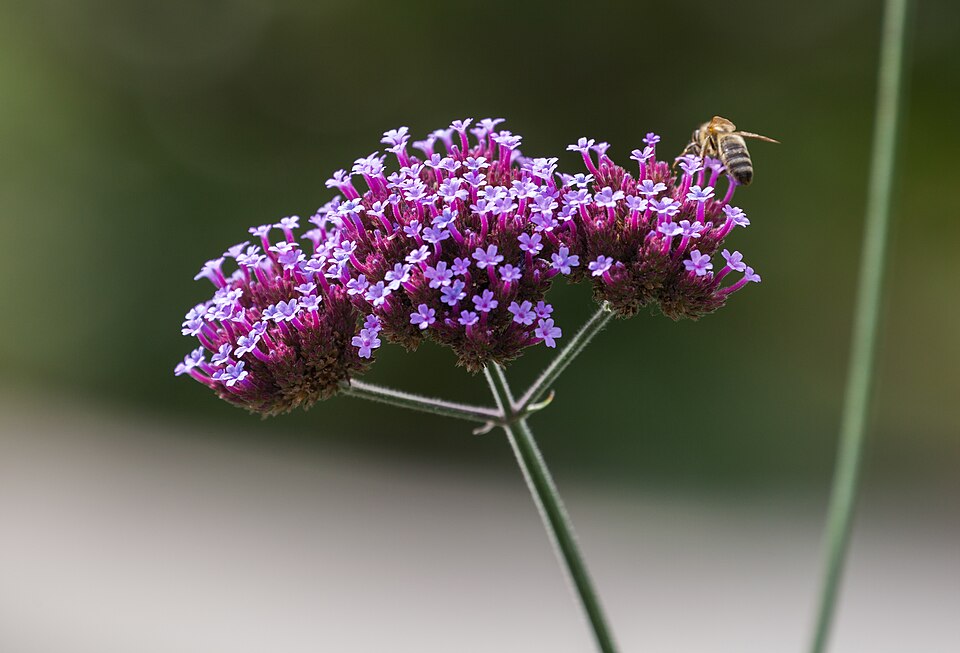
Verbena bonariensis, widely recognized as Purpletop Vervain or Tall Verbena, is an exquisite, slender perennial originating from the diverse landscapes of South America, specifically Brazil and Argentina, where its specific name hints at its presence near Buenos Aires. This member of the Verbenaceae family is characterized by its distinctively airy and transparent growth habit, making it a favorite for 'see-through' planting in garden designs. Its morphology features long, wiry, rough, and square stems that can reach heights of 3 to 6 feet, topped with delicate clusters of small, vibrant purple to rosy-lavender florets.
The deep green, lance-shaped, serrated leaves are primarily concentrated in a basal rosette, with sparse foliage along the upper stems, contributing to its ethereal appearance. Verbena bonariensis blooms profusely from mid-summer until the first frost, offering continuous color and acting as a powerful magnet for butterflies, bees, and other beneficial pollinators, thereby enriching ecological biodiversity in cultivated spaces. Its upright, clump-forming nature ensures it rarely requires staking despite its height, and it spreads gracefully, often self-seeding to establish new generations.
Trusted Scientific References
1. Authoritative external sources for Verbena bonariensis
1.1 Wikipedia — Verbena bonariensis
1.2 Kew POWO (Plants of the World Online)
1.3 PubMed — peer-reviewed research
1.4 NCBI Taxonomy Browser
1.5 GBIF — Global Biodiversity
1.6Verbena Garden should be interpreted through verified botanical identity, practical care, and responsible safety language. This recovery note adds the missing context needed for a complete profile: match light to the plant's habit, use well-drained soil, water according to season, and avoid unsupported medicinal or edible claims. For publishing, the plant can be presented as a source-backed garden plant with clear care guidance, common problem diagnosis, and conservative safety wording.
1.1.Verbena Garden — Defining Traits
- ✓Tall, airy, and upright growth habit, reaching 3 — 6 feet.
- ✓Distinctive clusters of small, vibrant purple to rosy — lavender flowers.
- ✓Exceptionally attractive to — Exceptionally attractive to butterflies, bees, and other pollinators.
- ✓Long blooming period, from mid — summer until the first frost.
- ✓Excellent for 'see — through' planting, adding vertical interest without visual obstruction.
- ✓Relatively low maintenance and drought — tolerant once established.
- ✓Readily self — seeds, contributing to naturalized garden aesthetics.
- ✓Strong, wiry stems — Strong, wiry stems that generally do not require staking.
- ✓Native to South — Native to South America, adapted to various garden conditions.
- ✓Valued as a — Valued as a cut flower for its unique form and extended vase life.
1.2.Verbena Garden — In Brief
- ✓Verbena bonariensis is a tall, airy ornamental perennial known for its vibrant purple flowers.
- ✓It is a significant attractor for butterflies and other pollinators, enhancing garden ecosystems.
- ✓Primarily cultivated for its aesthetic and ecological value, blooming from summer into autumn.
- ✓While other Verbena species have traditional medicinal uses, Verbena bonariensis lacks extensive specific documentation for these benefits.
- ✓Its unique transparent growth habit makes it ideal for 'see-through' garden designs.
- ✓Thrives in full sun and well-drained soil, often self-seeding to propagate naturally.
2.Verbena Garden — Taxonomic Classification
3.Verbena Garden — Botanical Stats
4.Verbena Garden — Plant Morphology
5.Verbena Garden — Habitat & Distribution
6.Verbena Garden — Cultural & Traditional Roles
7.Verbena Garden — Secondary Metabolites
- ✓Iridoid Glycosides — Primarily verbenalin, known for potential anti-inflammatory, sedative, and antispasmodic activities, though its concentration in Verbena bonariensis is not extensively studied.
- ✓Phenylpropanoid Glycosides — Including verbascoside (acteoside), which exhibits significant antioxidant, anti-inflammatory, and antimicrobial properties, likely present in varying amounts in Verbena bonariensis.
- ✓Flavonoids — Such as quercetin and kaempferol derivatives, contributing to antioxidant capacity and potentially offering anti-inflammatory and vascular protective effects.
- ✓Volatile Oils — Comprising various monoterpenes and sesquiterpenes, which impart characteristic aroma and may possess mild antimicrobial or insect-repellent properties.
- ✓Tannins — Astringent compounds that can contribute to anti-inflammatory effects and provide protection against oxidative damage, commonly found in many plant species.
- ✓Saponins — Glycosides with potential expectorant, anti-inflammatory, and immune-modulating properties, though specific types in Verbena bonariensis require further investigation.
- ✓Phenolic Acids — Including caffeic acid and chlorogenic acid, potent antioxidants that support cellular health and contribute to the plant's overall protective mechanisms.
- ✓Alkaloids — Generally found in trace amounts within the Verbenaceae family, their specific role and presence in Verbena bonariensis are not well-documented.
- ✓Glycosides (General) — Various other glycosidic compounds contributing to the plant's biochemical complexity and potential medicinal activities, whose specific identification in Verbena bonariensis is ongoing.
8.Verbena Garden — Research Insights
- ✓Nervous Tension Relief — While primarily attributed to Verbena officinalis, Verbena bonariensis may possess mild nervine properties that could help alleviate stress and promote relaxation.
- ✓Digestive Comfort — Other Verbena species are traditionally used to soothe digestive upsets, potentially due to antispasmodic effects on the gut.
- ✓Anti-inflammatory Support — Compounds like verbascoside, found in the Verbena genus, suggest a potential for reducing inflammation, though specific research on Verbena bonariensis is limited.
- ✓Respiratory Aid — Traditional herbalism uses related Verbena species for mild respiratory complaints, possibly acting as an expectorant or bronchodilator.
- ✓Antioxidant Activity — The presence of flavonoids and phenolic acids in the Verbena genus indicates a potential to combat oxidative stress and cellular damage.
- ✓Sedative Potential — Some Verbena species exhibit mild sedative effects, which could contribute to improved sleep quality and reduced anxiety.
- ✓Liver Support — Certain Verbena species are historically recognized for their role in supporting liver function and detoxification processes.
- ✓Diuretic Properties — Herbal teas made from Verbena species may possess mild diuretic effects, aiding in fluid balance and kidney support.
- ✓Wound Healing — Topical applications of related Verbena species have been used traditionally for minor skin irritations and to support healing.
- ✓Antispasmodic Action — Compounds in the Verbena genus may help to relax smooth muscles, potentially easing cramps and spasms.
- ✓Mood Enhancement — The subtle aromatics and nervine qualities of Verbena species are often associated with uplifting mood and reducing irritability.
- ✓Pain Management — Traditional uses suggest a mild analgesic effect, particularly for headaches or minor body aches associated with nervous tension.
8.1.Verbena Garden — Reported Uses
9.Verbena Garden — Adverse Effects
9.1.Verbena Garden — Reported Side Effects
- ✓Allergic Reactions — Potential for contact dermatitis or other allergic responses in sensitive individuals.
- ✓Gastrointestinal Upset — High doses, particularly of related Verbena species, may cause nausea, vomiting, or diarrhea.
- ✓Photosensitivity — Some individuals may experience increased skin sensitivity to sunlight when consuming Verbena extracts.
- ✓Medication Interactions — Possible interference with blood-thinning medications, sedatives, or blood pressure drugs, due to effects observed in related species.
- ✓Uterine Stimulation — Traditional uses of some Verbena species suggest potential uterine stimulant effects, posing a risk during pregnancy.
- ✓Liver Toxicity (High Doses) — Extremely high or prolonged doses of certain Verbena extracts might theoretically impact liver function, though rare.
9.2.Verbena Garden — Clinical Safety Notes
- ✓Pregnancy and Breastfeeding — Contraindicated during pregnancy due to potential uterine stimulating effects; caution advised during breastfeeding as constituents may pass into milk.
- ✓Children and Infants — Not recommended for use in young children or infants without expert medical guidance.
- ✓Pre-existing Conditions — Individuals with liver disease, kidney disease, or bleeding disorders should use with extreme caution and under medical supervision.
- ✓Medication Interactions — Consult a healthcare professional if taking anticoagulants, sedatives, or medications for hypertension or diabetes.
- ✓Allergic Sensitivity — Perform a patch test for topical applications; discontinue use if skin irritation or allergic reactions occur.
- ✓Dosage Adherence — Adhere strictly to recommended dosages, particularly when using extracts of related Verbena species, to avoid adverse effects.
- ✓Long-Term Use — Long-term use of Verbena preparations should be monitored by a healthcare practitioner.
10.Verbena Garden — Preparation & Dosage
- ✓Ornamental Garden Display — Primarily cultivated for its aesthetic appeal, providing vertical interest and an airy texture in mixed borders and cottage gardens.
- ✓Pollinator Attraction — Planted specifically to draw butterflies, bees, and other beneficial insects, enhancing garden biodiversity.
- ✓Cut Flower Arrangements — Stems with 70-80% open florets can be harvested for long-lasting fresh flower bouquets, adding a wild, naturalistic charm.
- ✓Herbal Infusion (General Verbena) — While not specific to V. bonariensis, other Verbena species are steeped in hot water to make teas for nervous tension or digestive support.
- ✓Tincture Preparation (General Verbena) — Alcoholic extracts of related Verbena species are used to concentrate their active compounds for targeted herbal remedies.
- ✓Topical Compress (General Verbena) — Crushed leaves or infused cloths from related Verbena species can be applied externally for minor skin irritations or muscle aches.
- ✓Landscape Filler — Its transparent habit allows it to be planted at the front or middle of borders without obstructing views of other plants, ideal for mass plantings.
11.Verbena Garden — Growth Requirements
- ✓Full Sun Exposure — Verbena bonariensis thrives in full sun, requiring at least 6-8 hours of direct sunlight daily for robust growth and abundant flowering.
- ✓Well-Drained Soil — Prefers well-draining, sandy or loamy soil with a slightly acidic to neutral pH (6.0-7.5); avoid heavy, waterlogged conditions.
- ✓Moderate Irrigation — While drought-tolerant once established, regular but moderate watering is beneficial, especially during dry spells and for young plants.
- ✓Planting Spacing — Space plants 12-18 inches apart in the garden to allow for adequate air circulation and growth, or 10-12 inches in a checkerboard pattern for greenhouse cultivation.
- ✓Timing for Planting — In warmer zones (8-11), plant in fall for early spring blooms or spring for summer flowers; in cooler zones (7 and below), transplant after the last frost.
- ✓Optional Pinching — Pinching back young plants 2-3 weeks after planting can encourage bushier growth and more flower stems, though it can also be left to its natural open form.
- ✓Self-Seeding — This plant readily self-seeds, often producing new plants each season; avoid disturbing soil too much in spring if volunteers are desired.
- ✓Pest and Disease Management — Ensure good air circulation to prevent powdery mildew; scout for aphids, whiteflies, and spider mites, treating promptly with appropriate controls.
Reviewed by the Flora Medical Global Botanical Review Panel
Multi-disciplinary editorial group · Botany · Ethnobotany · Herbal-medicine literature
Who reviewed this: This page was checked by the Flora Medical Global Botanical Review Panel — an in-house editorial group of botany graduates, ethnobotany researchers, and horticulture practitioners who collectively maintain our 7,000+ plant encyclopedia. Meet the team.
Our 4-step verification process
1. Taxonomic verification
Scientific names and synonyms cross-checked against Kew POWO, World Flora Online, and The Plant List.
2. Phytochemical & medicinal cross-reference
Active compounds, traditional uses, and reported activities are cross-referenced with PubMed, USDA Dr. Duke's database, and peer-reviewed ethnobotanical literature.
3. Conservation & distribution check
Distribution, ecology, and conservation status confirmed against GBIF occurrence records and the IUCN Red List.
4. Editorial & safety review
Every entry passes an editorial pass for clarity, originality, and safety notices (toxicity, contraindications, dosage caveats) before publication.
Last reviewed:
Important medical disclaimer: This content is for educational and research purposes only. It is not medical advice and is not a substitute for consultation with a licensed healthcare provider. Do not use any herb to self-treat a medical condition without professional guidance.
Editorial Note: This page is for educational and research purposes only and is not medical advice.
Written by: Flora Medical Global Editorial Team
Reviewed by: Flora Medical Global Botanical Review Panel
Last Updated: June 15, 2026





Verbena Garden — Comments & Community Reviews
Rate this plant