
Medical Disclaimer: This content is for educational purposes only. It is not medical advice. Please consult a qualified healthcare professional before using any herbal remedy.
Safety Overview
1.Viburnum Dentatum — Botanical Snapshot
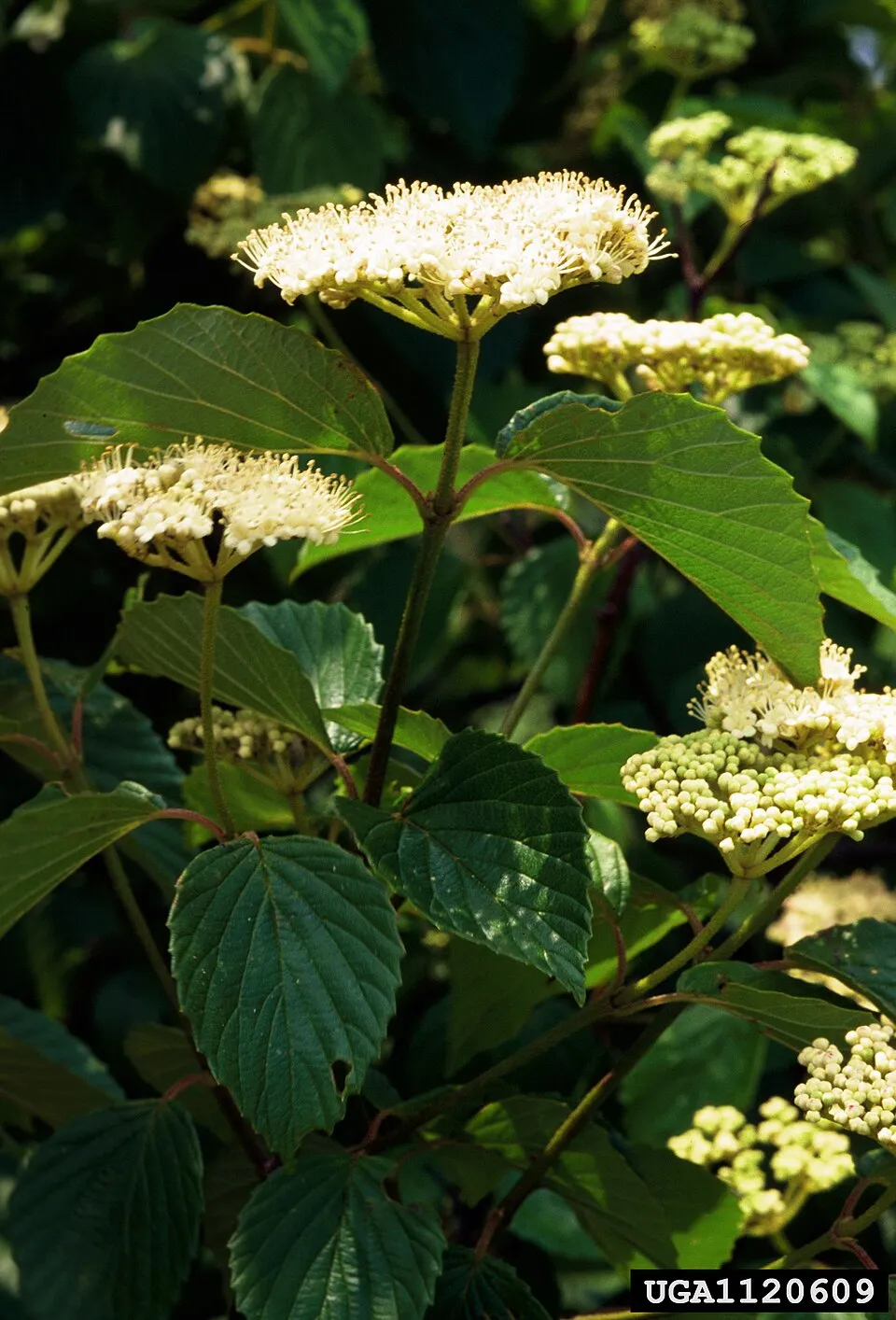
Viburnum dentatum, commonly known as Arrowwood Viburnum, is a resilient and aesthetically pleasing deciduous shrub indigenous to the eastern regions of North America. This robust plant typically achieves a mature height and spread of 6 to 10 feet, forming a dense, rounded, multi-stemmed habit that provides excellent cover and structure in the landscape. Its foliage consists of dark green, ovate to elliptic leaves, sharply toothed along their margins, which undergo a striking transformation in autumn, displaying vibrant hues of yellow, red, or reddish-purple.
In late spring to early summer, Arrowwood Viburnum produces an abundance of creamy white, flat-topped flower clusters (cymes) that are highly attractive to a diverse array of native pollinators, including bees and butterflies. Following the floral display, the shrub develops persistent, glossy blue-black berries in late summer and fall. These drupes are not only visually appealing but also serve as a crucial and reliable food source for numerous bird species and other wildlife throughout the colder months.
Highly adaptable to a wide range of environmental conditions, including varying soil types from heavy clay to sandy loams, and tolerating both full sun and partial shade, Viburnum dentatum is highly valued for its significant ornamental appeal, its vital contribution to local ecosystems, and its overall resilience, making it a cornerstone plant in ecological and garden settings alike. Taxonomically, it belongs to the family Adoxaceae, a classification shared with other prominent Viburnum species.
Trusted Scientific References
1. Authoritative external sources for Viburnum dentatum
1.1 Wikipedia — Viburnum dentatum
1.2 Kew POWO (Plants of the World Online)
1.3 PubMed — peer-reviewed research
1.4 NCBI Taxonomy Browser
1.5 GBIF — Global Biodiversity
1.6Viburnum Dentatum should be interpreted through verified botanical identity, practical care, and responsible safety language. This recovery note adds the missing context needed for a complete profile: match light to the plant's habit, use well-drained soil, water according to season, and avoid unsupported medicinal or edible claims. For publishing, the plant can be presented as a source-backed garden plant with clear care guidance, common problem diagnosis, and conservative safety wording.
1.1.Viburnum Dentatum — Highlights
- ✓Native Deciduous Shrub — Indigenous to eastern North America, losing its leaves in winter.
- ✓Attractive White Flowers — Produces flat-topped clusters in late spring to early summer.
- ✓Glossy Blue — Black Berries — Persistent fruits provide crucial food for birds in fall and winter.
- ✓Vibrant Fall Foliage — Leaves turn striking shades of yellow, red, and purple.
- ✓Highly Adaptable — Tolerates a wide range of soil types and light conditions.
- ✓Low Maintenance — Once established, requires minimal care, moderately drought-tolerant.
- ✓Excellent Wildlife Support — Attracts pollinators and provides food/shelter for birds.
- ✓Dense, Rounded Growth Habit — Ideal for naturalizing, hedges, or specimen planting.
- ✓Moderate Growth Rate — Reaches full size of 6-10 feet in 7-8 years.
- ✓Cold Hardy — Thrives in USDA Hardiness Zones 2-8.
1.2.Viburnum Dentatum — Quick Summary
- ✓Arrowwood Viburnum is a robust, deciduous shrub native to eastern North America.
- ✓Valued primarily for its ornamental beauty and significant wildlife support.
- ✓Contains iridoid glycosides, flavonoids, and tannins, typical of the Viburnum genus.
- ✓Limited traditional medicinal use for V. dentatum specifically, unlike some relatives.
- ✓Highly adaptable to various soils and light conditions, making it low-maintenance.
- ✓Berries are crucial for birds but considered mildly toxic for human consumption.
2.Viburnum Dentatum — Scientific Identity
3.Viburnum Dentatum — Vital Statistics
4.Viburnum Dentatum — Botanical Features
5.Viburnum Dentatum — Native Range & Habitat
6.Viburnum Dentatum — Folk Medicine Applications
7.Viburnum Dentatum — Phytochemistry
- ✓Iridoid Glycosides — Key compounds like viburnin, known for their bitter taste and potential antispasmodic and anti-inflammatory actions, though specific to the genus.
- ✓Triterpenes — Including various triterpenoid saponins and acids, which contribute to the plant's defense mechanisms and are studied for anti-inflammatory and adaptogenic potential.
- ✓Flavonoids — A diverse group of polyphenolic compounds such as quercetin, kaempferol, and their glycosides, providing antioxidant, anti-inflammatory, and potentially cardioprotective effects.
- ✓Phenolic Acids — Examples include caffeic acid and chlorogenic acid, powerful antioxidants that contribute to the plant's defense against oxidative stress and exhibit anti-inflammatory properties.
- ✓Tannins — Predominantly condensed tannins, responsible for the plant's astringent properties, which can help in tissue toning and offer mild antimicrobial effects.
- ✓Saponins — Glycosides with a frothing property, some of which are triterpenoid saponins, contributing to the plant's overall pharmacological profile.
- ✓Volatile Oils — Present in small quantities, these contribute to the plant's aroma and may possess mild antimicrobial or insect-repellent characteristics.
- ✓Lignans — A class of plant compounds with antioxidant and phytoestrogenic properties, found in various plant species, including some woody shrubs.
8.Viburnum Dentatum — Pharmacological Findings
- ✓Antioxidant Support — Arrowwood Viburnum contains flavonoids and phenolic acids, which are potent antioxidants that help neutralize free radicals and mitigate oxidative stress in the body.
- ✓Mild Anti-inflammatory Properties — Compounds such as iridoid glycosides and triterpenes, characteristic of the Viburnum genus, may contribute to a mild reduction in inflammatory responses.
- ✓Potential Astringent Effects — The presence of tannins suggests a potential for astringent action, which could be beneficial for toning tissues or minor wound care, though specific application for V. dentatum is not documented.
- ✓Antispasmodic Potential — Building on the reputation of other Viburnum species, the iridoid glycosides might offer mild antispasmodic effects, potentially easing muscle cramps or tension.
- ✓Digestive Health Support — Tannins found in the plant could offer some support for digestive comfort by interacting with gut mucosa, though specific internal use is not traditional for this species.
- ✓Cardiovascular Well-being — Flavonoids are generally associated with supporting cardiovascular health by improving blood vessel integrity and circulation, a potential shared by V. dentatum's constituents.
- ✓Immune System Modulation — Certain plant compounds, including some flavonoids, are known to subtly influence immune responses, potentially offering general immune support.
- ✓Skin Health — The mild astringent and antioxidant properties might lend themselves to external applications for minor skin irritations or as a component in botanical skincare formulations.
- ✓Neuroprotective Qualities — Some triterpenes and phenolic compounds found in plants are being researched for their neuroprotective potential, suggesting a broader pharmacological interest.
- ✓Antimicrobial Activity — While not a primary use, some plant extracts containing tannins and phenolic acids can exhibit mild antimicrobial properties against certain pathogens.
8.1.Viburnum Dentatum — Therapeutic Indications
9.Viburnum Dentatum — Safety & Side Effects
9.1.Viburnum Dentatum — Side Effects & Warnings
- ✓Gastrointestinal Upset — High doses of plant material, particularly the berries, may cause mild gastrointestinal distress due to saponins or other compounds.
- ✓Skin Irritation — Direct contact with plant sap or foliage, though uncommon, might cause mild skin irritation in sensitive individuals.
- ✓Allergic Reactions — As with any plant, individuals with sensitivities may experience allergic reactions to pollen or plant compounds upon exposure.
- ✓Bitterness — The presence of iridoid glycosides can impart a strong bitter taste, which may be unpalatable and potentially lead to nausea in sensitive individuals.
- ✓Hypotension Risk — Theoretical risk of blood pressure changes with very large doses due to some constituent actions, though specific to other Viburnum species.
- ✓Digestive Discomfort — Tannins, in high concentrations, can sometimes cause constipation or digestive upset in sensitive individuals.
9.2.Viburnum Dentatum — Safety Profile
- ✓Limited Human Data — Specific safety data for internal use of Viburnum dentatum in humans is very limited; primarily considered an ornamental plant.
- ✓Berries — While a valuable food source for birds, the berries are generally considered mildly toxic to humans if ingested in significant quantities.
- ✓Pregnancy & Lactation — Due to insufficient data, use during pregnancy or lactation is strongly discouraged.
- ✓Children — Keep plant parts, especially berries, out of reach of children to prevent accidental ingestion.
- ✓Pre-existing Conditions — Individuals with chronic health conditions should avoid internal use without expert medical advice.
- ✓Drug Interactions — No known specific drug interactions for V. dentatum; however, caution is advised when combining with medications impacting blood pressure or coagulation.
- ✓Proper Identification — Always ensure correct plant identification to avoid confusion with potentially more toxic species.
10.Viburnum Dentatum — Usage Guide
- ✓Ornamental Landscaping — Primarily valued for its aesthetic appeal, used as a specimen shrub, in hedgerows, or mixed borders for its attractive foliage, flowers, and berries.
- ✓Wildlife Habitat Enhancement — Planted to provide food (berries for birds) and shelter for various wildlife species, contributing to biodiversity.
- ✓Ecological Restoration Projects — Utilized in native plant gardens and restoration efforts due to its adaptability and ecological benefits.
- ✓Botanical Specimen Collection — Leaves, bark, and flowers may be collected for educational or research purposes to study its phytochemistry and morphology.
- ✓Infusion (Topical) — For external applications, an infusion of leaves or bark could theoretically be prepared for mild astringent effects, though specific traditional recipes for V. dentatum are rare.
- ✓Decoction (Topical) — A stronger decoction of the bark might be used externally for its potential astringent properties, similar to other Viburnum species, but caution is advised.
- ✓Tincture (Research Only) — A hydroalcoholic extract could be prepared for laboratory analysis of its chemical constituents, not for human consumption without extensive safety data.
- ✓Environmental Screening — Its dense growth habit makes it suitable for creating natural screens or barriers in garden designs.
11.Viburnum Dentatum — How to Grow
- ✓Site Selection — Plant in full sun to partial shade; ensure partial shade in hotter climates to prevent leaf scorch and optimize flowering.
- ✓Soil Requirements — Prefers moist, well-drained, loamy soil with an acidic to neutral pH, though it tolerates a wide range of soil types, including heavy clay.
- ✓Watering Regimen — Keep young shrubs consistently watered; mature plants tolerate moderate drought but benefit from watering during prolonged dry spells.
- ✓Fertilization — Apply a balanced, slow-release granular fertilizer or incorporate compost around the base in early spring to encourage vigorous growth and blooming.
- ✓Pruning Practices — Prune immediately after flowering to maintain desired shape, remove dead or damaged branches, and control size, avoiding removal of more than one-third of the plant.
- ✓Pest Management — Monitor for viburnum leaf beetle (Pyrrhalta viburni); prune off egg-laden stems in fall/winter or use targeted organic treatments for severe infestations.
- ✓Propagation — Easily propagated from softwood cuttings taken in late spring/early summer or hardwood cuttings during the dormant season, using rooting hormone for best results.
- ✓Winter Hardiness — Highly cold-hardy, thriving in USDA Zones 2-8, requiring no special winter protection in its established range.
Reviewed by the Flora Medical Global Botanical Review Panel
Multi-disciplinary editorial group · Botany · Ethnobotany · Herbal-medicine literature
Who reviewed this: This page was checked by the Flora Medical Global Botanical Review Panel — an in-house editorial group of botany graduates, ethnobotany researchers, and horticulture practitioners who collectively maintain our 7,000+ plant encyclopedia. Meet the team.
Our 4-step verification process
1. Taxonomic verification
Scientific names and synonyms cross-checked against Kew POWO, World Flora Online, and The Plant List.
2. Phytochemical & medicinal cross-reference
Active compounds, traditional uses, and reported activities are cross-referenced with PubMed, USDA Dr. Duke's database, and peer-reviewed ethnobotanical literature.
3. Conservation & distribution check
Distribution, ecology, and conservation status confirmed against GBIF occurrence records and the IUCN Red List.
4. Editorial & safety review
Every entry passes an editorial pass for clarity, originality, and safety notices (toxicity, contraindications, dosage caveats) before publication.
Last reviewed:
Important medical disclaimer: This content is for educational and research purposes only. It is not medical advice and is not a substitute for consultation with a licensed healthcare provider. Do not use any herb to self-treat a medical condition without professional guidance.
Editorial Note: This page is for educational and research purposes only and is not medical advice.
Written by: Flora Medical Global Editorial Team
Reviewed by: Flora Medical Global Botanical Review Panel
Last Updated: June 15, 2026





Viburnum Dentatum — Comments & Community Reviews
Rate this plant