
Medical Disclaimer: This content is for educational purposes only. It is not medical advice. Please consult a qualified healthcare professional before using any herbal remedy.
Safety Overview
1.Voacanga — Overview
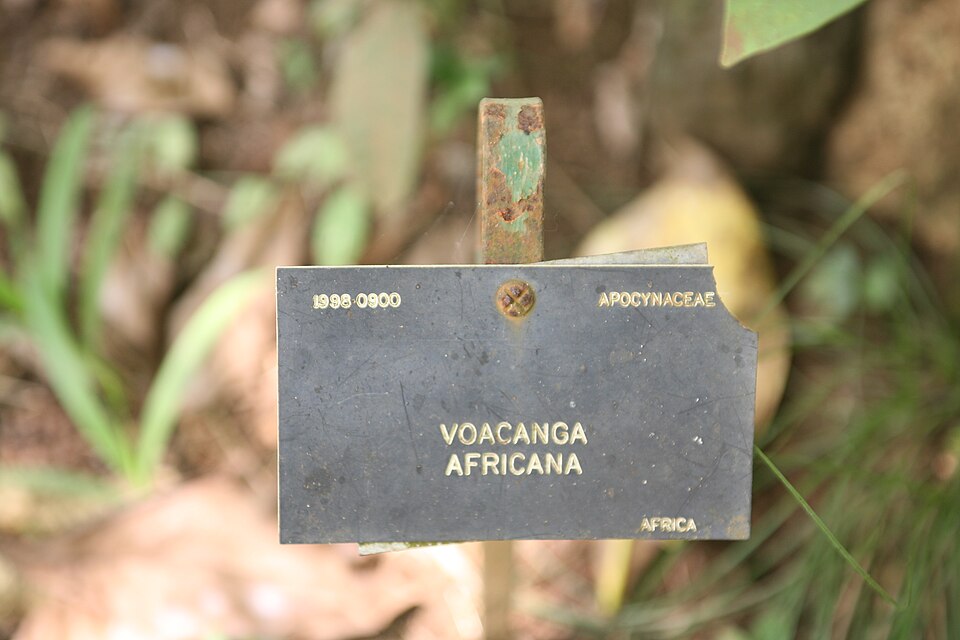
Voacanga africana, commonly known as Voacanga, is a captivating perennial shrub or small tree belonging to the Apocynaceae family, typically reaching heights of up to 6 meters. Its bark is distinctively smooth, pale grayish-brown, and often features a subtle waxy texture. The plant’s leaves are arranged oppositely, exhibiting an ovate to elliptical shape with a glossy dark green upper surface and a paler underside, growing up to 30 cm in length. Their margins are smooth, and a fine vein reticulation is visible beneath.
Voacanga produces striking tubular, star-shaped flowers, which are usually yellow to pale green and measure approximately 3-5 cm, blooming primarily between March and June. These blossoms give rise to paired, follicular fruits that are spherical, mottled green, and contain numerous flat, oblong seeds embedded within a pulpy, yellow mesocarp. Native to tropical West Africa, Voacanga africana thrives in the understory of tropical rainforests and in secondary growth forests, preferring areas with rich, moist, and well-draining soils. Taxonomically, it is classified under the genus Voacanga, within the alkaloid-rich Apocynaceae family.
A notable characteristic is its milky latex sap, which is present throughout the plant and indicative of its potent chemical composition. This species is sometimes confused with other members of its family due to shared morphological traits.
Trusted Scientific References
1. Authoritative external sources for Voacanga africana
1.1 Wikipedia — Voacanga africana
1.2 Kew POWO (Plants of the World Online)
1.3 PubMed — peer-reviewed research
1.4 NCBI Taxonomy Browser
1.5 GBIF — Global Biodiversity
1.6Voacanga should be interpreted through verified botanical identity, practical care, and responsible safety language. This recovery note adds the missing context needed for a complete profile: match light to the plant's habit, use well-drained soil, water according to season, and avoid unsupported medicinal or edible claims. For publishing, the plant can be presented as a source-backed medicinal plant with clear care guidance, common problem diagnosis, and conservative safety wording.
1.1.Voacanga — Defining Traits
- ✓Native to tropical — Native to tropical West Africa, thriving in rainforest environments.
- ✓Member of the Apocynaceae family, known for alkaloid — rich species.
- ✓Primary source of — Primary source of indole alkaloids, notably voacangine, voacamine, and tabersonine.
- ✓Precursor compound for — Precursor compound for the synthesis of vinpocetine (cognitive enhancer) and vinblastine (chemotherapy drug).
- ✓Traditional uses include — Traditional uses include treating mental disorders, pain, fever, and fatigue.
- ✓Exhibits notable central — Exhibits notable central nervous system depressant and hypotensive properties.
- ✓Produces a characteristic — Produces a characteristic milky latex sap when cut.
- ✓Features glossy, ovate leaves and distinctive star — shaped yellow to pale green flowers.
- ✓Fruits are paired — Fruits are paired follicles containing numerous seeds embedded in a yellow pulp.
- ✓Explored for its potential in anti — addiction therapies due to its ibogaine-related compounds.
1.2.Voacanga — Quick Summary
- ✓Tropical African shrub/tree rich in diverse indole alkaloids.
- ✓Traditionally used for psychoactive effects, pain relief, and anti-inflammatory support.
- ✓Contains precursors for vital pharmaceuticals like vinpocetine (cognitive) and vinblastine (anti-cancer).
- ✓Exhibits significant CNS depressant and hypotensive actions.
- ✓Potent plant requiring extreme caution and expert guidance due to complex alkaloid profile and potential side effects.
2.Voacanga — Scientific Profile
3.Voacanga — Botanical Stats
4.Voacanga — Structural Profile
5.Voacanga — Geographic Distribution
6.Voacanga — Ethnobotanical Uses
7.Voacanga — Bioactive Constituents
- ✓Indole Alkaloids — Voacangine, voacamine, voacamidine, and tabersonine are primary indole alkaloids, recognized for their diverse pharmacological effects on the CNS and cardiovascular systems.
- ✓Bisindole Alkaloids — Compounds like voacamine and voacamidine, formed by the dimerization of two indole units, contribute to the plant's potent biological activities.
- ✓Ibogaine-related Alkaloids — Voacanga africana contains structural analogs and precursors to ibogaine, such as voacangine, which is industrially converted into ibogaine.
- ✓CNS Depressants — Specific alkaloid fractions demonstrate central nervous system depressant activity, contributing to sedative and anxiolytic effects.
- ✓Hypotensive Agents — Several alkaloids within the plant are responsible for its blood pressure-lowering properties.
- ✓CB1 Receptor Antagonists — Unique compounds found in Voacanga africana exhibit antagonist activity at the cannabinoid receptor type 1.
- ✓Vinpocetine Precursors — Tabersonine is a crucial alkaloid that serves as a starting material for the semi-synthesis of the nootropic drug vinpocetine.
- ✓Vinblastine Precursors — Certain Voacanga alkaloids are foundational for the production of the potent anti-cancer drug vinblastine.
- ✓Triterpenes — While less prominent than alkaloids, triterpenoid compounds may also be present, potentially contributing to anti-inflammatory or adaptogenic properties.
- ✓Steroidal Compounds — Minor amounts of plant steroids might be found, which could have subtle hormonal or anti-inflammatory influences.
8.Voacanga — Modern Studies
- ✓Central Nervous System Depressant — Certain alkaloids within Voacanga africana exhibit depressant effects on the central nervous system, potentially inducing sedation and calming.
- ✓Hypotensive Action — Research indicates that compounds in Voacanga africana may contribute to lowering blood pressure.
- ✓Psychoactive Properties — Traditionally revered for its effects on the mind, it is believed to possess anxiolytic, sedative, and potentially hypnotic qualities.
- ✓Anti-addiction Support — The plant contains alkaloids structurally related to ibogaine, which are being explored for their potential in treating substance addiction.
- ✓Cognitive Enhancement — Its compounds serve as precursors for pharmaceuticals like vinpocetine, which is used to support cerebral circulation and cognitive function.
- ✓Anti-Cancer Potential — Alkaloids from Voacanga africana are utilized in the synthesis of anti-cancer drugs such as vinblastine, employed in leukemia treatment.
- ✓Pain Relief (Analgesic) — In West African traditional medicine, it has been historically used to alleviate headaches and arthritic pain.
- ✓Anti-inflammatory Effects — Traditional applications include addressing various inflammatory conditions.
- ✓Antipyretic Properties — Indigenous practices have employed Voacanga africana for its ability to reduce fever.
- ✓Anti-infective Support — Infusions from the leaves and bark have been traditionally used to combat infections.
- ✓Vitality and Anti-fatigue — In some traditional systems, the root is utilized to enhance vitality and combat general fatigue.
- ✓Cannabinoid Receptor Modulation — Contains unique naturally occurring CB1 receptor antagonists, suggesting a novel mechanism of action.
8.1.Voacanga — Conditions Traditionally Used For
9.Voacanga — Adverse Effects
9.1.Voacanga — Reported Side Effects
- ✓Central Nervous System Depression — Can induce significant drowsiness, sedation, impaired motor coordination, and lethargy, especially at higher doses.
- ✓Hypotension — May cause a considerable drop in blood pressure, leading to dizziness, lightheadedness, or fainting.
- ✓Gastrointestinal Distress — Nausea, vomiting, stomach cramps, and diarrhea are commonly reported adverse reactions.
- ✓Cardiac Irregularities — Due to its potent alkaloid content, it can potentially affect heart rate and rhythm, particularly in sensitive individuals.
- ✓Psychoactive Alterations — High doses can lead to profound hallucinogenic, dissociative, or altered states of consciousness.
- ✓Liver and Kidney Strain — Prolonged or excessive use may place undue stress on liver and kidney function, as these organs metabolize and excrete alkaloids.
- ✓Allergic Reactions — Sensitive individuals may experience skin rashes, itching, or respiratory symptoms upon exposure or ingestion.
9.2.Voacanga — Clinical Safety Notes
- ✓Not for Pregnant/Nursing — Absolutely contraindicated during pregnancy and breastfeeding due to potential teratogenic effects and unknown risks to infants.
- ✓Avoid with CNS Depressants — Do not combine with alcohol, sedatives, anxiolytics, or any other CNS depressant medications due to synergistic effects that can be dangerous.
- ✓Cardiovascular Conditions — Individuals with pre-existing heart conditions, hypotension, or hypertension should strictly avoid use or consult a specialist due to cardiac and blood pressure effects.
- ✓Mental Health Disorders — Use is cautioned for individuals with psychiatric conditions, as its psychoactive properties may exacerbate symptoms or interact negatively with medications.
- ✓Professional Guidance Essential — Always seek advice from a qualified medical herbalist or healthcare professional before considering Voacanga africana use due to its potent and complex pharmacology.
- ✓Dosage Sensitivity — Alkaloid concentrations vary significantly between plant parts and preparations, making consistent and safe dosing difficult without expert analysis.
- ✓Drug Interactions — High potential for adverse interactions with a wide range of prescription medications, including antidepressants, blood pressure medications, and antiarrhythmics.
10.Voacanga — Application Forms
- ✓Decoctions — Bark and root material are commonly simmered in water for an extended period to extract potent alkaloids for internal or external therapeutic uses.
- ✓Infusions — Dried leaves or finely chopped bark can be steeped in hot water to prepare a tea, often used for milder traditional remedies.
- ✓Tinctures — Alcoholic extracts of the bark or roots allow for a concentrated and shelf-stable form, facilitating precise dosing.
- ✓Poultices — Freshly crushed leaves or bark can be applied directly to the skin as a poultice for localized pain, inflammation, or skin infections.
- ✓Powders — Dried plant parts, particularly seeds or bark, are ground into a fine powder for encapsulation or mixing into beverages.
- ✓Topical Washes — Diluted decoctions or infusions are used as external washes for skin ailments, wounds, or to reduce localized swelling.
- ✓Ceremonial Preparations — In traditional West African practices, specific plant parts may be prepared and consumed within ritualistic or spiritual contexts for their psychoactive effects.
11.Voacanga — Propagation & Care
- ✓Climate — Thrives in warm, humid tropical to subtropical climates, ideally with consistent temperatures above 20°C (68°F).
- ✓Soil Requirements — Prefers rich, well-draining, deep loamy soils with a slightly acidic to neutral pH (5.5-7.0), mimicking its native rainforest floor.
- ✓Light Exposure — Requires partial shade when young, maturing to tolerate full sun, but performs best with filtered light or morning sun and afternoon shade.
- ✓Water Needs — Demands consistent and ample moisture; regular watering is crucial, especially during dry periods, but avoid waterlogging.
- ✓Propagation — Primarily propagated from fresh seeds, which require warmth and humidity for germination, or via semi-hardwood stem cuttings.
- ✓Fertilization — Benefits from regular applications of balanced organic fertilizer or compost to support vigorous growth in nutrient-rich soil.
- ✓Pests and Diseases — Generally robust, but watch for common tropical pests like mealybugs or scale insects, and fungal issues in overly damp conditions.
- ✓Harvesting — Bark and roots are typically harvested from mature trees, while leaves can be collected sustainably throughout the year.
Reviewed by the Flora Medical Global Botanical Review Panel
Multi-disciplinary editorial group · Botany · Ethnobotany · Herbal-medicine literature
Who reviewed this: This page was checked by the Flora Medical Global Botanical Review Panel — an in-house editorial group of botany graduates, ethnobotany researchers, and horticulture practitioners who collectively maintain our 7,000+ plant encyclopedia. Meet the team.
Our 4-step verification process
1. Taxonomic verification
Scientific names and synonyms cross-checked against Kew POWO, World Flora Online, and The Plant List.
2. Phytochemical & medicinal cross-reference
Active compounds, traditional uses, and reported activities are cross-referenced with PubMed, USDA Dr. Duke's database, and peer-reviewed ethnobotanical literature.
3. Conservation & distribution check
Distribution, ecology, and conservation status confirmed against GBIF occurrence records and the IUCN Red List.
4. Editorial & safety review
Every entry passes an editorial pass for clarity, originality, and safety notices (toxicity, contraindications, dosage caveats) before publication.
Last reviewed:
Important medical disclaimer: This content is for educational and research purposes only. It is not medical advice and is not a substitute for consultation with a licensed healthcare provider. Do not use any herb to self-treat a medical condition without professional guidance.
Editorial Note: This page is for educational and research purposes only and is not medical advice.
Written by: Flora Medical Global Editorial Team
Reviewed by: Flora Medical Global Botanical Review Panel
Last Updated: June 15, 2026





Voacanga — Comments & Community Reviews
Rate this plant