

Medical Disclaimer: This content is for educational purposes only. It is not medical advice. Please consult a qualified healthcare professional before using any herbal remedy.
Safety Overview
1.Wahoo — Introduction & Highlights
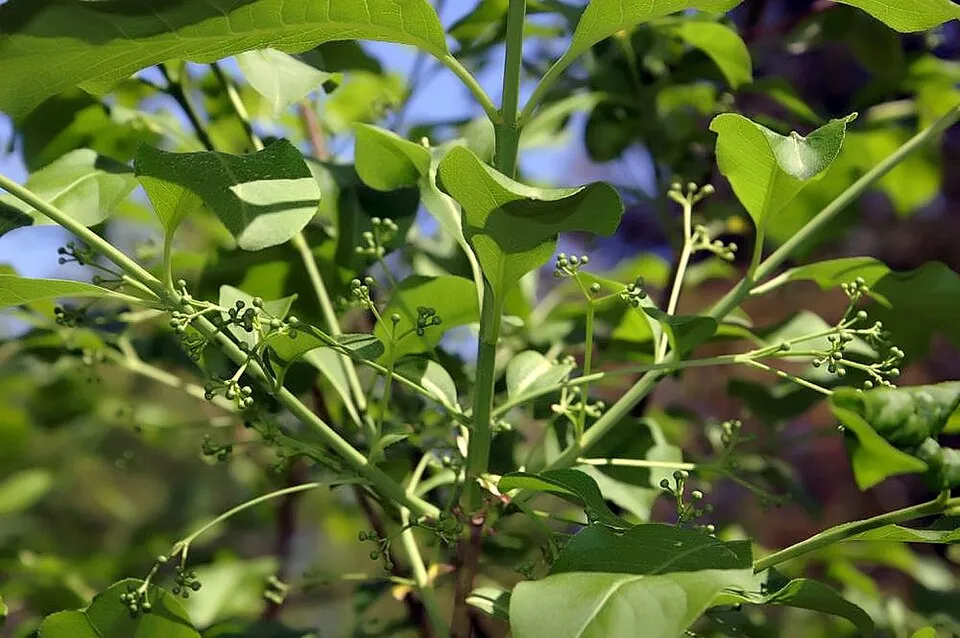
Wahoo, scientifically known as Euonymus atropurpureus, is a captivating deciduous shrub or small tree native to the eastern and central regions of North America. It typically reaches heights of up to 8 meters, featuring a slender trunk with a diameter of about 10 cm. The bark is characteristically gray, smooth, and may develop light fissures with age.
Its twigs are slender and dark purple, sometimes exhibiting four-angled or slightly winged structures. The leaves are elliptical, measuring 8-11 cm long and 3-5 cm broad, with a distinctive long-pointed tip and finely serrated margins. In late spring to early summer, Wahoo produces inconspicuous bisexual flowers, approximately 10-12 mm in diameter, adorned with four brown-purple petals, four green sepals, and four stamens.
The most striking feature of the plant is its smooth, red to pink, four-lobulated fruit, which splits open in the fall to reveal bright orange seeds, giving rise to common names like 'Burning Bush' or 'Bursting Heart'. Wahoo thrives in well-drained, moist soils, often found along stream banks, in open meadows, and on wooded slopes. It reproduces effectively by reseeding, attracting various birds and wildlife with its vibrant berries, which are, however, highly toxic.
Trusted Scientific References
1. Authoritative external sources for Euonymus atropurpureus
1.1 Wikipedia — Euonymus atropurpureus
1.2 Kew POWO (Plants of the World Online)
1.3 PubMed — peer-reviewed research
1.4 NCBI Taxonomy Browser
1.5 GBIF — Global Biodiversity
1.6Wahoo should be interpreted through verified botanical identity, practical care, and responsible safety language. This recovery note adds the missing context needed for a complete profile: match light to the plant's habit, use well-drained soil, water according to season, and avoid unsupported medicinal or edible claims. For publishing, the plant can be presented as a source-backed medicinal plant with clear care guidance, common problem diagnosis, and conservative safety wording.
1.1.Wahoo — Key Features
- ✓Deciduous shrub or — Deciduous shrub or small tree native to North America.
- ✓Distinctive red, four — lobulated fruit that opens to reveal orange seeds.
- ✓Historically valued in — Historically valued in Western herbalism for its medicinal properties.
- ✓Known for its — Known for its potent laxative and diuretic actions.
- ✓Acts as a — Acts as a cholagogue, stimulating bile flow.
- ✓Contains compounds that — Contains compounds that exert a significant effect on the heart.
- ✓All plant parts — All plant parts are considered highly toxic and potentially deadly.
- ✓Used traditionally for — Used traditionally for digestive issues, fluid retention, and fevers.
- ✓Ornamental appeal, but — Ornamental appeal, but its toxicity necessitates careful placement.
- ✓Requires expert guidance — Requires expert guidance for any potential therapeutic application.
1.2.Wahoo — Concise Overview
- ✓Wahoo (Euonymus atropurpureus) is a North American native shrub.
- ✓Traditionally used as a laxative, diuretic, and bile stimulant.
- ✓Contains potent compounds like euonymin and cardiac-active principles.
- ✓All parts, especially fruits, bark, and seeds, are highly poisonous.
- ✓Strict contraindications for pregnancy, breastfeeding, heart, and GI conditions.
- ✓Requires extreme caution and professional medical supervision for any use.
2.Wahoo — Systematic Position
3.Wahoo — Reference Facts
4.Wahoo — Morphological Account
5.Wahoo — Habitat & Distribution
6.Wahoo — Cultural & Traditional Roles
7.Wahoo — Secondary Metabolites
- ✓Euonymin — A complex resinous extract, historically considered the principal active compound responsible for Wahoo’s laxative and cholagogue effects.
- ✓Asparagine — An amino acid found in the plant, contributing to its overall metabolic profile and general plant physiology.
- ✓Euonic Acid — A unique organic acid specific to the Euonymus genus, whose precise pharmacological role is still being investigated but contributes to the plant’s distinct chemical signature.
- ✓Inorganic Salts — Essential mineral components that play a role in various physiological functions of the plant and may contribute to its traditional medicinal actions.
- ✓Cardiac Glycosides — Although not always explicitly named, the potent cardiac effects observed with Wahoo strongly suggest the presence of cardenolides or similar compounds that influence heart function, warranting extreme caution.
- ✓Flavonoids — A class of polyphenolic compounds likely present, contributing to the plant's antioxidant and potential anti-inflammatory properties.
- ✓Tannins — These astringent compounds are typically found in bark and may contribute to some of Wahoo's traditional digestive and anti-diarrheal (in specific contexts) uses.
- ✓Terpenoids — Various terpenoid compounds are often found in medicinal plants and could contribute to the plant's overall bioactivity, including its reported antimicrobial effects.
8.Wahoo — Modern Studies
- ✓Laxative Action — Wahoo bark is traditionally employed as a potent laxative, effective in treating obstinate constipation by stimulating peristalsis in the digestive tract.
- ✓Diuretic Properties — It acts as a diuretic, increasing the frequency of urination and assisting in the management of water retention and conditions like dropsy linked to renal and hepatic inactivity.
- ✓Cholagogue Activity — This herb stimulates the flow of bile from the liver and gallbladder, supporting digestive processes and traditionally used for gallbladder ailments and skin conditions like eczema rooted in poor liver function.
- ✓Digestive Aid — Wahoo helps alleviate various digestive complaints including dyspepsia, indigestion, and a burning sensation in the stomach, while also improving gastric debility.
- ✓Appetite Stimulation — In carefully controlled small doses, Wahoo has been observed to stimulate the nutritive process and increase appetite, beneficial for conditions like anorexia.
- ✓Anti-malarial Support — Historically, it has been used to treat malarial fevers and was noted for its ability to supplement the action of quinine, a well-known anti-malarial drug.
- ✓Expectorant Effects — The bark possesses expectorant qualities, making it a traditional remedy for pulmonary affections and other respiratory ailments.
- ✓Cardiotonic Effects — Wahoo has been noted to exert a stimulant effect on the heart and digestive system, akin to the action of digitalis, requiring extreme caution in its application.
- ✓Anti-inflammatory Support — Its rich profile of bioactive phytochemicals, as suggested by modern pharmacological research, contributes to anti-inflammatory effects.
- ✓Antioxidant Activity — The presence of various phytochemicals lends Wahoo antioxidant properties, helping to combat oxidative stress within the body.
- ✓Antimicrobial Properties — Research indicates that Wahoo contains compounds with potential antimicrobial activity, offering broad-spectrum protective benefits.
- ✓Skin and Scalp Health — Traditionally, powdered Wahoo bark has been applied topically to treat dandruff and eczema, particularly when these conditions are linked to hepatic imbalances.
8.1.Wahoo — Health Applications
9.Wahoo — Adverse Effects
9.1.Wahoo — Warnings
- ✓Severe Gastrointestinal Distress — Ingestion, particularly of large doses, can cause extreme upset stomach, nausea, vomiting, and bloody diarrhea.
- ✓Neurological Symptoms — Poisoning can lead to serious neurological effects including seizures, syncope (fainting), weakness, and in severe cases, unconsciousness and coma.
- ✓Cardiac Complications — Wahoo contains compounds that affect the heart, potentially exacerbating existing cardiac conditions or interacting dangerously with heart medications like Digoxin.
- ✓Respiratory Issues — Symptoms of toxicity may include shortness of breath.
- ✓Irritation of Intestines — Large doses are known to irritate the intestinal lining significantly.
- ✓Exacerbation of Diarrhea/IBS — The presence of caffeine-like compounds can worsen symptoms of diarrhea and Irritable Bowel Syndrome.
- ✓General Systemic Poisoning — Overall symptoms of severe poisoning include fever, chills, and profound weakness, making it potentially deadly.
9.2.Wahoo — Safety Profile
- ✓UNSAFE for General Use — Wahoo is considered highly poisonous and unsafe for internal use by the general public without strict medical supervision.
- ✓Pregnancy and Breastfeeding Contraindication — Absolutely contraindicated during pregnancy and breastfeeding due to severe risks to both the mother and the baby.
- ✓Avoid in GI Disorders — Individuals with diarrhea, Irritable Bowel Syndrome (IBS), or other stomach and intestinal disorders should strictly avoid Wahoo as it can worsen these conditions.
- ✓Cardiac Contraindication — Due to its potent effects on the heart, it is contraindicated in individuals with heart conditions or those taking cardiac medications like Digoxin (Lanoxin).
- ✓Drug Interactions — Exhibits major interaction with Digoxin, increasing its effects and side effects. Moderate interactions with Macrolide and Tetracycline antibiotics are also noted.
- ✓Children and Pets — Keep all parts of the Wahoo plant strictly out of reach of children and pets, as ingestion can be fatal.
- ✓Professional Consultation — Always consult a qualified healthcare professional or medical herbalist before considering any use of Wahoo due to its extreme toxicity.
10.Wahoo — Preparation & Dosage
- ✓Bark Preparation — The root bark and trunk bark are the primary parts used medicinally, typically dried and processed.
- ✓Decoction — Traditionally prepared as a decoction, where the bark is boiled in water to extract its active compounds for internal use.
- ✓Powdered Form — For external applications, such as treating dandruff, the bark can be finely powdered and applied topically.
- ✓Controlled Dosing — Due to its potent and toxic nature, Wahoo must be used in very small, carefully measured doses; large doses can be highly irritating or poisonous.
- ✓Traditional Internal Use — Historically administered internally for conditions like constipation, indigestion, dropsy, and malarial fevers under expert supervision.
- ✓External Application — Powdered bark has been historically used as a topical remedy for scalp conditions like dandruff.
- ✓Professional Guidance — Given its high toxicity and potential for severe side effects, Wahoo should never be self-administered and requires strict professional medical herbalist guidance.
- ✓Avoid Raw Consumption — All parts of the plant, especially the fruits and seeds, are poisonous and should never be consumed raw.
11.Wahoo — Growing Guide
- ✓Native Habitat — Best grown in its native North American environment, replicating conditions of open woodlands, stream banks, and meadows.
- ✓Soil Requirements — Prefers well-drained soil, but also tolerates moist conditions, reflecting its natural occurrence near water sources.
- ✓Sunlight Exposure — Thrives in adequate sunlight, ranging from full sun to partial shade, which is typical for its adaptable nature in open slopes.
- ✓Propagation — Primarily reproduces by reseeding itself, with its vibrant berries aiding in natural dispersal by birds and wildlife.
- ✓Growth Form — Cultivated as a deciduous shrub or small tree, reaching a mature height of up to 8 meters with a spreading, upright habit.
- ✓Adaptability — Known for its adaptable nature, making it a robust addition to suitable landscapes, though its toxicity must be considered.
- ✓Water Needs — Requires consistent moisture, especially during dry periods, to support its growth and vigor in moist soil environments.
Reviewed by the Flora Medical Global Botanical Review Panel
Multi-disciplinary editorial group · Botany · Ethnobotany · Herbal-medicine literature
Who reviewed this: This page was checked by the Flora Medical Global Botanical Review Panel — an in-house editorial group of botany graduates, ethnobotany researchers, and horticulture practitioners who collectively maintain our 7,000+ plant encyclopedia. Meet the team.
Our 4-step verification process
1. Taxonomic verification
Scientific names and synonyms cross-checked against Kew POWO, World Flora Online, and The Plant List.
2. Phytochemical & medicinal cross-reference
Active compounds, traditional uses, and reported activities are cross-referenced with PubMed, USDA Dr. Duke's database, and peer-reviewed ethnobotanical literature.
3. Conservation & distribution check
Distribution, ecology, and conservation status confirmed against GBIF occurrence records and the IUCN Red List.
4. Editorial & safety review
Every entry passes an editorial pass for clarity, originality, and safety notices (toxicity, contraindications, dosage caveats) before publication.
Last reviewed:
Important medical disclaimer: This content is for educational and research purposes only. It is not medical advice and is not a substitute for consultation with a licensed healthcare provider. Do not use any herb to self-treat a medical condition without professional guidance.
Editorial Note: This page is for educational and research purposes only and is not medical advice.
Written by: Flora Medical Global Editorial Team
Reviewed by: Flora Medical Global Botanical Review Panel
Last Updated: June 15, 2026





Wahoo — Comments & Community Reviews
Rate this plant