

Medical Disclaimer: This content is for educational purposes only. It is not medical advice. Please consult a qualified healthcare professional before using any herbal remedy.
Safety Overview
1.Wall Germander — Introduction & Highlights
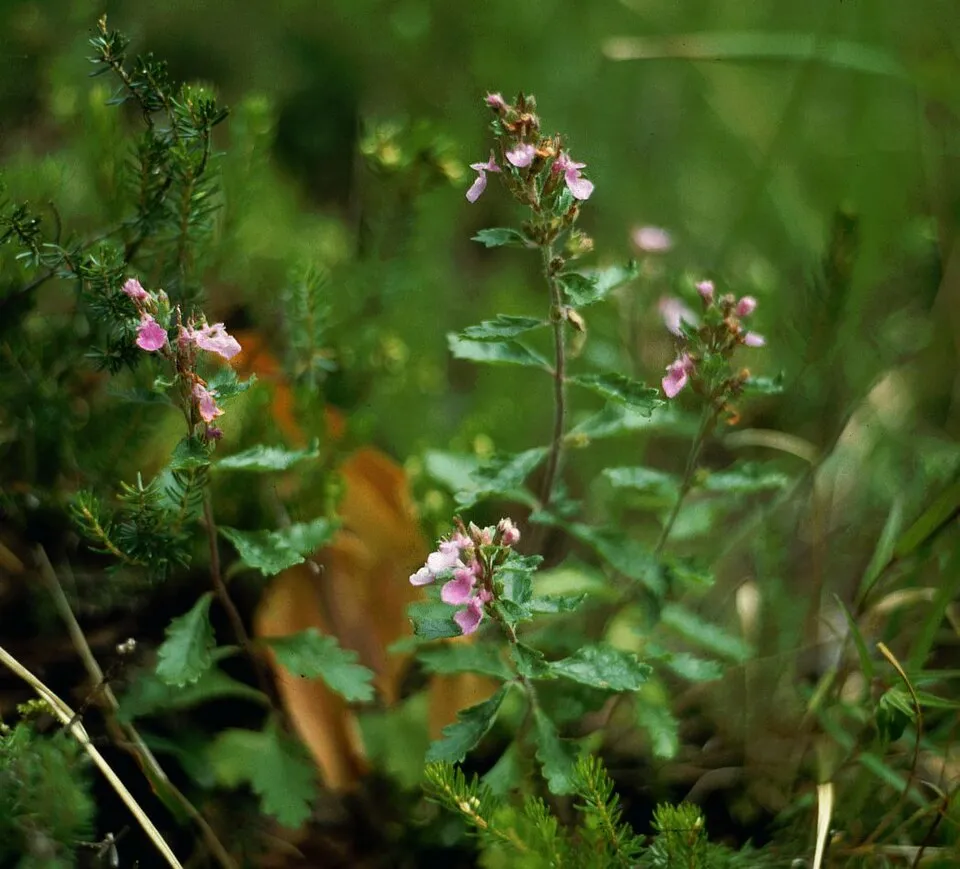
Wall Germander (Teucrium chamaedrys) is a resilient perennial herbaceous plant belonging to the expansive Lamiaceae family, known for its characteristic square stems and aromatic foliage. Typically reaching heights of 30 to 80 centimeters, this species presents an upright, often bushy growth habit. Its leaves are oppositely arranged, ranging from oval to lanceolate in shape, measuring 2 to 5 centimeters in length. They exhibit a deep green hue, often with a glossy upper surface and a finely serrated margin, contributing to the plant's ornamental appeal.
The stems are distinctly angular and covered with a fine layer of downy hairs, imparting a textured feel. From late spring through early autumn, Wall Germander produces delicate, tubular flowers, predominantly pale purple to pink, though variations can include white or rose shades. These blossoms are arranged in attractive whorls along the upper stem, serving as a magnet for various native pollinators, including bees and butterflies. Teucrium chamaedrys is indigenous to the Mediterranean basin, flourishing in dry, rocky, and well-drained soils.
Its natural habitat includes sun-drenched grasslands, open woodlands, and rocky slopes, reflecting its robust drought tolerance. Taxonomically, it shares close evolutionary ties with other aromatic genera within the mint family, making it a classic example of Mediterranean xerophytic flora.
Trusted Scientific References
1. Authoritative external sources for Teucrium chamaedrys
1.1 Wikipedia — Teucrium chamaedrys
1.2 Kew POWO (Plants of the World Online)
1.3 PubMed — peer-reviewed research
1.4 NCBI Taxonomy Browser
1.5 GBIF — Global Biodiversity
1.6Wall Germander should be interpreted through verified botanical identity, practical care, and responsible safety language. This recovery note adds the missing context needed for a complete profile: match light to the plant's habit, use well-drained soil, water according to season, and avoid unsupported medicinal or edible claims. For publishing, the plant can be presented as a source-backed medicinal plant with clear care guidance, common problem diagnosis, and conservative safety wording.
1.1.Wall Germander — Standout Qualities
- ✓Scientific Name — Teucrium chamaedrys
- ✓Family — Lamiaceae (Mint Family)
- ✓Growth Habit — Perennial herbaceous plant, 30-80 cm tall
- ✓Foliage — Dark green, oval to lanceolate, serrated leaves
- ✓Flowers — Pale purple to pink, tubular, arranged in whorls
- ✓Habitat — Native to Mediterranean, rocky, well-drained soils
- ✓Primary Toxin — Furanoid neoclerodane diterpenoids (e.g., Teucrin A)
- ✓Major Risk — Severe hepatotoxicity, liver failure, fatalities
- ✓Traditional Use — Historically for inflammation, digestion (now contraindicated)
- ✓Modern Use — Primarily as an ornamental, drought-tolerant garden plant
1.2.Wall Germander — In Brief
- ✓Wall Germander (Teucrium chamaedrys) is a Mediterranean perennial herb in the Lamiaceae family, known for its ornamental value.
- ✓Historically used in traditional European medicine for inflammatory and digestive issues.
- ✓Contains furanoid neoclerodane diterpenoids, specifically Teucrin A and Teuchmaedryn A, identified as severe hepatotoxins.
- ✓Internal consumption is strictly contraindicated due to a high risk of acute liver failure, chronic hepatitis, and fatalities.
- ✓Its use as an herbal supplement has been banned in many countries following widespread reports of severe hepatotoxicity.
- ✓Primarily safe for use as a drought-tolerant ornamental garden plant, not for medicinal purposes.
2.Wall Germander — Systematic Position
3.Wall Germander — Quick Facts
4.Wall Germander — Plant Morphology
5.Wall Germander — Geographic Distribution
6.Wall Germander — Cultural & Traditional Roles
7.Wall Germander — Active Compounds
- ✓Furanoid Neoclerodane Diterpenoids — Key compounds like Teucrin A and Teuchmaedryn A are identified as the primary hepatotoxins, undergoing cytochrome P450 oxidation to reactive metabolites that cause liver cell damage.
- ✓Flavonoids — This class includes compounds such as luteolin and apigenin derivatives, traditionally associated with antioxidant and anti-inflammatory activities, though their presence does not negate the plant's severe toxicity.
- ✓Volatile Oils — Comprising various monoterpenes and sesquiterpenes, these oils contribute to the plant's characteristic aroma, but their specific medicinal contributions are overshadowed by hepatotoxic components.
- ✓Phenolic Acids — Compounds like caffeic acid and rosmarinic acid are present, known for their antioxidant properties in many Lamiaceae species, but their therapeutic benefits are not safely extractable from Wall Germander.
- ✓Iridoids — These bitter compounds are found in many medicinal plants and may contribute to traditional digestive stimulant effects, though their role in Wall Germander's historical use is minor compared to its toxicity.
- ✓Triterpenes — Including compounds like ursolic acid, these are often linked to anti-inflammatory and cytotoxic activities in other plants, but their specific safe application from Wall Germander is non-existent.
- ✓Saponins — These glycosides can have various biological effects, from hemolytic to anti-inflammatory, but their presence in Teucrium chamaedrys does not contribute to a safe therapeutic profile.
- ✓Alkaloids — While generally present in smaller amounts, alkaloids are a diverse group of nitrogen-containing compounds that can have potent pharmacological effects, but none are known to safely contribute to Wall Germander's medicinal use.
8.Wall Germander — Research Insights
- ✓Anti-inflammatory Support (Historical Claim) — Traditionally, Wall Germander was purported to reduce inflammation, making it a historical remedy for conditions such as arthritis and gout, though modern internal use is contraindicated due to severe risks.
- ✓Digestive Aid (Traditional Use) — Historically, Teucrium chamaedrys was employed to alleviate various gastrointestinal complaints, including indigestion and stomach upset, based on traditional European herbal practices.
- ✓Febrifuge Properties (Historical Application) — In folk medicine, Wall Germander was used to help reduce fevers, suggesting an antipyretic action, although its efficacy and safety for this purpose are not validated for modern consumption.
- ✓Diuretic Action (Traditional Belief) — Some historical accounts suggest its use as a diuretic, aiding in the expulsion of excess bodily fluids, a claim not supported by safe modern clinical evidence.
- ✓General Tonic (Historical Use) — It was traditionally considered a general strengthening tonic to promote overall well-being, a practice now recognized as highly dangerous due to its hepatotoxic potential.
- ✓Weight Management (Historical Marketing) — In the late 1980s, extracts were marketed for weight control, which led to widespread liver injury and subsequent bans, proving this application to be severely harmful.
- ✓Cholesterol Lowering (Historical Marketing) — Similarly, Wall Germander extracts were once promoted for managing hyperlipidemia, an application that resulted in significant hepatotoxicity and is now strongly discouraged.
- ✓Antioxidant Activity (In Vitro/Animal Studies) — While some in vitro and animal studies have indicated antioxidant effects from certain Teucrium species, these findings do not justify human consumption given the severe hepatotoxicity risks associated with the plant.
8.1.Wall Germander — Indications & Uses
9.Wall Germander — Precautions & Warnings
9.1.Wall Germander — Warnings
- ✓Severe Hepatotoxicity — The most critical side effect, leading to acute or chronic liver injury, including inflammation, necrosis, and potentially liver failure.
- ✓Jaundice — A common symptom of liver damage, characterized by yellowing of the skin and eyes, frequently reported in cases of germander toxicity.
- ✓Fatigue and Nausea — Early and common indicators of liver distress experienced by individuals consuming Wall Germander, often preceding more severe symptoms.
- ✓Acute Viral Hepatitis-like Syndrome — The clinical presentation of germander-induced liver injury often mimics acute viral hepatitis, with elevated liver enzymes.
- ✓Chronic Hepatitis and Cirrhosis — Prolonged exposure can lead to chronic liver inflammation, fibrosis, and ultimately cirrhosis, a severe and irreversible form of liver scarring.
- ✓Fatalities and Liver Transplantation — Numerous reports document cases where germander consumption resulted in death or required emergency liver transplantation.
- ✓Rapid Recurrence on Re-exposure — Liver injury often recurs more rapidly and severely upon re-exposure, even to different preparations, indicating a potent and consistent toxic effect.
9.2.Wall Germander — Clinical Safety Notes
- ✓Absolute Contraindication for Internal Use — Due to severe and potentially fatal hepatotoxicity, Wall Germander should never be consumed internally in any form.
- ✓Banned in Many Countries — Its sale and use as an herbal medication are prohibited in several European countries and other regions due to documented liver injury.
- ✓Not for Pregnant or Lactating Individuals — Even if not internally consumed, out of an abundance of caution, pregnant or breastfeeding women should avoid any direct contact or use.
- ✓Avoid in Liver Conditions — Individuals with pre-existing liver disease or compromised liver function are at extremely high risk and must strictly avoid this plant.
- ✓Risk of Adulteration — Germander has been reported as an adulterant in other herbal preparations; consumers should exercise extreme caution with unverified herbal products.
- ✓Consult Healthcare Professional — Always consult a medical professional before considering any traditional or external use of this plant, especially given its known dangers.
- ✓Keep Away from Children and Pets — Ensure Wall Germander plants are inaccessible to children and pets to prevent accidental ingestion and severe poisoning.
10.Wall Germander — Preparation & Dosage
- ✓Given the severe hepatotoxicity of Wall Germander, internal consumption is strictly contraindicated and illegal in many regions.
- ✓Ornamental Cultivation — Primarily, Teucrium chamaedrys is safely used as an attractive ornamental plant in gardens, valued for its drought tolerance, evergreen foliage, and delicate flowers.
- ✓Historical Herbal Teas (Not Recommended) — Historically, infusions were prepared from dried leaves and flowers for various ailments, but this method of internal consumption is now known to cause severe liver damage and is strictly advised against.
- ✓Topical Applications (Limited Historical Use) — Some historical accounts mention external poultices or washes for skin conditions; however, caution is still advised, and patch testing is essential due to potential skin sensitivities.
- ✓Culinary Herb (Extreme Caution, Not Recommended) — While some germander species have a bitter, aromatic quality, Teucrium chamaedrys should never be used culinarily due to its potent hepatotoxic compounds.
- ✓Aromatic Sachets — Dried Wall Germander can be incorporated into aromatic sachets or potpourri for its pleasant scent, offering a safe way to appreciate its aromatic qualities.
- ✓Xeriscaping Plantings — Its natural use is in sustainable landscaping, particularly in dry climates, where it contributes beauty without requiring significant water or care.
- ✓Garden Edging — Its compact growth habit and attractive foliage make it an ideal plant for creating neat, low-maintenance garden edges and borders.
11.Wall Germander — Propagation & Care
- ✓Soil Preference — Wall Germander thrives in well-drained, sandy, or rocky soils, preferring a neutral to alkaline pH; heavy, waterlogged soils should be avoided to prevent root rot.
- ✓Sunlight Requirements — This plant requires full sunlight exposure for optimal growth and flowering, ideally receiving at least 6-8 hours of direct sun daily.
- ✓Watering Regime — Once established, Teucrium chamaedrys is highly drought-tolerant, requiring minimal watering; overwatering is detrimental and can lead to plant decline.
- ✓Climate Adaptability — It is well-suited to Mediterranean and temperate climates, tolerating both heat and moderate cold, typically hardy in USDA zones 5-9.
- ✓Propagation — Wall Germander can be propagated from seeds, stem cuttings, or by division of established clumps in spring or early autumn, with cuttings being a popular and effective method.
- ✓Pruning Practices — Light pruning after the first flush of flowers can encourage a second bloom and maintain a tidy, compact shape, enhancing its ornamental value.
- ✓Pest and Disease Resistance — Generally robust, Wall Germander is relatively resistant to most common pests and diseases, particularly when grown in appropriate conditions.
- ✓Landscape Use — It is an excellent choice for xeriscaping, rock gardens, borders, and as a low-maintenance groundcover, valued for its evergreen foliage and attractive blooms.
Reviewed by the Flora Medical Global Botanical Review Panel
Multi-disciplinary editorial group · Botany · Ethnobotany · Herbal-medicine literature
Who reviewed this: This page was checked by the Flora Medical Global Botanical Review Panel — an in-house editorial group of botany graduates, ethnobotany researchers, and horticulture practitioners who collectively maintain our 7,000+ plant encyclopedia. Meet the team.
Our 4-step verification process
1. Taxonomic verification
Scientific names and synonyms cross-checked against Kew POWO, World Flora Online, and The Plant List.
2. Phytochemical & medicinal cross-reference
Active compounds, traditional uses, and reported activities are cross-referenced with PubMed, USDA Dr. Duke's database, and peer-reviewed ethnobotanical literature.
3. Conservation & distribution check
Distribution, ecology, and conservation status confirmed against GBIF occurrence records and the IUCN Red List.
4. Editorial & safety review
Every entry passes an editorial pass for clarity, originality, and safety notices (toxicity, contraindications, dosage caveats) before publication.
Last reviewed:
Important medical disclaimer: This content is for educational and research purposes only. It is not medical advice and is not a substitute for consultation with a licensed healthcare provider. Do not use any herb to self-treat a medical condition without professional guidance.
Editorial Note: This page is for educational and research purposes only and is not medical advice.
Written by: Flora Medical Global Editorial Team
Reviewed by: Flora Medical Global Botanical Review Panel
Last Updated: June 15, 2026





Wall Germander — Comments & Community Reviews
Rate this plant