
Medical Disclaimer: This content is for educational purposes only. It is not medical advice. Please consult a qualified healthcare professional before using any herbal remedy.
Safety Overview
1.Wattle Bark — Plant Snapshot
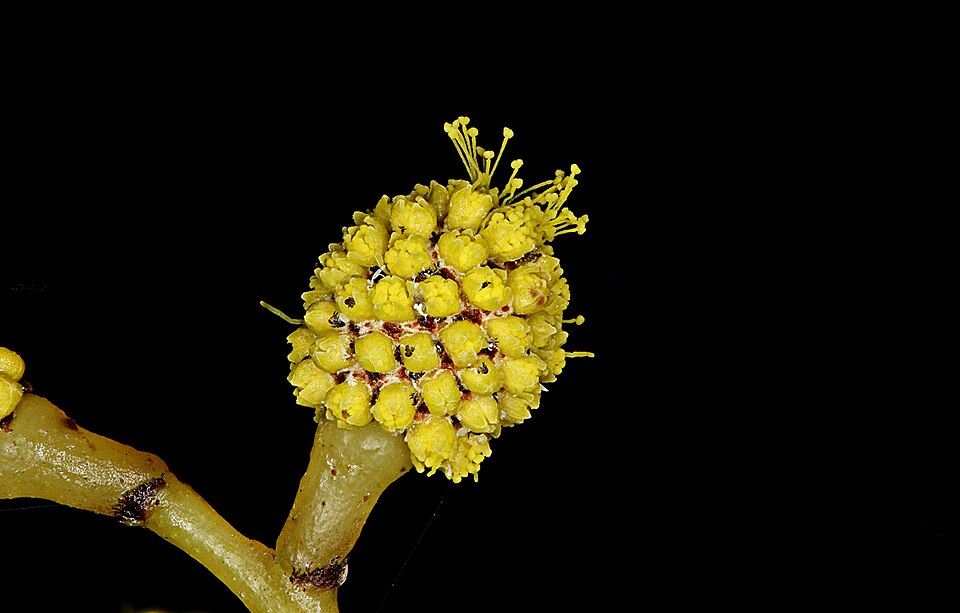
Wattle Bark, derived from the majestic Golden Wattle (Acacia pycnantha), is a prominent member of the diverse Fabaceae family, native to the southeastern regions of Australia, specifically New South Wales, Victoria, and South Australia. This evergreen tree typically ascends to heights of 8 to 10 meters, characterized by its distinctive, linear to narrowly elliptic phyllodes, which are modified leaf structures measuring approximately 5 to 15 cm in length and possessing a smooth, glossy texture. The species is celebrated for its spectacular display of vibrant yellow, globular flower spikes, densely packed and blooming profusely from late winter to early spring, earning it the esteemed title of Australia's national floral emblem.
The bark of Acacia pycnantha is a contrasting greyish-brown, marked by a rough, deeply fissured texture. It thrives in open woodland and scrub environments, preferring well-drained, often nutritionally poor soils, and is highly intolerant of shade. Ecologically, the Golden Wattle plays a crucial role as a nitrogen fixer, enriching soil fertility, and its extensive root system is vital for preventing soil erosion, particularly on sandy banks.
Beyond its ecological significance, it supports various native wildlife, including nectar-feeding birds and insects. Taxonomically, it belongs to the subgenus Acacia, and its historical economic importance extends to its high tannin content, traditionally utilized in the leather tanning industry, showcasing its versatile utility.
Trusted Scientific References
1. Authoritative external sources for Acacia pycnantha
1.1 Wikipedia — Acacia pycnantha
1.2 Kew POWO (Plants of the World Online)
1.3 PubMed — peer-reviewed research
1.4 NCBI Taxonomy Browser
1.5 GBIF — Global Biodiversity
1.6Wattle Bark should be interpreted through verified botanical identity, practical care, and responsible safety language. This recovery note adds the missing context needed for a complete profile: match light to the plant's habit, use well-drained soil, water according to season, and avoid unsupported medicinal or edible claims. For publishing, the plant can be presented as a source-backed medicinal plant with clear care guidance, common problem diagnosis, and conservative safety wording.
1.1.Wattle Bark — Standout Qualities
- ✓Scientific Name — Acacia pycnantha
- ✓Common Name — Golden Wattle, Wattle Bark
- ✓Family — Fabaceae (Leguminosae)
- ✓Native Range — Southeastern Australia (New South Wales, Victoria, South Australia)
- ✓Key Bioactives — High concentrations of Tannins, Flavonoids, Phenolic Acids
- ✓Primary Traditional Use — Astringent, anti-inflammatory, immune support, digestive aid
- ✓Ecological Role — Nitrogen fixer, soil erosion control, wildlife support
- ✓Distinctive Feature — Iconic vibrant yellow globular flower spikes, glossy phyllodes
- ✓Other Uses — Leather tanning (due to high tannin), natural dyes, edible gum (minor)
- ✓Growth Habit — Fast-growing evergreen tree, typically 8-10 meters tall
1.2.Wattle Bark — In Brief
- ✓Golden Wattle (Acacia pycnantha) is Australia's floral emblem, known for its vibrant yellow flowers and distinct phyllodes.
- ✓Its bark is remarkably rich in tannins (over 40%), a key compound for its traditional medicinal and industrial uses.
- ✓Traditionally valued for immune, anti-inflammatory, antioxidant, and digestive support, with ongoing research into its phytochemicals.
- ✓Contains diverse bioactive compounds including flavonoids, phenolic acids, and trace alkaloids, contributing to its therapeutic potential.
- ✓An important ecological species, functioning as a nitrogen fixer and vital for soil erosion control in its native Australian habitat.
- ✓Caution advised regarding its usage, especially concerning dosage, potential digestive upset, and interactions with medications.
2.Wattle Bark — Systematic Position
3.Wattle Bark — Reference Facts
4.Wattle Bark — Plant Morphology
5.Wattle Bark — Habitat & Distribution
6.Wattle Bark — Ethnobotanical Uses
7.Wattle Bark — Active Compounds
- ✓Tannins — Predominantly hydrolyzable and condensed tannins, present in high concentrations (up to 40.8% in bark), responsible for significant astringent, antioxidant, and potential antimicrobial activities.
- ✓Flavonoids — Includes compounds such as quercetin and kaempferol derivatives, which are powerful antioxidants and contribute to the plant's anti-inflammatory properties.
- ✓Phenolic Acids — Contains gallic acid, ellagic acid, and other phenolic compounds, contributing to its strong antioxidant capacity and astringent effects.
- ✓Alkaloids — While generally in trace amounts in the bark, these nitrogenous compounds can exhibit diverse pharmacological activities, though specific ones for A. pycnantha bark are less studied.
- ✓Terpenoids — A diverse group of organic compounds that may contribute to the plant's aromatic profile and possess anti-inflammatory or antimicrobial potential.
- ✓Gums/Polysaccharides — Exudates from the plant, particularly the edible gum, are rich in complex carbohydrates, offering demulcent and soothing properties.
- ✓Saponins — Present in low concentrations, these glycosides may contribute to immune modulation or adaptogenic effects, though specific roles require further research.
- ✓Resins — Minor components that can contribute to the plant's protective mechanisms and may possess mild antiseptic qualities.
8.Wattle Bark — What Research Suggests
- ✓Immune Support — Traditionally, Wattle Bark has been employed to bolster the body's natural defenses, contributing to overall immune resilience through its rich phytochemical profile.
- ✓Anti-inflammatory Effects — The presence of various compounds, including flavonoids and phenolic acids, suggests potential in modulating inflammatory responses within the body, a traditional application for soothing discomfort.
- ✓Antioxidant Protection — Abundant in antioxidants like flavonoids and phenolic acids, Acacia pycnantha helps neutralize harmful free radicals, thereby protecting cells from oxidative stress and supporting cellular health.
- ✓Digestive Health — Historically used to support gastrointestinal well-being, its astringent properties may help to tone digestive tissues and manage mild digestive upsets such as diarrhea.
- ✓General Wellness Promotion — Beyond specific ailments, the plant has been traditionally valued for its holistic contribution to vitality and overall health maintenance.
- ✓Astringent Properties — The high concentration of tannins in Wattle Bark makes it a potent astringent, useful for tightening tissues, reducing secretions, and aiding in the management of minor wounds and skin irritations.
- ✓Antimicrobial Activity — Due to its tannin content and other compounds, the bark may exhibit mild antimicrobial properties, traditionally applied topically to help cleanse and protect minor cuts and abrasions.
- ✓Wound Healing — Applied externally, its astringent and potentially antiseptic qualities contribute to the natural healing process of minor skin lesions and superficial injuries.
- ✓Skin Health Support — Topical preparations have been traditionally used to soothe various skin irritations, reduce redness, and promote a healthier skin barrier.
- ✓Oral Health Maintenance — Decoctions can be used as a gargle or mouthwash to address minor gum inflammation or sore throats, leveraging its astringent and potential antiseptic actions.
8.1.Wattle Bark — Health Applications
9.Wattle Bark — Risk Profile
9.1.Wattle Bark — Side Effects & Warnings
- ✓Digestive Upset — High tannin content can lead to constipation, stomach irritation, or nausea in sensitive individuals or when consumed in excessive amounts.
- ✓Allergic Reactions — Potential for skin rashes, itching, or respiratory symptoms in individuals sensitive to pollen or components of the bark.
- ✓Nutrient Absorption Interference — Tannins can bind to dietary proteins and minerals, potentially reducing their absorption with prolonged, high-dose internal use.
- ✓Liver/Kidney Stress — As with any potent herbal remedy, excessive long-term use without supervision could theoretically place undue stress on liver or kidney function.
- ✓Drug Interactions — May interact with certain medications, particularly those affecting nutrient absorption, blood clotting, or gastrointestinal motility; consult a healthcare professional.
- ✓Bitterness/Astringency — Decoctions can be intensely bitter and astringent, which may be unpalatable to some and could induce gagging or nausea.
9.2.Wattle Bark — Risk Assessment
- ✓Pregnancy and Lactation — Contraindicated during pregnancy and breastfeeding due to insufficient safety data and the potential astringent effects on maternal and fetal/infant systems.
- ✓Children — Not recommended for infants and young children without expert medical advice, given the lack of specific pediatric safety studies.
- ✓Pre-existing Conditions — Individuals with chronic gastrointestinal disorders, liver disease, or kidney impairment should exercise extreme caution or avoid use.
- ✓Medication Interactions — Consult a qualified healthcare practitioner before use if taking any prescription medications, especially iron supplements, antacids, or blood thinners.
- ✓Dosage Adherence — Strict adherence to recommended dosages is crucial; high or prolonged doses increase the risk of adverse effects.
- ✓Allergic Sensitivity — Discontinue use immediately if any signs of allergic reaction, such as skin rash, swelling, or difficulty breathing, manifest.
- ✓Long-term Use — For internal applications, intermittent or short-term use is generally advisable; prolonged continuous use should be avoided without professional guidance.
10.Wattle Bark — Application Forms
- ✓Decoction — Prepare a decoction by simmering dried Wattle Bark in water for 15-20 minutes; traditionally used internally for digestive or immune support, or externally as a wash.
- ✓Tincture — A concentrated alcoholic extract of the bark, taken in small doses under professional guidance for systemic effects.
- ✓Poultice — Crushed or powdered bark, mixed with a small amount of water to form a paste, applied topically to minor wounds, skin irritations, or inflamed areas.
- ✓External Wash — Diluted decoctions can be used as an antiseptic or astringent wash for skin conditions, minor cuts, or as a soothing compress.
- ✓Powdered Bark — Dried bark can be finely powdered and encapsulated for internal consumption, or incorporated into topical creams and ointments.
- ✓Gargle/Mouthwash — A cooled decoction can serve as an effective gargle for sore throats or as a mouthwash to support oral hygiene due to its astringent properties.
- ✓Edible Gum — The oily gum exuded by the tree can be chewed as a candy or dissolved in water to create a jelly-like consistency, traditionally consumed for its demulcent properties.
- ✓Dye Preparation — Flowers are used to extract a yellow dye, while the seed pods yield a green dye for natural textile coloring.
11.Wattle Bark — Growing Guide
- ✓Soil Preference — Thrives in well-drained, sandy loam soils, including nutritionally poor soils, with a preferred pH range of 5.8 to 6.5; avoids excessively limey conditions.
- ✓Sunlight Exposure — Requires full sun exposure for optimal growth and flowering; it is intolerant of shade and needs hot, sunny summers to ripen its wood.
- ✓Watering — Prefers dry to moist soil conditions; regular watering is crucial during establishment, but it becomes drought-tolerant once mature.
- ✓Hardiness — Suitable for USDA hardiness zones 7-10 and UK zone 8; young plants may require protection from frost and cold winds in cooler climates.
- ✓Propagation — Best propagated from scarified seeds, pre-soaked in warm water and sown in a warm greenhouse; cuttings of half-ripe wood with a heel can also be used.
- ✓Growth Rate — A fast-growing tree, though it can be relatively short-lived in cultivation compared to its natural lifespan.
- ✓Special Considerations — Acts as a nitrogen fixer, enriching soil fertility, and is often planted for its extensive root system to prevent soil erosion on sandy banks.
Reviewed by the Flora Medical Global Botanical Review Panel
Multi-disciplinary editorial group · Botany · Ethnobotany · Herbal-medicine literature
Who reviewed this: This page was checked by the Flora Medical Global Botanical Review Panel — an in-house editorial group of botany graduates, ethnobotany researchers, and horticulture practitioners who collectively maintain our 7,000+ plant encyclopedia. Meet the team.
Our 4-step verification process
1. Taxonomic verification
Scientific names and synonyms cross-checked against Kew POWO, World Flora Online, and The Plant List.
2. Phytochemical & medicinal cross-reference
Active compounds, traditional uses, and reported activities are cross-referenced with PubMed, USDA Dr. Duke's database, and peer-reviewed ethnobotanical literature.
3. Conservation & distribution check
Distribution, ecology, and conservation status confirmed against GBIF occurrence records and the IUCN Red List.
4. Editorial & safety review
Every entry passes an editorial pass for clarity, originality, and safety notices (toxicity, contraindications, dosage caveats) before publication.
Last reviewed:
Important medical disclaimer: This content is for educational and research purposes only. It is not medical advice and is not a substitute for consultation with a licensed healthcare provider. Do not use any herb to self-treat a medical condition without professional guidance.
Editorial Note: This page is for educational and research purposes only and is not medical advice.
Written by: Flora Medical Global Editorial Team
Reviewed by: Flora Medical Global Botanical Review Panel
Last Updated: June 15, 2026





Wattle Bark — Comments & Community Reviews
Rate this plant