

Medical Disclaimer: This content is for educational purposes only. It is not medical advice. Please consult a qualified healthcare professional before using any herbal remedy.
Safety Overview
1.White Bryony — Introduction & Highlights
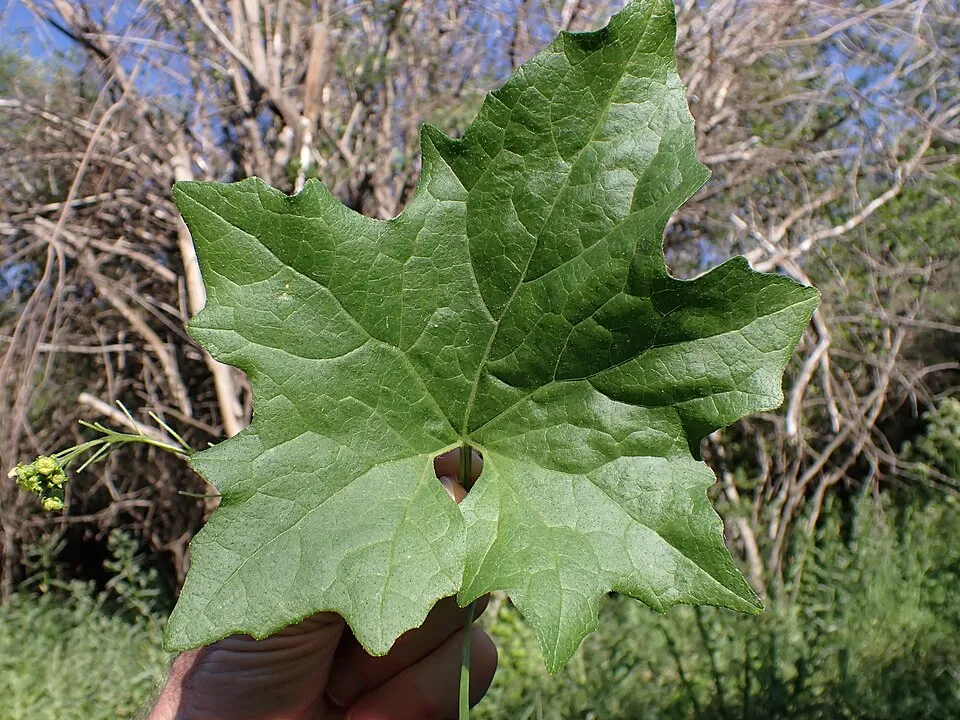
White Bryony, known scientifically as Bryonia alba, is an intriguing perennial climbing vine belonging to the Cucurbitaceae family, a botanical lineage shared with familiar cucurbits like cucumbers and melons. This robust plant is native to Europe and parts of Western Asia, thriving in temperate climates, often found vigorously twining around hedgerows, fences, and trellises, reaching impressive heights of up to 3 meters (10 feet). Its striking foliage consists of large, deeply lobed leaves, typically 10-20 centimeters across, displaying a palmate shape with distinctly serrated margins, contributing to its recognizable silhouette.
During the summer months, from June to August, White Bryony produces small, inconspicuous greenish-white flowers that cluster in the leaf axils. These flowers eventually give way to small, spherical berries that ripen to a vibrant red or orange hue, serving as a visual warning of their inherent toxicity. The plant's stem is stout and hollow, covered in a greenish-brown bark that can appear slightly hairy when young.
While its presence adds a wild beauty to its surroundings, it is crucial to recognize its potent nature, especially the highly toxic root, which has historically been the primary part used in traditional medicinal systems, albeit with extreme caution and in highly diluted preparations. Its preference for well-drained soils and adequate sunlight underscores its adaptability in its native range.
Trusted Scientific References
1. Authoritative external sources for Bryonia alba
1.1 Wikipedia — Bryonia alba
1.2 Kew POWO (Plants of the World Online)
1.3 PubMed — peer-reviewed research
1.4 NCBI Taxonomy Browser
1.5 GBIF — Global Biodiversity
1.6White Bryony should be interpreted through verified botanical identity, practical care, and responsible safety language. This recovery note adds the missing context needed for a complete profile: match light to the plant's habit, use well-drained soil, water according to season, and avoid unsupported medicinal or edible claims. For publishing, the plant can be presented as a source-backed medicinal plant with clear care guidance, common problem diagnosis, and conservative safety wording.
1.1.White Bryony — Standout Qualities
- ✓Highly Toxic Plant — All parts, especially the root and berries, contain potent and potentially fatal toxins.
- ✓Perennial Climbing Vine — A vigorous climber reaching up to 3 meters, often found in hedges and disturbed areas.
- ✓Lobed, Palmate Leaves — Distinctive foliage with deeply cut, serrated edges, characteristic of the Cucurbitaceae family.
- ✓Small Greenish — White Flowers — Inconspicuous blooms appearing in clusters during summer months.
- ✓Red/Orange Berries — Attractive yet deadly fruits that ripen in late summer and autumn.
- ✓Traditional European Herb — Historically used in folk medicine for its strong purgative, emetic, and anti-inflammatory actions.
- ✓Homeopathic Staple — A well-known remedy in homeopathy for conditions like joint pain, respiratory issues, and headaches.
- ✓Rich in Cucurbitacins — Contains a class of highly bitter and toxic triterpenoids responsible for its pharmacological effects.
- ✓Requires Support for Growth — Its climbing habit necessitates a trellis or other structure for optimal development.
- ✓Not for Internal Use (Crude) — Never consume raw or unprocessed White Bryony due to severe poisoning risk.
1.2.White Bryony — Concise Overview
- ✓Potent & Toxic — White Bryony (Bryonia alba) is a highly poisonous plant, with all parts, especially the root and berries, containing dangerous toxins.
- ✓Traditional Medicinal Use — Historically valued in European folk medicine for anti-inflammatory, purgative, and emetic properties, but with extreme caution.
- ✓Homeopathic Significance — Primarily used today in highly diluted homeopathic remedies for specific symptom profiles, such as joint pain and respiratory issues.
- ✓Key Compounds — Rich in toxic cucurbitacins and bryonin, alongside beneficial triterpenoids like bryonolic acid and flavonoids.
- ✓Strict Safety Warnings — Absolutely contraindicated for self-medication, pregnancy, lactation, and children; professional guidance is mandatory for any use.
2.White Bryony — Scientific Profile
3.White Bryony — Quick Facts
4.White Bryony — Plant Morphology
5.White Bryony — Habitat & Distribution
6.White Bryony — Cultural & Traditional Roles
7.White Bryony — Active Compounds
- ✓Triterpenoid Glycosides (Cucurbitacins) — This class includes highly toxic compounds like cucurbitacin E, I, J, K, which are responsible for the plant's purgative and emetic effects and overall toxicity.
- ✓Bryonin — A bitter and highly toxic glycoside, considered a primary active principle responsible for many of White Bryony's potent pharmacological effects.
- ✓Bryonolic Acid — A triterpenoid acid with documented anti-inflammatory and hepatoprotective properties in preclinical studies, contributing to its therapeutic potential.
- ✓Saponins — These compounds contribute to the plant's foaming properties and may possess expectorant, immune-modulating, and hemolytic activities, though toxic in high concentrations.
- ✓Flavonoids — Including isoquercetin, these compounds offer antioxidant and anti-inflammatory benefits, contributing to the plant's overall phytochemical profile.
- ✓Phenolic Compounds (Resveratrol) — Resveratrol, a stilbenoid, is present in trace amounts and is known for its antioxidant, anti-inflammatory, and cardioprotective properties.
- ✓Alkaloids — While not the dominant class, various minor alkaloids may be present, contributing to the complex pharmacological actions, often with toxic implications.
- ✓Volatile Oils — Present in small quantities, these contribute to the plant's characteristic aroma and may possess mild antimicrobial or insecticidal properties.
- ✓Resins — Complex mixtures of organic compounds that can contribute to the plant's irritating and purgative properties.
8.White Bryony — What Research Suggests
- ✓Anti-inflammatory Support — Traditionally used in highly diluted preparations for its potential to alleviate inflammatory conditions, particularly those affecting joints and serous membranes.
- ✓Analgesic Properties — Historically applied externally in liniments or poultices to soothe rheumatic pain, muscular aches, and neuralgia, acting as a counter-irritant.
- ✓Digestive Aid (Purgative/Emetic) — In historical herbalism, the root was employed as a potent purgative and emetic to induce detoxification, though this use is now considered dangerously toxic.
- ✓Respiratory Relief — Traditional European herbal medicine utilized diluted forms for symptoms of pleurisy, bronchitis, and dry, painful coughs, often associated with inflammation.
- ✓Joint Health — Homeopathic preparations of White Bryony are a well-known remedy for acute joint pain, stiffness, and swelling that worsens with motion and improves with rest.
- ✓Edema Reduction — Folk medicine sometimes used external applications or highly diluted internal remedies to address fluid retention and swelling due to its diuretic potential.
- ✓Immune System Modulation — Some traditional accounts suggest its use in supporting the body's response to acute fevers and infections, likely due to its broader systemic effects.
- ✓Skin Conditions — Historically, poultices or washes from the plant were applied externally for skin eruptions, bruises, and swellings, leveraging its counter-irritant and drawing properties.
- ✓Liver Support — In very specific traditional contexts, extremely diluted preparations were considered for liver congestion, though this is highly speculative and risky.
- ✓Homeopathic Remedy — Widely recognized in homeopathy for conditions characterized by dryness, stitching pains, and aggravation by motion, such as headaches, mastitis, and certain fevers.
8.1.White Bryony — Conditions Traditionally Used For
9.White Bryony — Precautions & Warnings
9.1.White Bryony — Possible Adverse Reactions
- ✓Gastrointestinal Distress — Ingestion of raw or unprocessed plant parts can cause severe nausea, vomiting, abdominal pain, and violent diarrhea due to its purgative compounds.
- ✓Skin Irritation — Direct contact with the fresh root or sap can cause severe dermatitis, blistering, and inflammation due to irritating sap.
- ✓Cardiovascular Effects — High doses can lead to cardiac arrhythmia, palpitations, and potentially heart failure dueating to its systemic toxicity.
- ✓Nervous System Disturbances — Symptoms may include headaches, dizziness, convulsions, paralysis, and in severe cases, central nervous system depression.
- ✓Kidney Damage — The toxic compounds can lead to acute kidney injury and renal failure, further exacerbating systemic toxicity.
- ✓Liver Toxicity — Hepatotoxic effects can occur, leading to liver damage and impaired function.
- ✓Fatalities — Ingestion of even a small number of berries or a piece of the root can be lethal, especially in children.
9.2.White Bryony — Toxicity Assessment
- ✓Extreme Toxicity — White Bryony is highly poisonous; all parts of the plant, especially the root and berries, contain potent toxins that can be fatal if ingested.
- ✓Contraindicated in Pregnancy & Lactation — Absolutely forbidden for pregnant or breastfeeding individuals due to abortifacient and toxic effects that can harm the fetus or infant.
- ✓Avoid in Children — Children are particularly vulnerable to its toxins; even small amounts can be lethal, making it unsuitable for pediatric use in any form other than homeopathic.
- ✓Professional Supervision Required — Any medicinal use of White Bryony, beyond highly diluted homeopathic preparations, must be strictly overseen by a qualified medical professional.
- ✓Not for Self-Medication — Due to its dangerous nature, self-medication with White Bryony in crude or concentrated forms is strictly prohibited and extremely risky.
- ✓Interaction with Medications — May interact dangerously with heart medications, diuretics, or drugs affecting the gastrointestinal tract; consult a physician.
- ✓External Use Caution — Even external application requires extreme caution due to potential skin irritation and systemic absorption of toxins.
10.White Bryony — How to Use
- ✓Homeopathic Tinctures — The primary safe method of using White Bryony today is in highly diluted homeopathic preparations (e.g., Bryonia alba 30C), prescribed by a qualified homeopath.
- ✓External Liniments — Historically, diluted alcoholic extracts or infused oils of the root were prepared as liniments for external application to sore muscles and joints, always with caution.
- ✓Poultices — Traditional use involved making poultices from mashed fresh or dried root for topical application to reduce swelling or pain, but skin irritation was a significant risk.
- ✓Decoctions (Highly Diluted) — In ancient herbalism, extremely diluted decoctions were prepared for internal use as a purgative, a practice now considered dangerously toxic and obsolete.
- ✓Professional Guidance — Due to its extreme toxicity, any consideration of White Bryony for medicinal purposes outside of homeopathic dilutions MUST be under the strict supervision of a qualified medical herbalist or physician.
- ✓Avoid Self-Medication — It is absolutely critical to never self-medicate with White Bryony in any form other than commercially prepared, highly diluted homeopathic remedies.
11.White Bryony — Growth Requirements
- ✓Propagation — White Bryony can be propagated from seeds sown in autumn or spring, or via root division in early spring, ensuring each division has several buds.
- ✓Soil Requirements — Prefers well-drained, fertile soil rich in organic matter, with a neutral to slightly alkaline pH (6.5-7.5) for optimal growth.
- ✓Light Conditions — Thrives in full sun to partial shade; adequate sunlight is essential for robust growth and fruit production.
- ✓Watering — Requires consistent moisture, especially during dry periods and establishment, but avoid waterlogging which can lead to root rot.
- ✓Support Structure — As a vigorous climber, it necessitates a sturdy trellis, fence, or other support for its tendrils to grasp and ascend, reaching its full height potential.
- ✓Pest and Disease Management — Generally robust, but monitor for common garden pests like aphids and slugs; good air circulation helps prevent fungal issues.
- ✓Harvesting — The root, the primary medicinal part, is typically harvested in late autumn after the foliage dies back or in early spring before new growth begins, with extreme caution.
- ✓Climate — Best suited for temperate climates, it is hardy in USDA zones 4-8, tolerating winter cold but preferring a longer growing season.
Reviewed by the Flora Medical Global Botanical Review Panel
Multi-disciplinary editorial group · Botany · Ethnobotany · Herbal-medicine literature
Who reviewed this: This page was checked by the Flora Medical Global Botanical Review Panel — an in-house editorial group of botany graduates, ethnobotany researchers, and horticulture practitioners who collectively maintain our 7,000+ plant encyclopedia. Meet the team.
Our 4-step verification process
1. Taxonomic verification
Scientific names and synonyms cross-checked against Kew POWO, World Flora Online, and The Plant List.
2. Phytochemical & medicinal cross-reference
Active compounds, traditional uses, and reported activities are cross-referenced with PubMed, USDA Dr. Duke's database, and peer-reviewed ethnobotanical literature.
3. Conservation & distribution check
Distribution, ecology, and conservation status confirmed against GBIF occurrence records and the IUCN Red List.
4. Editorial & safety review
Every entry passes an editorial pass for clarity, originality, and safety notices (toxicity, contraindications, dosage caveats) before publication.
Last reviewed:
Important medical disclaimer: This content is for educational and research purposes only. It is not medical advice and is not a substitute for consultation with a licensed healthcare provider. Do not use any herb to self-treat a medical condition without professional guidance.
Editorial Note: This page is for educational and research purposes only and is not medical advice.
Written by: Flora Medical Global Editorial Team
Reviewed by: Flora Medical Global Botanical Review Panel
Last Updated: June 15, 2026





White Bryony — Comments & Community Reviews
Rate this plant