

Medical Disclaimer: This content is for educational purposes only. It is not medical advice. Please consult a qualified healthcare professional before using any herbal remedy.
Safety Overview
1.White Oak Bark — Essential Profile
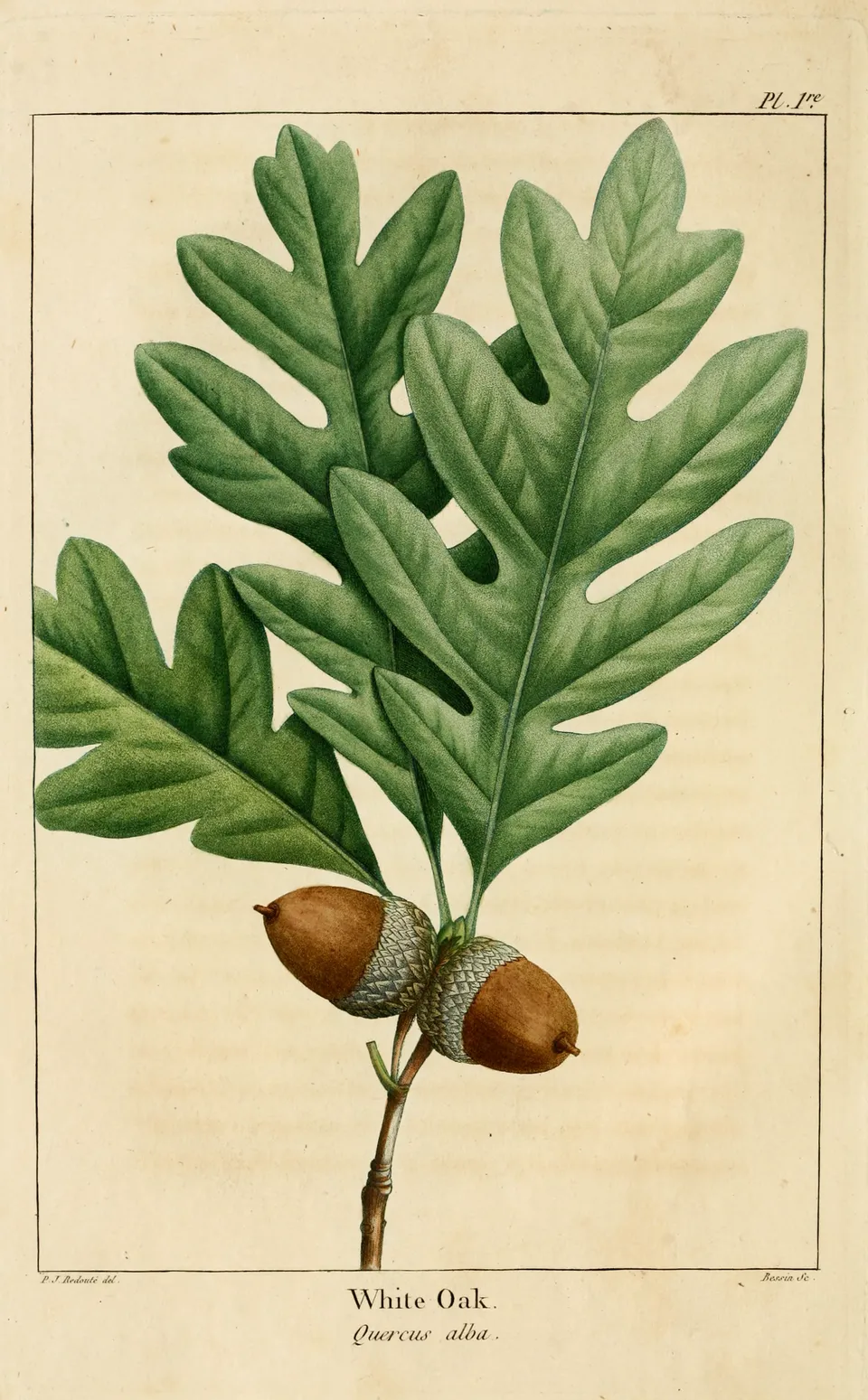
White Oak Bark, derived from the majestic Quercus alba, is a highly valued medicinal plant belonging to the Fagaceae family, a lineage of flowering plants that includes oaks, beeches, and chestnuts. This deciduous tree is indigenous to the eastern and central regions of North America, flourishing across a vast range from southern Quebec and Ontario in Canada, south to northern Florida, and west to eastern Texas and Minnesota in the United States. Quercus alba is distinguished by its light grey, often scaly bark, which deepens with age, and its distinctive lobed leaves that turn brilliant shades of red and brown in autumn.
It typically grows in well-drained, acidic to neutral soils, preferring full sunlight but tolerating partial shade. As a dominant species in many forest ecosystems, the White Oak plays a crucial ecological role, providing habitat and food for numerous wildlife species. Taxonomically, it is classified within the Quercus section Quercus, characterized by acorns that mature in a single season and lack bristles on the leaf lobes.
Its robust growth, longevity, and significant timber value have made it a prominent species, while its bark has garnered centuries of use in traditional herbal medicine for its potent astringent and anti-inflammatory properties, a legacy now being further explored and validated by modern pharmacological research into its rich phytochemical profile.
Trusted Scientific References
1. Authoritative external sources for Quercus alba
1.1 Wikipedia — Quercus alba
1.2 Kew POWO (Plants of the World Online)
1.3 PubMed — peer-reviewed research
1.4 NCBI Taxonomy Browser
1.5 GBIF — Global Biodiversity
1.6White Oak Bark should be interpreted through verified botanical identity, practical care, and responsible safety language. This recovery note adds the missing context needed for a complete profile: match light to the plant's habit, use well-drained soil, water according to season, and avoid unsupported medicinal or edible claims. For publishing, the plant can be presented as a source-backed medicinal plant with clear care guidance, common problem diagnosis, and conservative safety wording.
1.1.White Oak Bark — Highlights
- ✓Potent Astringent Properties — Highly effective for contracting tissues and reducing secretions.
- ✓Rich Tannin Content — Main active compounds responsible for its therapeutic actions.
- ✓Anti — inflammatory Action — Helps reduce swelling and pain in various conditions.
- ✓Antimicrobial Efficacy — Supports the body against bacterial, fungal, and viral infections.
- ✓Digestive Aid — Valued in traditional medicine for treating diarrhea and dysentery.
- ✓Topical Healing Agent — Promotes wound healing and alleviates skin irritations.
- ✓Oral Health Benefits — Useful as a gargle for gum health and sore throats.
- ✓Native North American Species — Widely distributed and ecologically significant.
- ✓Versatile Preparations — Can be used as a decoction, tincture, poultice, or wash.
- ✓Traditional Medicine Staple — Long history of use in Western herbalism and other systems.
1.2.White Oak Bark — At-a-Glance Summary
- ✓White Oak Bark (Quercus alba) is a potent astringent native to North America.
- ✓Rich in tannins, offering anti-inflammatory, antimicrobial, and antioxidant benefits.
- ✓Traditionally used for diarrhea, skin conditions, wound healing, and oral health.
- ✓Primarily prepared as a decoction for internal or external application.
- ✓Short-term use is recommended due to potential side effects like GI upset and nutrient malabsorption.
- ✓Consult a healthcare professional, especially if pregnant, breastfeeding, or on medication.
2.White Oak Bark — Scientific Identity
3.White Oak Bark — Vital Statistics
4.White Oak Bark — Physical Description
5.White Oak Bark — Ecological Habitat
6.White Oak Bark — Heritage Uses
7.White Oak Bark — Chemical Profile
- ✓Hydrolyzable Tannins — Predominantly gallotannins and ellagitannins, such as gallic acid, ellagic acid, and their derivatives, which are responsible for the bark's potent astringent, anti-inflammatory, and antioxidant properties.
- ✓Condensed Tannins (Proanthocyanidins) — These polymeric flavonoids contribute to the antioxidant capacity and further enhance the astringent effects, binding to proteins and precipitating them.
- ✓Phenolic Acids — Including caffeic acid, p-coumaric acid, and ferulic acid, which provide additional antioxidant and anti-inflammatory benefits to White Oak Bark.
- ✓Flavonoids — Compounds like quercetin and kaempferol are present, offering significant antioxidant, anti-inflammatory, and mast cell stabilizing activities.
- ✓Triterpenes — Such as lupeol and betulinic acid, which have demonstrated anti-inflammatory, antiviral, and antiproliferative effects in various studies.
- ✓Steroids — Including beta-sitosterol, known for its cholesterol-lowering and anti-inflammatory properties.
- ✓Resins — Complex mixtures of various organic compounds that contribute to the plant's protective mechanisms and may have some therapeutic actions.
- ✓Volatile Oils — Present in trace amounts, these contribute to the bark's characteristic aroma and may possess mild antimicrobial activity.
- ✓Minerals — Contains various essential minerals absorbed from the soil, contributing to its overall nutritional profile.
8.White Oak Bark — Evidence-Based Benefits
- ✓Potent Astringent Action — White Oak Bark is renowned for its high tannin content, which causes tissues to contract, reducing swelling and secretions, making it invaluable for various inflammatory conditions.
- ✓Anti-inflammatory Support — The tannins and other phenolic compounds in Quercus alba exhibit significant anti-inflammatory effects, helping to alleviate pain and discomfort associated with inflammation.
- ✓Antimicrobial Properties — Its rich composition of tannins contributes to its antimicrobial activity, inhibiting the growth of bacteria, fungi, and viruses, thereby supporting the body's defense against infections.
- ✓Digestive Health Aid — Traditionally used to firm up loose stools and soothe irritated mucous membranes in the digestive tract, White Oak Bark can help manage symptoms of diarrhea and dysentery.
- ✓Wound Healing Acceleration — Applied topically, the astringent properties help to dry out weeping wounds, reduce bleeding, and promote tissue regeneration, assisting in the healing of minor cuts, abrasions, and burns.
- ✓Oral Health Enhancement — As a gargle or mouthwash, it can tighten gum tissue, reduce inflammation, and combat oral bacteria, beneficial for gingivitis, sore throats, and mouth ulcers.
- ✓Skin Condition Relief — Its drying and anti-inflammatory actions make it useful for topical application on skin irritations such as eczema, hemorrhoids, varicose veins, and minor rashes.
- ✓Immune System Modulation — While not a direct immune stimulant, its broad antimicrobial and anti-inflammatory effects indirectly support overall immune function by reducing the burden of infection and inflammation.
- ✓Detoxification Support — By promoting healthy bowel function and reducing inflammation, it can aid the body's natural detoxification processes.
- ✓Venous Insufficiency Management — The astringent effect can help tone blood vessels, potentially aiding in the management of conditions like varicose veins and hemorrhoids by reducing swelling and discomfort.
- ✓Traditional Ayurvedic Use — In Ayurveda, it is valued for its 'Kashaya' (astringent) taste, used to balance Pitta and Kapha doshas, particularly for conditions involving excess secretions or inflammation.
- ✓Traditional Western Herbalism — A cornerstone in Western herbalism for centuries, primarily as a strong astringent for internal and external bleeding, diarrhea, and inflammatory skin conditions.
8.1.White Oak Bark — Therapeutic Indications
9.White Oak Bark — Safety & Side Effects
9.1.White Oak Bark — Caution Notes
- ✓Gastrointestinal Upset — High doses or prolonged internal use of White Oak Bark may cause stomach irritation, nausea, or vomiting due to its strong astringent action.
- ✓Constipation — Excessive internal use can lead to constipation, especially in individuals prone to it, due to the drying effect of tannins.
- ✓Liver Damage — Very high doses or long-term internal use may potentially lead to liver toxicity, though rare, due to the concentration of tannins.
- ✓Skin Irritation — Topical application may cause dryness or irritation in sensitive individuals, particularly with prolonged contact.
- ✓Nutrient Absorption Inhibition — Tannins can bind to minerals and other nutrients, potentially reducing their absorption if consumed with meals.
- ✓Allergic Reactions — Though uncommon, individuals may experience allergic reactions such as rash or itching from topical or internal use.
- ✓Kidney Issues — Individuals with pre-existing kidney conditions should use White Oak Bark with caution, especially internally, due to potential strain.
9.2.White Oak Bark — Toxicity Assessment
- ✓Pregnancy and Lactation — Avoid internal use during pregnancy and breastfeeding due to insufficient safety data and potential effects on nutrient absorption.
- ✓Children — Internal use is generally not recommended for young children; topical use should be supervised and limited.
- ✓Pre-existing Conditions — Individuals with heart conditions, high blood pressure, or kidney disease should consult a healthcare professional before use.
- ✓Medication Interactions — May interfere with the absorption of medications, supplements, and iron due to tannin content; take separately by several hours.
- ✓Duration of Use — Internal use should be short-term (no more than 3-4 days) to avoid potential side effects and nutrient malabsorption.
- ✓Topical Use — Generally considered safe for short-term external use; discontinue if irritation occurs.
- ✓Dosage — Adhere strictly to recommended dosages and consult a qualified herbalist or healthcare provider for personalized advice.
10.White Oak Bark — Preparations & Uses
- ✓Decoction — The most common method; simmer 1-2 teaspoons of dried White Oak Bark in 8 ounces of water for 10-15 minutes, then strain. Used internally for diarrhea or externally for washes.
- ✓Tincture — Prepare by macerating dried bark in a mixture of alcohol and water for several weeks, then straining. Dosage typically 2-5 ml, 2-3 times daily for internal use.
- ✓Poultice — Grind dried bark into a powder, mix with a small amount of warm water to form a paste, and apply directly to skin irritations or wounds.
- ✓Topical Wash/Compress — Use a strong decoction or diluted tincture for external application to skin conditions, hemorrhoids, or varicose veins.
- ✓Gargle/Mouthwash — A cooled decoction can be used to rinse the mouth or gargle for sore throats, gingivitis, or mouth ulcers.
- ✓Sitz Bath — Add a strong decoction to bathwater for soothing relief of hemorrhoids or vaginal irritations.
- ✓Powdered Bark — Dried and powdered bark can be encapsulated for internal use, though decoction is often preferred for optimal extraction of tannins.
11.White Oak Bark — Garden Cultivation
- ✓Site Selection — Choose a location with full sun exposure to partial shade and well-drained soil, ideally with a slightly acidic to neutral pH (5.5-7.0).
- ✓Seed Propagation — Collect acorns in the fall, stratify them over winter, and plant directly in the spring or start indoors.
- ✓Planting Saplings — Dig a hole twice as wide as the root ball and just as deep, ensuring the root collar is at soil level.
- ✓Watering — Provide consistent moisture, especially during dry periods and in the first few years after planting, but avoid waterlogging.
- ✓Soil Requirements — White Oak Bark thrives in deep, fertile loams but is adaptable to various soil types, provided drainage is good.
- ✓Fertilization — Generally not required in rich soils; however, a balanced slow-release fertilizer can be applied in spring for younger trees in poor soil.
- ✓Pest and Disease Management — Monitor for common oak pests like gypsy moths and diseases such as oak wilt; ensure good air circulation and tree health for prevention.
Reviewed by the Flora Medical Global Botanical Review Panel
Multi-disciplinary editorial group · Botany · Ethnobotany · Herbal-medicine literature
Who reviewed this: This page was checked by the Flora Medical Global Botanical Review Panel — an in-house editorial group of botany graduates, ethnobotany researchers, and horticulture practitioners who collectively maintain our 7,000+ plant encyclopedia. Meet the team.
Our 4-step verification process
1. Taxonomic verification
Scientific names and synonyms cross-checked against Kew POWO, World Flora Online, and The Plant List.
2. Phytochemical & medicinal cross-reference
Active compounds, traditional uses, and reported activities are cross-referenced with PubMed, USDA Dr. Duke's database, and peer-reviewed ethnobotanical literature.
3. Conservation & distribution check
Distribution, ecology, and conservation status confirmed against GBIF occurrence records and the IUCN Red List.
4. Editorial & safety review
Every entry passes an editorial pass for clarity, originality, and safety notices (toxicity, contraindications, dosage caveats) before publication.
Last reviewed:
Important medical disclaimer: This content is for educational and research purposes only. It is not medical advice and is not a substitute for consultation with a licensed healthcare provider. Do not use any herb to self-treat a medical condition without professional guidance.
Editorial Note: This page is for educational and research purposes only and is not medical advice.
Written by: Flora Medical Global Editorial Team
Reviewed by: Flora Medical Global Botanical Review Panel
Last Updated: June 15, 2026





White Oak Bark — Comments & Community Reviews
Rate this plant