

Medical Disclaimer: This content is for educational purposes only. It is not medical advice. Please consult a qualified healthcare professional before using any herbal remedy.
Safety Overview
1.White Sandalwood — Plant Snapshot
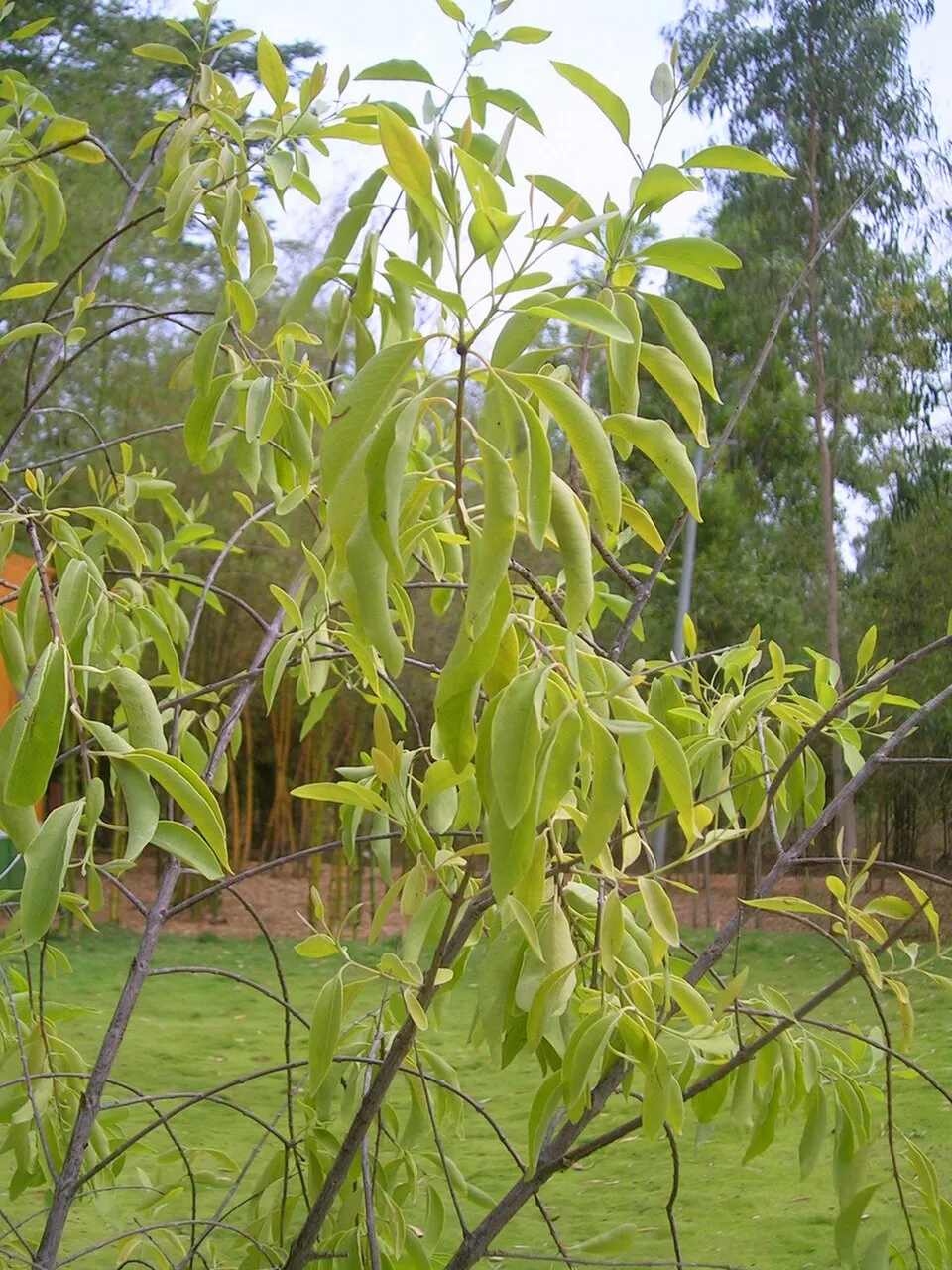
White Sandalwood, scientifically known as Santalum album L., is a revered small to medium-sized evergreen tree, typically attaining heights of 4 to 9 meters. Its trunk is often slender and can appear twisted, characterized by a greyish-brown bark that starts smooth in its youth but gradually develops a rough, flaky texture with age, peeling off in thin strips. The leaves are arranged in an opposite or whorled pattern, presenting a lanceolate to ovate shape, measuring approximately 6 to 12 cm in length and 2 to 4 cm in width. They exhibit a glossy, dark green upper surface contrasting with a paler underside.
Flowering occurs predominantly from August to November, producing small, highly fragrant flowers that range in color from pale yellow to white. These delicate blossoms are grouped in axillary or terminal clusters and possess five petals with multiple stamens, contributing to the plant's distinctive aromatic profile. The fruit is a small, round, fleshy drupe, about 1.5 cm in diameter, which ripens to a dark purplish-black and contains a single seed. Santalum album is indigenous to the dry deciduous forests of southern India, particularly Karnataka, and extends its natural range into other parts of Southeast Asia.
It thrives in well-drained, sandy or loamy soils and is notable for its hemiparasitic nature, requiring host plants for optimal growth. Taxonomically, it belongs to the Santalaceae family, a group recognized for its members' parasitic habits. The heartwood of this species is highly prized globally for its rich, sweet, woody aroma, making it invaluable in perfumery, religious ceremonies, and traditional medicine, where it is celebrated for its calming and anti-inflammatory attributes.
Trusted Scientific References
1. Authoritative external sources for Santalum album L.
1.1 Wikipedia — Santalum album L.
1.2 Kew POWO (Plants of the World Online)
1.3 PubMed — peer-reviewed research
1.4 NCBI Taxonomy Browser
1.5 GBIF — Global Biodiversity
1.6White Sandalwood should be interpreted through verified botanical identity, practical care, and responsible safety language. This recovery note adds the missing context needed for a complete profile: match light to the plant's habit, use well-drained soil, water according to season, and avoid unsupported medicinal or edible claims. For publishing, the plant can be presented as a source-backed medicinal plant with clear care guidance, common problem diagnosis, and conservative safety wording.
1.1.White Sandalwood — Defining Traits
- ✓Highly Aromatic Heartwood — Highly Aromatic Heartwood
- ✓Hemiparasitic Growth Habit — Hemiparasitic Growth Habit
- ✓Rich in Alpha — Rich in Alpha and Beta Santalols
- ✓Traditional Ayurvedic and — Traditional Ayurvedic and TCM Herb
- ✓Excellent Skin Soothing — Excellent Skin Soothing Properties
- ✓Calming and Anxiolytic — Calming and Anxiolytic Essential Oil
- ✓Valued in Perfumery — Valued in Perfumery and Cosmetics
- ✓Native to the — Native to the Indian Subcontinent
- ✓Significant Conservation Status — Significant Conservation Status Concern
- ✓Offers Potent Antioxidant — Offers Potent Antioxidant Support
1.2.White Sandalwood — At-a-Glance Summary
- ✓Botanical Name — Santalum album L., a fragrant, hemiparasitic tree.
- ✓Key Uses — Calming, anti-inflammatory, antimicrobial properties, revered in aromatherapy and skincare.
- ✓Active Compounds — Rich in alpha-santalol and beta-santalol, responsible for its therapeutic effects.
- ✓Traditional Significance — Deeply embedded in Ayurveda, TCM, and spiritual practices for holistic well-being.
- ✓Cautions — Avoid in pregnancy, kidney disease, and with Lithium medication; topical use requires patch testing.
- ✓Habitat — Native to dry deciduous forests of Southern India and parts of Southeast Asia.
2.White Sandalwood — Scientific Profile
3.White Sandalwood — Reference Facts
4.White Sandalwood — Morphological Account
5.White Sandalwood — Geographic Distribution
6.White Sandalwood — Historical Applications
7.White Sandalwood — Bioactive Constituents
- ✓Sesquiterpene Alcohols — The primary active components, notably alpha-santalol (typically 40-55%) and beta-santalol (typically 15-25%), are responsible for the distinctive aroma, anti-inflammatory, antimicrobial, and anxiolytic properties of White Sandalwood oil.
- ✓Flavonoids — A diverse group of polyphenolic compounds, including various flavones and flavonols, known for their potent antioxidant activity, which helps to neutralize free radicals and reduce oxidative stress.
- ✓Phenolic Acids — Compounds such as gallic acid, caffeic acid, and ferulic acid contribute significantly to the plant's antioxidant and anti-inflammatory effects, supporting cellular protection and health.
- ✓Alkaloids — Nitrogen-containing organic compounds that may exhibit a range of pharmacological activities, though their specific contributions to White Sandalwood's medicinal profile are less defined compared to the santalols.
- ✓Terpenoids — A broad class encompassing various monoterpenes and sesquiterpenes beyond the santalols, which contribute to the plant's complex fragrance and may offer additional therapeutic benefits, including antispasmodic actions.
- ✓Glycosides — Compounds where a sugar molecule is linked to a non-sugar component, potentially influencing various biological activities and improving the bioavailability of other active constituents.
- ✓Tannins — Astringent compounds present in the heartwood that can help tighten tissues, reduce inflammation, and possess antimicrobial properties, contributing to traditional uses for skin and mucous membrane conditions.
- ✓Fatty Acids — Present in the seed oil, these provide nourishing and emollient properties, making them beneficial in cosmetic and dermatological applications for skin hydration and barrier support.
8.White Sandalwood — Research Insights
- ✓Anti-inflammatory Support — Santalum album contains sesquiterpene alcohols like alpha-santalol that help modulate inflammatory pathways, reducing systemic inflammation and alleviating discomfort associated with various inflammatory conditions.
- ✓Antimicrobial Properties — Its essential oil has demonstrated significant efficacy against a wide spectrum of bacteria and fungi, offering natural protection and aiding in the treatment of microbial infections when applied appropriately.
- ✓Anxiolytic and Calming Effects — The aromatic compounds, particularly santalols, when inhaled, interact with the limbic system to promote relaxation, reduce anxiety levels, and alleviate symptoms of stress and nervous tension.
- ✓Skin Health Enhancement — Traditionally used for its cooling, soothing, and antiseptic properties, White Sandalwood aids in calming irritated skin, reducing blemishes, and promoting an even, radiant complexion.
- ✓Respiratory System Support — In Ayurvedic and other traditional practices, it has been employed to soothe irritated airways and support respiratory function, particularly for conditions like bronchitis and common colds.
- ✓Digestive Wellness — Historically, White Sandalwood has been utilized to address digestive complaints, possibly due to its antispasmodic qualities that help calm gastrointestinal spasms and promote a balanced gut environment.
- ✓Antioxidant Protection — The plant is rich in phenolic compounds and flavonoids, which act as potent free radical scavengers, helping to protect cellular structures from oxidative damage and supporting overall cellular integrity.
- ✓Memory and Cognitive Function — Some traditional applications suggest a role in enhancing cognitive functions and memory, though modern research is still exploring the specific mechanisms behind these potential benefits.
- ✓Urinary Tract Health — It has been traditionally used to support the urinary system, potentially due to mild diuretic and antiseptic actions that help maintain a healthy microbial balance within the urinary tract.
- ✓General Wellness and Rejuvenation — Across various traditional healing systems, White Sandalwood is esteemed for its holistic benefits, contributing to a sense of well-being, mental clarity, and physical vitality.
8.1.White Sandalwood — Indications & Uses
9.White Sandalwood — Precautions & Warnings
9.1.White Sandalwood — Warnings
- ✓Kidney Damage — Prolonged internal use of White Sandalwood, especially in large medicinal quantities for more than six weeks, is possibly unsafe and may lead to kidney damage.
- ✓Allergic Skin Reactions — Topical application, particularly of the essential oil or powder, can induce contact dermatitis, itching, redness, or other allergic responses in sensitive individuals.
- ✓Nausea — Ingesting White Sandalwood preparations in excessive amounts may trigger gastrointestinal discomfort, including feelings of nausea and stomach upset.
- ✓Gastrointestinal Upset — Oral consumption might lead to general digestive disturbances such as stomach irritation, cramps, or mild diarrhea in some users.
- ✓Photosensitivity — Although rare, some individuals might experience increased skin sensitivity to sunlight following topical application of sandalwood products, particularly essential oils.
- ✓Drug Interactions — White Sandalwood may interact with certain medications, notably Lithium, by potentially altering its elimination from the body, which could lead to increased Lithium levels and adverse effects.
9.2.White Sandalwood — Toxicity Assessment
- ✓Pregnancy Contraindication — Oral consumption of White Sandalwood in medicinal doses is considered likely unsafe during pregnancy due to potential effects that may heighten the risk of miscarriage; therefore, it should be strictly avoided.
- ✓Breastfeeding Caution — There is insufficient reliable information regarding the safety of White Sandalwood use during breastfeeding; as a precautionary measure, it is advisable to avoid its use.
- ✓Kidney Disease Warning — Individuals diagnosed with kidney problems or pre-existing kidney disease should completely avoid White Sandalwood preparations, as it may exacerbate renal conditions.
- ✓Lithium Interaction — White Sandalwood may possess diuretic properties, which could decrease the body's excretion of Lithium, potentially increasing Lithium levels and leading to serious side effects; consult a healthcare provider if taking Lithium.
- ✓Patch Test for Skin — Prior to extensive topical application, a patch test on a small, inconspicuous area of skin is recommended to check for any allergic reactions or sensitivities.
- ✓Duration of Use — Internal medicinal use should be limited to short periods, generally less than six weeks, to mitigate the potential risks of kidney damage and other adverse effects.
- ✓Professional Consultation — Always seek advice from a qualified healthcare professional or medical herbalist before using White Sandalwood for medicinal purposes, especially to determine appropriate dosages and assess individual risks.
10.White Sandalwood — Preparation & Dosage
- ✓Essential Oil — Extracted from the heartwood via steam distillation, it is widely used in aromatherapy for its calming effects, topically (diluted) for skin conditions, and as a prized ingredient in perfumery and cosmetics.
- ✓Herbal Powder (Churna) — The finely ground heartwood or bark is often mixed with water, rosewater, or milk to form a paste for internal consumption in traditional remedies or applied externally as a face mask for skin benefits.
- ✓Topical Paste — Created by grinding sandalwood with water or other liquids, this paste is applied directly to the skin to soothe irritations, reduce inflammation, treat blemishes, and provide a cooling sensation.
- ✓Decoction/Infusion — Small chips of sandalwood heartwood or bark are steeped in hot water to prepare a tea, traditionally consumed for digestive complaints, urinary tract support, and as a general tonic.
- ✓Incense — The fragrant wood is burned as incense during spiritual ceremonies and meditation, revered for its ability to purify the environment and promote a sense of peace and tranquility.
- ✓Soaps and Cosmetics — Due to its delightful fragrance, skin-soothing, and mild antiseptic properties, White Sandalwood is a popular additive in various beauty products, including soaps, lotions, and creams.
- ✓Oral Supplements — Available in capsule or tablet forms containing standardized extracts of the heartwood, used for systemic benefits under the guidance of a qualified healthcare professional.
11.White Sandalwood — Growing Guide
- ✓Climate Preference — White Sandalwood thrives in tropical to subtropical climates, ideally with a distinct dry season, and prefers temperatures ranging from 12°C to 35°C.
- ✓Soil Requirements — It necessitates well-drained, sandy to loamy soils with a pH between 6.0 and 7.5; waterlogged conditions are detrimental to its growth.
- ✓Sunlight Exposure — Requires full sunlight for optimal development, although young saplings benefit from partial shade during their initial establishment phase.
- ✓Watering Regime — Regular watering is crucial for young trees and during prolonged dry spells, but mature trees exhibit considerable drought tolerance once established.
- ✓Hemiparasitic Nature — Santalum album is a root hemiparasite, meaning it needs suitable host plants (e.g., Casuarina equisetifolia, Pongamia pinnata) planted nearby to obtain essential nutrients and water for survival and vigorous growth.
- ✓Propagation — Primarily propagated from seeds, which typically require pre-treatment like scarification and stratification to enhance and synchronize germination rates.
- ✓Pruning and Maintenance — Minimal pruning is generally required, focusing on removing dead or diseased branches; protection from browsing animals is vital for young saplings.
- ✓Harvesting — The valuable heartwood, rich in essential oil, is harvested from mature trees, usually after 15-20 years of growth, as oil content and quality increase significantly with age.
Reviewed by the Flora Medical Global Botanical Review Panel
Multi-disciplinary editorial group · Botany · Ethnobotany · Herbal-medicine literature
Who reviewed this: This page was checked by the Flora Medical Global Botanical Review Panel — an in-house editorial group of botany graduates, ethnobotany researchers, and horticulture practitioners who collectively maintain our 7,000+ plant encyclopedia. Meet the team.
Our 4-step verification process
1. Taxonomic verification
Scientific names and synonyms cross-checked against Kew POWO, World Flora Online, and The Plant List.
2. Phytochemical & medicinal cross-reference
Active compounds, traditional uses, and reported activities are cross-referenced with PubMed, USDA Dr. Duke's database, and peer-reviewed ethnobotanical literature.
3. Conservation & distribution check
Distribution, ecology, and conservation status confirmed against GBIF occurrence records and the IUCN Red List.
4. Editorial & safety review
Every entry passes an editorial pass for clarity, originality, and safety notices (toxicity, contraindications, dosage caveats) before publication.
Last reviewed:
Important medical disclaimer: This content is for educational and research purposes only. It is not medical advice and is not a substitute for consultation with a licensed healthcare provider. Do not use any herb to self-treat a medical condition without professional guidance.
Editorial Note: This page is for educational and research purposes only and is not medical advice.
Written by: Flora Medical Global Editorial Team
Reviewed by: Flora Medical Global Botanical Review Panel
Last Updated: June 15, 2026





White Sandalwood — Comments & Community Reviews
Rate this plant