
Medical Disclaimer: This content is for educational purposes only. It is not medical advice. Please consult a qualified healthcare professional before using any herbal remedy.
Safety Overview
1.Wild Cherry Bark — Essential Profile
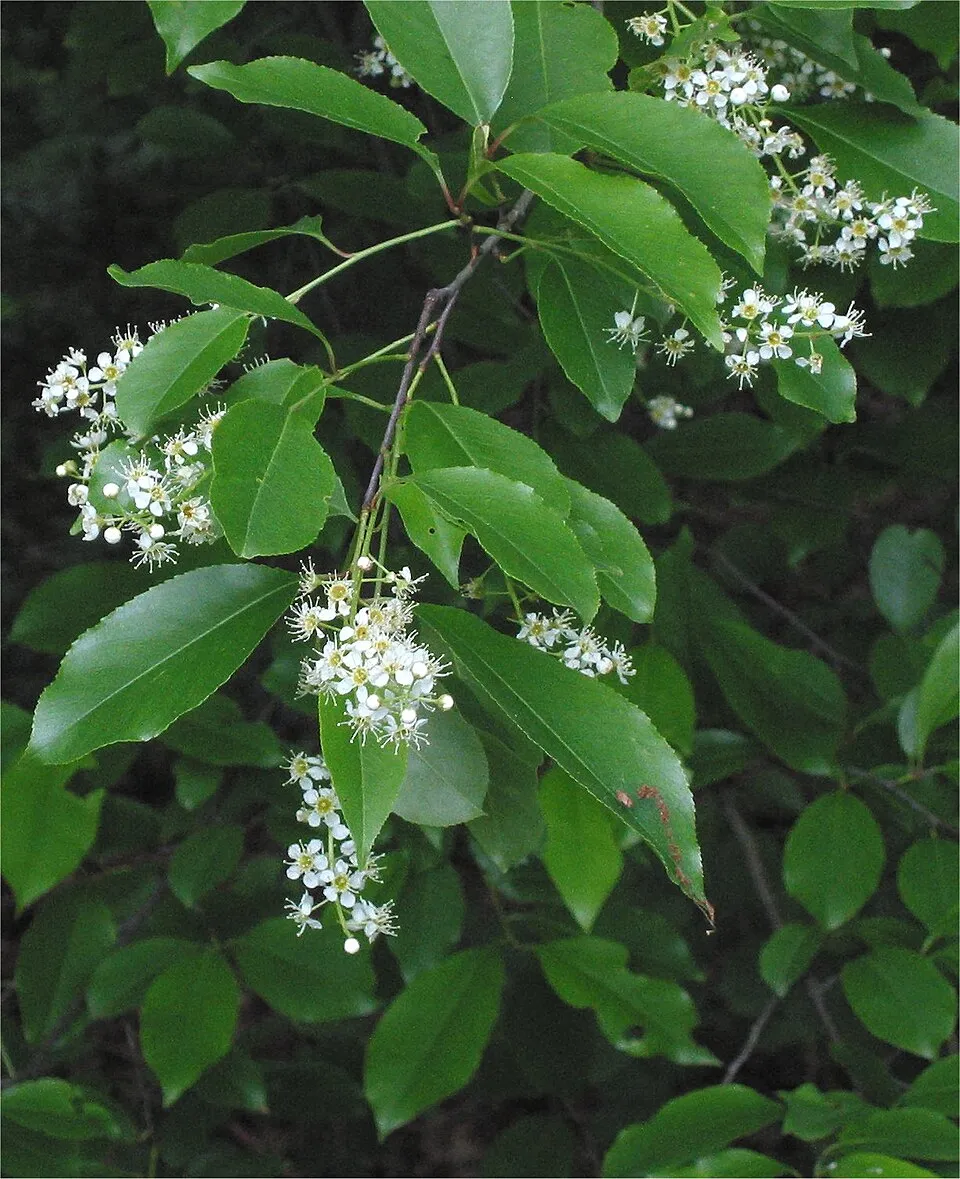
Wild Cherry Bark, derived from Prunus serotina, also widely known as Black Cherry or Rum Cherry, is a deciduous tree native to eastern North America, belonging to the expansive Rosaceae family. This stately tree can reach heights of 50 to 80 feet, characterized by its distinctive dark, reddish-brown bark that starts smooth and develops into scaly, plate-like patches resembling burnt potato chips on mature trees. Its leaves are glossy, ovate to lance-shaped, finely serrated, and turn vibrant shades of yellow and red in autumn.
In spring, it produces delicate white flowers arranged in elongated clusters (racemes), which later yield small, dark purplish-black, edible fruits that are a favorite of wildlife. Prunus serotina thrives in a variety of well-drained soils, from rich loams to sandy or rocky uplands, preferring full sun to partial shade. Its natural distribution spans from southeastern Canada down to Florida and west to parts of Texas and the Dakotas, making it a widespread and ecologically significant species.
The inner bark, which holds the primary medicinal value, is harvested from younger branches or sustainably from the trunk.
Trusted Scientific References
1. Authoritative external sources for Prunus serotina
1.1 Wikipedia — Prunus serotina
1.2 Kew POWO (Plants of the World Online)
1.3 PubMed — peer-reviewed research
1.4 NCBI Taxonomy Browser
1.5 GBIF — Global Biodiversity
1.6Wild Cherry Bark should be interpreted through verified botanical identity, practical care, and responsible safety language. This recovery note adds the missing context needed for a complete profile: match light to the plant's habit, use well-drained soil, water according to season, and avoid unsupported medicinal or edible claims. For publishing, the plant can be presented as a source-backed medicinal plant with clear care guidance, common problem diagnosis, and conservative safety wording.
1.7Wild Cherry Bark (Prunus serotina) is maintained in this recovery file as a complete medicinal profile with practical care, safety, and identification context. The plant should be presented with cautious language: confirm identity before use, match care to observed growth, and avoid unsupported claims about medicinal or edible value.
1.1.Wild Cherry Bark — Highlights
- ✓Botanical Origin — Derived from the inner bark of Prunus serotina, a tree in the Rosaceae family.
- ✓Primary Therapeutic Action — Highly effective as an antitussive and antispasmodic for various coughs.
- ✓Distinctive Chemical Signature — Characterized by cyanogenic glycosides like prunasin, yielding a unique almond scent.
- ✓Rich Ethnobotanical History — Valued medicine in Indigenous North American traditions, Eclectic medicine, and noted in TCM.
- ✓Broad — Spectrum Respiratory Support — Addresses dry, irritating, chronic, and spasmodic coughs, and nervous asthma.
- ✓Nervine and Sedative Qualities — Offers calming effects for the nervous system, helpful for anxiety and restlessness.
- ✓Astringent Properties — Contains tannins that provide a toning and mild antimicrobial action.
- ✓Energetic Profile — Traditionally considered cooling and astringent, providing a soothing effect.
- ✓Sustainability Status — Currently not listed as at risk, but sustainable harvesting practices are encouraged.
- ✓Versatile Preparations — Commonly used in decoctions, syrups, and tinctures for internal administration.
1.2.Wild Cherry Bark — In Brief
- ✓Wild Cherry Bark (Prunus serotina) is a potent antitussive and antispasmodic.
- ✓Primarily used for irritating, persistent, and spasmodic coughs and respiratory issues.
- ✓Contains cyanogenic glycosides (prunasin) responsible for its almond aroma and therapeutic effects.
- ✓Acts as a nervine, calming agitation and supporting digestive health.
- ✓Traditional uses span Indigenous North American, Eclectic, and Chinese medicine systems.
- ✓Strict adherence to dosage and contraindications for pregnancy, lactation, and children is essential.
2.Wild Cherry Bark — Scientific Identity
3.Wild Cherry Bark — Vital Statistics
4.Wild Cherry Bark — Botanical Features
5.Wild Cherry Bark — Native Range & Habitat
6.Wild Cherry Bark — Traditional Uses
7.Wild Cherry Bark — Phytochemistry
- ✓Cyanogenic Glycosides — Primarily prunasin and amygdalin, which upon hydrolysis release hydrocyanic acid (HCN). HCN is responsible for the characteristic almond aroma and is believed to exert the antitussive and sedative effects on the respiratory center.
- ✓Flavonoids — Including quercetin, kaempferol, and their glycosides, known for their potent antioxidant, anti-inflammatory, and antiallergic properties.
- ✓Phenolic Acids — Such as gallic acid, caffeic acid, and p-coumaric acid, contributing to the bark's antioxidant capacity and overall therapeutic effects.
- ✓Tannins — A significant component, particularly condensed tannins, which impart astringent properties, beneficial for toning tissues and offering antimicrobial effects.
- ✓Volatile Oils — Responsible for the aromatic qualities, though present in small quantities, they contribute to the overall therapeutic profile.
- ✓Coumarins — Compounds like scopoletin, which may contribute to anti-inflammatory and antispasmodic actions.
- ✓Resins — Complex mixtures of organic compounds that contribute to the plant's protective mechanisms and may have mild expectorant properties.
- ✓Saponins — Present in modest amounts, these compounds can contribute to expectorant activity but are also associated with potential hemolytic effects in high concentrations.
8.Wild Cherry Bark — Scientific Evidence
- ✓Antitussive — Wild Cherry Bark is highly valued for its ability to suppress irritating, dry, and persistent coughs, acting as a mild sedative on the cough reflex and soothing irritated mucous membranes.
- ✓Expectorant — While primarily antitussive, it can also aid in the expulsion of mucus, particularly in conditions like chronic bronchitis, by relaxing bronchial passages.
- ✓Antispasmodic — Its compounds help relax smooth muscles, making it effective for spasmodic conditions such as whooping cough, croup, and general respiratory spasms.
- ✓Nervine — Wild Cherry Bark exhibits calming properties, beneficial for nervous indigestion, restlessness, agitation, and anxiety-induced palpitations, aligning with its traditional use for 'heart fire blazing' in TCM.
- ✓Astringent — The presence of tannins contributes to its astringent action, useful for toning mucous membranes in the respiratory, gastrointestinal, and urinary tracts, and traditionally for diarrhea.
- ✓Anti-inflammatory — Contains flavonoids and other phenolic compounds that help reduce inflammation throughout the body, providing relief from discomfort associated with various conditions.
- ✓Antioxidant — Rich in antioxidant compounds, it helps protect cells from oxidative stress and damage caused by free radicals, contributing to overall cellular health.
- ✓Digestive Tonic — Traditionally used to stimulate appetite and improve digestive function, particularly in cases of nervous indigestion or during convalescence.
- ✓Circulatory Sedative — Historically noted in Eclectic medicine for its ability to gently calm the circulation and nervous system, easing a rapid pulse.
- ✓Soothes Mucous Membranes — Offers a demulcent-like effect that can soothe irritation in the respiratory, gastrointestinal, and urinary systems, promoting comfort and healing.
8.1.Wild Cherry Bark — Health Applications
9.Wild Cherry Bark — Cautions & Contraindications
9.1.Wild Cherry Bark — Reported Side Effects
- ✓Nausea and Vomiting — Can occur with excessive doses due to the action of cyanogenic glycosides.
- ✓Dizziness and Headache — Possible neurological symptoms if consumed in large quantities.
- ✓Respiratory Depression — High doses of cyanogenic glycosides can lead to slowed or difficult breathing, indicating toxicity.
- ✓Cyanide Poisoning — Ingestion of large amounts of raw or improperly prepared bark, especially wilted leaves, can be acutely toxic.
- ✓Allergic Reactions — Individuals sensitive to plants in the Rosaceae family may experience skin rashes or other allergic symptoms.
- ✓Sedation — May cause drowsiness, especially when combined with other sedatives or in high doses.
- ✓Gastrointestinal Upset — Stomach irritation or discomfort can occur in sensitive individuals.
9.2.Wild Cherry Bark — Toxicity Assessment
- ✓Pregnancy and Lactation — Contraindicated due to the potential for cyanogenic glycoside toxicity and historical traditional uses for inducing labor.
- ✓Children — Use with extreme caution and only under professional guidance, especially for infants, due to increased susceptibility to cyanide toxicity.
- ✓Liver and Kidney Conditions — Individuals with impaired liver or kidney function should consult a healthcare provider before use.
- ✓Drug Interactions — May potentiate the effects of sedatives or cough suppressants and could interact with medications metabolized by the liver.
- ✓Dosage Adherence — Strict adherence to recommended dosages is crucial; never exceed prescribed amounts due to the risk of toxicity.
- ✓Raw Plant Material Avoidance — Avoid consuming raw leaves, stems, or seeds, as they contain higher concentrations of cyanogenic glycosides.
- ✓Professional Consultation — Always consult a qualified medical herbalist or healthcare professional before using Wild Cherry Bark, particularly if you have underlying health conditions.
10.Wild Cherry Bark — Preparations & Uses
- ✓Decoction — Prepare by simmering 1-2 teaspoons of dried, shredded Wild Cherry Bark in 8 ounces of water for 10-15 minutes; strain and drink for coughs.
- ✓Syrup — A traditional and effective method, combining a bark decoction with honey or glycerin, making it palatable for soothing throat irritation and coughs.
- ✓Tincture — A concentrated alcohol extract, typically taken in drops (e.g., 2-5 ml) diluted in water, offering potent antitussive and nervine effects.
- ✓Infusion (Cold) — Some prefer a cold infusion to minimize the breakdown of cyanogenic glycosides, steeping bark in cold water for several hours.
- ✓Capsules/Tablets — Standardized powdered bark or extracts are available for convenient and precise dosing, following manufacturer guidelines.
- ✓Herbal Steams — Inhaling steam from a hot decoction can help soothe respiratory passages and relieve congestion, although direct ingestion is more common.
- ✓Topical Washes — Used externally as an astringent wash for skin irritations or as a compress for muscular aches, though less common than internal use.
11.Wild Cherry Bark — Garden Cultivation
- ✓Climate Adaptation — Thrives in temperate climates, hardy in USDA zones 3-9, tolerating a wide range of temperatures.
- ✓Soil Requirements — Prefers well-drained, fertile, slightly acidic to neutral loamy soils, but adapts to sandy or rocky conditions.
- ✓Sunlight Exposure — Requires full sun to partial shade for optimal growth and fruit production, with at least 6 hours of direct sunlight daily.
- ✓Propagation Techniques — Can be propagated from seeds, which require cold stratification, or from softwood cuttings taken in late spring to early summer.
- ✓Watering Needs — Young trees need regular watering to establish roots; mature trees are relatively drought-tolerant but benefit from consistent moisture during dry periods.
- ✓Pest and Disease Management — Generally robust, but can be susceptible to black knot fungus, cherry leaf spot, and tent caterpillars; inspect regularly.
- ✓Harvesting Practices — The inner bark is typically harvested in spring or autumn from young branches or sustainably from the main trunk, ensuring the tree's health.
- ✓Maintenance and Pruning — Prune to remove dead or diseased branches and to maintain desired shape, ideally in late winter or early spring before new growth.
Reviewed by the Flora Medical Global Botanical Review Panel
Multi-disciplinary editorial group · Botany · Ethnobotany · Herbal-medicine literature
Who reviewed this: This page was checked by the Flora Medical Global Botanical Review Panel — an in-house editorial group of botany graduates, ethnobotany researchers, and horticulture practitioners who collectively maintain our 7,000+ plant encyclopedia. Meet the team.
Our 4-step verification process
1. Taxonomic verification
Scientific names and synonyms cross-checked against Kew POWO, World Flora Online, and The Plant List.
2. Phytochemical & medicinal cross-reference
Active compounds, traditional uses, and reported activities are cross-referenced with PubMed, USDA Dr. Duke's database, and peer-reviewed ethnobotanical literature.
3. Conservation & distribution check
Distribution, ecology, and conservation status confirmed against GBIF occurrence records and the IUCN Red List.
4. Editorial & safety review
Every entry passes an editorial pass for clarity, originality, and safety notices (toxicity, contraindications, dosage caveats) before publication.
Last reviewed:
Important medical disclaimer: This content is for educational and research purposes only. It is not medical advice and is not a substitute for consultation with a licensed healthcare provider. Do not use any herb to self-treat a medical condition without professional guidance.
Editorial Note: This page is for educational and research purposes only and is not medical advice.
Written by: Flora Medical Global Editorial Team
Reviewed by: Flora Medical Global Botanical Review Panel
Last Updated: June 15, 2026





Wild Cherry Bark — Comments & Community Reviews
Rate this plant