


Medical Disclaimer: This content is for educational purposes only. It is not medical advice. Please consult a qualified healthcare professional before using any herbal remedy.
Safety Overview
1.Wild Geranium — At a Glance
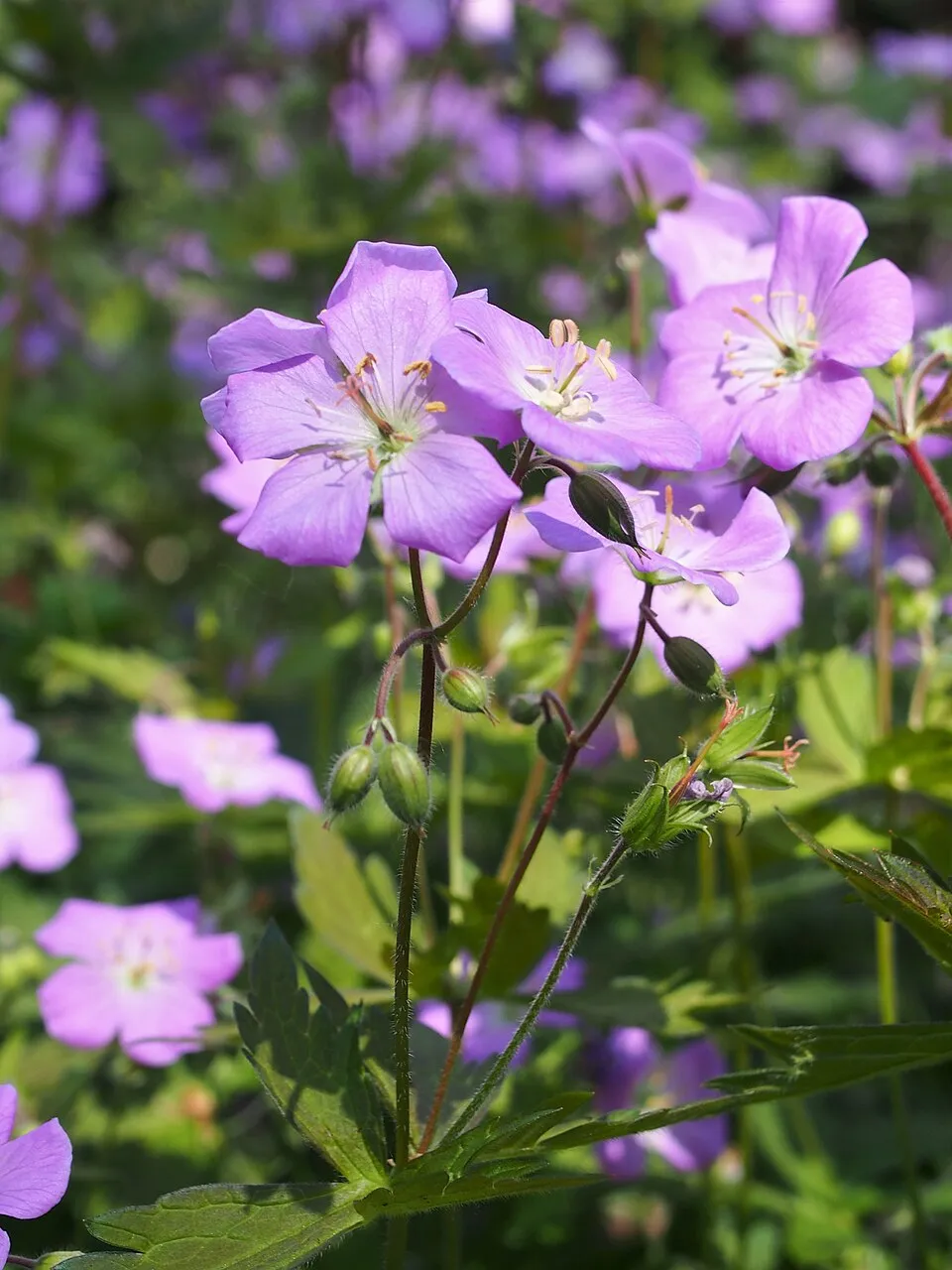
Wild Geranium (Geranium maculatum), also commonly known as Spotted Cranesbill or Wood Geranium, is a resilient perennial herb native to the woodlands and open forests of eastern North America. Belonging to the Geraniaceae family, this species is characterized by its distinctive palmate leaves, deeply lobed into 5 to 7 segments, which often display a mottled or 'spotted' appearance, giving rise to its common name. The plant typically grows to a height of 1-2 feet, producing delicate, cup-shaped flowers that range in color from pale pink to vibrant magenta, blooming in spring.
Each flower features five broad petals and prominent stamens, contributing to its ornamental appeal. The stem is usually erect and hairy, originating from a thick, knotty rhizome system. This robust rhizome is the primary medicinal part of the plant, packed with bioactive compounds.
Geranium maculatum thrives in a variety of conditions, from full sun in cooler climates to partial to full shade in warmer regions, preferring moist, well-drained soil rich in organic matter. Its widespread distribution across temperate deciduous forests underscores its ecological adaptability and historical significance in indigenous North American traditional medicine.
Trusted Scientific References
1. Authoritative external sources for Geranium maculatum
1.1 Wikipedia — Geranium maculatum
1.2 Kew POWO (Plants of the World Online)
1.3 PubMed — peer-reviewed research
1.4 NCBI Taxonomy Browser
1.5 GBIF — Global Biodiversity
1.6Wild Geranium should be interpreted through verified botanical identity, practical care, and responsible safety language. This recovery note adds the missing context needed for a complete profile: match light to the plant's habit, use well-drained soil, water according to season, and avoid unsupported medicinal or edible claims. For publishing, the plant can be presented as a source-backed medicinal plant with clear care guidance, common problem diagnosis, and conservative safety wording.
1.1.Wild Geranium — Notable Characteristics
- ✓North American Native — Indigenous to the eastern woodlands of the continent.
- ✓Perennial Herb — A hardy plant that returns year after year from its rhizomatous rootstock.
- ✓Distinctive Foliage — Features deeply lobed, palmate leaves often with a 'spotted' appearance.
- ✓Medicinal Rhizome — The primary part used in herbal medicine, rich in active compounds.
- ✓Potent Astringent — High in tannins, making it effective for tightening tissues and reducing secretions.
- ✓Anti — inflammatory Action — Contains phenolic compounds that help reduce inflammation.
- ✓Antioxidant Powerhouse — Rich in flavonoids and other compounds that neutralize free radicals.
- ✓Traditional Healer — Extensively used by indigenous peoples and in Western herbalism for centuries.
- ✓Versatile Applications — Utilized internally for digestive issues and externally for wounds and skin conditions.
- ✓Ecosystem Contributor — Provides early spring nectar for pollinators and stabilizes woodland soils.
1.2.Wild Geranium — At-a-Glance Summary
- ✓Wild Geranium (Geranium maculatum) is a North American native perennial.
- ✓Renowned for its potent astringent properties, primarily due to high tannin content.
- ✓Traditionally used for diarrhea, hemorrhoids, wounds, and oral inflammations.
- ✓Exhibits significant anti-inflammatory, antioxidant, and antimicrobial activities.
- ✓Best prepared as decoctions or tinctures for internal and external applications.
- ✓Requires caution in pregnant/nursing women and those with digestive sensitivities.
2.Wild Geranium — Scientific Identity
3.Wild Geranium — Fact Sheet
4.Wild Geranium — Botanical Features
5.Wild Geranium — Origin & Spread
6.Wild Geranium — Heritage Uses
7.Wild Geranium — Chemical Profile
- ✓Tannins — Predominantly ellagitannins such as geraniin, corilagin, and gallotannins, which are responsible for its powerful astringent, anti-inflammatory, and antioxidant properties. These compounds bind to proteins, forming protective layers on tissues.
- ✓Flavonoids — Including quercetin, kaempferol, and their glycosides, contributing significantly to the plant's antioxidant and anti-inflammatory activities, protecting cells from oxidative damage.
- ✓Phenolic Acids — Such as gallic acid, ellagic acid, and caffeic acid, known for their strong antioxidant, anti-inflammatory, and antimicrobial effects, supporting overall cellular health.
- ✓Volatile Oils — Present in smaller quantities, contributing to the plant's characteristic aroma and potentially offering mild antiseptic properties.
- ✓Resins — Complex mixtures of organic compounds that may contribute to the plant's protective and wound-healing capabilities.
- ✓Saponins — While less prominent, some saponins may be present, potentially influencing absorption and contributing to the plant's overall therapeutic profile.
- ✓Essential Fatty Acids — Trace amounts that contribute to cellular health and membrane integrity.
- ✓Minerals — Including calcium, potassium, and magnesium, vital micronutrients supporting various bodily functions.
8.Wild Geranium — Evidence-Based Benefits
- ✓Potent Astringent — Wild Geranium's high tannin content effectively tightens and tones tissues, making it invaluable for reducing bleeding and secretions from mucous membranes and skin.
- ✓Anti-inflammatory Support — The plant's rich profile of phenolic compounds, including gallic acid and ellagitannins, helps to mitigate inflammatory responses throughout the body, providing relief from various irritations.
- ✓Antioxidant Protection — Abundant in flavonoids and tannins, Geranium maculatum combats oxidative stress by neutralizing free radicals, thereby protecting cellular integrity and supporting overall health.
- ✓Digestive Health Aid — Traditionally used to soothe gastrointestinal distress, its astringent properties can help firm stools and alleviate symptoms of diarrhea, dysentery, and irritable bowel syndrome.
- ✓Wound Healing Promoter — Applied topically, the astringent and antimicrobial actions of Wild Geranium can accelerate the healing of minor cuts, abrasions, and burns by forming a protective layer and deterring infection.
- ✓Oral Health Enhancer — As a gargle or mouthwash, it effectively reduces gum inflammation, bleeding gums, canker sores, and sore throats due to its tissue-toning and antimicrobial effects.
- ✓Hemorrhoid Relief — The constricting action on blood vessels provided by tannins helps to reduce swelling and bleeding associated with hemorrhoids when applied topically or taken internally.
- ✓Immune System Modulation — While not a direct immune stimulant, its anti-inflammatory and antimicrobial properties contribute to a healthier internal environment, supporting the body’s natural defenses.
- ✓Menstrual Flow Regulation — Historically, its astringent qualities have been employed to help manage excessive menstrual bleeding (menorrhagia) by toning uterine tissues.
- ✓Skin Condition Management — Its soothing and astringent effects can be beneficial for various skin irritations, minor rashes, and acne by reducing oiliness and inflammation.
8.1.Wild Geranium — Indications & Uses
9.Wild Geranium — Safety & Side Effects
9.1.Wild Geranium — Side Effects & Warnings
- ✓Gastric Upset — High tannin content can cause stomach upset, nausea, or indigestion in sensitive individuals, especially if taken on an empty stomach.
- ✓Constipation — Excessive intake due to its potent astringent effects may lead to constipation, particularly in individuals prone to it.
- ✓Allergic Reactions — Rare, but some individuals may experience allergic skin reactions or gastrointestinal discomfort.
- ✓Skin Irritation — Topical application may cause mild irritation or dermatitis in very sensitive skin types.
- ✓Reduced Nutrient Absorption — Tannins can interfere with the absorption of certain minerals, like iron, if consumed concurrently or in large quantities.
- ✓Oral Dryness — Frequent use as a mouthwash or gargle may lead to temporary dryness of the mouth due to its astringent action.
- ✓Liver or Kidney Stress — While not well-documented for Geranium maculatum, prolonged high-dose use of any potent herb should be monitored.
9.2.Wild Geranium — Risk Assessment
- ✓Pregnancy and Lactation — Not recommended for use during pregnancy or breastfeeding due to insufficient safety data and its potent astringent properties which could theoretically affect uterine tone or nutrient absorption.
- ✓Children — Use with caution and under professional guidance for children, due to potential for digestive upset and lack of specific pediatric dosing information.
- ✓Pre-existing Conditions — Individuals with chronic constipation, iron-deficiency anemia, or serious digestive disorders should consult a healthcare provider before use.
- ✓Drug Interactions — May interfere with the absorption of iron supplements or other medications due to its tannin content; separate intake by several hours.
- ✓Blood Thinners — Theoretical interaction with anticoagulant medications due to potential effects on blood clotting, though not well-established for Geranium maculatum.
- ✓Dosage Adherence — Adhere strictly to recommended dosages; prolonged or excessive use is not advised and may increase the risk of side effects.
- ✓Consultation — Always consult a qualified medical herbalist or healthcare professional before incorporating Wild Geranium into a therapeutic regimen, especially if on other medications or with underlying health conditions.
10.Wild Geranium — Preparation Methods
- ✓Decoction — Prepare by simmering 1-2 teaspoons of dried, cut rhizome in 1 cup of water for 15-20 minutes; strain and consume for internal issues like diarrhea or use externally as a wash.
- ✓Tincture — A common preparation, typically a 1:5 ratio of dried root to 60% alcohol; take 1-2 ml, 2-3 times daily, or as directed by a healthcare professional.
- ✓Poultice — Crush fresh leaves or moisten dried root powder with a little water to form a paste; apply directly to minor wounds, insect bites, or skin irritations.
- ✓Infusion — While less potent than a decoction for roots, leaves and flowers can be steeped in hot water for 10-15 minutes to make a milder tea, often for oral rinses.
- ✓Gargle/Mouthwash — Use a cooled decoction or diluted tincture to rinse the mouth or gargle for sore throats, gum inflammation, or canker sores.
- ✓Topical Compress — Soak a clean cloth in a strong, cooled decoction and apply to hemorrhoids, varicose veins, or inflamed skin areas for relief.
- ✓Ointment/Salve — Incorporate a concentrated extract or powdered root into a beeswax and oil base for a soothing, astringent topical application.
11.Wild Geranium — Garden Cultivation
- ✓Soil Preference — Thrives in moist, well-drained soil rich in organic matter; a slightly acidic to neutral pH (6.0-7.0) is ideal.
- ✓Light Requirements — Prefers partial to full shade, especially in hotter climates, but can tolerate full sun in cooler, consistently moist environments.
- ✓Watering — Requires consistent moisture, particularly during dry spells; avoid waterlogging to prevent root rot.
- ✓Propagation — Can be propagated by seed (cold stratification recommended), division of mature rhizomes in early spring or fall, or stem cuttings.
- ✓Spacing — Plant individual specimens 12-18 inches apart to allow for adequate growth and air circulation.
- ✓Fertilization — Generally low-maintenance; a light application of compost or balanced organic fertilizer in spring can enhance growth.
- ✓Pest and Disease Management — Relatively pest and disease resistant; occasional issues might include powdery mildew in humid conditions or slug damage.
- ✓Hardiness — A hardy perennial, typically thriving in USDA Hardiness Zones 3-8, tolerant of cold winters.
Reviewed by the Flora Medical Global Botanical Review Panel
Multi-disciplinary editorial group · Botany · Ethnobotany · Herbal-medicine literature
Who reviewed this: This page was checked by the Flora Medical Global Botanical Review Panel — an in-house editorial group of botany graduates, ethnobotany researchers, and horticulture practitioners who collectively maintain our 7,000+ plant encyclopedia. Meet the team.
Our 4-step verification process
1. Taxonomic verification
Scientific names and synonyms cross-checked against Kew POWO, World Flora Online, and The Plant List.
2. Phytochemical & medicinal cross-reference
Active compounds, traditional uses, and reported activities are cross-referenced with PubMed, USDA Dr. Duke's database, and peer-reviewed ethnobotanical literature.
3. Conservation & distribution check
Distribution, ecology, and conservation status confirmed against GBIF occurrence records and the IUCN Red List.
4. Editorial & safety review
Every entry passes an editorial pass for clarity, originality, and safety notices (toxicity, contraindications, dosage caveats) before publication.
Last reviewed:
Important medical disclaimer: This content is for educational and research purposes only. It is not medical advice and is not a substitute for consultation with a licensed healthcare provider. Do not use any herb to self-treat a medical condition without professional guidance.
Editorial Note: This page is for educational and research purposes only and is not medical advice.
Written by: Flora Medical Global Editorial Team
Reviewed by: Flora Medical Global Botanical Review Panel
Last Updated: June 15, 2026





Wild Geranium — Comments & Community Reviews
Rate this plant