
Medical Disclaimer: This content is for educational purposes only. It is not medical advice. Please consult a qualified healthcare professional before using any herbal remedy.
Safety Overview
1.Wisteria Floribunda — At a Glance
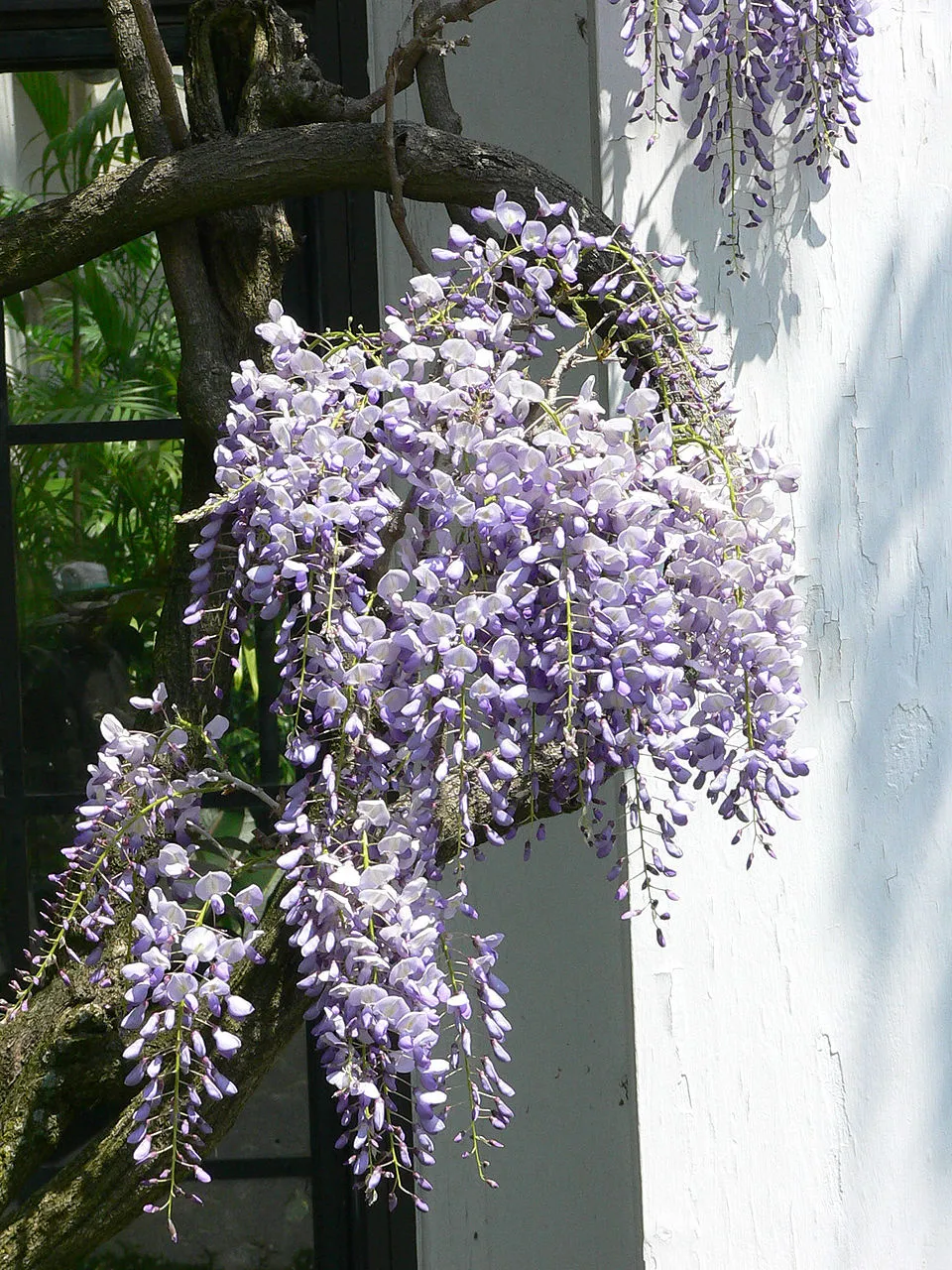
Wisteria floribunda, commonly known as Japanese Wisteria, is a magnificent deciduous woody vine belonging to the Fabaceae (Pea family). Native to the islands of Japan, particularly Honshu, Shikoku, and Kyushu, it is renowned globally for its spectacular floral displays. This vigorous climber exhibits a characteristic clockwise twining growth habit, capable of ascending to heights of over 30 feet (9 meters) and spreading extensively when provided with sturdy support structures such as pergolas, arbors, or mature trees. Its pinnately compound leaves consist of 13-19 ovate to lanceolate leaflets, which emerge with a bronze tint in spring before maturing to a lush green.
The most striking feature of Wisteria floribunda is its dramatic, pendulous racemes of fragrant, pea-like flowers, which unfurl sequentially from the base to the tip. These racemes can reach an impressive length of 1 to 3 feet (30-90 cm), showcasing a spectrum of colors including lavender, violet, pink, and white, depending on the cultivar. Flowering typically occurs in late spring to early summer, preceding or coinciding with the emergence of foliage. Following the floral display, the plant produces velvety, bean-like pods that contain its seeds.
While highly prized for its ornamental value, its aggressive growth necessitates diligent pruning and robust structural support to prevent damage to buildings or overwhelming other vegetation. Japanese Wisteria is a long-lived species, often thriving for several decades, establishing a lasting presence in landscapes.
Trusted Scientific References
1. Authoritative external sources for Wisteria floribunda
1.1 Wikipedia — Wisteria floribunda
1.2 Kew POWO (Plants of the World Online)
1.3 PubMed — peer-reviewed research
1.4 NCBI Taxonomy Browser
1.5 GBIF — Global Biodiversity
1.6Wisteria Floribunda should be interpreted through verified botanical identity, practical care, and responsible safety language. This recovery note adds the missing context needed for a complete profile: match light to the plant's habit, use well-drained soil, water according to season, and avoid unsupported medicinal or edible claims. For publishing, the plant can be presented as a source-backed garden plant with clear care guidance, common problem diagnosis, and conservative safety wording.
1.1.Wisteria Floribunda — Highlights
- ✓Spectacular Cascading Flowers — Produces long, pendulous racemes of fragrant, pea-like flowers.
- ✓Vigorous Woody Vine — A robust climber with a strong, twining growth habit.
- ✓Deciduous Foliage — Pinnately compound leaves emerge bronze, maturing to vibrant green.
- ✓Native to Japan — Indigenous to various islands of Japan.
- ✓High Ornamental Value — Widely cultivated globally for its aesthetic appeal in gardens.
- ✓ALL PARTS TOXIC — Contains potent lectins, making it highly poisonous if ingested.
- ✓Long — Lived Plant — Capable of thriving for many decades in suitable conditions.
- ✓Requires Sturdy Support — Needs strong structures like pergolas or arbors to support its growth.
- ✓Sequential Flowering — Flowers open progressively from the base to the tip of the raceme.
- ✓Aggressive Growth Habit — Demands regular pruning to manage its size and spread.
1.2.Wisteria Floribunda — In Brief
- ✓Japanese Wisteria is a highly ornamental, vigorous woody vine known for its spectacular cascading flowers.
- ✓All parts of Wisteria floribunda, particularly the seeds and pods, are highly toxic if ingested by humans or animals.
- ✓Traditional medicinal uses for Wisteria species are extremely limited, primarily external, and carry significant risks due to toxicity.
- ✓Symptoms of ingestion include severe gastrointestinal distress, dizziness, and potential collapse.
- ✓Cultivation requires sturdy support, full sun, and regular pruning to manage its aggressive growth and promote flowering.
- ✓It is essential to educate individuals about its toxicity and keep it out of reach of children and pets.
2.Wisteria Floribunda — Nomenclature & Classification
3.Wisteria Floribunda — Key Data
4.Wisteria Floribunda — Botanical Description
5.Wisteria Floribunda — Ecological Habitat
6.Wisteria Floribunda — Traditional Uses
7.Wisteria Floribunda — Chemical Profile
- ✓Lectins — Wisteria floribunda contains potent lectins, particularly wisterin, which are glycoproteins known to bind to carbohydrates on cell surfaces, leading to cellular agglutination and toxicity.
- ✓Saponins — Various parts of the plant may contain saponins, which are glycosides that can cause gastrointestinal irritation and hemolysis, contributing to the plant's toxicity.
- ✓Flavonoids — Small amounts of flavonoids like quercetin and kaempferol derivatives may be present, offering potential antioxidant activity in isolated contexts, but not enough to counteract the plant's overall toxicity.
- ✓Amino Acids — The plant contains various amino acids, typical of plant proteins, though some may be part of the toxic lectins.
- ✓Organic Acids — Trace amounts of organic acids such as malic acid and citric acid are likely present, contributing to plant metabolism.
- ✓Alkaloids — While not primary toxic agents, some minor alkaloids might be present in trace quantities, though their medicinal significance is negligible.
- ✓Phenolic Compounds — Other general phenolic compounds, beyond flavonoids, contribute to the plant's defense mechanisms and pigmentation.
- ✓Polysaccharides — Structural and storage polysaccharides are abundant in the plant tissues, typical of woody plants.
- ✓Triterpenes — Some triterpenoid compounds may be found in the bark or roots, which can have diverse biological activities but are not well-studied in Wisteria's toxicity profile.
8.Wisteria Floribunda — Pharmacological Findings
- ✓Anti-inflammatory (External) — Historically, some traditional practices in East Asia have explored Wisteria species extracts for their purported anti-inflammatory properties, primarily for topical application on skin conditions, though rigorous scientific validation is scarce and internal use is highly toxic.
- ✓Analgesic (External) — Traditional folk medicine mentions the external application of Wisteria preparations, often as liniments, to alleviate pain associated with conditions like rheumatism or neuralgia, without clear evidence of efficacy or safety.
- ✓Dermatological Aid (External) — Anecdotal reports from certain traditional systems suggest the use of Wisteria extracts in highly diluted external preparations for skin irritations such as eczema, strictly avoiding broken skin due to toxicity.
- ✓Antiparasitic (Traditional) — There are historical, unverified accounts of Wisteria components being used in some traditional settings to address internal parasites, a practice strongly condemned due to the plant's severe toxicity.
- ✓Diuretic (Traditional) — Certain historical texts from East Asian traditional medicine may refer to diuretic properties of Wisteria species, a dangerous claim given its toxicity and lack of modern support.
- ✓Antispasmodic (Traditional) — Unverified traditional uses occasionally cite Wisteria for its potential antispasmodic effects, again, a highly risky and unsupported application.
- ✓Wound Healing (External, Caution) — In extremely dilute, traditional external applications, some Wisteria preparations were theoretically used for minor wound care, a practice fraught with risk due to its irritant and toxic compounds.
- ✓Hypotensive (Traditional, Unsafe) — There are vague historical mentions of Wisteria's potential to lower blood pressure, which is an extremely dangerous and unproven claim given its potent toxins.
- ✓Antioxidant Activity (Research) — Preliminary laboratory research on isolated compounds from Wisteria species has identified some antioxidant potential, but this does not translate to safe whole-plant medicinal use.
8.1.Wisteria Floribunda — Therapeutic Indications
9.Wisteria Floribunda — Cautions & Contraindications
9.1.Wisteria Floribunda — Reported Side Effects
- ✓Severe Gastrointestinal Distress — Ingestion of any part of Wisteria floribunda leads to severe nausea, vomiting, abdominal pain, and diarrhea.
- ✓Dizziness and Confusion — Systemic absorption of toxins can cause neurological symptoms like dizziness, confusion, and lethargy.
- ✓Oral Irritation — Contact with plant parts, especially seeds, can cause irritation and burning sensations in the mouth and throat.
- ✓Collapse and Death — In severe cases, particularly with large ingestions, wisteria poisoning can lead to collapse, shock, and potentially death, especially in children or pets.
- ✓Skin Irritation — Direct contact with sap or crushed plant material can cause mild to moderate skin irritation or dermatitis in sensitive individuals.
- ✓Dehydration — Persistent vomiting and diarrhea can lead to severe dehydration and electrolyte imbalance, requiring urgent medical attention.
9.2.Wisteria Floribunda — Safety Overview
- ✓HIGH TOXICITY — All parts of Wisteria floribunda, especially the seeds and pods, are highly toxic if ingested, containing lectins like wisterin.
- ✓AVOID INTERNAL USE — Under no circumstances should any part of Wisteria floribunda be consumed internally by humans or animals.
- ✓CHILDREN AND PETS — Keep children and pets away from Wisteria plants, particularly fallen pods and seeds, which can be attractive to them.
- ✓PREGNANCY AND LACTATION — Absolutely contraindicated for use during pregnancy or lactation due to severe toxicity and potential harm to fetus or infant.
- ✓EXTERNAL USE WARNING — Even external traditional applications are highly risky; avoid contact with broken skin and consult a medical professional for any adverse reaction.
- ✓FIRST AID FOR INGESTION — In case of ingestion, seek immediate emergency medical attention or contact a poison control center.
- ✓GLOVES FOR HANDLING — Wear gloves when pruning or handling the plant to prevent skin irritation.
10.Wisteria Floribunda — Preparation Methods
- ✓External Poultices (Traditional, Extreme Caution) — Historically, crushed Wisteria leaves or bark were reportedly used as topical poultices for skin conditions or inflammation, strictly avoiding open wounds or prolonged contact due to severe skin irritation and absorption risks.
- ✓Liniments (Traditional, Highly Diluted External Use Only) — In some traditional practices, highly diluted extracts were prepared as liniments for external application to sore joints or muscles, a method with significant safety concerns and no modern endorsement.
- ✓Decoctions for External Wash (Traditional, Risky) — Unverified traditional accounts mention decoctions used as external washes for certain ailments, always with extreme caution and never for internal consumption.
- ✓Pest Control (Historical, Non-Medicinal) — Historically, parts of Wisteria were sometimes used as an insecticide or rodenticide, highlighting its inherent toxicity rather than medicinal utility.
- ✓Research Extracts (Laboratory Use Only) — Isolated compounds or highly purified extracts are used in controlled laboratory settings for research into potential bioactivities, not for self-medication.
- ✓Horticultural Display (Primary Use) — The primary and safest 'use' of Wisteria floribunda is as an ornamental plant for its stunning flowers, providing aesthetic beauty in gardens and landscapes.
- ✓Botanical Study (Educational) — Used in botanical gardens and educational institutions for study of its unique morphology and growth habits.
11.Wisteria Floribunda — How to Grow
- ✓Site Selection — Plant Japanese Wisteria in full sun (at least 6 hours daily) for optimal flowering; avoid very shady or water-logged spots.
- ✓Support Structure — Provide a robust, sturdy support like a heavy-duty pergola, arbor, or strong wall wires, as Wisteria floribunda is a vigorous, heavy twiner.
- ✓Soil Requirements — Prefers well-drained, moderately fertile soil; amend heavy clay soils with organic matter to improve drainage.
- ✓Planting Technique — For grafted plants, ensure the graft union is above the soil line; check for healthy roots before planting.
- ✓Pruning Schedule — Requires two main prunes: a summer prune (July/August) to cut back whippy growth to 5-6 leaves, and a crucial winter prune (January/February) to shorten side shoots to 2-3 buds for flower production.
- ✓Watering — Water regularly during the first two summers after planting, especially during dry spells; established plants are quite drought-tolerant.
- ✓Fertilization — Fertilize sparingly with a balanced, low-nitrogen fertilizer if growth is weak, as too much nitrogen can promote foliage over flowers.
- ✓Frost Protection — In cold gardens or areas prone to late frosts, plant against a warm wall or choose later-flowering white varieties to protect flower buds.
Reviewed by the Flora Medical Global Botanical Review Panel
Multi-disciplinary editorial group · Botany · Ethnobotany · Herbal-medicine literature
Who reviewed this: This page was checked by the Flora Medical Global Botanical Review Panel — an in-house editorial group of botany graduates, ethnobotany researchers, and horticulture practitioners who collectively maintain our 7,000+ plant encyclopedia. Meet the team.
Our 4-step verification process
1. Taxonomic verification
Scientific names and synonyms cross-checked against Kew POWO, World Flora Online, and The Plant List.
2. Phytochemical & medicinal cross-reference
Active compounds, traditional uses, and reported activities are cross-referenced with PubMed, USDA Dr. Duke's database, and peer-reviewed ethnobotanical literature.
3. Conservation & distribution check
Distribution, ecology, and conservation status confirmed against GBIF occurrence records and the IUCN Red List.
4. Editorial & safety review
Every entry passes an editorial pass for clarity, originality, and safety notices (toxicity, contraindications, dosage caveats) before publication.
Last reviewed:
Important medical disclaimer: This content is for educational and research purposes only. It is not medical advice and is not a substitute for consultation with a licensed healthcare provider. Do not use any herb to self-treat a medical condition without professional guidance.
Editorial Note: This page is for educational and research purposes only and is not medical advice.
Written by: Flora Medical Global Editorial Team
Reviewed by: Flora Medical Global Botanical Review Panel
Last Updated: June 15, 2026





Wisteria Floribunda — Comments & Community Reviews
Rate this plant