

Medical Disclaimer: This content is for educational purposes only. It is not medical advice. Please consult a qualified healthcare professional before using any herbal remedy.
Safety Overview
1.Wisteria Frutescens — Introduction & Highlights
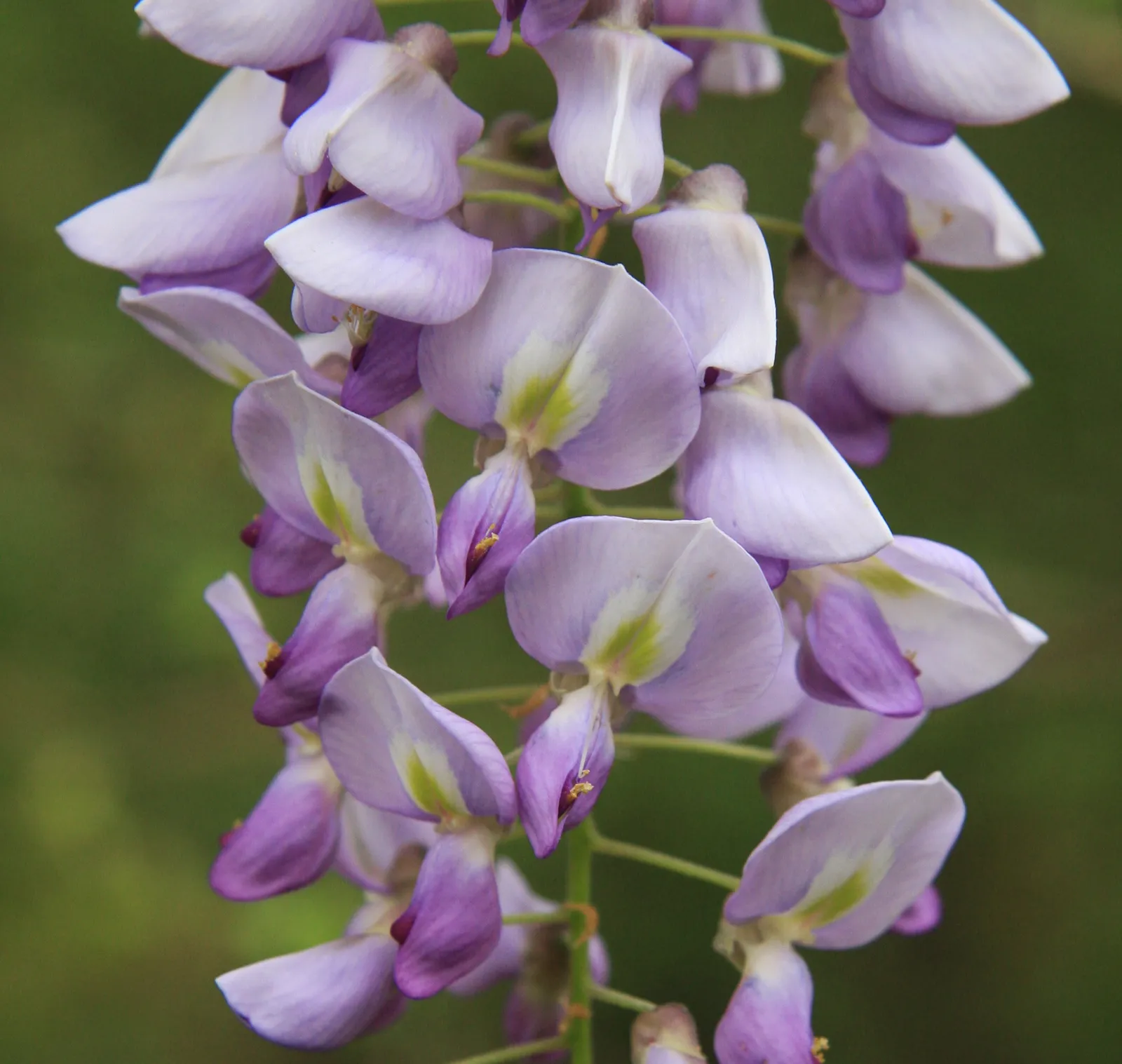
Wisteria frutescens, commonly known as American Wisteria, Texas Wisteria, or Kentucky Wisteria, is a captivating deciduous woody vine native to the southeastern United States. This member of the Fabaceae (Pea family) typically climbs to impressive heights of 15-30 feet (4.5-9 meters), though its growth is notably less aggressive and more manageable than its Asian counterparts, W. sinensis and W.
floribunda. Its foliage consists of attractive pinnately compound leaves, each bearing 9-15 oblong to ovate leaflets that emerge with a bronze hue in spring before maturing to a vibrant bright green. The most striking feature is its profusion of fragrant, pea-like flowers, presented in dense, pendulous racemes that usually span 4-6 inches (10-15 cm) long, sometimes up to 9 inches.
These beautiful lavender-blue to violet blooms typically appear in late spring to early summer, notably after the leaves have fully emerged, a key distinguishing characteristic from Asian species. Following the floral display, velvety, bean-like pods develop, persisting into the winter months and adding continued ornamental interest. Wisteria frutescens is widely distributed across many states, including Alabama, Arkansas, Florida, Georgia, Illinois, Kentucky, Louisiana, Maryland, Mississippi, Missouri, North Carolina, Ohio, Oklahoma, South Carolina, Tennessee, Texas, Virginia, and West Virginia, thriving in its native range.
Trusted Scientific References
1. Authoritative external sources for Wisteria Frutescens
1.1 Wikipedia — Wisteria Frutescens
1.2 Kew POWO (Plants of the World Online)
1.3 PubMed — peer-reviewed research
1.4 NCBI Taxonomy Browser
1.5 GBIF — Global Biodiversity
1.6Wisteria Frutescens should be interpreted through verified botanical identity, practical care, and responsible safety language. This recovery note adds the missing context needed for a complete profile: match light to the plant's habit, use well-drained soil, water according to season, and avoid unsupported medicinal or edible claims. For publishing, the plant can be presented as a source-backed garden plant with clear care guidance, common problem diagnosis, and conservative safety wording.
1.1.Wisteria Frutescens — Standout Qualities
- ✓Native to the — Native to the Southeastern USA.
- ✓Deciduous woody climbing vine reaching 15 — 30 feet.
- ✓Produces fragrant, pea — like lavender-blue to violet flowers.
- ✓Blooms in pendulous — Blooms in pendulous racemes after leaves emerge in late spring/early summer.
- ✓Exhibits a less — Exhibits a less aggressive growth habit compared to Asian Wisteria species.
- ✓Develops velvety, bean — like pods that are highly toxic upon ingestion.
- ✓Features pinnately compound leaves with 9 — 15 distinct leaflets.
- ✓Primarily valued and — Primarily valued and cultivated as an ornamental landscape plant.
- ✓Attracts various native — Attracts various native pollinators, including bees and butterflies.
- ✓Requires full sun — Requires full sun exposure and strong structural support for optimal growth and flowering.
1.2.Wisteria Frutescens — At-a-Glance Summary
- ✓American Wisteria is a beautiful, native deciduous woody vine.
- ✓Primarily cultivated for its fragrant lavender-blue flowers and ornamental appeal.
- ✓All parts are toxic, especially seeds and pods, containing lectins and glycosides.
- ✓Not used medicinally; ingestion causes severe gastrointestinal upset.
- ✓Requires full sun and sturdy support for optimal growth.
- ✓A less aggressive and more manageable alternative to Asian Wisteria species.
2.Wisteria Frutescens — Scientific Profile
3.Wisteria Frutescens — Botanical Stats
4.Wisteria Frutescens — Structural Profile
5.Wisteria Frutescens — Habitat & Distribution
6.Wisteria Frutescens — Historical Applications
7.Wisteria Frutescens — Active Compounds
- ✓Lectins — Specifically, wisterin, a potent lectin found predominantly in the seeds and pods, is responsible for the plant's toxicity, causing agglutination of red blood cells and severe gastrointestinal irritation upon ingestion.
- ✓Glycosides — Unspecified glycosides are also implicated in the toxic profile of Wisteria frutescens, contributing to its adverse effects, such as vomiting and diarrhea, particularly when raw plant parts are consumed.
- ✓Flavonoids — Like many plants in the Fabaceae family, American Wisteria likely contains various flavonoids, which are plant pigments and natural antioxidants, though their specific medicinal role or concentration in this species is not established for therapeutic use.
- ✓Saponins — Some legumes contain saponins, which can have hemolytic properties; their presence in Wisteria frutescens, if any, could potentially contribute to its overall toxic effects, especially in higher concentrations in certain plant parts.
- ✓Alkaloids — While not prominently identified as primary toxins, many plant species contain alkaloids, and their presence in trace amounts could be a subject for further phytochemical investigation in Wisteria frutescens, though no specific toxic alkaloids are widely reported.
- ✓Amino Acids — As a living plant, it contains a range of amino acids essential for its growth, protein synthesis, and metabolic functions, but no unique or medicinally significant amino acids have been highlighted.
- ✓Carbohydrates — Structural and storage carbohydrates, including starches and various sugars, are present in all plant parts, fundamental for the plant's energy and structural integrity.
- ✓Lipids — Seeds and other plant tissues contain various lipids, including fatty acids and sterols, crucial for energy storage, cell membrane structure, and other physiological processes.
8.Wisteria Frutescens — Research Insights
- ✓Ornamental Appeal — Wisteria frutescens is primarily valued for its breathtaking display of fragrant, pendulous lavender-blue to violet flower clusters, making it a highly desirable landscape plant for aesthetic enhancement.
- ✓Pollinator Attraction — Its abundant and fragrant flowers serve as a valuable nectar source for various pollinators, including bees and butterflies, contributing to local biodiversity.
- ✓Native Ecosystem Support — As a native species to the southeastern United States, American Wisteria supports local wildlife habitats and fits harmoniously into native plant communities.
- ✓Less Invasive Growth Habit — Unlike its more aggressive Asian relatives, Wisteria frutescens exhibits a more restrained growth, offering an ornamental vine that is easier to manage in gardens without overwhelming structures.
- ✓Soil Stabilization — Its robust root system can contribute to soil stabilization on slopes or in areas prone to erosion, though this is a general vine characteristic rather than a unique medicinal benefit.
- ✓Potential for Phytochemical Study — While not medicinally used, the presence of specific lectins and glycosides offers avenues for scientific research into their biochemical properties and potential applications as research tools.
- ✓Cultural and Aesthetic Value — The plant's beauty and fragrance contribute to human well-being through aesthetic pleasure and connection to nature, which is a recognized aspect of holistic health.
- ✓Genetic Research Resource — As a distinct species within the Wisteria genus, it serves as a valuable resource for genetic and phylogenetic studies to understand plant evolution and speciation.
- ✓Educational Tool — Wisteria frutescens can be used in botanical gardens and educational settings to teach about native plant species, their ecology, and the differences between native and introduced flora.
- ✓Landscape Design Versatility — Its ability to be trained on pergolas, trellises, or as a small tree offers versatility in landscape design, contributing to functional and beautiful outdoor spaces.
- ✓Habitat for Beneficial Insects — The foliage and structure of the vine can provide shelter and nesting sites for various beneficial insects, enhancing garden health.
- ✓Historical Horticultural Significance — American Wisteria has a history of cultivation in American gardens, representing a significant native contribution to horticultural practices.
8.1.Wisteria Frutescens — Conditions Traditionally Used For
9.Wisteria Frutescens — Precautions & Warnings
9.1.Wisteria Frutescens — Reported Side Effects
- ✓Gastrointestinal Distress — Ingestion of any part of Wisteria frutescens, particularly seeds and pods, commonly leads to severe nausea, vomiting, and intense abdominal pain.
- ✓Diarrhea — Significant watery diarrhea is a frequent adverse effect, which can rapidly lead to dehydration, especially concerning in children and pets.
- ✓Dehydration — Persistent vomiting and diarrhea can result in severe fluid and electrolyte imbalance, potentially requiring immediate medical intervention.
- ✓Dizziness and Weakness — Systemic effects from toxin absorption may include dizziness, general weakness, and lethargy following ingestion of plant material.
- ✓Oral Irritation — Direct contact with plant sap or chewing plant parts can cause irritation, burning sensations, and inflammation of the mouth and throat tissues.
- ✓Potential for Serious Complications — In severe cases of large ingestions, more serious symptoms or complications, though rare, cannot be entirely ruled out, necessitating urgent medical consultation.
9.2.Wisteria Frutescens — Safety Overview
- ✓Toxic Plant — Wisteria frutescens is classified as a toxic plant; all parts, especially the seeds and pods, contain compounds that are harmful if ingested by humans or animals.
- ✓Avoid Ingestion — Absolutely do not consume any part of the American Wisteria, as it can cause severe gastrointestinal distress and other adverse systemic effects.
- ✓Keep Away from Children and Pets — Ensure that children and domestic animals cannot access, play with, or ingest the pods and seeds, which can be particularly attractive and dangerous.
- ✓Wear Protective Gloves — When handling the plant, especially during pruning, training, or harvesting seeds, wear protective gloves to prevent potential skin irritation from plant sap.
- ✓Seek Immediate Medical Attention — In the event of suspected ingestion of any plant part, contact poison control or a medical professional immediately for prompt guidance and treatment.
- ✓No Medicinal Use — It is crucial to understand that Wisteria frutescens has no documented medicinal uses and should never be prepared for internal consumption or therapeutic application.
- ✓Outdoor Ornamental Use Only — Cultivate American Wisteria strictly as an outdoor ornamental plant, appreciating its beauty from a safe distance and not for any purported health benefits.
10.Wisteria Frutescens — Preparation & Dosage
- ✓Ornamental Display — Train American Wisteria to climb pergolas, arbors, fences, or sturdy trellises to create stunning floral displays and provide shade in garden landscapes.
- ✓Container Growing — Cultivate in large, heavy containers with strong support for smaller spaces or patios, ensuring adequate drainage and consistent watering to prevent drying out.
- ✓Specimen Plant — Prune and train as a standalone small tree or standard for a unique focal point in the garden, which requires diligent structural support and regular shaping.
- ✓Groundcover (limited) — While primarily a climber, it can be allowed to sprawl as a dense groundcover in specific, controlled situations where its vigorous growth can be managed effectively.
- ✓Propagation by Cuttings — Propagate new plants from semi-hardwood cuttings taken in summer, ensuring proper rooting conditions with rooting hormone and consistent moisture.
- ✓Seed Propagation — Collect mature pods in fall, extract seeds, and plant after scarification and stratification, though germination can be slow, variable, and offspring may not be true to parent type.
- ✓Safe Handling — Always wear gloves when handling Wisteria frutescens, particularly the seeds and pods, and ensure children and pets do not ingest any plant parts due to their inherent toxicity.
- ✓Landscape Integration — Use to soften architectural lines, provide living screens, or add vertical interest and fragrance to various garden designs.
11.Wisteria Frutescens — Growth Requirements
- ✓Site Selection — Choose a location receiving at least 6 hours of direct sunlight daily for optimal flowering and robust growth of American Wisteria.
- ✓Soil Preparation — Ensure well-drained, fertile soil, ideally with a slightly acidic to neutral pH (6.0-7.0), enriching with organic matter if the soil is poor.
- ✓Planting Technique — Plant in spring or fall, ensuring the root ball is level with the surrounding soil, and water thoroughly after planting to settle the soil.
- ✓Structural Support — Provide a robust trellis, pergola, arbor, or sturdy fence, as Wisteria frutescens is a vigorous climber that requires strong support for its mature weight.
- ✓Pruning Regimen — Prune annually in late winter to early spring to shape the plant, control size, and encourage more abundant flowering, as blooms appear on new wood.
- ✓Watering Schedule — Maintain consistent moisture, especially during dry periods and in the first few years after planting, but avoid waterlogging which can lead to root rot.
- ✓Fertilization — Fertilize sparingly with a balanced, low-nitrogen fertilizer if soil fertility is poor; excessive nitrogen can promote lush foliage at the expense of flower production.
- ✓Pest and Disease Management — Monitor for common vine pests like aphids or scale insects and potential fungal diseases, addressing issues promptly with appropriate organic or chemical treatments.
Reviewed by the Flora Medical Global Botanical Review Panel
Multi-disciplinary editorial group · Botany · Ethnobotany · Herbal-medicine literature
Who reviewed this: This page was checked by the Flora Medical Global Botanical Review Panel — an in-house editorial group of botany graduates, ethnobotany researchers, and horticulture practitioners who collectively maintain our 7,000+ plant encyclopedia. Meet the team.
Our 4-step verification process
1. Taxonomic verification
Scientific names and synonyms cross-checked against Kew POWO, World Flora Online, and The Plant List.
2. Phytochemical & medicinal cross-reference
Active compounds, traditional uses, and reported activities are cross-referenced with PubMed, USDA Dr. Duke's database, and peer-reviewed ethnobotanical literature.
3. Conservation & distribution check
Distribution, ecology, and conservation status confirmed against GBIF occurrence records and the IUCN Red List.
4. Editorial & safety review
Every entry passes an editorial pass for clarity, originality, and safety notices (toxicity, contraindications, dosage caveats) before publication.
Last reviewed:
Important medical disclaimer: This content is for educational and research purposes only. It is not medical advice and is not a substitute for consultation with a licensed healthcare provider. Do not use any herb to self-treat a medical condition without professional guidance.
Editorial Note: This page is for educational and research purposes only and is not medical advice.
Written by: Flora Medical Global Editorial Team
Reviewed by: Flora Medical Global Botanical Review Panel
Last Updated: June 15, 2026





Wisteria Frutescens — Comments & Community Reviews
Rate this plant