


Medical Disclaimer: This content is for educational purposes only. It is not medical advice. Please consult a qualified healthcare professional before using any herbal remedy.
Safety Overview
1.Witch Grass — Botanical Snapshot
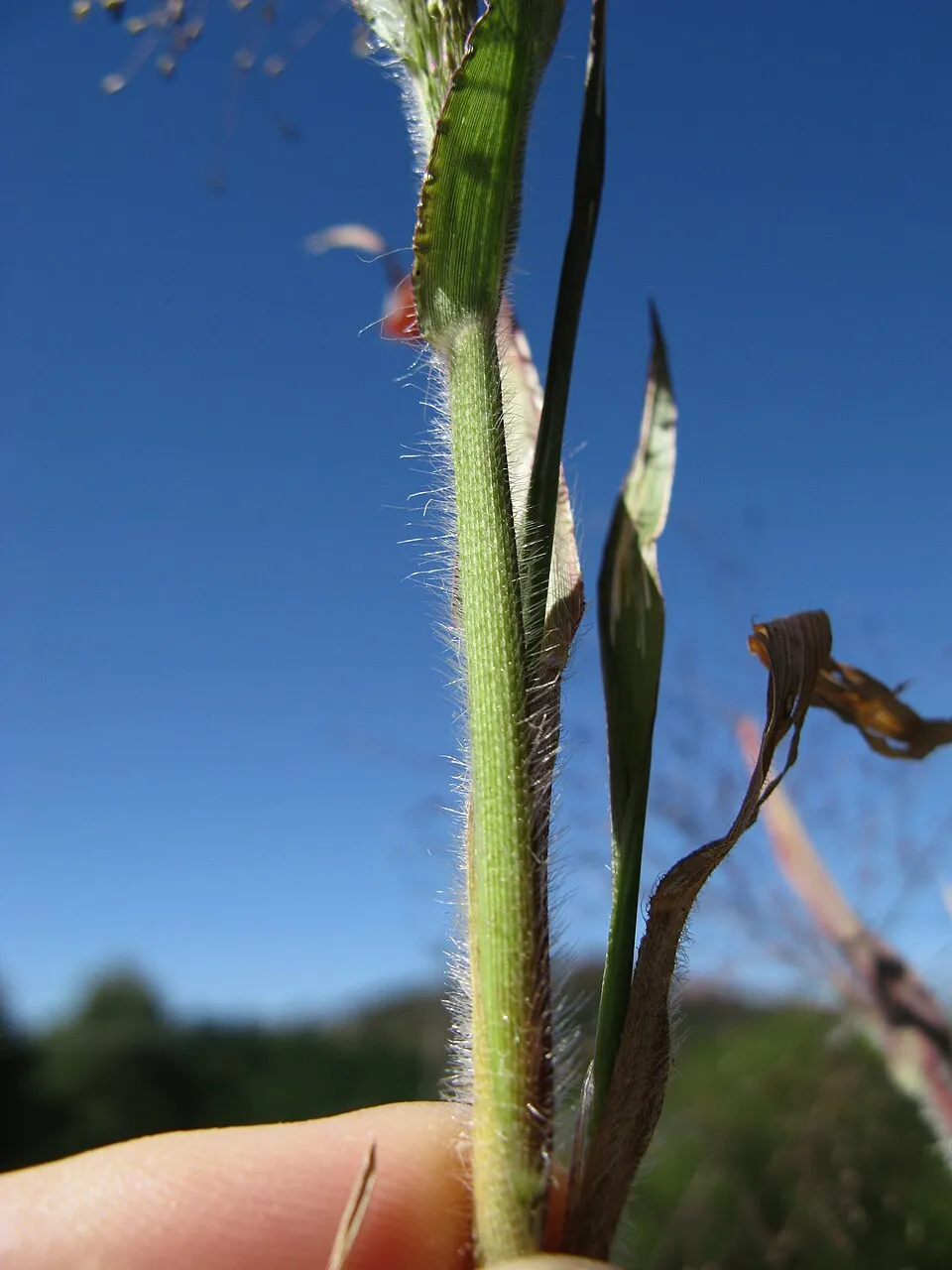
Witch Grass, scientifically known as Panicum capillare, is an annual warm-season grass belonging to the Poaceae family. This resilient plant typically grows in tufted clumps, sending up multiple leafy culms that can reach heights of 30 to 100 centimeters, though it can vary from four inches to two feet. Its leaf blades are generally narrow and elongated, up to 25 centimeters long and 16 mm wide, often described as floppy and variably hairy, sometimes appearing ragged with age. The leaf sheaths are distinctively covered with long, spreading hairs.
The most striking feature is its inflorescence—a large, open, airy panicle that can be up to 45 centimeters long and 30 centimeters across. These mature panicles, often constituting half the plant's length, are laden with tiny, ellipsoid-ovoid spikelets that are light green, sometimes tinged with pale purple. Blooming occurs in late summer to early fall, after which the entire panicle detaches and tumbles like a tumbleweed, effectively dispersing its numerous small, rounded grains. Panicum capillare is native to most of temperate North America, from Canada to the southern United States, and is particularly common in disturbed areas such as roadsides, fields, construction sites, and waste areas.
It thrives in full sun, tolerating mesic to dry conditions and a variety of barren soils including sand, gravel, and hard-pan clay, demonstrating remarkable adaptability. Taxonomically, it falls under the Panicoideae subfamily and exhibits C4 metabolism, optimizing its growth in hot, dry weather.
Trusted Scientific References
1. Authoritative external sources for Panicum capillare
1.1 Wikipedia — Panicum capillare
1.2 Kew POWO (Plants of the World Online)
1.3 PubMed — peer-reviewed research
1.4 NCBI Taxonomy Browser
1.5 GBIF — Global Biodiversity
1.6Witch Grass should be interpreted through verified botanical identity, practical care, and responsible safety language. This recovery note adds the missing context needed for a complete profile: match light to the plant's habit, use well-drained soil, water according to season, and avoid unsupported medicinal or edible claims. For publishing, the plant can be presented as a source-backed medicinal plant with clear care guidance, common problem diagnosis, and conservative safety wording.
1.1.Witch Grass — Distinguishing Points
- ✓Native North American Annual Grass — Widespread and adaptable across temperate regions.
- ✓Distinctive Airy Panicle — Features a large, open, and widely spreading seedhead.
- ✓Warm — Season C4 Metabolism — Optimally grows and develops during hot summer and early autumn.
- ✓Traditional Immune & Anti — inflammatory Support — Historically valued for these properties.
- ✓Rich Phytochemical Profile — Contains alkaloids, flavonoids, terpenoids, and phenolic acids.
- ✓Colonizes Disturbed Habitats — Commonly found along roadsides, fields, and waste areas.
- ✓Fibrous Root System — Supports resilience and efficient nutrient uptake in various soils.
- ✓Variable Morphology — Exhibits diversity in height, leaf characteristics, and hairiness.
- ✓Tumbleweed Seed Dispersal — Mature panicles detach and roll, efficiently spreading seeds.
- ✓Potential for Weediness — Can become problematic in certain agricultural or garden settings.
1.2.Witch Grass — Concise Overview
- ✓Witch Grass (Panicum capillare) is a resilient annual native to North America.
- ✓Traditionally valued for immune, anti-inflammatory, antioxidant, and digestive support.
- ✓Rich in bioactive compounds including flavonoids, terpenoids, and phenolic acids.
- ✓Thrives in disturbed areas, preferring full sun and well-drained, often barren, soils.
- ✓Utilized in herbal infusions, decoctions, and tinctures for holistic wellness.
- ✓Requires careful consideration of potential side effects and drug interactions.
2.Witch Grass — Scientific Identity
3.Witch Grass — Fact Sheet
4.Witch Grass — Botanical Description
5.Witch Grass — Origin & Spread
6.Witch Grass — Heritage Uses
7.Witch Grass — Chemical Profile
- ✓Alkaloids — Diverse nitrogen-containing compounds potentially contributing to a range of pharmacological activities, though specific types and their exact roles in Witch Grass are under investigation.
- ✓Flavonoids — A prominent group of polyphenols, including compounds like quercetin and luteolin, known for their potent antioxidant, anti-inflammatory, and cardioprotective effects.
- ✓Terpenoids — Volatile aromatic compounds that may confer antimicrobial, anti-inflammatory, and insecticidal properties to the plant.
- ✓Phenolic Acids — Such as caffeic acid and ferulic acid, which are powerful antioxidants and contribute to the plant's defense mechanisms and astringent qualities.
- ✓Saponins — Glycosides with a frothing characteristic, potentially offering immune-modulating and expectorant properties.
- ✓Polysaccharides — Complex carbohydrates that can support immune function and act as prebiotics, fostering a healthy gut microbiome.
- ✓Glycosides — Compounds where a sugar is bound to a non-sugar moiety, often responsible for various biological activities.
- ✓Phytosterols — Plant sterols like beta-sitosterol, which are known for their anti-inflammatory effects and potential role in cholesterol management.
- ✓Lignans — Phenolic compounds with antioxidant and phytoestrogenic properties, contributing to cellular protection.
8.Witch Grass — Pharmacological Findings
- ✓Immune Support — Traditionally believed to modulate immune responses and enhance the body's natural resilience against various pathogens.
- ✓Anti-inflammatory Effects — Contains compounds that may help alleviate inflammation throughout the body, reducing discomfort and swelling.
- ✓Antioxidant Protection — Rich in phytochemicals like flavonoids and phenolic acids that neutralize harmful free radicals, protecting cellular integrity.
- ✓Digestive Health — Used in traditional practices to soothe the digestive tract, promote healthy gut function, and alleviate minor gastrointestinal upsets.
- ✓General Wellness Promotion — Contributes to overall vitality and balance within the body, supporting systemic health and well-being.
- ✓Skin Health Support — Its anti-inflammatory and antioxidant properties may offer soothing and protective benefits for skin irritations.
- ✓Metabolic Regulation — Traditional uses suggest a role in supporting healthy metabolic processes, though specific mechanisms require further research.
- ✓Respiratory Comfort — May help ease minor respiratory discomfort through its potential anti-inflammatory actions.
- ✓Stress Adaptation — Contributes to the body's ability to adapt to physiological stressors, promoting a sense of calm and resilience.
- ✓Pain Management — Offers a natural approach to managing minor aches and pains, likely attributed to its anti-inflammatory constituents.
8.1.Witch Grass — Therapeutic Indications
9.Witch Grass — Safety & Side Effects
9.1.Witch Grass — Reported Side Effects
- ✓Allergic Reactions — Sensitive individuals may experience skin rashes, itching, or respiratory symptoms upon contact or ingestion.
- ✓Digestive Upset — High doses or individual sensitivity may lead to nausea, vomiting, stomach cramps, or diarrhea.
- ✓Interaction with Medications — Potential to interact with certain prescription drugs, particularly blood thinners, blood pressure medications, or immunosuppressants.
- ✓Pregnancy and Lactation — Lack of sufficient safety data necessitates avoidance during pregnancy and breastfeeding.
- ✓Hypotension Risk — May cause a drop in blood pressure in susceptible individuals, especially those already on hypotensive medications.
- ✓Drowsiness — Some users might experience mild sedative effects, advising caution when operating machinery or driving.
- ✓Photosensitivity — Rare cases of increased skin sensitivity to sunlight have been reported with certain plant compounds.
9.2.Witch Grass — Toxicity Assessment
- ✓Consult Healthcare Professional — Always seek advice from a qualified healthcare provider before using Witch Grass, especially if pregnant, nursing, on medication, or with pre-existing health conditions.
- ✓Dosage Adherence — Strictly follow recommended dosages to prevent potential adverse effects; self-medication with unknown quantities is discouraged.
- ✓Patch Testing — For topical applications, perform a small patch test on the skin to check for allergic reactions before widespread use.
- ✓Monitor for Reactions — Discontinue use immediately if any adverse reactions or unusual symptoms occur.
- ✓Not for Pediatric Use — Avoid administering Witch Grass to infants, children, or adolescents due to insufficient safety and efficacy data.
- ✓Pre-Surgical Discontinuation — Discontinue use at least two weeks prior to any scheduled surgery due to potential interactions with anesthesia or bleeding.
- ✓Quality Sourcing — Ensure plant material is obtained from reputable sources, verified for species identification, and free from contaminants or pesticides.
10.Witch Grass — Usage Guide
- ✓Herbal Infusion — Dried leaves and stems can be steeped in hot water for 5-10 minutes to create a mild tea, traditionally consumed for general wellness.
- ✓Decoction — Tougher plant parts, like roots or more fibrous stems (if used), can be simmered in water for 15-30 minutes to extract more potent compounds.
- ✓Tincture — A concentrated alcohol extract made by soaking fresh or dried plant material in high-proof alcohol for several weeks, offering a potent and shelf-stable preparation.
- ✓Poultice — Freshly crushed or macerated plant material can be applied directly to the skin as a poultice to soothe localized inflammation or skin irritations.
- ✓Capsules/Powder — Dried and finely ground Witch Grass can be encapsulated or consumed as a powder, providing a convenient method for consistent dosing.
- ✓Topical Oil Infusion — Dried plant material infused in a carrier oil (e.g., olive, jojoba) over several weeks can be used topically for massage or skin applications.
- ✓Herbal Compress — A cloth soaked in a strong infusion or decoction and applied warm to affected areas for therapeutic relief.
11.Witch Grass — How to Grow
- ✓Soil Preference — Thrives in well-drained, barren soils, including sandy, gravelly, or hard-pan clay types; tolerates alkaline conditions.
- ✓Sunlight Requirements — Prefers full sun exposure for optimal growth, but can tolerate partial shade.
- ✓Watering Regime — Adaptable to mesic to dry conditions, requiring moderate watering, especially during establishment.
- ✓Climate & Seasonality — A warm-season annual grass with C4 metabolism, it germinates later in the spring and exhibits most growth during summer and early autumn, tolerating hot, dry weather.
- ✓Propagation — Primarily spreads by reseeding; its tumbleweed-like panicles efficiently distribute seeds across landscapes.
- ✓Growth Habit — Often forms dense colonies in disturbed areas, benefiting from reduced competition from other vegetation.
- ✓Management — In gardens or cultivated areas, management may involve mowing, tilling, or hand-pulling to prevent excessive spread.
Reviewed by the Flora Medical Global Botanical Review Panel
Multi-disciplinary editorial group · Botany · Ethnobotany · Herbal-medicine literature
Who reviewed this: This page was checked by the Flora Medical Global Botanical Review Panel — an in-house editorial group of botany graduates, ethnobotany researchers, and horticulture practitioners who collectively maintain our 7,000+ plant encyclopedia. Meet the team.
Our 4-step verification process
1. Taxonomic verification
Scientific names and synonyms cross-checked against Kew POWO, World Flora Online, and The Plant List.
2. Phytochemical & medicinal cross-reference
Active compounds, traditional uses, and reported activities are cross-referenced with PubMed, USDA Dr. Duke's database, and peer-reviewed ethnobotanical literature.
3. Conservation & distribution check
Distribution, ecology, and conservation status confirmed against GBIF occurrence records and the IUCN Red List.
4. Editorial & safety review
Every entry passes an editorial pass for clarity, originality, and safety notices (toxicity, contraindications, dosage caveats) before publication.
Last reviewed:
Important medical disclaimer: This content is for educational and research purposes only. It is not medical advice and is not a substitute for consultation with a licensed healthcare provider. Do not use any herb to self-treat a medical condition without professional guidance.
Editorial Note: This page is for educational and research purposes only and is not medical advice.
Written by: Flora Medical Global Editorial Team
Reviewed by: Flora Medical Global Botanical Review Panel
Last Updated: June 15, 2026





Witch Grass — Comments & Community Reviews
Rate this plant