
Medical Disclaimer: This content is for educational purposes only. It is not medical advice. Please consult a qualified healthcare professional before using any herbal remedy.
Safety Overview
1.Wood Sage — Plant Snapshot
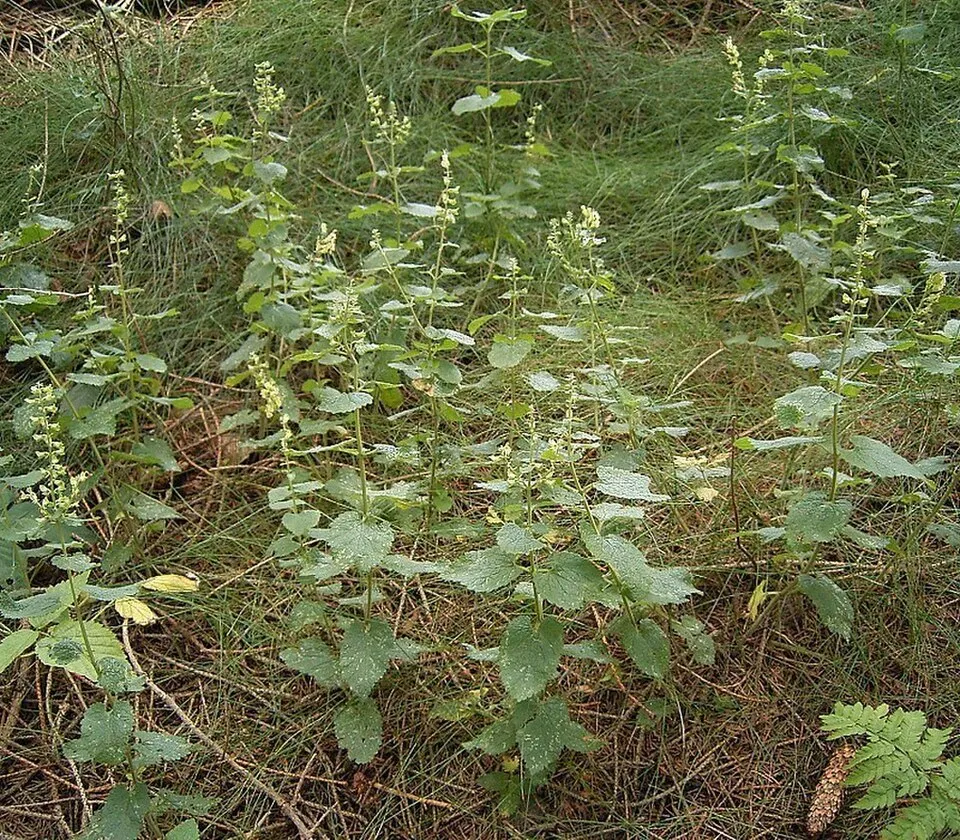
Wood Sage (Teucrium scorodonia), often known as Woodland Germander or Sage-leaved Germander, is a distinctive perennial herbaceous plant belonging to the expansive Lamiaceae family. Typically reaching heights of 30 to 50 centimeters, its morphology is characterized by erect, square-sectioned stems that become somewhat woody towards the base. The leaves are ovate to lanceolate, measuring 5 to 8 centimeters in length, presenting a smooth, dark green upper surface and a noticeably paler, finely hairy underside. This contrast in leaf texture is a key identification feature.
During the summer months, specifically from June to August, Wood Sage produces small, tubular flowers arranged in dense, terminal clusters. These blossoms typically display delicate shades of pale purple or lilac, adding a subtle beauty to its habitat. While it thrives in well-drained, often sandy or rocky soils, Teucrium scorodonia is a common sight in dry, open woodland environments across a wide geographical range. Its native distribution spans Europe, from the Atlantic coastlines eastward into Central and Southern Europe, and extends into parts of North Africa.
It has also been introduced to other regions globally, including parts of North America and New Zealand. Taxonomically, it is classified within the Lamiales order, closely related to other species within the Teucrium genus, such as the North American Teucrium canadense, though T. scorodonia is the focus of this monograph. The aerial parts, particularly the leaves and flowering stems, are traditionally recognized for their medicinal properties, which are largely attributed to a rich array of bioactive compounds including various flavonoids, terpenoids, and phenolic acids.
Trusted Scientific References
1. Authoritative external sources for Teucrium scorodonia
1.1 Wikipedia — Teucrium scorodonia
1.2 Kew POWO (Plants of the World Online)
1.3 PubMed — peer-reviewed research
1.4 NCBI Taxonomy Browser
1.5 GBIF — Global Biodiversity
1.6Wood Sage should be interpreted through verified botanical identity, practical care, and responsible safety language. This recovery note adds the missing context needed for a complete profile: match light to the plant's habit, use well-drained soil, water according to season, and avoid unsupported medicinal or edible claims. For publishing, the plant can be presented as a source-backed medicinal plant with clear care guidance, common problem diagnosis, and conservative safety wording.
1.1.Wood Sage — Key Features
- ✓European Native — Indigenous to Western and Central Europe and parts of North Africa.
- ✓Mint Family Member — Belongs to Lamiaceae, characterized by square stems and aromatic foliage.
- ✓Woodland Habitat — Thrives in dry, open woodlands, clearings, and along forest edges.
- ✓Pale Purple Flowers — Produces small, tubular, pale purple or lilac flowers in dense summer clusters.
- ✓Aromatic Leaves — Leaves possess a distinct, somewhat bitter aroma, indicative of volatile compounds.
- ✓Traditional Herbalism — Widely recognized in European folk medicine for various applications.
- ✓Phytochemically Rich — Contains a diverse profile of bioactive compounds, including potent antioxidants.
- ✓Drought Tolerant — Adaptable to well-drained, less fertile soils and periods of dryness.
- ✓Common Names — Also known as Woodland Germander, Sage-leaved Germander, or Large-leaved Germander.
- ✓Perennial Herb — Returns year after year from its rootstock.
1.2.Wood Sage — Snapshot Summary
- ✓Botanical Name — Teucrium scorodonia, a perennial herb in the mint family (Lamiaceae).
- ✓Traditional Uses — Historically valued in European folk medicine for digestive, respiratory, and wound care.
- ✓Key Constituents — Rich in flavonoids, diverse terpenoids (e.g., teucrins), and phenolic acids.
- ✓Habitat — Commonly found in dry, open woodlands across Western and Central Europe.
- ✓Safety Note — Limited scientific safety data available; avoid during pregnancy and lactation; consult a healthcare professional before use.
2.Wood Sage — Scientific Profile
3.Wood Sage — Botanical Stats
4.Wood Sage — Morphological Account
5.Wood Sage — Geographic Distribution
6.Wood Sage — Ethnobotanical Uses
7.Wood Sage — Bioactive Constituents
- ✓Flavonoids — Includes luteolin, apigenin, diosmetin, scutellarein, chrysoeriol, and their glycosides; these compounds are known for potent antioxidant, anti-inflammatory, and neuroprotective activities.
- ✓Terpenoids — A diverse group featuring neo-clerodane diterpenoids like teucrin A, teucrin B, teucrin H1, teucrin H2, and scorodioside, alongside monoterpenes and sesquiterpenes (e.g., β-caryophyllene) which contribute to aroma and various biological effects such as antifeedant and antimicrobial properties.
- ✓Phenolic Acids — Predominantly caffeic acid and rosmarinic acid; these are powerful antioxidants with demonstrated anti-inflammatory, antiviral, and antimicrobial activities.
- ✓Volatile Oils — Comprising a complex mixture of monoterpenes and sesquiterpenes, these contribute to the plant's characteristic scent and may exert mild antiseptic qualities.
- ✓Tannins — Astringent compounds that can aid in tissue contraction and provide benefits for wound healing and gastrointestinal disturbances.
- ✓Saponins — Glycosides that may possess expectorant properties, aiding in the loosening of mucus, and potentially contributing to anti-inflammatory actions.
- ✓Iridoids — Bitter compounds which can stimulate digestion and may have anti-inflammatory and antimicrobial effects.
- ✓Glycosides — Various sugar-bound compounds that contribute to the plant's diverse pharmacological activities and bitterness.
8.Wood Sage — Research Insights
- ✓Digestive Support — Traditionally, Wood Sage has been employed to address a range of digestive tract disorders, potentially aiding in soothing stomach and intestinal discomfort.
- ✓Respiratory Health — Historically, the plant was utilized for alleviating symptoms associated with swollen airways and throat spasms, suggesting expectorant or bronchodilatory properties.
- ✓Anti-inflammatory Potential — The presence of flavonoids and phenolic acids in Teucrium scorodonia suggests a potential for anti-inflammatory effects, which could help reduce swelling and pain.
- ✓Antimicrobial Properties — Certain terpenoids and other phytochemicals may confer antiseptic and antifungal actions, contributing to its traditional use against infections.
- ✓Wound Healing — Applied topically, Wood Sage was traditionally used as a poultice or wash to support the healing of minor wounds and skin irritations due to its astringent qualities.
- ✓Antispasmodic Effects — Phytochemicals found in the herb may possess antispasmodic activity, helping to relax smooth muscles and relieve cramps or spasms.
- ✓Tonic Properties — In folk medicine, Wood Sage was sometimes considered a general tonic, believed to enhance overall vitality and well-being.
- ✓Liver Support — Traditional European herbalism occasionally pointed to Wood Sage for its potential role in supporting liver function or addressing liver disorders.
- ✓Blood Pressure Regulation — Historically, there are mentions of its use in traditional practices for managing high blood pressure, though modern evidence is limited.
- ✓Diuretic Action — Some traditional accounts suggest a mild diuretic effect, potentially assisting in fluid balance and urinary health.
8.1.Wood Sage — Indications & Uses
9.Wood Sage — Adverse Effects
9.1.Wood Sage — Caution Notes
- ✓Insufficient Data — There is a significant lack of reliable scientific information regarding specific side effects of Wood Sage in humans.
- ✓Allergic Reactions — As with any herbal product, individuals may experience allergic reactions, which could manifest as skin rashes, itching, or mild gastrointestinal upset.
- ✓Gastrointestinal Discomfort — High or unadvised doses might theoretically lead to mild stomach discomfort, nausea, or loose stools.
- ✓Liver Toxicity — While not specifically noted for Teucrium scorodonia, some other Teucrium species have been associated with hepatotoxicity, warranting caution and professional consultation.
- ✓Drug Interactions — Due to its phytochemical complexity and limited research, potential interactions with prescription medications, particularly those metabolized by the liver, cannot be ruled out.
- ✓Unknown Long-Term Effects — The safety profile of long-term or chronic consumption of Wood Sage has not been established through clinical trials.
9.2.Wood Sage — Clinical Safety Notes
- ✓Pregnancy and Lactation — Avoid use during pregnancy and breastfeeding due to the absence of sufficient reliable safety data.
- ✓Medical Conditions — Individuals with pre-existing medical conditions, especially liver or kidney disorders, should consult a healthcare professional before use.
- ✓Medication Interactions — Exercise extreme caution if taking prescription medications, particularly those with narrow therapeutic windows or known hepatic metabolism.
- ✓Dosage — Adhere strictly to expert-recommended dosages, as excessive consumption may elevate the risk of potential adverse effects.
- ✓Professional Guidance — Always seek advice from a qualified medical herbalist or healthcare provider before incorporating Wood Sage into any therapeutic regimen.
- ✓Children and Elderly — Use with caution in pediatric and elderly populations due to potential increased sensitivity and the lack of specific dosage guidelines for these groups.
- ✓Allergic Sensitivities — Discontinue use if any signs of allergic reaction or adverse effects occur.
10.Wood Sage — How to Use
- ✓Herbal Infusion (Tea) — Dried leaves and flowering tops are steeped in hot water for 5-10 minutes, traditionally consumed for digestive or respiratory complaints.
- ✓Tincture — An alcoholic extract of the aerial parts, prepared by maceration, allowing for concentrated internal dosing under professional guidance.
- ✓Poultice — Fresh, crushed leaves are directly applied to the skin to alleviate minor wounds, skin irritations, or localized inflammation.
- ✓Decoction — A stronger extract made by simmering the aerial parts in water, used when a more potent internal or external application is desired.
- ✓Wash/Compress — A cooled, strong infusion or decoction can be used externally as a skin wash for cleansing or as a compress for soothing inflamed areas.
- ✓Inhalation — The vapor from a hot infusion can be carefully inhaled to help relieve congestion associated with respiratory issues.
- ✓Herbal Powder — Dried aerial parts can be finely ground and encapsulated or mixed into a beverage for internal consumption.
11.Wood Sage — Growth Requirements
- ✓Soil Preference — Thrives in well-drained, sandy, or rocky soils, tolerating a range from poor to moderately fertile conditions; pH adaptable.
- ✓Sunlight Exposure — Prefers full sun to partial shade; adequate sunlight encourages denser growth and abundant flowering.
- ✓Watering Regimen — Drought-tolerant once established, requiring minimal supplemental watering; avoid waterlogging, which can lead to root rot.
- ✓Propagation — Can be propagated effectively by seed sown in spring or by division of mature clumps in early spring or autumn.
- ✓Climate Adaptability — Hardy in temperate climates (USDA Zones 4-8), tolerating typical European woodland temperatures and conditions.
- ✓Pest and Disease Resistance — Generally robust, with few significant issues from common garden pests or fungal diseases.
- ✓Maintenance — Requires minimal care; occasional deadheading of spent flowers can encourage a bushier habit and potentially prolong blooming.
Reviewed by the Flora Medical Global Botanical Review Panel
Multi-disciplinary editorial group · Botany · Ethnobotany · Herbal-medicine literature
Who reviewed this: This page was checked by the Flora Medical Global Botanical Review Panel — an in-house editorial group of botany graduates, ethnobotany researchers, and horticulture practitioners who collectively maintain our 7,000+ plant encyclopedia. Meet the team.
Our 4-step verification process
1. Taxonomic verification
Scientific names and synonyms cross-checked against Kew POWO, World Flora Online, and The Plant List.
2. Phytochemical & medicinal cross-reference
Active compounds, traditional uses, and reported activities are cross-referenced with PubMed, USDA Dr. Duke's database, and peer-reviewed ethnobotanical literature.
3. Conservation & distribution check
Distribution, ecology, and conservation status confirmed against GBIF occurrence records and the IUCN Red List.
4. Editorial & safety review
Every entry passes an editorial pass for clarity, originality, and safety notices (toxicity, contraindications, dosage caveats) before publication.
Last reviewed:
Important medical disclaimer: This content is for educational and research purposes only. It is not medical advice and is not a substitute for consultation with a licensed healthcare provider. Do not use any herb to self-treat a medical condition without professional guidance.
Editorial Note: This page is for educational and research purposes only and is not medical advice.
Written by: Flora Medical Global Editorial Team
Reviewed by: Flora Medical Global Botanical Review Panel
Last Updated: June 15, 2026





Wood Sage — Comments & Community Reviews
Rate this plant