

Medical Disclaimer: This content is for educational purposes only. It is not medical advice. Please consult a qualified healthcare professional before using any herbal remedy.
Safety Overview
1.Yew — At a Glance
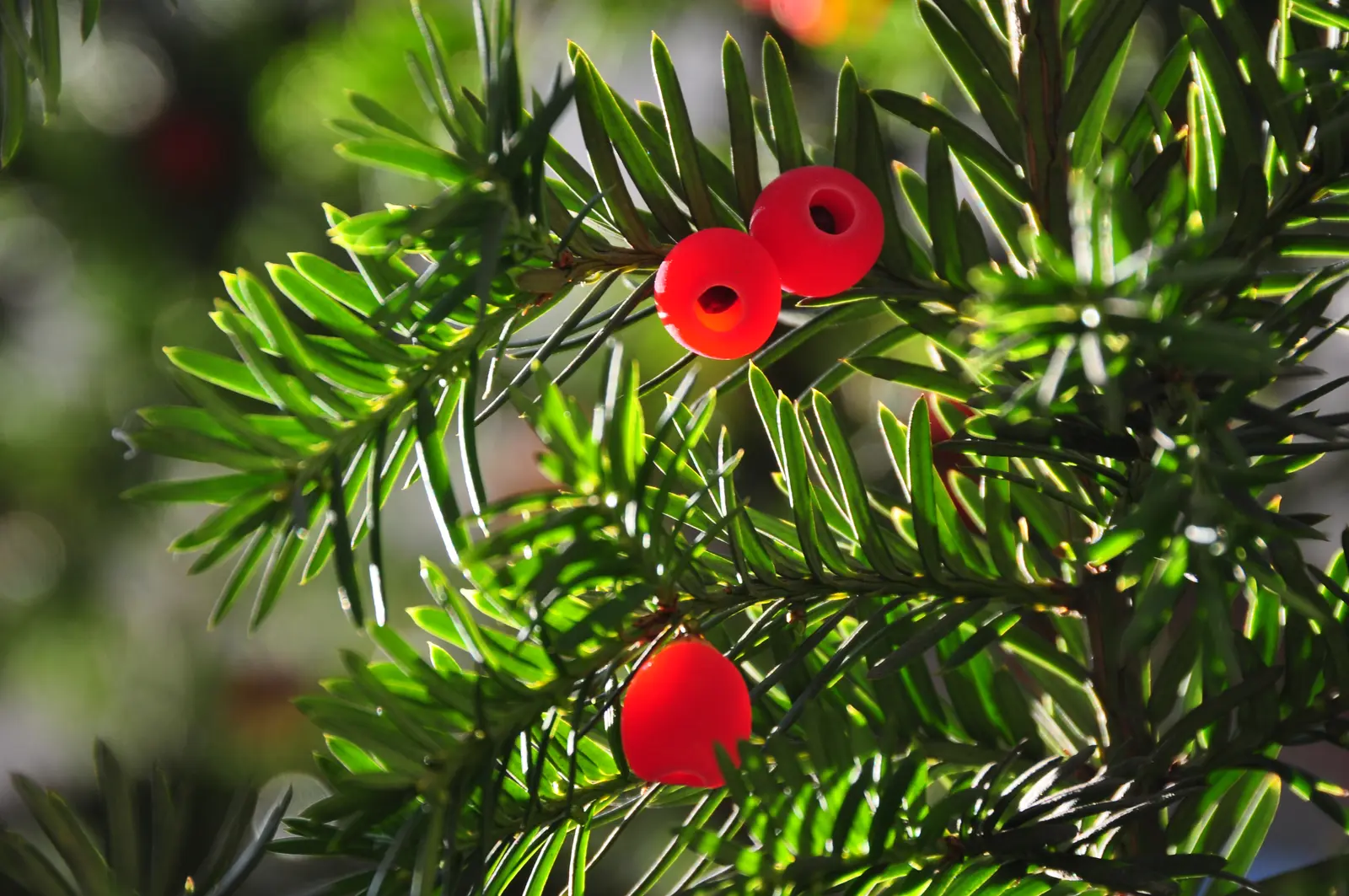
Taxus baccata, commonly known as the Common Yew or European Yew, is a distinguished coniferous tree belonging to the ancient Taxaceae family. This evergreen species is indigenous to a broad range spanning western, central, and southern Europe, extending into northwest Africa and southwest Asia. Renowned for its exceptional longevity, the yew is a remarkably slow-growing tree, frequently attaining ages between 400 and 600 years, with some venerable specimens documented to live for over a millennium.
Typically reaching heights of 10-20 meters, with rare individuals soaring up to 28 meters, its distinctive reddish-brown bark exfoliates in narrow, papery strips. The foliage consists of dark green, linear, flattened needles, usually 1-4 cm long and 2-3 mm wide, characterized by a prominent midrib. These needles are spirally arranged but often appear to be in two ranks along the shoots.
Taxus baccata is a dioecious species, meaning individual plants are either male, producing small yellowish pollen cones, or female, bearing a single ovule that matures into a striking, fleshy, bright red aril. This aril uniquely encases the toxic seed and is the only non-poisonous part of the plant. European Yews thrive in shady, moist woodland environments, preferring alkaline or neutral soils, yet demonstrating considerable adaptability to diverse growing conditions, often found in ancient churchyards.
Trusted Scientific References
1. Authoritative external sources for Taxus baccata
1.1 Wikipedia — Taxus baccata
1.2 Kew POWO (Plants of the World Online)
1.3 PubMed — peer-reviewed research
1.4 NCBI Taxonomy Browser
1.5 GBIF — Global Biodiversity
1.6Yew should be interpreted through verified botanical identity, practical care, and responsible safety language. This recovery note adds the missing context needed for a complete profile: match light to the plant's habit, use well-drained soil, water according to season, and avoid unsupported medicinal or edible claims. For publishing, the plant can be presented as a source-backed garden plant with clear care guidance, common problem diagnosis, and conservative safety wording.
1.1.Yew — Highlights
- ✓Ancient, Long — Lived Conifer — Can live for over a thousand years, making it one of Europe's oldest trees.
- ✓Highly Toxic — Contains potent taxane alkaloids that are lethal upon ingestion.
- ✓Source of Paclitaxel (Taxol) — Crucial for modern chemotherapy treatments against various cancers.
- ✓Dioecious — Individual trees are either male or female, producing pollen cones or seed-bearing arils.
- ✓Distinctive Red Aril — The fleshy, bright red structure surrounding the seed is the only non-toxic part.
- ✓Dense, Dark Green Foliage — Features linear, flattened needles arranged spirally on shoots.
- ✓Shade Tolerant & Cold Hardy — Adaptable to various light conditions and resilient in cold climates.
- ✓Native to Europe, NW Africa, SW Asia — Widely distributed across temperate regions.
- ✓Ornamental Value — Popular for hedging, topiary, and landscaping due to its evergreen nature and ability to withstand heavy pruning.
1.2.Yew — At-a-Glance Summary
- ✓Taxus baccata is an ancient, slow-growing, highly toxic coniferous tree.
- ✓It is the natural source of potent anti-cancer drugs, particularly paclitaxel (Taxol).
- ✓All parts of the plant, except the fleshy red aril (without the seed), are deadly poisonous.
- ✓Causes rapid cardiac failure and neurological symptoms upon ingestion.
- ✓Not safe for direct medicinal use; its value is in pharmaceutical extraction.
- ✓Known for its extreme longevity and adaptability in temperate climates.
2.Yew — Botanical Identity
3.Yew — Fact Sheet
4.Yew — Physical Description
5.Yew — Ecological Habitat
6.Yew — Heritage Uses
7.Yew — Key Phytochemicals
- ✓Taxane Alkaloids — This is the most significant group, including paclitaxel (Taxol), baccatin III, and 10-deacetylbaccatin III, which are potent antimitotic agents crucial for cancer chemotherapy.
- ✓Taxines — Highly toxic diterpenoid alkaloids such as taxine A, taxine B, and related compounds are responsible for the severe cardiotoxic effects of the plant, disrupting cardiac conduction.
- ✓Lignans — Various lignans are present, contributing to the plant's overall secondary metabolite profile, though their specific medicinal activities in yew are less studied than taxanes.
- ✓Flavonoids — Yew contains several flavonoid glycosides and aglycones, which are generally known for their antioxidant and anti-inflammatory properties.
- ✓Steroids — Phytosteroids are found in Taxus baccata, playing roles in plant physiology and potentially contributing to minor biological activities.
- ✓Phenolic Acids — Derivatives like gallic acid and chlorogenic acid are present, acting as antioxidants and contributing to the plant's defense mechanisms.
- ✓Volatile Oils — Present in the foliage, these oils contribute to the characteristic scent of the yew and may contain various monoterpenes and sesquiterpenes.
- ✓Cyanogenic Glycosides — Traces of cyanogenic glycosides can be found, particularly in the seeds, contributing to their toxicity upon hydrolysis.
- ✓Resins — The plant contains various resinous compounds, which are complex mixtures of terpenes, fatty acids, and other secondary metabolites.
- ✓Sugars — The fleshy aril is rich in sugars, making it palatable to birds, which aid in seed dispersal.
8.Yew — Pharmacological Findings
- ✓Anticancer Agent Source — Taxus baccata serves as the primary natural source for taxane compounds like paclitaxel (Taxol), which are potent chemotherapy agents used to treat various aggressive cancers by inhibiting cell division.
- ✓Microtubule Stabilizer — Paclitaxel works by stabilizing microtubules, preventing their depolymerization and thus arresting cells in the G2/M phase of the cell cycle, leading to apoptosis in cancerous cells.
- ✓Breast Cancer Treatment — Derivatives from the yew tree, particularly paclitaxel, are widely employed in the treatment protocols for advanced and metastatic breast cancers.
- ✓Ovarian Cancer Therapy — Paclitaxel is a cornerstone medication for ovarian cancer, often used in combination with platinum-based drugs to improve patient outcomes.
- ✓Lung Cancer Management — Non-small cell lung cancer (NSCLC) and small cell lung cancer (SCLC) are among the pulmonary malignancies for which yew-derived compounds offer effective therapeutic options.
- ✓Kaposi's Sarcoma Treatment — For patients with AIDS-related Kaposi's sarcoma, paclitaxel has demonstrated efficacy, particularly in cases resistant to other treatments.
- ✓Gastric and Pancreatic Cancer — Emerging research and clinical applications suggest the utility of taxanes in managing challenging gastrointestinal cancers such as gastric and pancreatic carcinomas.
- ✓Immunosuppressive Potential (Research) — Beyond oncology, some taxanes are being investigated for potential immunosuppressive properties, though this is not a current clinical application.
- ✓Anti-inflammatory Properties (Preclinical) — Certain isolated yew compounds have shown preliminary anti-inflammatory effects in laboratory studies, distinct from their primary anticancer actions.
- ✓Diuretic Properties (Traditional) — Historically, the fleshy red aril, devoid of the toxic taxanes found elsewhere in the plant, was used in folk medicine for its mild diuretic effects, though scientific evidence is scarce and direct consumption is risky due to potential seed ingestion.
8.1.Yew — Health Applications
9.Yew — Cautions & Contraindications
9.1.Yew — Warnings
- ✓Severe Cardiac Toxicity — Ingestion of yew plant material causes rapid and often fatal cardiac arrhythmias, bradycardia, and heart failure due to taxine alkaloids.
- ✓Gastrointestinal Distress — Symptoms can include nausea, vomiting, abdominal pain, and severe diarrhea, often appearing quickly after ingestion.
- ✓Neurological Symptoms — May manifest as dizziness, muscle weakness, tremors, convulsions, and central nervous system depression, leading to coma.
- ✓Respiratory Paralysis — High doses of yew toxins can lead to respiratory depression and paralysis, contributing to fatality.
- ✓Liver and Kidney Damage — Systemic toxicity can cause damage to vital organs, including the liver and kidneys, in cases of survival.
- ✓Allergic Reactions — Contact with yew foliage can occasionally cause skin irritation or allergic dermatitis in sensitive individuals.
- ✓Sudden Death — Due to the rapid action of cardiotoxins, victims (human and animal) often experience sudden death with minimal prior symptoms.
9.2.Yew — Safety Profile
- ✓Extreme Toxicity — All parts of Taxus baccata, except the fleshy red aril (provided the seed is removed), are highly toxic due to taxane alkaloids; even dried leaves and wood retain their toxicity.
- ✓Lethal Dose — As little as 50-100 grams of yew leaves can be fatal to an adult human, and even smaller amounts are lethal for children and pets.
- ✓No Safe Direct Consumption — Direct internal consumption of any part of the yew plant (except the aril, with extreme caution regarding the seed) is strictly prohibited and life-threatening.
- ✓High Risk for Livestock and Pets — Animals, particularly horses, cattle, dogs, and birds, are highly susceptible to yew poisoning, often with fatal outcomes.
- ✓Pregnancy and Lactation — Yew is strictly contraindicated during pregnancy and lactation due to its abortifacient and toxic effects.
- ✓Professional Handling Only — Medicinal extraction of taxanes for chemotherapy must only be performed by pharmaceutical professionals in controlled environments.
- ✓Keep Away from Children — Yew plants in gardens should be inaccessible to children due to the attractive red berries and high toxicity.
10.Yew — Usage Guide
- ✓Pharmaceutical Extraction — The primary and only safe medicinal use involves industrial extraction of taxane compounds from the bark and needles for the synthesis of chemotherapy drugs like paclitaxel.
- ✓Topical Applications (Historical/Extreme Caution) — Historically, yew leaves were occasionally prepared as poultices for external application to alleviate rheumatic pain, a practice now strongly discouraged due to the risk of dermal absorption and systemic toxicity.
- ✓Aril Consumption (Limited & Risky) — The bright red, fleshy aril is the only non-toxic part and was traditionally consumed in very small quantities for mild diuretic effects, but it is critically important to meticulously remove the highly poisonous seed before consumption.
- ✓Decoctions (Forbidden) — Direct preparation of yew leaf or bark decoctions for internal use is strictly forbidden and highly dangerous due to the potent cardiotoxic alkaloids.
- ✓Homeopathic Preparations (Highly Diluted) — Some homeopathic remedies may incorporate highly diluted forms of Taxus baccata, adhering to specific homeopathic dilution principles that render the substance non-toxic.
- ✓Veterinary Use (Strictly Avoided) — Direct use of yew in any form for animals is extremely dangerous and often fatal; veterinary treatment for yew poisoning focuses on supportive care.
- ✓Research and Development — Plant material is used in controlled laboratory settings for ongoing pharmacological research into new taxane derivatives and their potential therapeutic applications.
11.Yew — Garden Cultivation
- ✓Propagation — Primarily propagated through semi-hardwood cuttings taken in late summer or autumn; seeds require a complex warm-then-cold stratification for germination.
- ✓Soil Requirements — Prefers well-drained, fertile soils with a neutral to alkaline pH (5.3-7.8), but can tolerate a range of soil types, including clay and sandy loams.
- ✓Light Conditions — Thrives in partial to full shade, making it an excellent understory plant or hedge, though it can tolerate full sun if kept adequately moist.
- ✓Water Needs — Requires consistent moisture, especially when young; mature plants are reasonably drought-tolerant once established but benefit from regular watering in dry periods.
- ✓Hardiness Zones — Highly cold-hardy, suitable for USDA zones 4 through 7, tolerant of temperatures down to -30°F (-34°C).
- ✓Pruning — Tolerates heavy pruning and shearing, making it ideal for hedging and topiary; best pruned in late winter or early spring.
- ✓Pest and Disease Management — Generally robust, but can be susceptible to root rot in poorly drained soils, and occasional issues with mealybugs, scale, or winter burn in exposed sites.
- ✓Trimming Disposal — All trimmings must be disposed of carefully and securely in landfills, away from livestock and pets, due to their extreme toxicity.
Reviewed by the Flora Medical Global Botanical Review Panel
Multi-disciplinary editorial group · Botany · Ethnobotany · Herbal-medicine literature
Who reviewed this: This page was checked by the Flora Medical Global Botanical Review Panel — an in-house editorial group of botany graduates, ethnobotany researchers, and horticulture practitioners who collectively maintain our 7,000+ plant encyclopedia. Meet the team.
Our 4-step verification process
1. Taxonomic verification
Scientific names and synonyms cross-checked against Kew POWO, World Flora Online, and The Plant List.
2. Phytochemical & medicinal cross-reference
Active compounds, traditional uses, and reported activities are cross-referenced with PubMed, USDA Dr. Duke's database, and peer-reviewed ethnobotanical literature.
3. Conservation & distribution check
Distribution, ecology, and conservation status confirmed against GBIF occurrence records and the IUCN Red List.
4. Editorial & safety review
Every entry passes an editorial pass for clarity, originality, and safety notices (toxicity, contraindications, dosage caveats) before publication.
Last reviewed:
Important medical disclaimer: This content is for educational and research purposes only. It is not medical advice and is not a substitute for consultation with a licensed healthcare provider. Do not use any herb to self-treat a medical condition without professional guidance.
Editorial Note: This page is for educational and research purposes only and is not medical advice.
Written by: Flora Medical Global Editorial Team
Reviewed by: Flora Medical Global Botanical Review Panel
Last Updated: June 15, 2026





Yew — Comments & Community Reviews
Rate this plant