
Medical Disclaimer: This content is for educational purposes only. It is not medical advice. Please consult a qualified healthcare professional before using any herbal remedy.
Safety Overview
1.Yucca Filamentosa — Introduction & Highlights
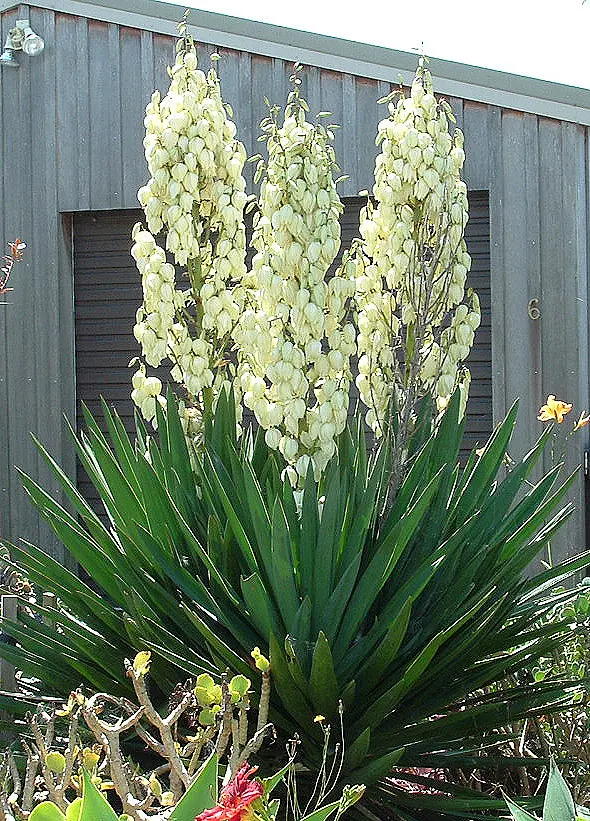
Yucca filamentosa, commonly known as Adam's Needle, is an exceptionally striking evergreen perennial native to the arid and semi-arid regions of the southeastern United States, particularly from Maryland south to Florida and west to Mississippi. This resilient member of the Asparagaceae family (subfamily Agavoideae) forms a robust basal rosette of stiff, sword-shaped leaves, typically measuring between 1.5 to 6 feet in length and 1 to 3 inches in width.
A distinctive feature of Yucca filamentosa is the fibrous margin of its leaves, which produces numerous long, curling, thread-like filaments, giving the plant its evocative common name. These unique threads contribute to its characteristic texture and visual appeal.
In mid-summer, Adam's Needle commands attention by sending forth a magnificent, dramatic flower stalk, or inflorescence, that can soar to impressive heights of 4 to 10 feet. This towering stalk is adorned with a dense cluster of pendulous, bell-shaped flowers, each approximately 2 to 3 inches across. The flowers are typically creamy white to a pale yellow, often exhibiting subtle tinges of green or purple, and emit a delicate fragrance that attracts nocturnal pollinators, most notably the Yucca moth.
Renowned for its exceptional drought tolerance and heat resistance, Yucca filamentosa is a highly favored choice for xeriscaping, rock gardens, and other low-water landscapes. It is a slow-growing but remarkably long-lived plant, cherished for its architectural silhouette and spectacular, ephemeral floral display.
Trusted Scientific References
1. Authoritative external sources for Yucca Filamentosa
1.1 Wikipedia — Yucca Filamentosa
1.2 Kew POWO (Plants of the World Online)
1.3 PubMed — peer-reviewed research
1.4 NCBI Taxonomy Browser
1.5 GBIF — Global Biodiversity
1.6Yucca Filamentosa should be interpreted through verified botanical identity, practical care, and responsible safety language. This recovery note adds the missing context needed for a complete profile: match light to the plant's habit, use well-drained soil, water according to season, and avoid unsupported medicinal or edible claims. For publishing, the plant can be presented as a source-backed garden plant with clear care guidance, common problem diagnosis, and conservative safety wording.
1.1.Yucca Filamentosa — Key Features
- ✓Evergreen Foliage — Maintains its rigid, sword-shaped leaves year-round, providing continuous landscape interest.
- ✓Drought Tolerant — Highly resilient to dry conditions, making it an excellent choice for water-wise gardening and xeriscapes.
- ✓Deer Resistant — Generally unpalatable to deer and other common garden pests, reducing browse damage.
- ✓Attracts Pollinators — Its fragrant, creamy-white flowers attract nocturnal pollinators, most notably the specialized Yucca moth.
- ✓Low Maintenance — Requires minimal care once established, thriving in challenging soil and environmental conditions.
- ✓Architectural Form — Offers a strong, sculptural presence with its dramatic basal rosette and towering flower stalk.
- ✓Salt Tolerant — Capable of withstanding coastal conditions and exposure to road salt, expanding its planting versatility.
- ✓Fibrous Leaves — Distinctive leaf margins produce unique, thread-like filaments, contributing to its common name and texture.
- ✓Medicinal Potential — Contains bioactive compounds like saponins and flavonoids, explored for anti-inflammatory and antioxidant benefits.
1.2.Yucca Filamentosa — Quick Summary
- ✓Yucca filamentosa, or Adam's Needle, is a striking evergreen perennial native to the southeastern US.
- ✓Traditionally utilized by Native American tribes for digestive issues and topical skin remedies.
- ✓Rich in steroidal saponins (yamogenin, diosgenin), flavonoids, and phenolic compounds.
- ✓Exhibits potential anti-inflammatory, antioxidant, and purgative properties.
- ✓Exceptionally drought-tolerant, low-maintenance, and provides significant architectural interest in landscapes.
- ✓Requires careful consideration and professional guidance for any internal medicinal applications.
2.Yucca Filamentosa — Systematic Position
3.Yucca Filamentosa — Quick Facts
4.Yucca Filamentosa — Structural Profile
5.Yucca Filamentosa — Where It Grows
6.Yucca Filamentosa — Historical Applications
7.Yucca Filamentosa — Active Compounds
- ✓Steroidal Saponins — Key active compounds such as yamogenin and diosgenin are abundant, primarily in the roots, and are recognized for their anti-inflammatory, antioxidant, and potential cholesterol-lowering properties.
- ✓Flavonoids — A diverse group of polyphenolic compounds, including various glycosides of quercetin and kaempferol, contribute significantly to the plant's antioxidant defense system.
- ✓Phenolic Compounds — Beyond flavonoids, other phenolic acids and derivatives are present, bolstering the plant's overall antioxidant capacity and contributing to its protective effects.
- ✓Resveratrol — A stilbenoid found in some Yucca species, known for its potent antioxidant, anti-inflammatory, and cardioprotective attributes.
- ✓Polysaccharides — Complex carbohydrates that can have immunomodulatory effects and contribute to the plant's structural integrity.
- ✓Anthraquinones — Compounds that may contribute to the plant's traditional purgative action, influencing bowel motility and offering laxative effects.
- ✓Carotenoids — Pigments present in the leaves, acting as powerful antioxidants and serving as precursors for Vitamin A.
- ✓Enzymes — Biologically active proteins involved in various metabolic processes within the plant, some of which may have therapeutic relevance in human digestion or inflammation.
- ✓Fatty Acids — Essential lipids found in plant tissues, important for cellular structure and function, contributing to the plant's overall nutritional profile.
8.Yucca Filamentosa — Modern Studies
- ✓Anti-inflammatory Support — Steroidal saponins like yamogenin and diosgenin may modulate inflammatory pathways, potentially offering relief for conditions associated with inflammation.
- ✓Antioxidant Activity — Flavonoids and various phenolic compounds present in the plant help neutralize harmful free radicals, protecting cellular integrity from oxidative stress.
- ✓Digestive Aid — Historically employed as a purgative, preparations from the root can support bowel regularity and help alleviate occasional constipation by promoting gut motility.
- ✓Skin Health — Topical applications derived from the plant have been traditionally used to soothe various skin conditions, irritations, and minor abrasions.
- ✓Antiseptic Properties — The sap has been applied topically to minor wounds, cuts, and insect bites, suggesting a traditional role in preventing infection and promoting healing.
- ✓Joint Comfort — Saponins are often associated with supporting joint health and flexibility, potentially reducing discomfort in conditions like arthritis, as per traditional understanding.
- ✓Detoxification Support — The purgative action can assist the body's natural processes of waste elimination, contributing to a sense of internal cleansing.
- ✓Cholesterol Management — Some research on saponins, in general, suggests a potential role in binding dietary cholesterol in the gut, thereby aiding its excretion and supporting healthy lipid profiles.
- ✓Immune System Modulation — Certain phytochemicals within Yucca filamentosa may exert immunomodulatory effects, helping to balance and support the body's natural defense mechanisms.
- ✓Blood Sugar Regulation — While not a primary traditional use for this specific species, some plant saponins are being explored for their potential influence on glucose metabolism.
8.1.Yucca Filamentosa — Health Applications
9.Yucca Filamentosa — Precautions & Warnings
9.1.Yucca Filamentosa — Warnings
- ✓Gastrointestinal Upset — High doses, particularly of raw or improperly prepared root material, can induce nausea, vomiting, or diarrhea due to the presence of saponins.
- ✓Allergic Reactions — Rare instances of contact dermatitis or skin irritation may occur in sensitive individuals upon topical application of the plant's sap or preparations.
- ✓Digestive Irritation — Internal consumption may cause irritation to the digestive lining, especially in individuals with pre-existing gastrointestinal sensitivities or conditions.
- ✓Bitter Taste — Preparations, especially decoctions, possess a strong, often unpleasant bitter taste that can be off-putting to some users.
- ✓Blood Thinning Potential — While not extensively documented for Yucca filamentosa specifically, some saponins may theoretically interfere with blood clotting mechanisms, warranting caution with anticoagulant medications.
- ✓Renal Irritation — Extremely high doses of saponins could potentially irritate the kidneys, although this is uncommon with typical herbal dosages.
9.2.Yucca Filamentosa — Safety Overview
- ✓Professional Consultation — Always consult a qualified healthcare professional or medical herbalist before using Yucca filamentosa, especially for internal consumption or if you have underlying health conditions.
- ✓Pregnancy and Lactation — Avoid use during pregnancy and breastfeeding due to insufficient safety data and the potential for uterine stimulation or effects on infants.
- ✓Children — Not recommended for use in children without explicit medical supervision, given the limited safety research in pediatric populations.
- ✓Gastrointestinal Sensitivity — Individuals with sensitive digestive systems, stomach ulcers, or inflammatory bowel conditions should exercise extreme caution or avoid internal use.
- ✓Drug Interactions — Discuss potential interactions with medications, particularly blood thinners, anti-inflammatories, cholesterol-lowering drugs, or diuretics, with a healthcare provider.
- ✓Dosage Adherence — Strictly adhere to recommended dosages and preparation guidelines to minimize the risk of adverse effects and ensure safe usage.
- ✓Topical Sensitivity — Perform a patch test on a small area of skin before extensive topical application to check for allergic reactions or irritation.
10.Yucca Filamentosa — How to Use
- ✓Root Decoction — The roots can be simmered in water to create a decoction, traditionally consumed internally as a purgative or to address stomach ailments.
- ✓Topical Poultice — Crushed or macerated fresh root material can be prepared as a poultice and applied directly to the skin to soothe irritations, minor wounds, or insect bites.
- ✓Sap Application — The fresh sap extracted from the leaves or stems can be carefully dabbed onto minor cuts, scrapes, or insect stings for its traditional antiseptic qualities.
- ✓Herbal Extracts — Standardized liquid extracts or tinctures of Yucca filamentosa, often concentrated for their saponin content, are available for internal use, typically mixed with water.
- ✓Powdered Root — Dried and finely powdered root can be encapsulated or blended into smoothies and beverages, offering a convenient method for internal consumption.
- ✓Skin Washes — Diluted infusions or decoctions of the root can be used as a topical wash for cleansing irritated skin or as a mild antiseptic application.
- ✓Natural Soaps — Historically, the saponin-rich parts of the plant were used to create natural lathering agents for cleansing; modern applications may include herbal soaps or shampoos.
11.Yucca Filamentosa — Propagation & Care
- ✓Sun Exposure — Requires full sun to partial sun exposure for optimal growth, ideally receiving at least 6 hours of direct sunlight daily.
- ✓Soil Requirements — Thrives in well-drained, sandy, or normal soil conditions; excellent drainage is paramount as it is highly susceptible to root rot in waterlogged soil.
- ✓Watering Regimen — Exceptionally drought-tolerant once established, necessitating minimal supplemental watering; water deeply but infrequently, especially during prolonged dry spells.
- ✓Hardiness Zones — Adaptable and hardy across USDA Hardiness Zones 4-10, capable of tolerating a wide range of temperatures from cold winters to intense summer heat.
- ✓Maintenance & Pruning — Low-maintenance; remove spent flower stalks close to the base after blooming and trim any old, winter-damaged leaves in early spring to encourage new, healthy growth.
- ✓Planting Location — Ideal for rock gardens, xeriscapes, foundation plantings, and arid landscapes due to its striking architectural form and resilience.
- ✓Fertilization — Generally requires little to no fertilization in average soils; a light application of a balanced, slow-release granular fertilizer in spring can benefit plants in poor or depleted soils.
Reviewed by the Flora Medical Global Botanical Review Panel
Multi-disciplinary editorial group · Botany · Ethnobotany · Herbal-medicine literature
Who reviewed this: This page was checked by the Flora Medical Global Botanical Review Panel — an in-house editorial group of botany graduates, ethnobotany researchers, and horticulture practitioners who collectively maintain our 7,000+ plant encyclopedia. Meet the team.
Our 4-step verification process
1. Taxonomic verification
Scientific names and synonyms cross-checked against Kew POWO, World Flora Online, and The Plant List.
2. Phytochemical & medicinal cross-reference
Active compounds, traditional uses, and reported activities are cross-referenced with PubMed, USDA Dr. Duke's database, and peer-reviewed ethnobotanical literature.
3. Conservation & distribution check
Distribution, ecology, and conservation status confirmed against GBIF occurrence records and the IUCN Red List.
4. Editorial & safety review
Every entry passes an editorial pass for clarity, originality, and safety notices (toxicity, contraindications, dosage caveats) before publication.
Last reviewed:
Important medical disclaimer: This content is for educational and research purposes only. It is not medical advice and is not a substitute for consultation with a licensed healthcare provider. Do not use any herb to self-treat a medical condition without professional guidance.
Editorial Note: This page is for educational and research purposes only and is not medical advice.
Written by: Flora Medical Global Editorial Team
Reviewed by: Flora Medical Global Botanical Review Panel
Last Updated: June 15, 2026





Yucca Filamentosa — Comments & Community Reviews
Rate this plant