

Medical Disclaimer: This content is for educational purposes only. It is not medical advice. Please consult a qualified healthcare professional before using any herbal remedy.
Safety Overview
1.Yucca Rostrata — Essential Profile
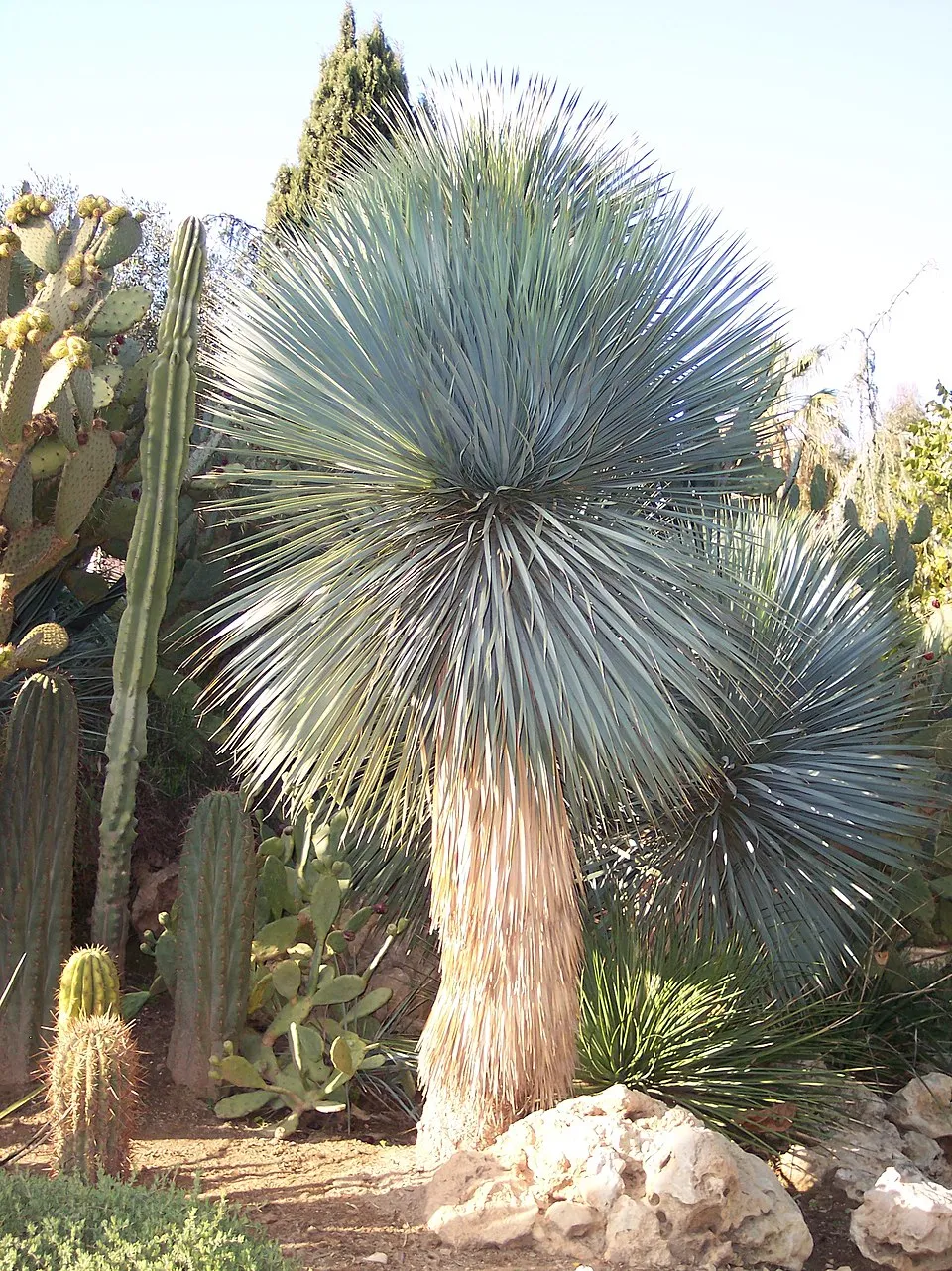
Yucca rostrata, widely known as the Beaked Yucca or Big Bend Yucca, is an iconic, slow-growing, tree-like evergreen succulent belonging to the Asparagaceae family. Native to the arid and semi-arid regions of Western Texas and Northern Mexico, particularly thriving in the Chihuahuan Desert at elevations between 3,000 and 5,000 feet, this striking plant is perfectly adapted to harsh desert environments. Its morphology is characterized by a sturdy, often single, woody trunk that can reach up to 15 feet in height, crowned by a magnificent, symmetrical, globe-shaped rosette of narrow, sword-like, silvery-blue leaves.
These rigid leaves, typically 1 to 3 feet long, radiate outwards, creating a dramatic, pom-pom-like appearance. The trunk itself is often covered with a protective layer of persistent, pale gray, dried old leaves, giving it a unique textured look. In late spring to mid-summer, mature plants produce an impressive, tall flower stalk, sometimes reaching 6 to 12 feet above the foliage, adorned with numerous creamy white to pale yellow, bell-shaped blossoms.
These flowers are pollinated by specific yucca moths, highlighting a fascinating co-evolutionary relationship. Yucca rostrata’s exceptional drought tolerance and ability to withstand significant temperature fluctuations, including sub-freezing conditions, make it a highly valued ornamental plant for xeriscaping and sustainable landscaping in USDA Hardiness Zones 5-12.
Trusted Scientific References
1. Authoritative external sources for Yucca Rostrata
1.1 Wikipedia — Yucca Rostrata
1.2 Kew POWO (Plants of the World Online)
1.3 PubMed — peer-reviewed research
1.4 NCBI Taxonomy Browser
1.5 GBIF — Global Biodiversity
1.6Yucca Rostrata should be interpreted through verified botanical identity, practical care, and responsible safety language. This recovery note adds the missing context needed for a complete profile: match light to the plant's habit, use well-drained soil, water according to season, and avoid unsupported medicinal or edible claims. For publishing, the plant can be presented as a source-backed garden plant with clear care guidance, common problem diagnosis, and conservative safety wording.
1.1.Yucca Rostrata — Notable Characteristics
- ✓Tree — like evergreen succulent with a woody trunk.
- ✓Distinctive symmetrical, globe — shaped rosette of leaves.
- ✓Silvery — blue, sword-like leaves, 1-3 feet long.
- ✓Tall flower stalk — Tall flower stalk with creamy white to pale yellow blossoms.
- ✓Exceptional drought tolerance — Exceptional drought tolerance and cold hardiness (USDA Zones 5-12).
- ✓Native to arid — Native to arid regions of Western Texas and Northern Mexico.
- ✓Valued for xeriscaping — Valued for xeriscaping and ornamental garden design.
- ✓Contains beneficial steroidal — Contains beneficial steroidal saponins and phenolic compounds.
- ✓Slow — growing, long-lived plant.
- ✓Attracts yucca moths — Attracts yucca moths for pollination.
1.2.Yucca Rostrata — Quick Summary
- ✓Drought-tolerant succulent native to Texas and Mexico.
- ✓Known for its striking, globe-shaped crown of silvery-blue leaves.
- ✓Contains saponins, flavonoids, and phenolics with anti-inflammatory and antioxidant potential.
- ✓Traditionally used for joint pain, cholesterol, and antiseptic purposes.
- ✓Requires full sun and well-draining soil for optimal growth.
- ✓Generally low maintenance but needs careful handling due to sharp leaves.
2.Yucca Rostrata — Botanical Identity
3.Yucca Rostrata — Vital Statistics
4.Yucca Rostrata — Botanical Features
5.Yucca Rostrata — Ecological Habitat
6.Yucca Rostrata — Folk Medicine Applications
7.Yucca Rostrata — Key Phytochemicals
- ✓Steroidal Saponins — Key compounds like sarsasaponin, smilagenin, and spirostanol glycosides are responsible for anti-inflammatory, cholesterol-lowering, and immune-modulating activities.
- ✓Flavonoids — Includes various glycosides and aglycones such as quercetin, kaempferol, and rutin, contributing to potent antioxidant, anti-inflammatory, and cardioprotective effects.
- ✓Phenolic Compounds — A diverse group including phenolic acids (e.g., gallic acid, caffeic acid) and tannins, which offer significant antioxidant, antimicrobial, and astringent properties.
- ✓Resins — Complex mixtures of terpenoids, fatty acids, and waxes that contribute to the plant's protective mechanisms and may possess mild antiseptic qualities.
- ✓Polysaccharides — High molecular weight carbohydrates that can exhibit immunomodulatory and prebiotic effects, supporting gut health.
- ✓Lignans — Plant secondary metabolites with potential antioxidant, anti-inflammatory, and phytoestrogenic activities.
- ✓Phytosterols — Plant sterols such as beta-sitosterol, which can help in cholesterol management and possess anti-inflammatory properties.
- ✓Fatty Acids — Essential and non-essential fatty acids found in the plant tissues, important for cellular structure and various metabolic functions.
- ✓Volatile Compounds — Small amounts of aromatic compounds that contribute to the plant's defense mechanisms and subtle scent.
8.Yucca Rostrata — Evidence-Based Benefits
- ✓Anti-inflammatory Support — Extracts from Yucca species, including Yucca rostrata through its saponin content, may help reduce inflammation by modulating cytokine production and inhibiting inflammatory pathways.
- ✓Joint Health Enhancement — Traditional uses and preliminary research suggest that yucca saponins could alleviate symptoms of osteoarthritis and other joint discomfort by reducing swelling and pain.
- ✓Cholesterol Management — Steroidal saponins found in Yucca have been investigated for their potential to bind with cholesterol in the digestive tract, thereby reducing its absorption and aiding in cholesterol regulation.
- ✓Antioxidant Protection — The presence of flavonoids and phenolic compounds provides potent antioxidant activity, helping to neutralize free radicals and protect cells from oxidative damage.
- ✓Antiseptic Properties — Certain constituents in Yucca species exhibit antiseptic qualities, historically used topically to cleanse wounds and prevent infections.
- ✓Detoxification Aid — Saponins can support the body's natural detoxification processes by influencing gut health and potentially aiding the excretion of metabolic waste products.
- ✓Digestive Comfort — Traditionally, Yucca preparations have been used to soothe digestive irritation and promote a healthy gut environment, possibly due to their anti-inflammatory effects on the gastrointestinal lining.
- ✓Immune System Modulation — The complex array of phytochemicals, particularly polysaccharides and saponins, may contribute to immune system support and modulation, enhancing the body's natural defenses.
- ✓Skin Health Promotion — Topical applications of Yucca extracts, especially from related species, have been explored for their ability to soothe irritated skin and support wound healing due to anti-inflammatory and antiseptic actions.
- ✓Blood Sugar Balance — Preliminary studies on some Yucca species indicate a potential role in supporting healthy blood glucose levels, though more research specific to Yucca rostrata is needed.
8.1.Yucca Rostrata — Therapeutic Indications
9.Yucca Rostrata — Cautions & Contraindications
9.1.Yucca Rostrata — Caution Notes
- ✓Digestive Upset — High doses of Yucca saponins can cause stomach irritation, nausea, vomiting, or diarrhea in sensitive individuals.
- ✓Allergic Reactions — Rare cases of skin rash or itching have been reported with topical application, indicating potential allergic sensitivity.
- ✓Drug Interactions — May interact with cholesterol-lowering medications or anti-inflammatory drugs, potentially altering their efficacy.
- ✓Bitter Taste — Oral preparations can have a strong, bitter taste that some individuals find unpalatable.
- ✓Diuretic Effect — Saponins may have a mild diuretic action, potentially affecting electrolyte balance with prolonged use.
- ✓Uterine Contractions — Due to potential hormonal activity, pregnant women should avoid Yucca as it might stimulate uterine contractions.
- ✓Photosensitivity — Some individuals may experience increased skin sensitivity to sunlight, though this is uncommon.
9.2.Yucca Rostrata — Safety Overview
- ✓Pregnancy & Lactation — Avoid use during pregnancy and breastfeeding due to insufficient safety data and potential effects on hormone levels.
- ✓Children — Not recommended for infants or young children; consult a pediatrician for any pediatric use.
- ✓Pre-existing Conditions — Individuals with gastrointestinal disorders, kidney disease, or hormone-sensitive conditions should use with caution and medical supervision.
- ✓Dosage — Adhere strictly to recommended dosages; excessive intake can lead to adverse effects, particularly digestive upset.
- ✓Topical Use — Perform a patch test on a small skin area before widespread topical application to check for sensitivity.
- ✓Professional Consultation — Always consult a healthcare professional before starting any new herbal supplement, especially if taking other medications.
- ✓Harvesting Safety — Handle leaves with care due to sharp tips; wear protective gloves and eyewear during pruning or repotting.
10.Yucca Rostrata — Usage Guide
- ✓Decoction for Internal Use — Roots or rhizomes of Yucca species can be simmered in water to create a decoction, traditionally used for inflammatory conditions or joint pain.
- ✓Topical Poultice — Crushed fresh leaves or powdered dried plant material, mixed with a small amount of water, can be applied as a poultice to skin irritations or minor wounds.
- ✓Extract Tincture — Alcohol-based tinctures of Yucca roots are prepared for concentrated internal use, often for systemic anti-inflammatory support.
- ✓Powdered Supplement — Dried and pulverized Yucca root can be encapsulated or mixed into beverages as a dietary supplement for general wellness.
- ✓Soaps and Shampoos — Saponin-rich extracts from Yucca have historically been used as a natural soap substitute for cleansing skin and hair due to their lathering properties.
- ✓Culinary (Limited) — While Yucca rostrata is primarily ornamental, some Yucca species have edible flowers or flower stalks; specific edibility for rostrata is not a primary use.
- ✓Infused Oils — Dried Yucca material can be infused into carrier oils for topical application as massage oils for sore muscles or joints.
- ✓Homeopathic Preparations — Highly diluted preparations may be used in homeopathic contexts for specific symptom patterns, though evidence is largely anecdotal.
11.Yucca Rostrata — Cultivation & Care
- ✓Light — Requires full sun, at least 6 hours of direct sunlight daily, to maintain robust growth and vibrant foliage.
- ✓Soil — Thrives in dry, well-draining soil; prefers sandy or gravelly textures with a neutral to alkaline pH, tolerating slightly acidic conditions.
- ✓Watering — Water regularly (once a week) during active growth in summer/spring, allowing soil to dry completely; reduce to once a month or less in fall/winter.
- ✓Temperature — Winter hardy in USDA Zones 5-12, tolerates heat and short periods below -10°F (-23°C) but needs protection in prolonged sub-freezing conditions.
- ✓Fertilizer — Generally not required; if desired, apply a balanced, time-released fertilizer in spring, then water well.
- ✓Propagation — Can be propagated from stem cuttings (allow to dry for 4-5 days before planting) or seeds, though seedlings are slow to germinate.
- ✓Maintenance — Low maintenance; prune dead or brown lower leaves by pulling them downwards with gloved hands; repotting is infrequent due to slow growth.
- ✓Pests & Diseases — Generally resistant, but can be susceptible to agave bugs, aphids, mealybugs, scale, and mites, especially in stressed conditions.
Reviewed by the Flora Medical Global Botanical Review Panel
Multi-disciplinary editorial group · Botany · Ethnobotany · Herbal-medicine literature
Who reviewed this: This page was checked by the Flora Medical Global Botanical Review Panel — an in-house editorial group of botany graduates, ethnobotany researchers, and horticulture practitioners who collectively maintain our 7,000+ plant encyclopedia. Meet the team.
Our 4-step verification process
1. Taxonomic verification
Scientific names and synonyms cross-checked against Kew POWO, World Flora Online, and The Plant List.
2. Phytochemical & medicinal cross-reference
Active compounds, traditional uses, and reported activities are cross-referenced with PubMed, USDA Dr. Duke's database, and peer-reviewed ethnobotanical literature.
3. Conservation & distribution check
Distribution, ecology, and conservation status confirmed against GBIF occurrence records and the IUCN Red List.
4. Editorial & safety review
Every entry passes an editorial pass for clarity, originality, and safety notices (toxicity, contraindications, dosage caveats) before publication.
Last reviewed:
Important medical disclaimer: This content is for educational and research purposes only. It is not medical advice and is not a substitute for consultation with a licensed healthcare provider. Do not use any herb to self-treat a medical condition without professional guidance.
Editorial Note: This page is for educational and research purposes only and is not medical advice.
Written by: Flora Medical Global Editorial Team
Reviewed by: Flora Medical Global Botanical Review Panel
Last Updated: June 15, 2026





Yucca Rostrata — Comments & Community Reviews
Rate this plant