
Medical Disclaimer: This content is for educational purposes only. It is not medical advice. Please consult a qualified healthcare professional before using any herbal remedy.
Safety Overview
1.Zantedeschia Rehmannii — Plant Snapshot
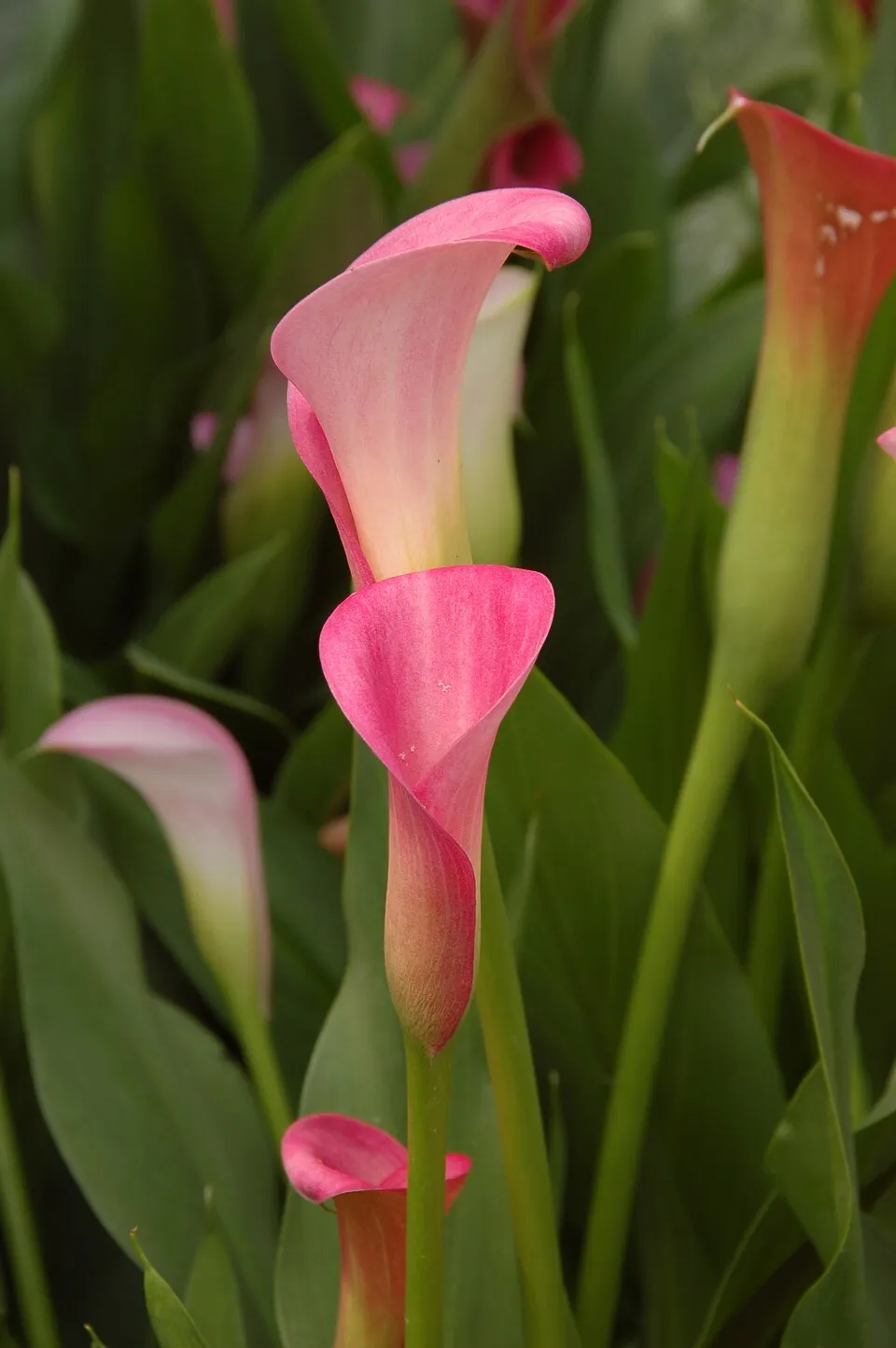
Zantedeschia rehmannii, commonly known as the Pink Arum Lily or Red Calla Lily, is an exquisite perennial herbaceous plant belonging to the Araceae family. Native to the summer rainfall regions of South Africa, it is botanically characterized by its unique morphology. The plant produces elegant, trumpet-shaped spathes—modified leaves that encircle the true, inconspicuous flowers on a central spadix. These spathes typically display a captivating palette of pink, rose, red, and occasionally purple or white, often accentuated by a darker throat.
Its foliage consists of lance-shaped to ovate leaves, which can sometimes be speckled with distinctive white spots, emerging directly from robust rhizomatous tubers. Compared to its larger relative, Zantedeschia aethiopica, Z. rehmannii is notably more compact and smaller, making it an ideal candidate for container cultivation, garden borders, and as a prized cut flower. This species thrives in well-drained, fertile soil and requires consistently warm, moist conditions during its active growth period, followed by a crucial drier dormancy phase.
Its striking colors and refined form have solidified its status as a highly sought-after ornamental plant globally. However, it is imperative to acknowledge its inherent toxicity, a characteristic prevalent among many species within the Araceae family, primarily due to the presence of calcium oxalate crystals.
Trusted Scientific References
1. Authoritative external sources for Zantedeschia rehmannii
1.1 Wikipedia — Zantedeschia rehmannii
1.2 Kew POWO (Plants of the World Online)
1.3 PubMed — peer-reviewed research
1.4 NCBI Taxonomy Browser
1.5 GBIF — Global Biodiversity
1.6Zantedeschia Rehmannii should be interpreted through verified botanical identity, practical care, and responsible safety language. This recovery note adds the missing context needed for a complete profile: match light to the plant's habit, use well-drained soil, water according to season, and avoid unsupported medicinal or edible claims. For publishing, the plant can be presented as a source-backed garden plant with clear care guidance, common problem diagnosis, and conservative safety wording.
1.1.Zantedeschia Rehmannii — Standout Qualities
- ✓Botanical Name — Zantedeschia rehmannii
- ✓Common Names — Pink Arum Lily, Red Calla Lily
- ✓Family — Araceae (Arum Family)
- ✓Origin — South Africa (summer rainfall regions)
- ✓Spathe Colors — Shades of pink, rose, red, purple, white
- ✓Leaf Morphology — Lance-shaped to ovate, often with white speckles
- ✓Growth Habit — Perennial herbaceous, compact, growing from rhizomes
- ✓Toxicity — Contains calcium oxalate crystals; highly toxic if ingested
- ✓Primary Use — Ornamental plant, valued for cut flowers
- ✓Dormancy Requirement — Needs a dry, frost-free dormancy period
1.2.Zantedeschia Rehmannii — At-a-Glance Summary
- ✓Zantedeschia rehmannii, or Pink Arum Lily, is a stunning ornamental plant native to South Africa.
- ✓It features elegant pink, red, or purple spathes and thrives in warm, moist conditions with a dry dormancy.
- ✓All parts of the plant are highly toxic due to calcium oxalate crystals, causing severe irritation upon contact or ingestion.
- ✓Primarily cultivated for its aesthetic value; there are no documented traditional or modern medicinal uses for this specific species.
- ✓Requires careful handling and placement to prevent accidental exposure to humans and pets, ensuring garden safety.
2.Zantedeschia Rehmannii — Scientific Profile
3.Zantedeschia Rehmannii — Botanical Stats
4.Zantedeschia Rehmannii — Plant Morphology
5.Zantedeschia Rehmannii — Habitat & Distribution
6.Zantedeschia Rehmannii — Cultural & Traditional Roles
7.Zantedeschia Rehmannii — Active Compounds
- ✓Calcium Oxalate Crystals — Predominantly present as insoluble raphides, these sharp, needle-like crystals are responsible for the immediate and intense irritation, burning sensation, and swelling upon ingestion or contact.
- ✓Proteolytic Enzymes — Some members of the Araceae family contain enzymes like proteases that can break down proteins, contributing to the irritant and inflammatory response alongside oxalate crystals.
- ✓Anthocyanins — These water-soluble vacuolar pigments are largely responsible for the vibrant pink, red, and purple hues observed in Zantedeschia rehmannii's spathes, acting as natural colorants.
- ✓Flavonoids — While not exhaustively studied in Z. rehmannii, flavonoids are common plant polyphenols that could hypothetically be present, contributing to antioxidant capacity in other plant species.
- ✓Saponins — Various saponins, a class of glycosides, may be present in trace amounts; in other plants, these compounds can have diverse biological activities, including detergent-like and potentially toxic effects.
- ✓Alkaloids — Although specific alkaloids in Z. rehmannii are not well-documented, alkaloids are a diverse group of nitrogen-containing compounds found across many plant families, often with potent pharmacological actions.
- ✓Glycosides — A general class of compounds where a sugar is linked to a non-sugar moiety, various glycosides may exist, influencing the plant's defense mechanisms or metabolic pathways.
- ✓Polysaccharides — Structural and storage carbohydrates are fundamental components of the plant's cell walls and energy reserves, though their specific bioactivities in Z. rehmannii are uncharacterized.
8.Zantedeschia Rehmannii — Research Insights
- ✓Potential Anti-inflammatory Action — While specific research on Zantedeschia rehmannii is lacking, some members of the Araceae family contain compounds that exhibit anti-inflammatory properties, suggesting a theoretical area for future investigation.
- ✓Traditional Topical Considerations — Historically, certain Araceae species were used in folk medicine for topical applications on inflammatory conditions or skin irritations, though Z. rehmannii’s toxicity makes such use unsafe without extensive detoxification.
- ✓Ornamental Therapeutic Value — The aesthetic appeal of Zantedeschia rehmannii contributes significantly to horticultural therapy, promoting mental well-being, stress reduction, and sensory engagement in garden environments.
- ✓Air Purification (Indirect) — As a living plant, it contributes to indoor air quality through photosynthesis and transpiration, offering a general environmental benefit, though not a direct medicinal one.
- ✓Biodiversity Contribution — Cultivating Zantedeschia rehmannii supports plant diversity in gardens and conservatories, indirectly contributing to ecological health and botanical appreciation.
- ✓Source of Natural Pigments — Its vibrant spathes are rich in anthocyanins, natural pigments that are explored for their potential antioxidant properties in other plant sources, though not for direct consumption from this species.
- ✓Botanical Education — The plant serves as an excellent specimen for botanical study, illustrating unique monocot morphology and the important concept of plant defense mechanisms, including toxicity.
- ✓Potential for Bioactive Compound Discovery — Although currently undocumented for medicinal use, the diverse phytochemistry of the Araceae family suggests Z. rehmannii could be a source of novel bioactive compounds for future pharmaceutical research, under strict safety protocols.
8.1.Zantedeschia Rehmannii — Therapeutic Indications
9.Zantedeschia Rehmannii — Adverse Effects
9.1.Zantedeschia Rehmannii — Warnings
- ✓Oral Irritation — Immediate and intense burning sensation, stinging, and numbness in the mouth and throat upon ingestion due to calcium oxalate raphides.
- ✓Swelling & Pain — Significant swelling of the tongue, lips, and pharynx, leading to dysphagia (difficulty swallowing) and aphonia (difficulty speaking).
- ✓Gastrointestinal Distress — Nausea, vomiting, abdominal pain, and diarrhea may occur as a systemic reaction to ingestion.
- ✓Skin Irritation — Dermal contact with the plant sap can cause contact dermatitis, characterized by itching, redness, and a burning sensation, especially in sensitive individuals.
- ✓Ocular Irritation — Direct contact with the eyes can result in severe pain, redness, swelling, and temporary blurring of vision.
- ✓Airway Obstruction — In severe cases of ingestion, pronounced swelling of the throat tissues can potentially lead to airway compromise, requiring immediate medical intervention.
- ✓Pet Toxicity — Similar severe irritant effects are observed in pets if they chew on or ingest any part of the plant, necessitating urgent veterinary care.
9.2.Zantedeschia Rehmannii — Safety Profile
- ✓Highly Toxic Plant — All parts of Zantedeschia rehmannii contain calcium oxalate crystals, rendering the plant toxic if ingested or handled improperly.
- ✓Keep Away From Children & Pets — It is crucial to position this plant where curious children and domestic animals cannot access or chew on it.
- ✓Wear Protective Gear — Always use gloves and eye protection when handling, pruning, or repotting Zantedeschia rehmannii to prevent skin and eye irritation.
- ✓Not for Internal Use — This plant is strictly contra-indicated for any form of internal consumption, medicinal preparation, or culinary application due to its severe toxicity.
- ✓First Aid for Exposure — In case of accidental ingestion, rinse the mouth thoroughly and seek immediate medical attention; for skin contact, wash the affected area extensively with soap and water.
- ✓No Documented Medicinal Safety — Given the absence of scientific studies on its therapeutic efficacy and its known toxicity, Z. rehmannii has no established safety profile for medicinal purposes.
- ✓Dispose of Plant Material Safely — When pruning or discarding plant parts, ensure they are handled and disposed of in a manner that prevents accidental contact or ingestion by others.
10.Zantedeschia Rehmannii — How to Use
- ✓Ornamental Display — Primarily cultivated and utilized for its striking aesthetic appeal in garden beds, borders, and as an elegant container plant.
- ✓Cut Flower Production — The vibrant spathes are highly prized in floristry for creating stunning bouquets and floral arrangements, valued for their beauty and longevity.
- ✓Cautionary Handling — Always wear protective gloves when handling the plant, especially during pruning, repotting, or dividing, to prevent skin contact with irritant sap.
- ✓Prevent Ingestion — Ensure the plant is placed out of reach of children and pets to prevent accidental ingestion, which can cause severe oral and gastrointestinal irritation.
- ✓Horticultural Therapy — Its visual beauty and the act of caring for it can contribute to mental well-being and relaxation in therapeutic gardening contexts.
- ✓Landscape Accent — Its compact size and distinctive coloration make it an excellent choice for adding a focal point or vibrant accent to various garden styles.
- ✓No Internal Application — Due to its inherent toxicity, Zantedeschia rehmannii must never be prepared or consumed for any internal medicinal or culinary purpose.
11.Zantedeschia Rehmannii — Growth Requirements
- ✓Soil Preference — Requires well-drained, rich, and fertile soil that is abundant in organic matter to support vigorous growth and flowering.
- ✓Light Requirements — Thrives best in locations receiving full sun to partial shade, with optimal flowering typically occurring when exposed to ample sunlight.
- ✓Watering Schedule — Needs consistent and generous watering during its active growing season but must be kept significantly drier during its dormant period to prevent rhizome rot.
- ✓Temperature & Hardiness — As a tender species, Z. rehmannii is highly sensitive to frost and must be protected from temperatures below 5°C (41°F), often requiring overwintering indoors.
- ✓Planting Time — Dormant rhizomes are ideally planted in pots indoors from early spring onwards; established potted plants can be moved outdoors after the last risk of frost has passed.
- ✓Dormancy Management — Once leaves die back after flowering, move the dormant rhizomes to a dry, dark, and frost-free location for winter storage until spring.
- ✓Propagation — Easily propagated by carefully dividing mature rhizomatous clumps, a process best undertaken during the plant's dormant phase before new growth commences.
Reviewed by the Flora Medical Global Botanical Review Panel
Multi-disciplinary editorial group · Botany · Ethnobotany · Herbal-medicine literature
Who reviewed this: This page was checked by the Flora Medical Global Botanical Review Panel — an in-house editorial group of botany graduates, ethnobotany researchers, and horticulture practitioners who collectively maintain our 7,000+ plant encyclopedia. Meet the team.
Our 4-step verification process
1. Taxonomic verification
Scientific names and synonyms cross-checked against Kew POWO, World Flora Online, and The Plant List.
2. Phytochemical & medicinal cross-reference
Active compounds, traditional uses, and reported activities are cross-referenced with PubMed, USDA Dr. Duke's database, and peer-reviewed ethnobotanical literature.
3. Conservation & distribution check
Distribution, ecology, and conservation status confirmed against GBIF occurrence records and the IUCN Red List.
4. Editorial & safety review
Every entry passes an editorial pass for clarity, originality, and safety notices (toxicity, contraindications, dosage caveats) before publication.
Last reviewed:
Important medical disclaimer: This content is for educational and research purposes only. It is not medical advice and is not a substitute for consultation with a licensed healthcare provider. Do not use any herb to self-treat a medical condition without professional guidance.
Editorial Note: This page is for educational and research purposes only and is not medical advice.
Written by: Flora Medical Global Editorial Team
Reviewed by: Flora Medical Global Botanical Review Panel
Last Updated: June 15, 2026





Zantedeschia Rehmannii — Comments & Community Reviews
Rate this plant