
Medical Disclaimer: This content is for educational purposes only. It is not medical advice. Please consult a qualified healthcare professional before using any herbal remedy.
Safety Overview
1.Zanthoxylum Bungeanum — Plant Snapshot
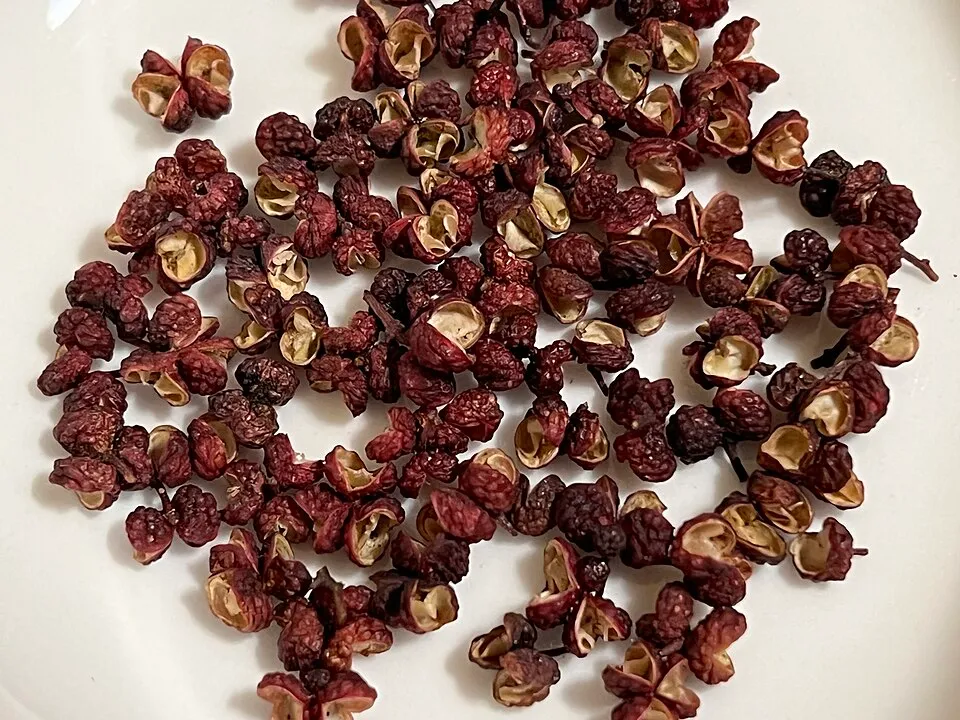
Zanthoxylum bungeanum, widely recognized by its common names Szechuan pepper, HuaJiao, or Fagara, is a deciduous shrub or small tree belonging to the Rutaceae family, which also includes citrus fruits. This species typically attains a height of 3 to 5 meters, sometimes reaching up to 7 meters under optimal conditions. Its botanical characteristics include pinnate leaves, generally 12 to 20 cm in length, composed of 5 to 11 ovate to lanceolate leaflets. Each leaflet, measuring approximately 3 to 7 cm, presents a vibrant, glossy green upper surface and often a paler underside.
The small, inconspicuous greenish-yellow flowers emerge in clusters from late spring to early summer, typically between May and June. These flowers subsequently develop into the plant's most distinctive feature: small, rounded berries that ripen into a striking red or dark purple hue in early autumn. The outer pericarp of these fruits is the prized spice. The bark of Zanthoxylum bungeanum is rough-textured and grayish-brown, frequently adorned with sharp thorns, lending the tree a rugged appearance.
Native to the temperate regions of East Asia, particularly widespread across China, it also thrives in parts of Korea and Japan. It prefers well-drained soils and ample sunlight, commonly found in forested margins, scrublands, and mountainous areas. As a member of the diverse Zanthoxylum genus, comprising approximately 250 species globally, Z. bungeanum is highly valued for its aromatic qualities, culinary contributions, and extensive traditional medicinal applications.
Trusted Scientific References
1. Authoritative external sources for Zanthoxylum bungeanum
1.1 Wikipedia — Zanthoxylum bungeanum
1.2 Kew POWO (Plants of the World Online)
1.3 PubMed — peer-reviewed research
1.4 NCBI Taxonomy Browser
1.5 GBIF — Global Biodiversity
1.6Zanthoxylum Bungeanum should be interpreted through verified botanical identity, practical care, and responsible safety language. This recovery note adds the missing context needed for a complete profile: match light to the plant's habit, use well-drained soil, water according to season, and avoid unsupported medicinal or edible claims. For publishing, the plant can be presented as a source-backed medicinal plant with clear care guidance, common problem diagnosis, and conservative safety wording.
1.1.Zanthoxylum Bungeanum — Standout Qualities
- ✓Unique 'Ma La' Sensation — Distinctive numbing and tingling effect from alkylamides (sanshools).
- ✓Culinary Staple — Essential spice in Szechuan cuisine and other Asian dishes.
- ✓Traditional Chinese Medicine (TCM) — Widely documented and utilized for various ailments.
- ✓Rich Phytochemistry — Contains over 140 identified compounds, including essential oils, alkaloids, and flavonoids.
- ✓Versatile Medicinal Actions — Offers analgesic, anti-inflammatory, antimicrobial, and digestive benefits.
- ✓Native to East Asia — Primarily distributed across China, Korea, and Japan.
- ✓Drought Tolerant — Known for its resilience in various temperate growing conditions.
- ✓Aromatic Qualities — Highly fragrant due to its essential oil content.
- ✓Supports Digestive Health — Traditionally used to alleviate stomach discomfort and improve digestion.
- ✓Potential for Modern Drug Development — Ongoing research into its anti-tumor and neuro-modulatory effects.
1.2.Zanthoxylum Bungeanum — In Brief
- ✓Zanthoxylum bungeanum, or Szechuan pepper, is a Rutaceae family plant native to Asia.
- ✓Valued for its unique 'ma la' (numbing and tingling) sensation in culinary applications.
- ✓Extensive traditional medicinal uses in TCM for digestion, pain relief, and inflammation.
- ✓Rich in active compounds like sanshools, essential oils, flavonoids, and alkaloids.
- ✓Exhibits anti-inflammatory, analgesic, antimicrobial, and antioxidant properties.
- ✓Requires careful dosage and has contraindications for pregnancy and certain health conditions.
2.Zanthoxylum Bungeanum — Scientific Profile
3.Zanthoxylum Bungeanum — Reference Facts
4.Zanthoxylum Bungeanum — Plant Morphology
5.Zanthoxylum Bungeanum — Habitat & Distribution
6.Zanthoxylum Bungeanum — Ethnobotanical Uses
7.Zanthoxylum Bungeanum — Bioactive Constituents
- ✓Alkylamides (Sanshools) — These are primary compounds responsible for the unique 'ma la' (numbing and tingling) sensation, including hydroxy-alpha-sanshool and hydroxy-beta-sanshool, which act on sensory nerve receptors and contribute to analgesic effects.
- ✓Essential Oils — Comprising monoterpenes and sesquiterpenes like linalool, limonene, geraniol, and citronellal, these oils impart the characteristic aroma, flavor, and contribute to the plant's antimicrobial and anti-inflammatory activities.
- ✓Flavonoids — Compounds such as quercetin, kaempferol, and their glycosides are present, providing significant antioxidant, anti-inflammatory, and potential anti-tumor properties.
- ✓Alkaloids — Various types of alkaloids, including isoquinoline and quinoline alkaloids like chelerythrine and dictamnine, are found, contributing to its diverse pharmacological actions, including antimicrobial and analgesic effects.
- ✓Terpenoids — Beyond essential oil components, other terpenoids are present, which may contribute to anti-inflammatory, antioxidant, and insecticidal properties.
- ✓Free Fatty Acids — These include linoleic acid, oleic acid, and palmitic acid, which are important for nutritional value and may have roles in modulating inflammation.
- ✓Lignans — Compounds like fagarol are found, which may possess antioxidant and anti-inflammatory activities.
- ✓Coumarins — Furocoumarins and simple coumarins are present, which can have diverse biological activities, including anti-inflammatory and phototoxic effects (though less prominent in culinary use).
- ✓Phenolic Acids — Gallic acid and caffeic acid derivatives contribute to the overall antioxidant capacity.
8.Zanthoxylum Bungeanum — Modern Studies
- ✓Digestive Enhancement — Zanthoxylum bungeanum is traditionally used to stimulate digestive processes, helping to alleviate symptoms of indigestion, bloating, and dyspepsia by promoting gastrointestinal motility.
- ✓Pain Relief (Analgesic) — The active compounds, particularly alkylamides like sanshools, exert local anesthetic effects, making it effective for relieving toothaches and general bodily discomfort.
- ✓Anti-inflammatory Action — Research indicates that extracts possess anti-inflammatory properties, potentially reducing swelling and pain associated with various inflammatory conditions.
- ✓Antimicrobial Properties — Its essential oils and other constituents demonstrate significant antibacterial and antifungal activities, offering protection against a range of pathogenic microorganisms.
- ✓Antioxidant Support — Rich in flavonoids and other phenolic compounds, Zanthoxylum bungeanum helps combat oxidative stress by neutralizing free radicals, contributing to cellular health.
- ✓Gastrointestinal Regulation — Beyond digestion, it helps regulate the overall function of the digestive system, useful in managing conditions like diarrhea and abdominal pain.
- ✓Nervous System Modulation — Certain compounds can interact with the nervous system, contributing to its unique tingling sensation and potentially offering benefits for nerve-related discomfort.
- ✓Circulation Improvement — In traditional medicine, it is believed to enhance blood circulation, aiding in warming the body and improving overall vitality.
- ✓Anti-tumor Potential — Preliminary studies suggest that some compounds isolated from the plant may exhibit anti-proliferative effects against certain cancer cell lines.
- ✓Eczema and Skin Conditions — Topical applications, particularly in traditional Chinese medicine, are used to address various skin irritations, including eczema, due to its anti-inflammatory and antiseptic qualities.
8.1.Zanthoxylum Bungeanum — Therapeutic Indications
9.Zanthoxylum Bungeanum — Adverse Effects
9.1.Zanthoxylum Bungeanum — Reported Side Effects
- ✓Oral Numbness and Tingling — The characteristic 'ma la' sensation can be intense for some individuals and may be perceived as unpleasant or excessive numbness.
- ✓Digestive Upset — High doses may lead to gastrointestinal discomfort, including nausea, vomiting, or diarrhea in sensitive individuals.
- ✓Allergic Reactions — Rare allergic reactions, such as skin rashes, itching, or swelling, may occur in susceptible individuals.
- ✓Skin Irritation — Direct contact with the fresh plant material or highly concentrated extracts can cause skin irritation or dermatitis in some cases.
- ✓Drug Interactions — Potential interactions with blood-thinning medications, sedatives, or drugs metabolized by the liver due to its chemical constituents.
- ✓Photosensitivity — Some coumarins present in the plant might theoretically increase photosensitivity, although this is generally not a significant concern with typical use.
- ✓Pregnancy Concerns — Due to insufficient safety data, it is generally advised against use during pregnancy and lactation.
9.2.Zanthoxylum Bungeanum — Clinical Safety Notes
- ✓Pregnancy and Lactation — Avoid use during pregnancy and breastfeeding due to a lack of sufficient safety data and potential uterine stimulant effects in high doses.
- ✓Children — Use with caution in children; consult a healthcare professional for appropriate dosing and safety.
- ✓Pre-existing Conditions — Individuals with gastrointestinal disorders, bleeding disorders, or liver conditions should consult a doctor before use.
- ✓Drug Interactions — May interact with anticoagulants, antiplatelet drugs, and certain sedatives; caution is advised.
- ✓Dosage — Adhere to recommended dosages; excessive consumption can lead to intensified side effects, particularly gastrointestinal distress.
- ✓Allergies — Individuals with known allergies to plants in the Rutaceae family should exercise caution.
- ✓External Use — When used topically, perform a patch test first to check for skin sensitivity or allergic reactions.
10.Zanthoxylum Bungeanum — Application Forms
- ✓Culinary Spice — The dried pericarps are widely used as a spice, ground or whole, in various cuisines, especially Szechuan cuisine, for its unique numbing and aromatic flavor.
- ✓Herbal Decoction — For medicinal use, dried pericarps, bark, or leaves are boiled in water to create a decoction, typically consumed to aid digestion or relieve pain.
- ✓Tinctures — Alcoholic extracts can be prepared from the pericarps or bark, used in small doses for internal or external application for analgesic or anti-inflammatory purposes.
- ✓Topical Poultices — Crushed fresh leaves or bark can be applied directly to the skin as a poultice for local pain relief, insect bites, or skin irritations like eczema.
- ✓Essential Oil Extraction — The essential oil, rich in aromatic compounds, is extracted from the pericarps and used in aromatherapy or topical formulations for its therapeutic properties.
- ✓Oral Rinses — A decoction of the pericarps can be used as a mouthwash to alleviate toothaches and gum inflammation due to its local anesthetic and antimicrobial effects.
- ✓Infused Oils — The pericarps can be infused into cooking oils to impart their distinctive flavor and some medicinal benefits, often used in stir-fries and dressings.
- ✓Powdered Form — Dried pericarps can be ground into a fine powder and incorporated into capsules for convenient internal use or mixed with other herbs in traditional formulas.
11.Zanthoxylum Bungeanum — Growing Guide
- ✓Climate Preference — Thrives in temperate climates with distinct seasons, tolerating both cold winters and warm summers.
- ✓Soil Requirements — Prefers well-drained, fertile loamy soils with a slightly acidic to neutral pH (6.0-7.0).
- ✓Sun Exposure — Requires full sun exposure for optimal growth and fruit production, needing at least 6-8 hours of direct sunlight daily.
- ✓Propagation — Can be propagated from seeds, cuttings, or by grafting. Seed germination can be slow and requires stratification.
- ✓Watering — Needs consistent moisture, especially during dry periods and fruit development, but avoid waterlogging to prevent root rot.
- ✓Pruning — Regular pruning helps maintain shape, improve air circulation, and encourage better fruit yield, typically done in late winter or early spring.
- ✓Fertilization — Benefits from a balanced fertilizer application in early spring to support vigorous growth and fruit set.
- ✓Pest and Disease Management — Generally hardy, but monitor for common pests like aphids and scale insects, and fungal diseases in humid conditions.
Reviewed by the Flora Medical Global Botanical Review Panel
Multi-disciplinary editorial group · Botany · Ethnobotany · Herbal-medicine literature
Who reviewed this: This page was checked by the Flora Medical Global Botanical Review Panel — an in-house editorial group of botany graduates, ethnobotany researchers, and horticulture practitioners who collectively maintain our 7,000+ plant encyclopedia. Meet the team.
Our 4-step verification process
1. Taxonomic verification
Scientific names and synonyms cross-checked against Kew POWO, World Flora Online, and The Plant List.
2. Phytochemical & medicinal cross-reference
Active compounds, traditional uses, and reported activities are cross-referenced with PubMed, USDA Dr. Duke's database, and peer-reviewed ethnobotanical literature.
3. Conservation & distribution check
Distribution, ecology, and conservation status confirmed against GBIF occurrence records and the IUCN Red List.
4. Editorial & safety review
Every entry passes an editorial pass for clarity, originality, and safety notices (toxicity, contraindications, dosage caveats) before publication.
Last reviewed:
Important medical disclaimer: This content is for educational and research purposes only. It is not medical advice and is not a substitute for consultation with a licensed healthcare provider. Do not use any herb to self-treat a medical condition without professional guidance.
Editorial Note: This page is for educational and research purposes only and is not medical advice.
Written by: Flora Medical Global Editorial Team
Reviewed by: Flora Medical Global Botanical Review Panel
Last Updated: June 15, 2026





Zanthoxylum Bungeanum — Comments & Community Reviews
Rate this plant