
Medical Disclaimer: This content is for educational purposes only. It is not medical advice. Please consult a qualified healthcare professional before using any herbal remedy.
Safety Overview
1.Zapoteca — At a Glance
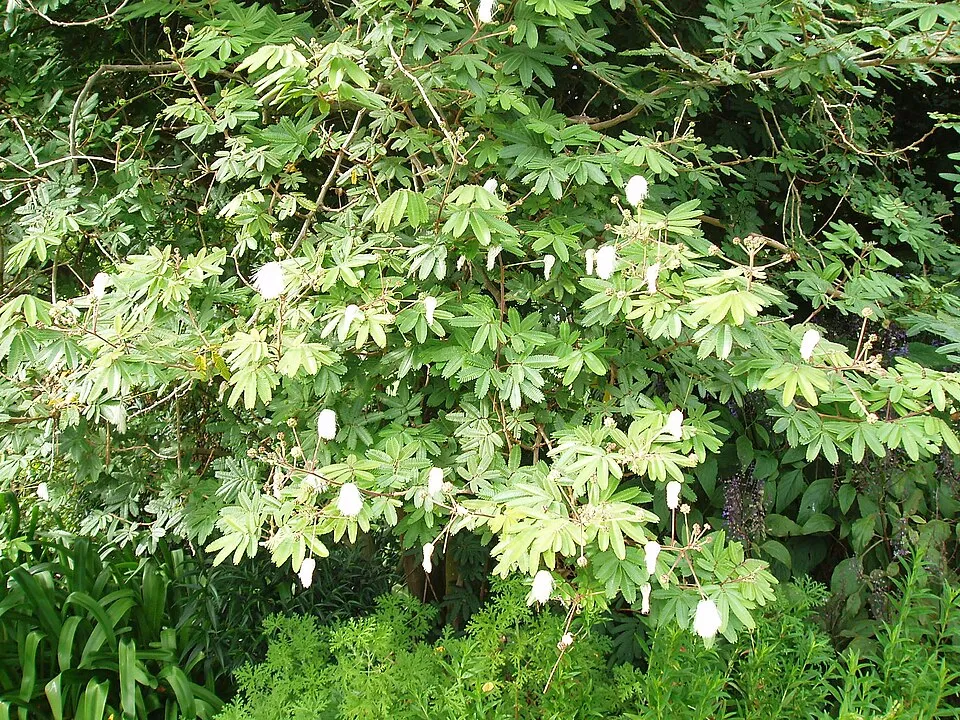
Zapoteca portoricensis, often known by the common name Zapoteca or, confusingly, as 'St. John's-wort' in certain Caribbean regions despite no relation to the genus Hypericum, is a resilient flowering plant belonging to the pea family, Fabaceae. This species is indigenous to the diverse ecosystems of the Caribbean islands, extending its natural range into various parts of Central and South America.
Morphologically, Zapoteca portoricensis typically manifests as a multi-stemmed shrub or a small, slender tree, commonly attaining heights between 2 to 5 meters. Its foliage is characterized by elegant bipinnate leaves, composed of numerous small, ovate leaflets that contribute to its dense, verdant appearance. The plant produces distinctive white or cream-colored flowers, which are compactly arranged into spherical heads, creating a striking visual display.
Following successful pollination, these flowers give way to the plant's fruit—a characteristic legume pod containing several viable seeds. Ecologically, Zapoteca portoricensis thrives in warm, humid tropical and subtropical climates, often found in open woodlands, forest edges, and disturbed areas, showcasing its adaptability and ecological significance within its native habitats. Its taxonomy confirms its place within the Zapoteca genus, distinguishing it clearly from other plant families, especially the Hypericaceae.
Trusted Scientific References
1. Authoritative external sources for Zapoteca portoricensis
1.1 Wikipedia — Zapoteca portoricensis
1.2 Kew POWO (Plants of the World Online)
1.3 PubMed — peer-reviewed research
1.4 NCBI Taxonomy Browser
1.5 GBIF — Global Biodiversity
1.6Zapoteca should be interpreted through verified botanical identity, practical care, and responsible safety language. This recovery note adds the missing context needed for a complete profile: match light to the plant's habit, use well-drained soil, water according to season, and avoid unsupported medicinal or edible claims. For publishing, the plant can be presented as a source-backed medicinal plant with clear care guidance, common problem diagnosis, and conservative safety wording.
1.1.Zapoteca — Notable Characteristics
- ✓Native to Caribbean — Native to Caribbean and parts of Central/South America.
- ✓Belongs to the — Belongs to the Fabaceae (pea) family.
- ✓Shrub or small tree, typically 2 — 5 meters tall.
- ✓Bipinnate leaves with — Bipinnate leaves with numerous small leaflets.
- ✓Produces white or cream — colored flowers in spherical heads.
- ✓Fruit is a — Fruit is a legume pod containing seeds.
- ✓Traditionally used as an anti — inflammatory and analgesic.
- ✓Contains unique trypanocidal — Contains unique trypanocidal dipeptides (saropeptate, anabellamide).
- ✓Rich in saponins, — Rich in saponins, tannins, flavonoids, and alkaloids.
- ✓Cultivated from seeds — Cultivated from seeds or cuttings in warm, humid conditions.
1.2.Zapoteca — Concise Overview
- ✓Zapoteca portoricensis is a medicinal plant from the Fabaceae family, native to the Caribbean and Americas.
- ✓Known for traditional uses as an anti-inflammatory, analgesic, and antiseptic.
- ✓Recent research highlights potent trypanocidal dipeptides, saropeptate and anabellamide, found in its roots.
- ✓Contains a rich array of phytochemicals including saponins, tannins, flavonoids, and alkaloids.
- ✓Traditionally used for tonsillitis, pain, skin conditions, and digestive issues.
- ✓Requires warm, humid climates and well-draining soil for cultivation.
2.Zapoteca — Nomenclature & Classification
3.Zapoteca — Vital Statistics
4.Zapoteca — Botanical Description
5.Zapoteca — Native Range & Habitat
6.Zapoteca — Heritage Uses
7.Zapoteca — Chemical Profile
- ✓Saponins — These compounds contribute to the plant's foaming properties and are known for their potential anti-inflammatory, cholesterol-lowering, and immune-modulating effects.
- ✓Tannins — Abundant in Zapoteca portoricensis, tannins confer astringent properties, useful in wound healing, and exhibit antioxidant and antimicrobial activities.
- ✓Flavonoids — A diverse group of polyphenols, flavonoids provide significant antioxidant, anti-inflammatory, and potentially cardioprotective benefits.
- ✓Alkaloids — These nitrogen-containing compounds can have potent physiological effects, contributing to the plant's traditional analgesic and antispasmodic uses.
- ✓Triterpenes — Known for their anti-inflammatory, anti-cancer, and hepatoprotective properties, these compounds are key to many medicinal plants.
- ✓Steroids — Plant steroids, or phytosterols, can influence hormonal pathways and are being investigated for anti-inflammatory and cholesterol-lowering effects.
- ✓Glycosides — These compounds, often linked to sugars, can have various pharmacological activities depending on their aglycone component, including cardiac or purgative effects.
- ✓Zapotecol — A specific compound isolated from the plant, likely contributing to its unique pharmacological profile, though its exact actions require further research.
- ✓Portoricensin — Another identified compound, which may play a role in the traditional medicinal efficacy of Zapoteca portoricensis.
- ✓Stenophyllin — This compound, along with zapotecol and portoricensin, forms part of the unique secondary metabolite profile of the plant.
- ✓Dipeptides (Saropeptate and Anabellamide) — Isolated from the roots, these novel dipeptides, particularly saropeptate (aurantiamide acetate), have shown potent trypanocidal activity against Trypanosoma brucei rhodesiense, highlighting a significant therapeutic potential.
8.Zapoteca — Pharmacological Findings
- ✓Anti-inflammatory — Zapoteca portoricensis extracts have demonstrated significant anti-inflammatory properties, potentially alleviating swelling and pain associated with various conditions.
- ✓Analgesic Activity — Traditionally used to mitigate pain, studies suggest components within the plant may exert pain-relieving effects, offering natural discomfort management.
- ✓Antiseptic Properties — The plant possesses compounds that can inhibit the growth of microorganisms, making it useful in traditional wound care and preventing infections.
- ✓Antispasmodic Effects — Historical use includes reducing muscle spasms and cramps, which points to potential smooth muscle relaxant properties.
- ✓Trypanocidal Action — Research has identified specific dipeptides, saropeptate and anabellamide, from Zapoteca portoricensis roots that exhibit potent activity against Trypanosoma brucei rhodesiense, a parasite causing African trypanosomiasis.
- ✓Antimicrobial Defense — Beyond antiseptic qualities, extracts have shown broader antimicrobial activities, combating a range of bacterial and fungal pathogens.
- ✓Anti-ulcer Potential — Traditional applications for digestive disorders are supported by documented anti-ulcer properties, suggesting protection for the gastrointestinal lining.
- ✓Fever Reduction — In traditional Ayurvedic practices, Zapoteca portoricensis is utilized to reduce fever, indicating potential antipyretic compounds.
- ✓Skin Condition Management — Applied topically, it has been traditionally used for various skin conditions, likely due to its anti-inflammatory and antiseptic actions.
- ✓Digestive Aid — Historically, the plant has been employed to address general digestive disorders, potentially soothing irritation and promoting gut health.
- ✓Adaptogenic Support — While not fully elucidated by modern science, traditional beliefs attribute adaptogenic properties, helping the body resist stressors and restore balance.
8.1.Zapoteca — Health Applications
9.Zapoteca — Safety Considerations
9.1.Zapoteca — Side Effects & Warnings
- ✓Allergic Reactions — Individuals sensitive to plants in the Fabaceae family may experience skin rashes, itching, or respiratory symptoms.
- ✓Gastrointestinal Upset — High doses or sensitive individuals may report nausea, vomiting, or diarrhea.
- ✓Hypotension — Due to potential antispasmodic or relaxant properties, it might cause a temporary drop in blood pressure.
- ✓Drug Interactions — Potential for interaction with prescription medications, especially those affecting blood clotting, blood sugar, or central nervous system.
- ✓Photosensitivity — Some plant compounds can increase sensitivity to sunlight, leading to sunburn-like reactions.
- ✓Pregnancy and Lactation — Lack of sufficient safety data necessitates avoidance during pregnancy and breastfeeding.
- ✓Liver or Kidney Strain — Prolonged high-dose use might theoretically burden these organs, though specific data are lacking.
9.2.Zapoteca — Safety Overview
- ✓Consult a Healthcare Professional — Always seek advice from a qualified medical herbalist or doctor before using Zapoteca portoricensis, especially if on medication or with pre-existing conditions.
- ✓Patch Test — For topical applications, perform a small patch test to check for skin sensitivity or allergic reactions.
- ✓Avoid During Pregnancy and Breastfeeding — Due to insufficient safety data, pregnant and lactating women should refrain from use.
- ✓Not for Children — Usage in infants and young children is not recommended due to lack of specific dosage and safety information.
- ✓Discontinue if Adverse Reactions Occur — Stop use immediately if any unusual or adverse symptoms develop and seek medical attention.
- ✓Avoid Before Surgery — Discontinue use at least two weeks prior to any scheduled surgery due to potential effects on blood clotting or anesthesia.
- ✓Proper Identification — Ensure correct plant identification to avoid accidental consumption of toxic look-alikes.
10.Zapoteca — Preparations & Uses
- ✓Decoction — Roots or bark can be boiled in water to extract medicinal compounds, commonly used for internal complaints like fever or digestive issues.
- ✓Infusion — Dried leaves or flowers can be steeped in hot water to create a tea, often consumed for anti-inflammatory or adaptogenic benefits.
- ✓Poultice — Crushed fresh leaves or roots can be applied directly to the skin as a poultice for localized pain, inflammation, or skin conditions.
- ✓Tincture — Plant material can be macerated in alcohol to produce a potent liquid extract, allowing for precise dosing and longer shelf life.
- ✓Topical Wash — Diluted decoctions or infusions can be used as a wash for antiseptic purposes on minor wounds or skin irritations.
- ✓Powdered Form — Dried plant parts can be ground into a fine powder for encapsulation or mixing into topical preparations.
- ✓Essential Oil — While not explicitly stated, some aromatic plants in Fabaceae yield essential oils, which could be used in aromatherapy or diluted for topical application.
- ✓Herbal Compress — Soaked cloths in a warm decoction can be applied to affected areas to alleviate muscle spasms or deep-seated pain.
11.Zapoteca — Garden Cultivation
- ✓Propagation — Zapoteca portoricensis can be effectively propagated from both seeds and stem cuttings, with cuttings often providing faster establishment.
- ✓Climate Preference — This plant thrives in warm, humid tropical and subtropical climates, mirroring its native habitat conditions.
- ✓Soil Requirements — It requires well-draining, fertile soil, ideally rich in organic matter, to support healthy growth and development.
- ✓Light Exposure — Prefers full sun to partial shade; adequate light is crucial for robust flowering and fruit production.
- ✓Watering — Consistent moisture is important, especially during establishment, but avoid waterlogging to prevent root rot.
- ✓Fertilization — Benefits from regular feeding with a balanced organic fertilizer during its active growing season.
- ✓Pruning — Light pruning can help maintain shape, encourage bushier growth, and remove any dead or diseased branches.
- ✓Pest and Disease Management — Generally resilient, but monitor for common tropical pests and fungal issues, addressing them with organic solutions.
Reviewed by the Flora Medical Global Botanical Review Panel
Multi-disciplinary editorial group · Botany · Ethnobotany · Herbal-medicine literature
Who reviewed this: This page was checked by the Flora Medical Global Botanical Review Panel — an in-house editorial group of botany graduates, ethnobotany researchers, and horticulture practitioners who collectively maintain our 7,000+ plant encyclopedia. Meet the team.
Our 4-step verification process
1. Taxonomic verification
Scientific names and synonyms cross-checked against Kew POWO, World Flora Online, and The Plant List.
2. Phytochemical & medicinal cross-reference
Active compounds, traditional uses, and reported activities are cross-referenced with PubMed, USDA Dr. Duke's database, and peer-reviewed ethnobotanical literature.
3. Conservation & distribution check
Distribution, ecology, and conservation status confirmed against GBIF occurrence records and the IUCN Red List.
4. Editorial & safety review
Every entry passes an editorial pass for clarity, originality, and safety notices (toxicity, contraindications, dosage caveats) before publication.
Last reviewed:
Important medical disclaimer: This content is for educational and research purposes only. It is not medical advice and is not a substitute for consultation with a licensed healthcare provider. Do not use any herb to self-treat a medical condition without professional guidance.
Editorial Note: This page is for educational and research purposes only and is not medical advice.
Written by: Flora Medical Global Editorial Team
Reviewed by: Flora Medical Global Botanical Review Panel
Last Updated: June 15, 2026





Zapoteca — Comments & Community Reviews
Rate this plant