
Medical Disclaimer: This content is for educational purposes only. It is not medical advice. Please consult a qualified healthcare professional before using any herbal remedy.
Safety Overview
1.Zingiber Garden — Botanical Snapshot
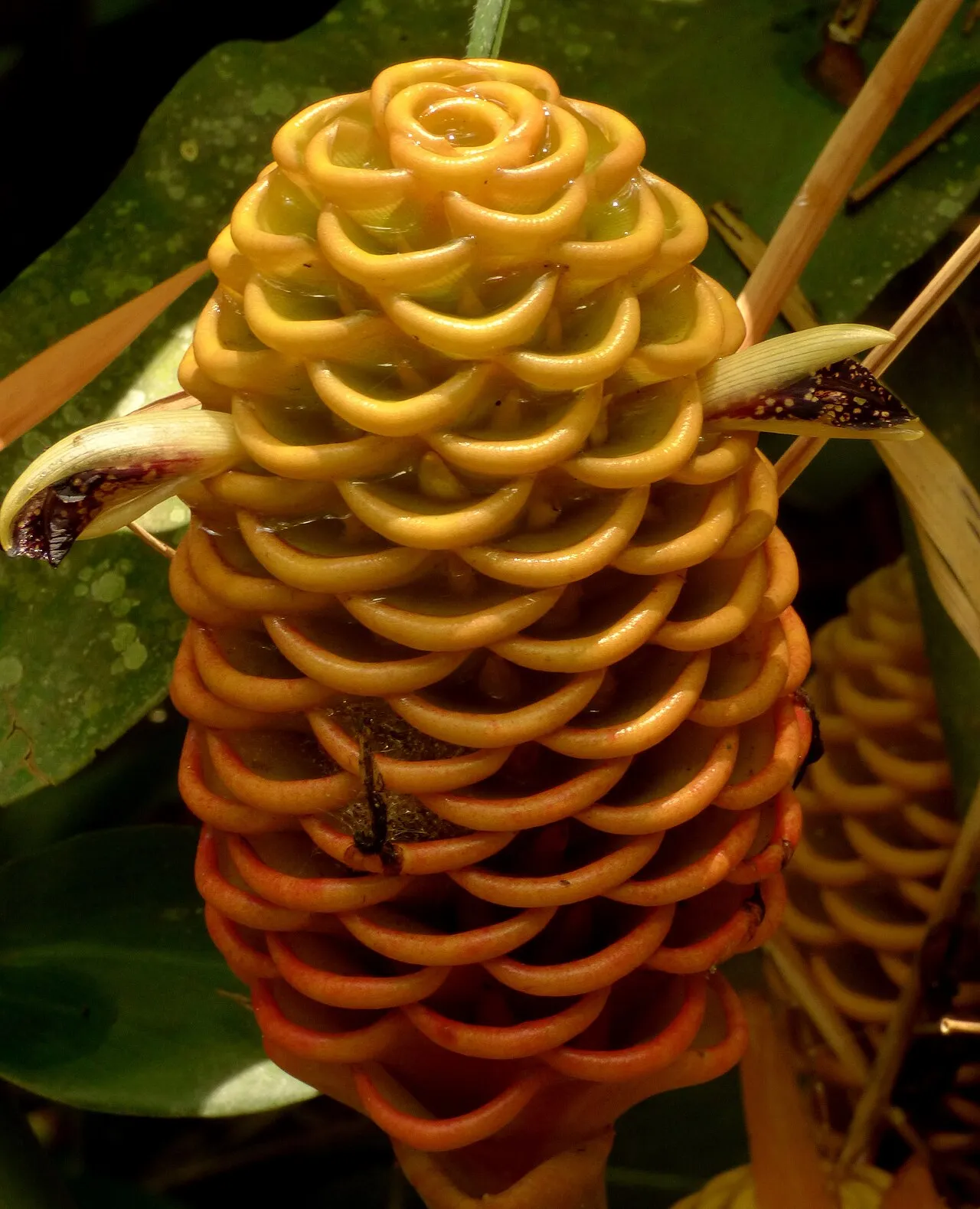
Zingiber spectabile, commonly known as 'Beehive Ginger' or 'Shampoo Ginger', is a captivating perennial herbaceous plant belonging to the Zingiberaceae family, the same botanical lineage as common culinary ginger. Native to the warm, humid rainforests of tropical Southeast Asia, particularly Malaysia and Thailand, this species is celebrated for its distinctive morphology and cultural significance. It typically grows to an impressive height of 1 to 2 meters, characterized by robust, upright stems adorned with large, lance-shaped, glossy green leaves arranged alternately.
The plant's most striking feature is its unique inflorescence, an erect, cone-like structure that strongly resembles a pine cone or a beehive. This 'cone' undergoes a fascinating color transformation, starting as a vibrant greenish-yellow and gradually maturing into shades of brilliant red or orange. Small, delicate yellow flowers emerge sequentially from within the overlapping bracts of this inflorescence.
Beyond its striking ornamental appeal, the aromatic and fleshy rhizomes of Beehive Ginger, along with the mucilaginous liquid collected from its mature inflorescence, have been integral to traditional medicinal practices and hair care rituals in its native regions. The plant thrives as an understory species, preferring filtered light and consistent moisture, conditions typical of its rainforest habitat.
Trusted Scientific References
1. Authoritative external sources for Zingiber spectabile
1.1 Wikipedia — Zingiber spectabile
1.2 Kew POWO (Plants of the World Online)
1.3 PubMed — peer-reviewed research
1.4 NCBI Taxonomy Browser
1.5 GBIF — Global Biodiversity
1.6Zingiber Garden should be interpreted through verified botanical identity, practical care, and responsible safety language. This recovery note adds the missing context needed for a complete profile: match light to the plant's habit, use well-drained soil, water according to season, and avoid unsupported medicinal or edible claims. For publishing, the plant can be presented as a source-backed garden plant with clear care guidance, common problem diagnosis, and conservative safety wording.
1.1.Zingiber Garden — Distinguishing Points
- ✓Botanical Name — Zingiber spectabile
- ✓Common Names — Beehive Ginger, Shampoo Ginger, Pinecone Ginger
- ✓Family — Zingiberaceae
- ✓Native Region — Tropical Southeast Asia (Malaysia, Thailand)
- ✓Distinctive Inflorescence — Beehive/pinecone-shaped, color-changing from yellow-green to red-orange
- ✓Medicinal Rhizomes — Used for various traditional remedies, including anti-inflammatory and digestive support
- ✓Hair & Scalp Benefits — Liquid from inflorescence traditionally used as a natural shampoo and conditioner
- ✓Chemical Profile — Rich in gingerols, shogaols, sesquiterpenes, flavonoids, and saponins
- ✓Growth Habit — Perennial herbaceous plant, typically growing 1-2 meters tall
- ✓Cultivation — Prefers warm, humid, partial shade conditions with rich, moist, well-drained soil.
1.2.Zingiber Garden — In Brief
- ✓Exotic ornamental and medicinal plant native to tropical Southeast Asia.
- ✓Renowned for its unique beehive-shaped inflorescence and aromatic rhizomes.
- ✓Traditionally used for anti-inflammatory, antimicrobial, and digestive support.
- ✓Inflorescence liquid serves as a natural hair and scalp conditioner and cleanser.
- ✓Rich in gingerols, shogaols, and sesquiterpenes offering diverse health benefits.
- ✓Requires warm, humid conditions and partial shade for optimal growth and vitality.
2.Zingiber Garden — Nomenclature & Classification
3.Zingiber Garden — Vital Statistics
4.Zingiber Garden — Botanical Features
5.Zingiber Garden — Origin & Spread
6.Zingiber Garden — Heritage Uses
Revered in Southeast Asian cultures for its beauty and traditional uses. The 'shampoo' liquid is a staple in some indigenous communities for hair care rituals and traditional cleansing ceremonies. Symbolizes natural beauty and vitality.
7.Zingiber Garden — Phytochemistry
- ✓Sesquiterpenes — Key compounds include zingiberene, ar-curcumene, and farnesene, which are responsible for the plant's characteristic aroma and contribute to its anti-inflammatory and antioxidant activities.
- ✓Monoterpenes — Such as camphene, limonene, and 1,8-cineole, which impart distinct aromatic notes and possess potential antimicrobial and expectorant properties.
- ✓Gingerols — Pungent phenolic compounds like 6-gingerol and 8-gingerol, known for their potent anti-inflammatory, antioxidant, and analgesic effects, crucial for many traditional uses.
- ✓Shogaols — Dehydration products of gingerols, such as 6-shogaol, which form upon drying or heating, exhibiting even stronger anti-inflammatory, analgesic, and neuroprotective activities than gingerols.
- ✓Flavonoids — A diverse group of polyphenolic compounds including quercetin and kaempferol derivatives, contributing significantly to the plant's antioxidant and anti-inflammatory capacity.
- ✓Phenolic Acids — Compounds like caffeic acid, ferulic acid, and p-coumaric acid, which enhance the plant's free radical scavenging abilities and overall protective effects.
- ✓Saponins — Triterpenoid glycosides found predominantly in the inflorescence liquid, responsible for its natural foaming and cleansing properties, hence its use as 'shampoo'.
- ✓Diarylheptanoids — Structurally similar to curcuminoids, these compounds contribute to the plant's anti-inflammatory, antioxidant, and potential anticancer activities.
- ✓Volatile Oils — A complex mixture of various terpenes and other aromatic compounds, giving the plant its distinctive fragrance and contributing to its medicinal properties.
- ✓Glycosides — Various sugar-bound secondary metabolites that may contribute to the plant's overall therapeutic profile and enhance bioavailability of active compounds.
8.Zingiber Garden — Evidence-Based Benefits
- ✓Anti-inflammatory — The rhizome extracts, rich in gingerols and shogaols, help reduce inflammation by inhibiting prostaglandin synthesis and inflammatory cytokine production.
- ✓Antimicrobial — Compounds present in Zingiber spectabile exhibit inhibitory effects against various bacteria and fungi, contributing to its traditional use in treating infections.
- ✓Antioxidant — High levels of phenolic compounds and flavonoids scavenge free radicals, protecting cellular structures from oxidative damage and promoting overall health.
- ✓Antipyretic (Fever Reduction) — Traditionally used to alleviate fever symptoms, potentially by modulating thermoregulatory pathways and reducing systemic inflammation.
- ✓Analgesic (Pain Relief) — The plant's constituents, particularly gingerols, possess pain-relieving properties, making it effective for headaches, muscle aches, and general body pains.
- ✓Digestive Aid — Helps soothe gastrointestinal discomfort, reduce nausea, and improve digestion by stimulating digestive enzymes and promoting gut motility.
- ✓Hair Conditioning — The mucilaginous liquid from the inflorescence acts as a natural conditioner, leaving hair soft, shiny, and manageable.
- ✓Scalp Health Promotion — Applied topically, the inflorescence liquid helps to soothe an irritated scalp, reduce itchiness, and maintain a healthy scalp environment.
- ✓Dandruff Treatment — Its antimicrobial and anti-inflammatory properties assist in combating the fungal overgrowth (Malassezia) often associated with dandruff.
- ✓Hair Growth Stimulation — Improved scalp circulation and nutrient delivery, possibly due to active compounds, may contribute to healthier hair follicle function and growth.
- ✓Immunomodulatory — Certain compounds may help regulate immune responses, enhancing the body's natural defense mechanisms against pathogens.
- ✓Hepatoprotective — Preliminary research suggests potential protective effects on liver cells, possibly due to its antioxidant and anti-inflammatory actions.
8.1.Zingiber Garden — Conditions Traditionally Used For
9.Zingiber Garden — Safety & Side Effects
9.1.Zingiber Garden — Warnings
- ✓Gastrointestinal Upset — High doses or sensitive individuals may experience mild heartburn, stomach discomfort, bloating, or diarrhea.
- ✓Skin Irritation — Topical application of concentrated rhizome extracts can occasionally cause skin redness, itching, or contact dermatitis in susceptible individuals.
- ✓Allergic Reactions — Although rare, individuals sensitive to ginger or other Zingiberaceae plants may develop allergic responses such as rash, hives, or swelling.
- ✓Blood Thinning — Due to potential antiplatelet effects, high consumption might theoretically increase the risk of bleeding, especially when combined with anticoagulant medications.
- ✓Hypoglycemia — May lower blood sugar levels, requiring caution and monitoring for individuals with diabetes or those on blood glucose-lowering medications.
- ✓Pregnancy Concerns — Insufficient clinical data on safety during pregnancy; it is generally advised to consult a healthcare professional before use.
- ✓Drug Interactions — Potential to interact with medications for blood thinning, diabetes, and high blood pressure, altering their efficacy.
9.2.Zingiber Garden — Clinical Safety Notes
- ✓Pregnancy and Lactation — Use with extreme caution, if at all, and only under the direct supervision of a qualified healthcare practitioner due to limited safety research.
- ✓Anticoagulant Medications — Contraindicated for individuals taking blood-thinning medications (e.g., Warfarin, Aspirin) due to potential additive antiplatelet effects and increased bleeding risk.
- ✓Diabetes Medications — Individuals on antidiabetic drugs should monitor blood glucose levels closely as Zingiber spectabile may have hypoglycemic effects.
- ✓Surgery — Discontinue use at least two weeks prior to any scheduled surgical procedure to minimize potential impacts on blood clotting.
- ✓Children — Not recommended for use in infants or young children without explicit medical advice from a pediatrician or qualified herbalist.
- ✓Allergic Individuals — Contraindicated for those with a known allergy or hypersensitivity to ginger or any members of the Zingiberaceae family.
- ✓Dosage Adherence — Always adhere strictly to recommended dosages and consult a professional for personalized guidance to avoid potential adverse effects.
10.Zingiber Garden — Preparation Methods
- ✓Rhizome Decoction — Slice or crush fresh rhizomes and boil them in water to prepare a potent medicinal tea, traditionally consumed for fevers, colds, and digestive complaints.
- ✓Topical Poultice — Grind fresh Zingiber spectabile rhizomes into a fine paste and apply directly to the skin to alleviate localized pain, muscle soreness, and inflammatory conditions.
- ✓Hair & Scalp Wash — Gently squeeze the mature inflorescences to extract the clear, mucilaginous liquid, then apply it directly to wet hair and scalp as a natural cleansing and conditioning agent.
- ✓Essential Oil Extraction — The rhizomes can undergo steam distillation to yield an essential oil, which is then diluted for aromatherapy, massage, or topical anti-inflammatory applications.
- ✓Tincture Preparation — Macerate dried and finely chopped rhizomes in a high-proof alcohol solution for several weeks to create a concentrated liquid extract for internal use, taken in small doses.
- ✓Infused Oil — Steep dried or fresh rhizome pieces in a carrier oil like coconut or olive oil over low heat to create an infused oil, excellent for therapeutic massages or scalp treatments.
- ✓Herbal Compress — Soak a clean cloth in a warm decoction of the rhizomes and apply it as a compress to painful joints, swollen areas, or the forehead to reduce fever.
- ✓Bath Additive — Add a strong decoction of the rhizome to bathwater to create a soothing, aromatic soak that can help relieve muscle aches and promote relaxation.
11.Zingiber Garden — Cultivation & Care
- ✓Climate Preference — Thrives in tropical and subtropical climates (USDA Zones 7-10), requiring warm temperatures and high humidity; protect from frost.
- ✓Light Requirements — Prefers partial shade, mimicking its natural understory habitat in rainforests; direct, intense sunlight can scorch the leaves.
- ✓Soil Composition — Requires organically rich, consistently moist, and well-draining soil with a neutral to slightly acidic pH for optimal growth.
- ✓Watering Schedule — Water frequently and deeply during the active growing season, ensuring the soil remains moist but never waterlogged to prevent root rot.
- ✓Fertilization — Benefits from regular feeding every other month with a balanced, slow-release granular fertilizer or generous applications of organic compost during the growing season.
- ✓Propagation — Easily propagated by dividing the rhizomes; ensure each section has at least one 'eye' or growth bud for successful establishment.
- ✓Container Growing — Ideal for cooler climates; plant in large, heavy pots to accommodate its vigorous rhizome growth and bring indoors during winter.
- ✓Pruning — Remove spent flower stalks at the ground level after blooming and prune any dead or damaged canes throughout the year to encourage healthy new growth.
Reviewed by the Flora Medical Global Botanical Review Panel
Multi-disciplinary editorial group · Botany · Ethnobotany · Herbal-medicine literature
Who reviewed this: This page was checked by the Flora Medical Global Botanical Review Panel — an in-house editorial group of botany graduates, ethnobotany researchers, and horticulture practitioners who collectively maintain our 7,000+ plant encyclopedia. Meet the team.
Our 4-step verification process
1. Taxonomic verification
Scientific names and synonyms cross-checked against Kew POWO, World Flora Online, and The Plant List.
2. Phytochemical & medicinal cross-reference
Active compounds, traditional uses, and reported activities are cross-referenced with PubMed, USDA Dr. Duke's database, and peer-reviewed ethnobotanical literature.
3. Conservation & distribution check
Distribution, ecology, and conservation status confirmed against GBIF occurrence records and the IUCN Red List.
4. Editorial & safety review
Every entry passes an editorial pass for clarity, originality, and safety notices (toxicity, contraindications, dosage caveats) before publication.
Last reviewed:
Important medical disclaimer: This content is for educational and research purposes only. It is not medical advice and is not a substitute for consultation with a licensed healthcare provider. Do not use any herb to self-treat a medical condition without professional guidance.
Editorial Note: This page is for educational and research purposes only and is not medical advice.
Written by: Flora Medical Global Editorial Team
Reviewed by: Flora Medical Global Botanical Review Panel
Last Updated: June 15, 2026





Zingiber Garden — Comments & Community Reviews
Rate this plant