


Medical Disclaimer: This content is for educational purposes only. It is not medical advice. Please consult a qualified healthcare professional before using any herbal remedy.
Safety Overview
1.Zinnia Medicinal — At a Glance
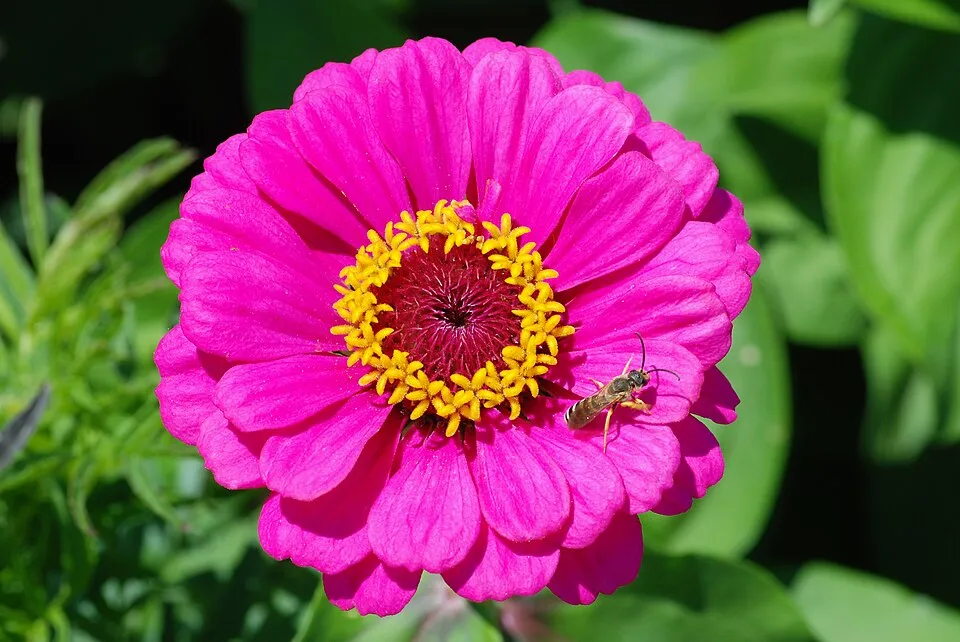
Zinnia elegans, commonly known as 'Zinnia Medicinal' or 'Elegant Zinnia,' is a vibrant annual flowering plant belonging to the expansive Asteraceae family, which also includes daisies and sunflowers. This species typically grows to a height of 30 to 100 centimeters, showcasing a sturdy, often slightly hairy stem that supports its prolific blooms. Its leaves are broad and lanceolate, measuring between 7 to 10 centimeters in length, characterized by a smooth, dark green surface and subtly serrated margins.
The most striking feature of Zinnia elegans is its diverse array of daisy-like flowers, which can span 7 to 10 centimeters in diameter and bloom in a spectrum of vivid colors including orange, pink, yellow, and white. Each flower head comprises a central disc of tubular florets encircled by elongated, petal-like ray florets. Native to Mexico, Zinnia elegans has adapted to a wide range of climates and is now cultivated globally in gardens and landscapes primarily for its ornamental appeal.
It thrives best in well-drained soils and open, sunny locations, demonstrating remarkable adaptability and ease of cultivation.
Trusted Scientific References
1. Authoritative external sources for Zinnia elegans
1.1 Wikipedia — Zinnia elegans
1.2 Kew POWO (Plants of the World Online)
1.3 PubMed — peer-reviewed research
1.4 NCBI Taxonomy Browser
1.5 GBIF — Global Biodiversity
1.6Zinnia Medicinal should be interpreted through verified botanical identity, practical care, and responsible safety language. This recovery note adds the missing context needed for a complete profile: match light to the plant's habit, use well-drained soil, water according to season, and avoid unsupported medicinal or edible claims. For publishing, the plant can be presented as a source-backed medicinal plant with clear care guidance, common problem diagnosis, and conservative safety wording.
1.7Zinnia Medicinal (Zinnia elegans) is maintained in this recovery file as a complete medicinal profile with practical care, safety, and identification context. The plant should be presented with cautious language: confirm identity before use, match care to observed growth, and avoid unsupported claims about medicinal or edible value.
1.1.Zinnia Medicinal — Notable Characteristics
- ✓Botanical Origin — Native to Mexico, widely cultivated globally.
- ✓Family Affiliation — Member of the Asteraceae family, known for diverse medicinal plants.
- ✓Ornamental Value — Highly prized for its vibrant, diverse flower colors.
- ✓Phytochemical Richness — Contains a broad spectrum of bioactive compounds including flavonoids, polyphenols, and alkaloids.
- ✓Antioxidant Activity — Demonstrated in vitro capacity to scavenge free radicals and chelate metals.
- ✓Anti — inflammatory Potential — Exhibits lipoxygenase inhibitory activity, crucial for mitigating inflammation.
- ✓Ease of Cultivation — An annual plant that is simple to grow from seed in sunny, well-drained conditions.
- ✓Emerging Research — Active area of study for its therapeutic potential beyond ornamental use.
- ✓Traditional Uses — Referenced in some traditional practices for minor ailments, though less specific for Z. elegans.
- ✓Eco — friendly Source — A readily available and sustainable plant for natural compound extraction.
1.2.Zinnia Medicinal — Snapshot Summary
- ✓Zinnia elegans is an ornamental annual flower with emerging medicinal potential, particularly for its antioxidant and anti-inflammatory properties.
- ✓Rich in flavonoids, polyphenols, and unique guanidine alkaloids, it offers a diverse phytochemical profile.
- ✓Research highlights its in vitro activity against inflammation (LOX inhibition) and oxidative stress (metal chelation).
- ✓Traditionally used for various ailments, though specific human applications for this species are less documented.
- ✓Easy to cultivate, making it a sustainable source for potential medicinal compounds.
- ✓Caution is advised due to limited human safety data, especially for internal use and in sensitive populations.
2.Zinnia Medicinal — Scientific Identity
3.Zinnia Medicinal — Fact Sheet
4.Zinnia Medicinal — Botanical Description
5.Zinnia Medicinal — Origin & Spread
6.Zinnia Medicinal — Heritage Uses
7.Zinnia Medicinal — Key Phytochemicals
- ✓Flavonoids — Key compounds like quercetin, kaempferol, and apigenin, often present as glycosides, contribute significantly to the plant's antioxidant, anti-inflammatory, and potential anticancer activities.
- ✓Polyphenols — This broad category includes chlorogenic acids and other phenolic compounds, which are potent antioxidants, protecting cells from oxidative stress and contributing to overall plant defense mechanisms.
- ✓Terpenoids — These diverse organic compounds are responsible for various biological activities, including potential antimicrobial, anti-inflammatory, and insecticidal properties, though specific Zinnia elegans terpenoids require further elucidation.
- ✓Anthocyanins — Pigments primarily responsible for the vibrant colors of Zinnia flowers, also possess strong antioxidant properties and may offer cardiovascular benefits.
- ✓Saponins — These soap-like compounds found in alcoholic extracts can exhibit various biological activities, including immunomodulatory and cholesterol-lowering effects.
- ✓Steroids — Plant steroids, or phytosterols, are present and can contribute to anti-inflammatory effects and may have roles in hormone regulation and cardiovascular health.
- ✓Guanidine Alkaloids — A novel guanidine alkaloid has been identified in Zinnia elegans, representing a new area of phytochemical interest with as-yet-undetermined biological activities.
- ✓Chlorogenic Acids — Identified as significant components, these compounds are well-known for their strong antioxidant and anti-inflammatory effects, particularly in protecting against cellular damage.
- ✓Kaempferol Glycosides — Abundant in Zinnia elegans, these specific flavonoid derivatives are strongly linked to the plant's 15-LOX inhibition activity, contributing to its anti-inflammatory potential.
8.Zinnia Medicinal — Evidence-Based Benefits
- ✓Anti-inflammatory — Research indicates Zinnia elegans possesses compounds that can inhibit lipoxygenase (LOX) enzymes, a key pathway in inflammatory responses, suggesting its potential for soothing inflammatory conditions.
- ✓Antioxidant Activity — The plant is rich in polyphenolic compounds and flavonoids, which scavenge free radicals and chelate metal ions, thereby protecting cells from oxidative damage and supporting overall cellular health.
- ✓Antimicrobial Potential — Studies on various Zinnia species, including Z. elegans, suggest the presence of compounds with activity against certain bacteria and fungi, offering a natural approach to combating infections.
- ✓Wound Healing Support — Traditional uses and phytochemical analyses point to constituents that may promote tissue regeneration and protect against microbial contamination in wounds.
- ✓Fever Reduction (Antipyretic) — Historically, certain plant preparations have been employed to alleviate fever, likely due to their anti-inflammatory and general soothing properties.
- ✓Pain Relief (Analgesic) — Extracts may possess analgesic qualities, potentially by modulating pain pathways, although more specific research on Z. elegans is needed.
- ✓Skin Conditions — Its anti-inflammatory and antioxidant properties make it a candidate for topical applications to soothe irritated skin, reduce redness, and support skin barrier function.
- ✓Hepatoprotective Effects — Some Zinnia species have shown potential in protecting liver cells from damage, suggesting a similar role for Zinnia elegans through its antioxidant compounds.
- ✓Antiviral Properties — Preliminary investigations into Zinnia species indicate potential antiviral activity, which warrants further exploration for its therapeutic implications.
- ✓Cytotoxic Activity — Certain extracts have demonstrated cytotoxic effects on cancer cell lines in laboratory settings, highlighting an area for significant future oncological research.
8.1.Zinnia Medicinal — Reported Uses
9.Zinnia Medicinal — Safety & Side Effects
9.1.Zinnia Medicinal — Side Effects & Warnings
- ✓Allergic Reactions — As a member of the Asteraceae family, Zinnia elegans may cause allergic reactions in sensitive individuals, manifesting as skin rashes or respiratory symptoms.
- ✓Photosensitivity — Some plant compounds can increase skin sensitivity to sunlight, though this is not specifically documented for Zinnia elegans, caution is advised.
- ✓Gastrointestinal Upset — Oral consumption of large quantities of plant material may lead to mild digestive discomfort, such as nausea or stomach upset.
- ✓Drug Interactions — The presence of active phytochemicals like flavonoids could potentially interact with certain medications, including anticoagulants or blood pressure drugs.
- ✓Lack of Human Safety Data — Comprehensive clinical trials on human safety and efficacy are limited, making precise side effect profiles difficult to ascertain.
- ✓Skin Irritation — Direct contact with plant sap or extracts might cause localized irritation in individuals with sensitive skin.
9.2.Zinnia Medicinal — Risk Assessment
- ✓Limited Human Studies — Due to a lack of extensive human clinical trials, the full safety profile of Zinnia elegans, especially for internal use, remains largely unexplored.
- ✓Pregnancy and Lactation — Pregnant or nursing individuals should avoid using Zinnia elegans due to insufficient data on its effects on fetal development or infant health.
- ✓Children — Use in children is not recommended without expert medical advice, given the absence of pediatric safety studies.
- ✓Allergic Individuals — People with known allergies to plants in the Asteraceae family (e.g., ragweed, chamomile, marigolds) should exercise extreme caution or avoid Zinnia elegans entirely.
- ✓Consult Healthcare Professional — Always consult a qualified healthcare provider before using Zinnia elegans, especially if you have pre-existing medical conditions or are taking other medications.
- ✓Patch Test for Topical Use — Before widespread topical application, perform a patch test on a small area of skin to check for any adverse reactions.
- ✓Avoid Ingestion of Unprocessed Plant Material — Ingesting raw or unprocessed parts of the plant is generally not recommended due to potential irritants or unknown compounds.
10.Zinnia Medicinal — Usage Guide
- ✓Infusion/Tea — While specific human consumption protocols for Zinnia elegans are less documented compared to its ornamental use, an infusion of dried flowers and leaves may be prepared for potential mild fever reduction or digestive support, always with caution and professional guidance.
- ✓Topical Poultice — Fresh crushed leaves or flowers can be applied as a poultice to minor skin irritations, cuts, or abrasions, leveraging its potential wound-healing and anti-inflammatory properties.
- ✓Extracts for Skin Care — Aqueous or alcoholic extracts of the plant's aerial parts can be incorporated into creams, lotions, or balms for conditions like eczema, minor burns, or general skin soothing, based on its antioxidant and anti-inflammatory profile.
- ✓Decoction for External Wash — A stronger decoction of the plant material can be used as an external wash for antiseptic purposes or to alleviate symptoms of minor skin infections.
- ✓Research-Grade Extracts — For scientific study, methanolic or ethanolic extracts of inflorescences are commonly prepared to isolate and analyze active compounds, such as flavonoids and polyphenols.
- ✓Aromatic Applications — The essential oils, though less studied for Zinnia elegans, might offer aromatic benefits in diffusers or diluted topical applications for relaxation, similar to other Asteraceae.
- ✓Herbal Compress — Soaking a cloth in a warm Zinnia infusion and applying it to sore muscles or joints could provide localized pain relief and reduce inflammation.
11.Zinnia Medicinal — How to Grow
- ✓Seed Propagation — Zinnia elegans is most easily grown from seeds, which can be sown directly outdoors after the last frost has passed.
- ✓Indoor Starting — For earlier blooms, seeds can be started indoors 4-6 weeks before the anticipated last frost date.
- ✓Sun Requirements — The plant thrives in full sun, requiring at least 6-8 hours of direct sunlight daily for optimal growth and flowering.
- ✓Soil Preferences — Well-draining soil is crucial; Zinnia elegans prefers average to rich soil with a pH between 6.0 and 7.0.
- ✓Watering — Consistent moisture is important, especially during dry spells, but avoid overwatering to prevent root rot.
- ✓Spacing — Plant seeds or seedlings 15-30 cm apart to ensure adequate air circulation and prevent fungal diseases.
- ✓Deadheading — Regular removal of spent flowers encourages continuous blooming throughout the growing season.
- ✓Pest Resistance — Generally robust, Zinnia elegans is relatively resistant to most common garden pests, though occasional monitoring is advised.
Reviewed by the Flora Medical Global Botanical Review Panel
Multi-disciplinary editorial group · Botany · Ethnobotany · Herbal-medicine literature
Who reviewed this: This page was checked by the Flora Medical Global Botanical Review Panel — an in-house editorial group of botany graduates, ethnobotany researchers, and horticulture practitioners who collectively maintain our 7,000+ plant encyclopedia. Meet the team.
Our 4-step verification process
1. Taxonomic verification
Scientific names and synonyms cross-checked against Kew POWO, World Flora Online, and The Plant List.
2. Phytochemical & medicinal cross-reference
Active compounds, traditional uses, and reported activities are cross-referenced with PubMed, USDA Dr. Duke's database, and peer-reviewed ethnobotanical literature.
3. Conservation & distribution check
Distribution, ecology, and conservation status confirmed against GBIF occurrence records and the IUCN Red List.
4. Editorial & safety review
Every entry passes an editorial pass for clarity, originality, and safety notices (toxicity, contraindications, dosage caveats) before publication.
Last reviewed:
Important medical disclaimer: This content is for educational and research purposes only. It is not medical advice and is not a substitute for consultation with a licensed healthcare provider. Do not use any herb to self-treat a medical condition without professional guidance.
Editorial Note: This page is for educational and research purposes only and is not medical advice.
Written by: Flora Medical Global Editorial Team
Reviewed by: Flora Medical Global Botanical Review Panel
Last Updated: June 15, 2026





Zinnia Medicinal — Comments & Community Reviews
Rate this plant