

Medical Disclaimer: This content is for educational purposes only. It is not medical advice. Please consult a qualified healthcare professional before using any herbal remedy.
Safety Overview
1.Zizia Aurea — Introduction & Highlights
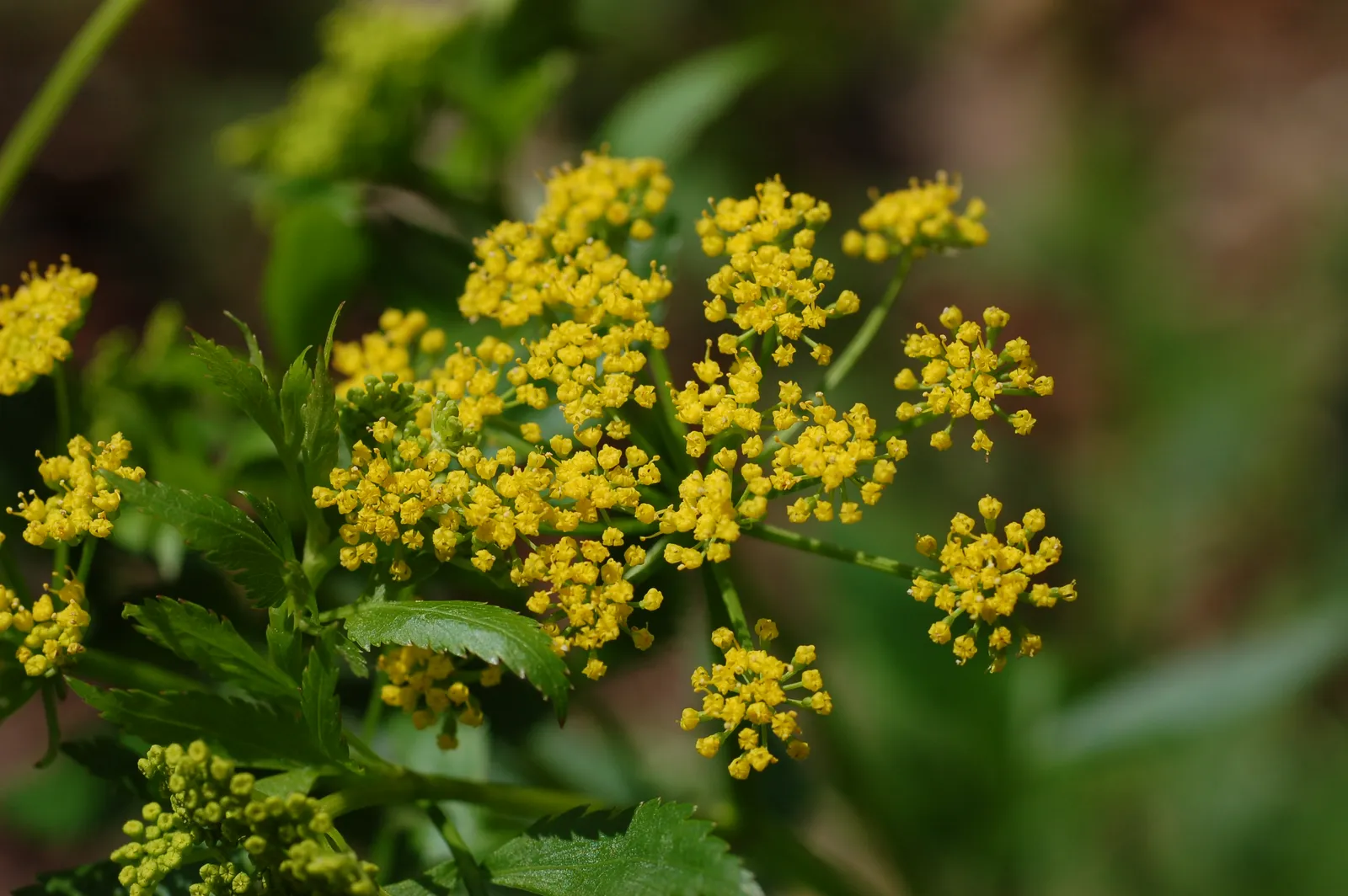
Zizia aurea, commonly known as golden alexanders, golden zizia, or meadow parsnip, is an enduring herbaceous perennial native to a broad expanse of eastern and central North America, extending from parts of Canada down through the New England states and along the Atlantic Coast. This resilient species is a cherished member of the Apiaceae family, a botanical group renowned for its characteristic umbellate flower clusters and including well-known edible and medicinal plants like carrots, parsley, and dill. Golden alexanders typically establishes itself as a robust, clumping plant, reaching heights of 1 to 3 feet (30 to 90 cm) with a spread of similar dimensions. Its foliage is distinctive, featuring attractive, compound leaves; the basal leaves are notably larger, triangular-ovate, and often deeply lobed or divided, presenting a somewhat fern-like texture, while the upper leaves are progressively smaller and more finely dissected.
The stems are smooth, erect, and frequently exhibit a subtle purplish hue. A highlight of the late spring to early summer landscape, Zizia aurea unfurls a profusion of small, brilliant yellow flowers. These are meticulously arranged in flat-topped compound umbels, a signature trait of the Apiaceae family, which can span 2 to 5 inches (5 to 12 cm) across. The genus name "Zizia" honors Johann Baptist Ziz, an 18th-century German botanist, while "aurea" is Latin for "golden," a direct reference to its striking floral display.
Beyond its aesthetic appeal, Zizia aurea plays a crucial ecological role as an early and vital nectar and pollen source, attracting a diverse array of beneficial insects including various species of bees, butterflies, moths, and other essential pollinators, thus supporting local biodiversity and ecosystem health. Following its vibrant bloom, the plant produces small, ribbed, oblong fruits that mature into a dark purplish-black color. This adaptable native thrives in moist to slightly dry, well-drained soils, tolerating both full sun and partial shade, making it a versatile and low-maintenance choice for naturalized gardens, wildflower meadows, and ecological restoration projects.
Trusted Scientific References
1. Authoritative external sources for Zizia aurea
1.1 Wikipedia — Zizia aurea
1.2 Kew POWO (Plants of the World Online)
1.3 PubMed — peer-reviewed research
1.4 NCBI Taxonomy Browser
1.5 GBIF — Global Biodiversity
1.1.Zizia Aurea — Key Features
- ✓Native North American Perennial — Indigenous to eastern and central regions, supporting local ecosystems.
- ✓Early Spring Bloomer — Provides vital nectar and pollen when other sources are scarce.
- ✓Bright Yellow Umbels — Characteristic flat-topped flower clusters of the Apiaceae family.
- ✓Premier Pollinator Attractor — Draws bees, butterflies, wasps, and other beneficial insects.
- ✓Traditional Indigenous Medicine — Historically used as an analgesic for headaches and a febrifuge for fevers.
- ✓Edible Young Leaves and Shoots — Can be consumed raw or cooked, offering nutritional value.
- ✓Low Maintenance and Adaptable — Tolerates various soil types and light conditions once established.
- ✓Drought — Tolerant Once Established — Requires minimal watering after its initial growth phase.
- ✓Supports Biodiversity — Contributes to habitat restoration and local wildlife support.
- ✓Distinctive Foliage — Features attractive, compound leaves with a fern-like appearance.
1.2.Zizia Aurea — In Brief
- ✓Golden alexanders is a native North American perennial valued for its bright yellow, early spring flowers.
- ✓It serves as a critical early-season food source for a wide range of pollinators.
- ✓Traditionally, indigenous peoples used Zizia aurea for its analgesic and febrifuge properties.
- ✓The young leaves and shoots are edible, offering nutritional benefits.
- ✓This low-maintenance plant thrives in various conditions, making it excellent for native and permaculture gardens.
- ✓Its ecological role and traditional medicinal uses highlight its multifaceted value.
2.Zizia Aurea — Systematic Position
3.Zizia Aurea — Reference Facts
4.Zizia Aurea — Structural Profile
5.Zizia Aurea — Where It Grows
6.Zizia Aurea — Historical Applications
7.Zizia Aurea — Secondary Metabolites
- ✓Flavonoids — These polyphenolic compounds, such as quercetin and kaempferol derivatives, are likely present, contributing to antioxidant and potentially anti-inflammatory activities within the plant.
- ✓Coumarins — Common in the Apiaceae family, these compounds are known for various biological activities including anti-inflammatory, anticoagulant, and antimicrobial properties.
- ✓Phenolic Acids — Including compounds like caffeic acid and ferulic acid, these are potent antioxidants that help protect cells from oxidative damage.
- ✓Essential Oils — While not as prominent as in some Apiaceae members, the plant may contain volatile terpenes and sesquiterpenes that contribute to its aroma and potential insect-repellent or antimicrobial effects.
- ✓Polyacetylenes — These are often found in Apiaceae roots and may possess cytotoxic, anti-inflammatory, and antimicrobial properties, though their presence in Zizia aurea specifically requires further research.
- ✓Saponins — These glycosides can have expectorant, anti-inflammatory, and immune-modulating effects, though their specific role and concentration in Zizia aurea are not well-defined.
- ✓Alkaloids — While less common in Apiaceae, trace amounts might be present, potentially contributing to various physiological effects, though typically not the primary active compounds.
- ✓Carotenoids — Responsible for the yellow coloration of the flowers, these compounds are potent antioxidants and precursors to Vitamin A, supporting eye health and immune function.
- ✓Polysaccharides — These complex carbohydrates can contribute to immune modulation and provide dietary fiber, supporting digestive health.
- ✓Mineral Salts — As an edible plant, Zizia aurea would naturally contain various essential mineral salts vital for human health, such as potassium, calcium, and magnesium.
8.Zizia Aurea — What Research Suggests
- ✓Analgesic Properties — Traditionally, indigenous communities utilized preparations from Zizia aurea, specifically the flower stalks, as a snuff to alleviate severe headaches, suggesting a historical recognition of its pain-relieving capabilities.
- ✓Febrifuge Action — The root of golden alexanders was historically employed as a remedy for fevers, indicating its traditional use in reducing body temperature and managing febrile states.
- ✓Headache Relief — Beyond general pain, specific traditional applications of flower stalks as snuff targeted "sick headaches," pointing to a potential for soothing various forms of cephalalgia.
- ✓Anti-inflammatory Potential — While not explicitly documented, many plants in the Apiaceae family possess compounds with anti-inflammatory effects, suggesting Zizia aurea might share similar properties that could contribute to its traditional use in pain and fever management.
- ✓Digestive Aid — Although direct evidence for Zizia aurea is limited, the Apiaceae family is rich in carminative and digestive-supportive compounds, hinting at a potential role for golden alexanders in promoting gastrointestinal comfort.
- ✓Antioxidant Support — The presence of flavonoids and phenolic acids, common in many plants, suggests Zizia aurea could offer antioxidant benefits, helping to neutralize free radicals and support cellular health.
- ✓Immune System Support — By aiding in the reduction of fever and potentially inflammation, Zizia aurea's traditional uses align with a broader action of supporting the body's natural immune response during illness.
- ✓Nutritional Value — The young leaves and shoots are edible and consumed raw or cooked, providing a source of vitamins, minerals, and fiber, contributing to overall dietary health.
- ✓Respiratory Comfort — While not a primary use, the application of flower stalks as snuff could imply some traditional association with clearing nasal passages or alleviating respiratory discomfort, though this is speculative.
- ✓General Well-being — Through its combined traditional uses for pain and fever, Zizia aurea contributes to a sense of general well-being, helping individuals cope with common ailments.
8.1.Zizia Aurea — Health Applications
9.Zizia Aurea — Precautions & Warnings
9.1.Zizia Aurea — Possible Adverse Reactions
- ✓Allergic Reactions — Sensitive individuals may experience skin irritation or allergic contact dermatitis upon contact with the plant, a common reaction to members of the Apiaceae family.
- ✓Digestive Upset — Ingesting large quantities of Zizia aurea, particularly raw, might lead to mild gastrointestinal discomfort in some individuals, such as bloating or indigestion.
- ✓Phototoxicity — While not strongly documented for Zizia aurea, some Apiaceae species contain furanocoumarins which can cause phototoxic reactions (skin sensitivity to sunlight) in susceptible individuals, especially after skin contact followed by sun exposure.
- ✓Misidentification Risk — There is a risk of misidentifying Zizia aurea with other, potentially toxic, members of the Apiaceae family, which could lead to severe adverse effects.
- ✓Pregnancy and Lactation — Due to insufficient safety data, pregnant and breastfeeding individuals should avoid internal use of Zizia aurea.
- ✓Drug Interactions — As with many medicinal plants, potential interactions with prescription medications cannot be ruled out, especially for those affecting blood clotting or liver enzymes.
- ✓Overconsumption — Excessive consumption of any plant material can potentially lead to adverse effects, therefore moderation is advised.
9.2.Zizia Aurea — Risk Assessment
- ✓Proper Identification — Always ensure correct identification of Zizia aurea to avoid confusion with poisonous look-alikes within the Apiaceae family.
- ✓Patch Test — For topical use, perform a patch test on a small area of skin to check for allergic reactions before widespread application.
- ✓Consultation with Professional — Individuals with pre-existing medical conditions, those on medication, or pregnant/nursing women should consult a healthcare provider before using Zizia aurea medicinally.
- ✓Moderate Consumption — When consumed as food, use in moderation, especially if new to the plant, to assess individual tolerance.
- ✓Avoid During Pregnancy/Lactation — Due to a lack of specific safety studies, internal use of Zizia aurea is not recommended for pregnant or breastfeeding individuals.
- ✓Children's Use — Exercise caution and consult a pediatrician before administering any Zizia aurea preparations to children.
- ✓Harvest Responsibly — When harvesting, ensure sustainable practices to protect wild populations and avoid areas with potential pesticide contamination.
10.Zizia Aurea — Preparation & Dosage
- ✓Edible Leaves and Shoots — Young leaves and shoots can be harvested in spring and consumed raw in salads or cooked as a nutritious green vegetable.
- ✓Herbal Infusion for Fevers — Traditionally, parts of the root or flower stalks could be prepared as a hot water infusion (tea) for febrifuge purposes.
- ✓Traditional Snuff for Headaches — Historically, dried and powdered flower stalks were used as a snuff to alleviate sick headaches, indicating a direct application to nasal passages.
- ✓Decoction from Roots — A stronger extract, a decoction, could be made by simmering the roots in water for a longer period, potentially for more potent traditional febrifuge actions.
- ✓Tincture Preparation — For modern herbal use, a tincture can be made by steeping fresh or dried Zizia aurea plant material in alcohol to extract its medicinal compounds.
- ✓Topical Application — While not explicitly documented, plant material could potentially be used in poultices for localized pain or inflammation, a common traditional herbal practice.
- ✓Culinary Addition — Beyond salads, the edible leaves can be incorporated into soups, stews, and stir-fries, adding a unique flavor and nutritional boost.
- ✓Habitat Restoration — Plant Zizia aurea in native landscapes to support local wildlife and enhance biodiversity, acting as a crucial early season pollinator food source.
11.Zizia Aurea — Propagation & Care
- ✓Site Selection — Plant Zizia aurea in a location that receives full sun to partial shade for optimal growth and flowering.
- ✓Soil Preparation — Ensure moist to slightly dry, well-drained soil, as golden alexanders thrives in a variety of soil textures including loamy and clay soils.
- ✓Hardiness Zone — Best suited for USDA Hardiness Zones 3 through 8, making it adaptable to a wide range of temperate climates.
- ✓Propagation — Can be propagated by seeds, which benefit from a period of cold stratification, or by dividing established clumps in spring or fall.
- ✓Watering — Requires regular watering during establishment, but once mature, it becomes relatively drought-tolerant, needing less frequent irrigation.
- ✓Spacing — Space plants about 1 to 2 feet (30-60 cm) apart to allow for mature spread and good air circulation, as it forms clumps.
- ✓Maintenance — Golden alexanders is a low-maintenance plant; deadheading spent flowers can encourage a tidier appearance, though it's not strictly necessary.
- ✓Ecological Planting — Ideal for permaculture gardens, native plant landscapes, rain gardens, and pollinator gardens to attract beneficial insects.
Reviewed by the Flora Medical Global Botanical Review Panel
Multi-disciplinary editorial group · Botany · Ethnobotany · Herbal-medicine literature
Who reviewed this: This page was checked by the Flora Medical Global Botanical Review Panel — an in-house editorial group of botany graduates, ethnobotany researchers, and horticulture practitioners who collectively maintain our 7,000+ plant encyclopedia. Meet the team.
Our 4-step verification process
1. Taxonomic verification
Scientific names and synonyms cross-checked against Kew POWO, World Flora Online, and The Plant List.
2. Phytochemical & medicinal cross-reference
Active compounds, traditional uses, and reported activities are cross-referenced with PubMed, USDA Dr. Duke's database, and peer-reviewed ethnobotanical literature.
3. Conservation & distribution check
Distribution, ecology, and conservation status confirmed against GBIF occurrence records and the IUCN Red List.
4. Editorial & safety review
Every entry passes an editorial pass for clarity, originality, and safety notices (toxicity, contraindications, dosage caveats) before publication.
Last reviewed:
Important medical disclaimer: This content is for educational and research purposes only. It is not medical advice and is not a substitute for consultation with a licensed healthcare provider. Do not use any herb to self-treat a medical condition without professional guidance.
Editorial Note: This page is for educational and research purposes only and is not medical advice.
Written by: Flora Medical Global Editorial Team
Reviewed by: Flora Medical Global Botanical Review Panel
Last Updated: June 15, 2026





Zizia Aurea — Comments & Community Reviews
Rate this plant