
Medical Disclaimer: This content is for educational purposes only. It is not medical advice. Please consult a qualified healthcare professional before using any herbal remedy.
Safety Overview
1.Zornia — At a Glance
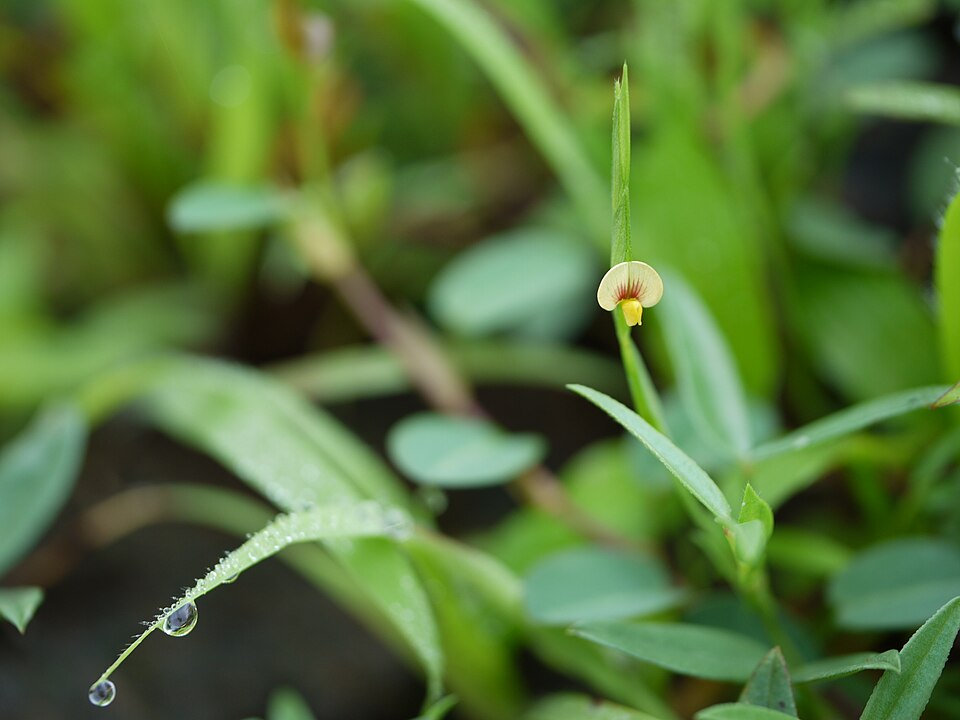
Zornia gibbosa, commonly known as Zornia, is a resilient perennial herbaceous plant belonging to the Fabaceae family, typically exhibiting a prostrate to ascending growth habit with stems reaching up to 50 cm in length. This species is characterized by its slender, green, and often somewhat hairy stems, which emerge from a delicate rootstock or sometimes a thick tuber. Its distinctive alternate leaves are compound, comprising two lance-shaped to elliptic leaflets, each usually measuring between 1-3 cm and frequently marked with characteristic black glands.
The plant produces small, bright yellow, butterfly-like flowers, typically 1-2 cm in diameter, arranged in spikes of four and often enclosed by leafy bracts, reflecting the classic structure of the pea family. Following flowering, Zornia gibbosa develops distinctive flattened, pod-like fruits, approximately 2-4 cm long, which are notably prickly and segmented into 3-6 joints, each containing an oval, smooth seed. This adaptable species thrives in tropical and subtropical regions across Africa, Asia (including Pakistan, India, Nepal, southern China, Myanmar, Thailand, Malaysia, Indonesia, Philippines, New Guinea, and northern Australia), and parts of America.
It prefers sandy, well-drained soils and is commonly found in disturbed habitats, grasslands, flood plains, and along roadsides, at elevations ranging from 100 to 1,200 meters. Its botanical classification places it within the Domain Eukaryota, Kingdom Plantae, Phylum Angiosperms, Class Eudicots, Order Fabales, Family Fabaceae, Genus Zornia, and Species Z. gibbosa.
Trusted Scientific References
1. Authoritative external sources for Zornia gibbosa
1.1 Wikipedia — Zornia gibbosa
1.2 Kew POWO (Plants of the World Online)
1.3 PubMed — peer-reviewed research
1.4 NCBI Taxonomy Browser
1.5 GBIF — Global Biodiversity
1.6Zornia should be interpreted through verified botanical identity, practical care, and responsible safety language. This recovery note adds the missing context needed for a complete profile: match light to the plant's habit, use well-drained soil, water according to season, and avoid unsupported medicinal or edible claims. For publishing, the plant can be presented as a source-backed medicinal plant with clear care guidance, common problem diagnosis, and conservative safety wording.
1.1.Zornia — Notable Characteristics
- ✓Botanical Name — Zornia gibbosa.
- ✓Common Name — Zornia.
- ✓Family — Fabaceae (Pea family).
- ✓Growth Habit — Prostrate to ascending annual/perennial herb, typically up to 50 cm tall.
- ✓Distinctive Leaves — Compound, with two lance-shaped leaflets often marked with black glands.
- ✓Flowers — Small, bright yellow, pea-like, borne in clusters or spikes.
- ✓Fruits — Flattened, prickly pods, segmented into 3-6 joints.
- ✓Key Constituents — Flavonoids, alkaloids, triterpenes, and tannins.
- ✓Traditional Uses — Anti-inflammatory, adaptogenic, nervine tonic, sedative, and treatment for dysentery.
- ✓Habitat — Thrives in tropical and subtropical regions, preferring sandy, well-drained soils.
1.2.Zornia — Snapshot Summary
- ✓Zornia gibbosa is a perennial herb known for its anti-inflammatory and adaptogenic properties.
- ✓It is rich in beneficial phytochemicals, including flavonoids, alkaloids, and triterpenes.
- ✓Traditionally used in Ayurvedic and Indian medicine for fever, pain, respiratory issues, and as a nervine tonic.
- ✓The plant is valued for its ability to help the body manage stress and support cognitive well-being.
- ✓Its roots are traditionally utilized as a mild sedative, particularly for children.
- ✓Cultivation requires well-drained soil and full sun, and it is primarily propagated by seed.
2.Zornia — Nomenclature & Classification
3.Zornia — Vital Statistics
4.Zornia — Physical Description
5.Zornia — Native Range & Habitat
6.Zornia — Traditional Uses
7.Zornia — Phytochemistry
- ✓Flavonoids — Prominent in Zornia gibbosa, these include novel flavonoids and specific compounds like dihydroquercetin, acting as potent antioxidants and anti-inflammatory agents.
- ✓Alkaloids — Nitrogen-containing compounds with diverse pharmacological activities, contributing to potential analgesic and nervine effects.
- ✓Glycosides — These compounds, often linked to sugar molecules, are associated with various therapeutic actions, including anti-inflammatory and antimicrobial properties.
- ✓Tannins — Possessing astringent properties, tannins help reduce inflammation and exert antimicrobial effects, beneficial for conditions such as dysentery.
- ✓Saponins — Natural detergents found in the plant, potentially offering adaptogenic, anti-inflammatory, and immune-modulating benefits.
- ✓Essential Oils — Volatile aromatic compounds that contribute to the plant's characteristic scent and may have antimicrobial and anti-inflammatory qualities.
- ✓Triterpenes — A class of natural products, with novel triterpenes identified, known for their anti-inflammatory, hepatoprotective, and adaptogenic effects.
- ✓Dihydroquercetin — A specific flavonoid found in the stem, highly regarded for its strong antioxidant and anti-inflammatory capabilities.
- ✓Lignin — A complex polymer providing structural integrity to the plant, which may also possess some antioxidant activity.
- ✓Starch — A primary carbohydrate storage molecule, providing energy and contributing to the plant's nutritional profile.
- ✓Minerals — Essential mineral elements such as calcium, potassium, sodium, and magnesium are present, vital for various biological functions.
8.Zornia — Evidence-Based Benefits
- ✓Anti-inflammatory — Zornia gibbosa exhibits significant anti-inflammatory properties, particularly in its aerial parts, helping to reduce swelling and pain associated with various inflammatory conditions.
- ✓Analgesic — The plant is traditionally used to alleviate pain, suggesting an ability to modulate pain perception or pathways within the body.
- ✓Antipyretic — Historically employed to reduce fever, Zornia gibbosa can help normalize body temperature during febrile states.
- ✓Antimicrobial — It possesses properties that inhibit the growth of certain microorganisms, making it useful in traditional medicine for combating infections.
- ✓Antioxidant — Rich in compounds like flavonoids, Zornia provides antioxidant protection, scavenging free radicals and mitigating cellular damage.
- ✓Nervine Tonic — Considered a nervine tonic, it supports the health and function of the nervous system, promoting calmness and reducing nervous tension.
- ✓Adaptogen — As an adaptogen, Zornia gibbosa helps the body adapt to various stressors, enhancing resilience and maintaining physiological balance.
- ✓Cognitive Enhancement — Traditional uses suggest it may contribute to improved cognitive function, potentially by supporting neurological health and reducing stress-induced mental fatigue.
- ✓Dysentery Treatment — In traditional Indian medicine, the herb is a recognized remedy for dysentery, helping to soothe the gastrointestinal tract and combat infection.
- ✓Soporific/Sedative — The roots of Zornia gibbosa are traditionally administered to children as a mild soporific or sedative to promote restful sleep.
- ✓Astringent — Its astringent qualities help to contract body tissues, which can be beneficial in reducing secretions and inflammation, particularly in mucous membranes.
- ✓Respiratory Support — Traditional applications include its use for respiratory infections, likely due to a combination of its anti-inflammatory and antimicrobial actions.
8.1.Zornia — Conditions Traditionally Used For
9.Zornia — Cautions & Contraindications
9.1.Zornia — Reported Side Effects
- ✓Drowsiness — As a traditional soporific, particularly its roots, Zornia gibbosa may induce drowsiness, especially in children, requiring careful dosage.
- ✓Allergic Reactions — Individuals with sensitivities may experience mild skin irritation or, rarely, systemic allergic responses.
- ✓Gastrointestinal Upset — High doses or consumption by sensitive individuals could lead to mild digestive discomfort, such as nausea or stomach upset.
- ✓Hypotension Risk — Due to potential relaxant effects, there is a theoretical risk of lowering blood pressure, so caution is advised for hypotensive individuals.
- ✓Drug Interactions — May potentially interact with sedative medications, blood pressure-lowering drugs, or other herbal supplements; medical consultation is recommended.
- ✓Pregnancy and Lactation — Lack of comprehensive safety data makes its use generally contraindicated during pregnancy and breastfeeding.
9.2.Zornia — Safety Profile
- ✓Consult a Professional — Always seek guidance from a qualified healthcare practitioner or medical herbalist before incorporating Zornia gibbosa into any health regimen.
- ✓Dosage Adherence — Adhere strictly to recommended dosages to ensure therapeutic benefits and minimize the risk of potential adverse effects.
- ✓Pediatric Use — While roots are traditionally used as a mild sedative for children, professional medical supervision is essential for appropriate dosing and safety.
- ✓Allergic Sensitivity — Perform a patch test before topical application to check for skin reactions, and discontinue use if any signs of allergy appear.
- ✓Contraindications — Avoid use during pregnancy and lactation due to insufficient safety information; caution is also advised for individuals with pre-existing medical conditions.
- ✓Quality Sourcing — Obtain Zornia gibbosa from reputable sources to guarantee product purity, potency, and freedom from contaminants or misidentification.
10.Zornia — Usage Guide
- ✓Herbal Tea/Infusion — Dried aerial parts or leaves steeped in hot water to create an infusion, commonly used for fever, stress, or general well-being.
- ✓Decoction — Roots or tougher plant sections are boiled in water for a longer period to extract potent compounds, often prepared for conditions like dysentery or inflammation.
- ✓Tincture — Plant material macerated in an alcohol-water solution to create a concentrated liquid extract, suitable for internal use with precise dosing.
- ✓Poultice/Compress — Fresh or dried leaves, crushed and mixed with a little water, are applied topically to skin ailments, localized pain, or inflamed areas.
- ✓Powdered Herb — Dried plant material is finely ground into a powder, which can be encapsulated for convenience or mixed into beverages or food.
- ✓Ayurvedic Formulations — Integrated into complex polyherbal remedies as per traditional Ayurvedic principles, addressing a spectrum of health concerns.
- ✓Topical Oils/Salves — Infused in carrier oils to produce medicated oils or salves, used for external application on skin irritations, minor wounds, or muscular aches.
11.Zornia — Cultivation & Care
- ✓Soil Preference — Zornia gibbosa thrives in sandy, well-drained soils, but can tolerate a range of soil types provided there is good drainage.
- ✓Climate Requirements — Best suited for tropical and subtropical climates, requiring warm temperatures and high humidity for optimal growth.
- ✓Light Exposure — Prefers full sun exposure to flourish, ensuring robust growth and abundant flowering.
- ✓Propagation — Primarily propagated by seed; seeds can be sown directly into prepared beds or started in trays for transplanting.
- ✓Water Needs — Requires moderate and consistent watering, especially during dry spells, though mature plants show some drought tolerance.
- ✓Nitrogen Fixation — This species forms a symbiotic relationship with soil bacteria, enabling nitrogen fixation in its root nodules, thereby enriching soil fertility.
- ✓Pest and Disease Management — Generally resistant to major pests and diseases, but good cultural practices help prevent fungal issues in humid conditions.
- ✓Harvesting — Aerial parts are typically harvested during the flowering stage for medicinal use, while roots are collected once the plant has reached maturity.
Reviewed by the Flora Medical Global Botanical Review Panel
Multi-disciplinary editorial group · Botany · Ethnobotany · Herbal-medicine literature
Who reviewed this: This page was checked by the Flora Medical Global Botanical Review Panel — an in-house editorial group of botany graduates, ethnobotany researchers, and horticulture practitioners who collectively maintain our 7,000+ plant encyclopedia. Meet the team.
Our 4-step verification process
1. Taxonomic verification
Scientific names and synonyms cross-checked against Kew POWO, World Flora Online, and The Plant List.
2. Phytochemical & medicinal cross-reference
Active compounds, traditional uses, and reported activities are cross-referenced with PubMed, USDA Dr. Duke's database, and peer-reviewed ethnobotanical literature.
3. Conservation & distribution check
Distribution, ecology, and conservation status confirmed against GBIF occurrence records and the IUCN Red List.
4. Editorial & safety review
Every entry passes an editorial pass for clarity, originality, and safety notices (toxicity, contraindications, dosage caveats) before publication.
Last reviewed:
Important medical disclaimer: This content is for educational and research purposes only. It is not medical advice and is not a substitute for consultation with a licensed healthcare provider. Do not use any herb to self-treat a medical condition without professional guidance.
Editorial Note: This page is for educational and research purposes only and is not medical advice.
Written by: Flora Medical Global Editorial Team
Reviewed by: Flora Medical Global Botanical Review Panel
Last Updated: June 15, 2026





Zornia — Comments & Community Reviews
Rate this plant