Acacia Gum: Benefits, Uses & Safety
 Flora Medical GlobalPublished: 4/10/2026Updated: 6/16/202620 min read
Editorial Disclaimer: This article is for informational and educational purposes only. It is not a substitute for professional medical advice, diagnosis, or treatment. Always consult a qualified healthcare provider or certified herbalist before using any plant for medicinal purposes, especially if you are pregnant, nursing, taking medication, or have a medical condition.
01What is Acacia Gum?
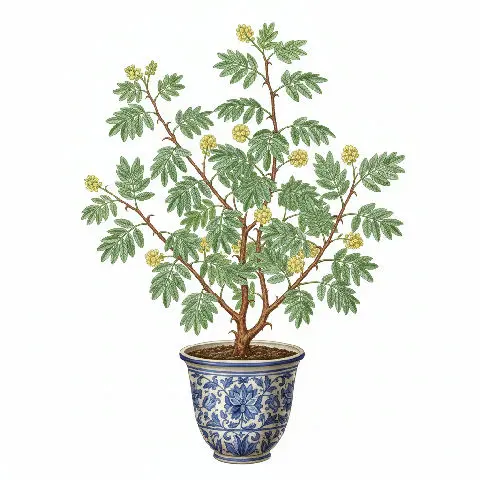
Acacia senegal, widely recognized as Acacia gum or gum arabic, is a resilient deciduous tree belonging to the Fabaceae family, specifically within the Mimosoideae subfamily.
The interesting part about Acacia Gum is that the plant can be discussed from several angles at once: visible form, environmental behavior, traditional context, and modern quality control.
Use this guide as a practical reference, then compare it with the detailed plant profile at https://www.floramedicalglobal.com/plant/acacia-gum-senegal whenever you want to confirm the source page itself.
- Acacia senegal, or gum arabic, is a drought-tolerant tree from Africa's Sahel region.
- Its hardened sap is a versatile natural gum with ancient historical and economic importance.
- Medicinally, it's valued for demulcent, prebiotic, anti-inflammatory, and antioxidant properties.
- Primarily used orally as a soluble fiber for gut health and topically for skin conditions.
- Generally considered safe for oral consumption, but caution is advised during pregnancy and lactation.
- Known for its complex polysaccharide structure, primarily arabin, and arabinogalactan proteins.
02Acacia Gum: Taxonomy & Classification
Acacia Gum should be anchored to the correct taxonomic identity before any discussion of care, use, or safety begins.
| Common name | Acacia Gum |
|---|---|
| Scientific name | Acacia senegalW |
| Family | Fabaceae |
| Order | Fabales |
| Genus | Acacia |
| Species epithet | senegal |
| Author citation | Pers. |
| Basionym | Mimosa senegal L. |
| Synonyms | Acacia senegal (L.) Willd. |
| Common names | গাম আরবি, আকাশিয়া সেনেগাল, Gum Acacia, Acacia Gum, Senegal Acacia, Gum Arabic Tree |
| Origin | Sub-Saharan Africa |
| Life cycle | Perennial |
| Growth habit | Tree |
Using the accepted scientific name Acacia senegal helps readers avoid confusion caused by old synonyms, loose common names, or inconsistent plant labels.
Family and order placement also matter because they explain recurring structural traits, likely relatives, and the kinds of mistakes readers often make when they rely on appearance alone.
Correct naming is not a small detail. A plant can collect multiple common names, outdated synonyms, and marketing labels over time, so using Acacia senegal consistently reduces the risk of confusion, bad care advice, and even safety mistakes.
03What Acacia Gum Looks Like
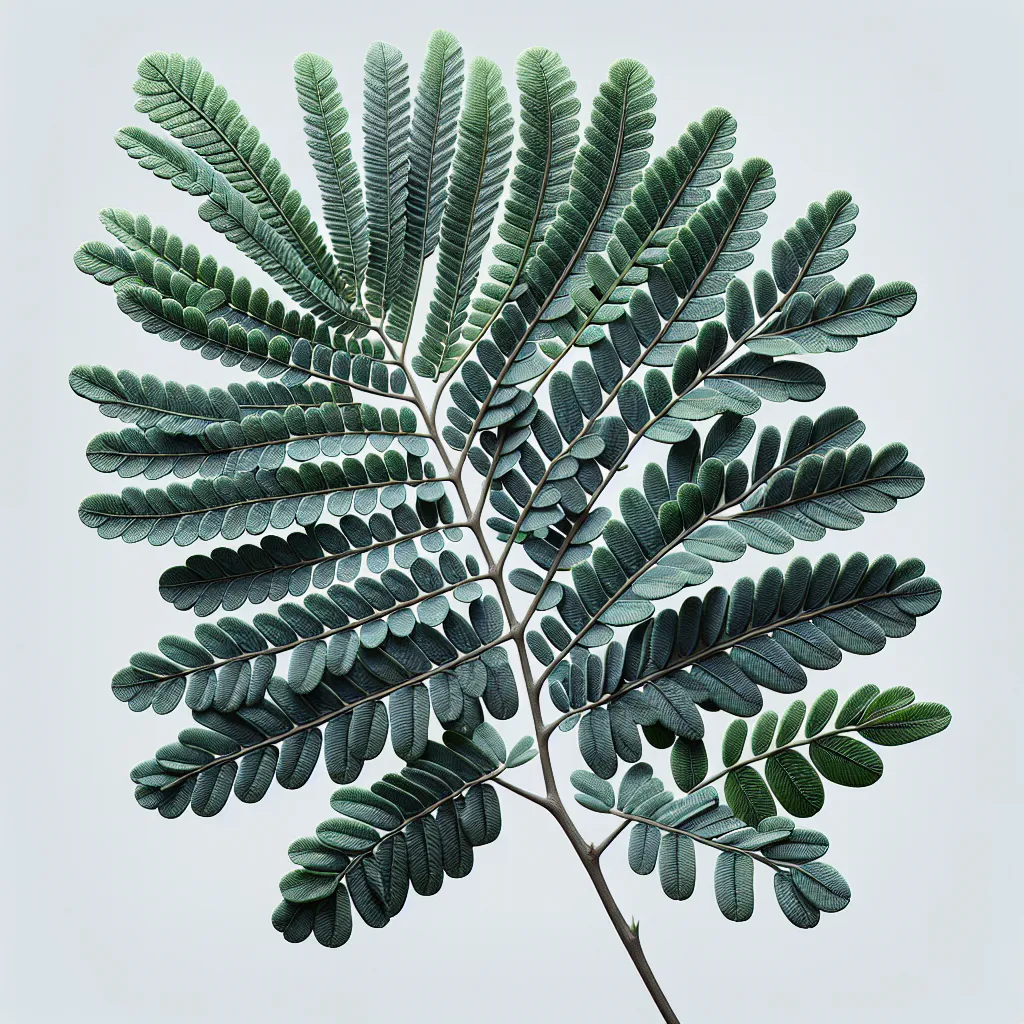
A practical reading of the plant starts with visible structure:
- Leaf: Bipinnately compound, feathery, with numerous small leaflets. Green to grayish-green.
- Stem: Typically a small to medium-sized tree, up to 15 meters tall, with a spreading canopy. Trunk often short and twisted.
- Root: Deep taproot enabling access to groundwater, and extensive lateral roots for stability and nutrient absorption.
- Flower: Small, pale yellow to whitish, highly fragrant, borne in cylindrical spikes or globular heads, usually appearing before or with the leaves.
- Fruit: Flattened, papery pods, about 5-10 cm long, containing several seeds. Initially green, turning brown when ripe.
- Seed: Small, flat, hard, dark brown or black seeds within the pods.
Microscopic or internal identification notes deepen the picture, especially for processed material: Trichomes are generally absent or scarce on the mature leaves and bark, though young shoots may possess simple hairs. The leaves commonly exhibit paracytic stomata, where subsidiary cells are parallel to the guard cells, a characteristic often found in the Fabaceae. Powdered gum arabic appears as colorless to pale yellowish, amorphous, angular fragments, often with fissures, and may show occasional starch grains.
In overall habit, the plant is described as Tree with a mature height around 5–12 m and spread of Typically 0.5-3 m.
04Where Acacia Gum Grows
The native or historically recorded center of distribution for Acacia Gum is Sub-Saharan Africa. That origin is more than background trivia; it explains how the plant responds to heat, moisture, shade, and seasonal change.
The plant is associated with the following countries or range markers: Chad, Eritrea, Ethiopia, Kenya, Mali, Mauritania, Niger, Nigeria, Senegal, Somalia, Sudan.
Environmental notes in the live record add more context: Arid to semi-arid tropical and subtropical regions, typically savannas and bushlands. Tolerates harsh, dry conditions and poor soils.
In cultivation terms, the main ecological clues are: Full sun; Infrequent (drought-tolerant); Sandy, loamy, well-draining; 9-11; Perennial; Tree.
Physiology data reinforce the habitat story: Displays robust stress physiology, including osmotic adjustment, desiccation tolerance, and efficient water use efficiency, crucial for survival in. Acacia senegal utilizes C3 photosynthesis, which is typical for most trees and shrubs in temperate and tropical regions. It exhibits significant drought adaptation, including mechanisms to reduce transpiration, such as leaf shedding during severe water stress and.
05Acacia Gum: Traditional Importance
Historically significant in North Africa and the Middle East for food, medicine, and as an ingredient in inks and paints. Essential to the economy of many Sahelian countries, known as 'white gold.'
Ethnobotanical records also show how this plant has been framed across different places: Demulcent in Turkey (Steinmetz, E.F. 1957. codex Vegetabilis. Published by the author, Amsterdam.); Demulcent in Elsewhere (Duke, 1992 *); Emollient in Nc (Steinmetz, E.F. 1957. codex Vegetabilis. Published by the author, Amsterdam.); Expectorant in Iran (Steinmetz, E.F. 1957. codex Vegetabilis. Published by the author, Amsterdam.); Astringent in French (Steinmetz, E.F. 1957. codex Vegetabilis. Published by the author, Amsterdam.); Cancer in Nc (Hartwell, J.L. 1967-71. Plants used against cancer. A survey. Lloydia 30-34.).
Traditional context matters, but it should always be separated from modern certainty. Historical use can guide questions, yet it does not automatically prove present-day clinical effectiveness.
06Acacia Gum Health Benefits
The main benefit themes associated with the plant include:
- Demulcent Properties — Acacia gum forms a protective, soothing layer over irritated mucous membranes, offering relief for coughs, sore throats, and.
- Anti-inflammatory Action — Research suggests Acacia senegal may modulate inflammatory pathways, potentially benefiting conditions like rheumatoid arthritis by.
- Antioxidant Support — The plant's arabinogalactans exhibit significant antioxidant activity, helping to neutralize free radicals and reduce oxidative stress.
- Gut Health Promotion — As a prebiotic fiber, acacia gum supports the growth of beneficial gut bacteria (bifidogenic effect), contributing to a healthy.
- Gastrointestinal Protection — Animal studies indicate a protective effect against chemically induced gastrointestinal insults, supporting gut lining integrity.
- Potential Blood Glucose Modulation — Some clinical data suggest Acacia gum may help improve certain metabolic parameters, including BMI and systolic blood.
- Lipid-Lowering Effects — Evidence points to a potential role in binding fatty acids and improving high-density lipoprotein (HDL) levels, contributing to.
- Wound Healing and Dermatological Use — Traditionally applied topically, it acts as an emollient and astringent, supporting skin repair and reducing.
The evidence matrix gives a more careful picture of those claims: Acacia gum acts as a demulcent for irritated mucous membranes. Empirical observation, historical use, recognized by pharmacopoeias for excipient properties. Traditional Use / Pharmacopoeial Recognition. Its mucilaginous nature forms a protective film, offering symptomatic relief for coughs and sore throats. Acacia gum possesses anti-inflammatory properties. In vitro studies on keratinocytes, rodent models, and a 12-week single-arm clinical study in rheumatoid arthritis patients. Animal and Limited Clinical Data. Suggests modulation of cytokines and inflammatory markers, but larger, controlled human trials are needed. Acacia gum exhibits antioxidant activity. In vitro studies, rodent models, and a 12-week single-arm clinical study in sickle cell disease patients. Animal and Limited Clinical Data. Demonstrated improved total antioxidant capacity and decreased markers of oxidative stress in clinical study. Acacia gum supports gut health as a prebiotic. In vitro fermentation studies with human bacterial populations and clinical observations of bifidogenic effects. Clinical Data. Promotes the growth of beneficial gut bacteria, contributing to improved gut microbiome balance. Acacia gum has potential benefits for metabolic syndrome and type 2 diabetes. Randomized, placebo-controlled trial in type 2 diabetes patients (N=91) and studies in metabolic syndrome. Limited Clinical Data. Reported improvements in BMI, systolic blood pressure, and HDL in gum arabic group, but more robust studies are warranted.
The stored evidence confidence for this profile is traditional. That should shape how strongly any benefit statement is interpreted.
For medicinal content, the key discipline is to distinguish traditional use, mechanism-based plausibility, and human clinical support. Those are related ideas, but they are not the same thing.
- Demulcent Properties — Acacia gum forms a protective, soothing layer over irritated mucous membranes, offering relief for coughs, sore throats, and.
- Anti-inflammatory Action — Research suggests Acacia senegal may modulate inflammatory pathways, potentially benefiting conditions like rheumatoid arthritis by.
- Antioxidant Support — The plant's arabinogalactans exhibit significant antioxidant activity, helping to neutralize free radicals and reduce oxidative stress.
- Gut Health Promotion — As a prebiotic fiber, acacia gum supports the growth of beneficial gut bacteria (bifidogenic effect), contributing to a healthy.
- Gastrointestinal Protection — Animal studies indicate a protective effect against chemically induced gastrointestinal insults, supporting gut lining integrity.
- Potential Blood Glucose Modulation — Some clinical data suggest Acacia gum may help improve certain metabolic parameters, including BMI and systolic blood.
- Lipid-Lowering Effects — Evidence points to a potential role in binding fatty acids and improving high-density lipoprotein (HDL) levels, contributing to.
- Wound Healing and Dermatological Use — Traditionally applied topically, it acts as an emollient and astringent, supporting skin repair and reducing.
- Antimicrobial Potential — In vitro and animal studies show some antimicrobial activity, particularly in reducing parasitemia in malaria models, though high.
- Oral Health Benefits — Its antibacterial properties have been studied for potential use in periodontal disease, contributing to better gum health.
07Acacia Gum Phytochemistry
The broader constituent profile includes:
- Polysaccharides — The primary component is arabin, which is the calcium, magnesium, and potassium salt of arabic acid.
- Arabinogalactan Proteins — These are glycoproteins within the gum, contributing to its emulsifying and stabilizing.
- D-Galactose Units — The core backbone of the gum's polysaccharide structure is composed of D-galactose residues.
- Uronic Acids — D-Glucuronic acid units are found in the side chains of the polysaccharide, contributing to the gum's.
- Neutral Sugars — L-Rhamnose and L-Arabinose are common terminal units on the side chains, adding to the structural.
- Mineral Salts — Contains various essential electrolytes, including calcium, magnesium, and potassium, which are.
- Peroxidase Enzyme — A naturally occurring enzyme in the gum, which, if not inactivated by heat, can catalyze the.
- Fiber — Classified as a soluble dietary fiber, contributing to its prebiotic and bulk-forming effects in the digestive.
The detailed phytochemistry file adds these markers: Arabin, Polysaccharide (Calcium salt of Arabic acid), Exudate gum, Major constituent% dry weight; D-Galactose, Monosaccharide (component of polysaccharide backbone), Exudate gum, Variable%; L-Arabinose, Monosaccharide (component of polysaccharide side chains), Exudate gum, Variable%; L-Rhamnose, Monosaccharide (component of polysaccharide side chains), Exudate gum, Variable%; D-Glucuronic Acid, Uronic Acid (component of polysaccharide side chains), Exudate gum, Variable%; Arabinogalactan Proteins, Glycoproteins, Exudate gum, Minor constituent%.
Local chemistry records also support the profile: QUERCETIN in Plant (not available-not available ppm); ASCORBIC-ACID in Plant (not available-not available ppm); KAEMPFEROL in Plant (not available-not available ppm); MAGNESIUM in Plant (not available-not available ppm); BETA-SITOSTEROL in Plant (not available-not available ppm); TANNIN in Plant (not available-not available ppm); CALCIUM in Leaf (not available-7500.0 ppm); FIBER in Fruit (not available-390000.0 ppm).
Compound profiles also shift with plant part, age, season, processing, and storage. The chemistry of a fresh leaf, dried root, or concentrated extract should never be treated as automatically identical.
08Acacia Gum Preparations & Dosage
Recorded preparation and use methods include Oral Powder/:
- Granules — Acacia gum is commonly consumed as a soluble powder mixed into water, juices, or food for its prebiotic and demulcent effects.
- Food Additive — Widely used in the food industry as an emulsifier, stabilizer, and thickener in beverages, confectionery, and processed foods.
- Pharmaceutical Excipient — Employed in pharmaceutical formulations as a binder, emulsifying agent, suspending agent, and demulcent in various medications.
- Traditional Infusions — In traditional medicine, the gum may be dissolved in warm water to create soothing drinks for sore throats, coughs, and digestive upset.
- Topical Applications — Historically, it has been incorporated into poultices and creams for wound healing, skin irritation, and as an emollient.
- Daily Dosing — Clinical trials often utilize doses of 30 grams orally per day, typically divided, for various indications over several weeks to months.
- Emulsion Stabilization — Its unique chemical structure makes it highly effective at stabilizing oil-in-water emulsions, preventing separation of ingredients.
The plant part most closely linked to use is recorded as Leaves, bark, roots, seeds, or berries cited in related taxa.
Edibility and processing notes matter here as well: Edible.
Preparation defines the outcome. Tea, decoction, tincture, powder, fresh plant material, cooked food use, and concentrated extract cannot be discussed as if they were interchangeable.
- Identify the exact species and plant part first.
- Match the preparation to the intended use.
- Check safety, interactions, and processing details before routine use or large-scale handling.
09Acacia Gum: Safety & Side Effects
The first safety note is direct: Low toxicity. Generally safe when consumed orally within recommended dosages. High doses may cause gastrointestinal upset. No known significant interactions with medications.
- Specific warnings recorded for this plant include Generally Recognized As Safe (GRAS) — Acacia gum is deemed safe for ingestion by regulatory bodies when used as a food additive.
- Oral Nontoxicity — It is essentially nontoxic when consumed orally within recommended dosages.
- Pregnancy and Lactation — Avoid use due to insufficient information regarding safety and efficacy in pregnant and breastfeeding individuals.
- Contraindications — No specific contraindications have been definitively identified, apart from known hypersensitivity or allergy to acacia gum.
- Drug Interactions — No well-documented drug interactions have been reported, making it generally safe to use alongside most medications.
- Allergic Potential — While generally safe, individuals with known allergies to other plant gums or members of the Fabaceae family should exercise caution.
- Dosage Adherence — Adhering to recommended dosages is important to minimize potential gastrointestinal discomfort.
- Allergic Reactions — Sensitive individuals may experience allergic responses, including skin rashes, itching, or respiratory symptoms.
- Gastrointestinal Discomfort — Early morning nausea, mild diarrhea, and bloating have been reported, especially at higher doses or upon initial consumption.
- Unfavorable Mouth Sensation — Some users may experience an unusual or unpleasant sensation in the mouth after ingesting acacia gum.
Quality-control notes add another warning: High risk of adulteration with cheaper gums from other Acacia species (e.g., Acacia seyal, now Vachellia seyal) or other genera like Albizia and Combretum, which have different.
No plant should be described as universally safe. Identity, dose, plant part, preparation style, age, pregnancy status, medication use, allergies, and contamination risk all change the answer.
10How to Grow Acacia Gum
The cultivation record emphasizes these practical steps: Climate and Soil — Thrives in arid and semi-arid regions, preferring poor, sandy, well-drained soils with low fertility. Propagation — Primarily propagated from seeds, which may require scarification to break dormancy, or occasionally from cuttings. Planting — Young seedlings are typically planted at the onset of the rainy season to establish themselves, requiring minimal initial care. Water Requirements — Highly drought-tolerant once established, requiring little to no irrigation in its native habitat, relying on deep taproots. Harvesting — Gum is traditionally harvested by tapping the trees during the dry season, when the bark naturally splits, exuding sap that hardens into 'tears'. Sustainable Practices — Modern commercial harvesting involves semi-mechanical tapping and collection, ensuring the long-term health and productivity of the trees. Growth Cycle — Trees typically begin producing gum after 3-5 years and continue to yield for many decades under favorable conditions. <ul><li>Watering: Drought-tolerant once established.
The broader growth environment is described like this: Arid to semi-arid tropical and subtropical regions, typically savannas and bushlands. Tolerates harsh, dry conditions and poor soils.
Planning becomes easier when these traits are kept in view: Tree; 5–12 m; Typically 0.5-3 m; Moderate; Beginner.
In practice, healthy cultivation comes from systems thinking rather than one-off tricks. Site choice, drainage, timing, spacing, pruning, feeding, and observation all reinforce one another.
11Caring for Acacia Gum: Light, Water & Soil
The most useful care snapshot is this: Light: Full sun; Water: Infrequent (drought-tolerant); Soil: Sandy, loamy, well-draining; Humidity: Low to moderate; Temperature: 20-40°C (68-104°F); frost-sensitive; USDA zone: 9-11.
Container details matter too: Large, deep pot with good drainage (if grown in container); Every 2-3 years for young potted plants, or when root-bound.
Outdoors, light, water, and soil must be read together. The same watering schedule can be too much in dense clay and too little in a porous sandy bed.
| Light | Full sun |
|---|---|
| Water | Infrequent (drought-tolerant) |
| Soil | Sandy, loamy, well-draining |
| Humidity | Low to moderate |
| Temperature | 20-40°C (68-104°F); frost-sensitive |
| USDA zone | 9-11 |
Light, water, and soil should never be treated as separate checkboxes. A plant in stronger light often dries faster, soil texture changes how quickly water moves, and temperature plus humidity influence how stress appears in leaves and roots.
For Acacia Gum, the safest care approach is to treat Full sun, Infrequent (drought-tolerant), and Sandy, loamy, well-draining as linked decisions rather than isolated tips. If one condition shifts, the other two usually need to be reconsidered as well.
12Propagating Acacia Gum
Documented propagation routes include Seeds (scarification often required to aid germination) and stem cuttings.
Propagation works best when the parent stock is healthy, correctly identified, and handled in the right season. That sounds obvious, but it is exactly where many failures begin.
- Seeds (scarification often required to aid germination) and stem cuttings.
Propagation works best when the reader matches method to biology. Some plants respond readily to cuttings, some to division, some to seed, and others require more patience or more exact seasonal timing.
A successful propagation guide therefore starts with healthy parent material and realistic expectations. Weak stock, rushed handling, and poor aftercare can make even a technically correct method fail.
For Acacia Gum, the real goal is not simply to produce another plant, but to produce a correctly identified, vigorous, well-established plant that continues growing without hidden stress from the first stage.
13Protecting Acacia Gum from Pests & Disease
The recorded problem list includes Pests are generally not a major issue for mature trees. Can be susceptible to termites or borers in some regions.
For medicinal species, pest pressure is not only a horticultural issue. It also affects harvest cleanliness, storage stability, and confidence in the final material.
The smartest response sequence is observation first, environmental correction second, and treatment only after the real pattern is clear.
- Pests are generally not a major issue for mature trees. Can be susceptible to termites or borers in some regions.
Pest and disease management is strongest when it begins before visible damage becomes severe. Routine observation, clean handling, sensible spacing, air movement, and balanced watering reduce many problems before treatment is even needed.
When symptoms do appear on Acacia Gum, the most reliable response is diagnostic rather than reactive. Yellowing, spots, wilt, chewing, and stunting can all have multiple causes, so a rushed treatment can waste time or worsen the problem.
14Harvesting & Storing Acacia Gum
The plant part most often associated with harvest or processing is Leaves, bark, roots, seeds, or berries cited in related taxa.
Storage guidance from the quality-control record reads as follows: Acacia gum is highly stable when stored in cool, dry conditions, protected from light and humidity, typically maintaining its properties for several years.
For medicinal plants, harvesting cannot be separated from processing. The right plant part, the right timing, and the right drying conditions all shape quality and safety.
Whatever the purpose, the rule is the same: harvest clean material, label it clearly, and store it in a way that preserves identity and condition.
Harvest and storage determine whether a plant's quality is preserved after it leaves the bed, pot, field, or wild source. Clean timing, correct plant part selection, and careful drying or handling all matter more than many readers expect.
15Designing a Garden with Acacia Gum
Useful companions or placement partners include Not typically cultivated with companion plants; often grown in monoculture or alongside other drought-tolerant native.
In a home herb garden or medicinal bed, Acacia Gum should be placed where harvesting is easy, labeling remains clear, and neighboring plants do not create confusion at collection time.
- Not typically cultivated with companion plants; often grown in monoculture or alongside other drought-tolerant native.
Companion planting and design are not only aesthetic decisions. They affect airflow, root competition, moisture sharing, harvest access, visibility, and the general logic of the planting scheme.
With Acacia Gum, good placement means thinking about mature size, maintenance rhythm, and how neighboring plants change the feel and function of the space. A plant can be healthy on its own and still be poorly placed within the broader composition.
16Research on Acacia Gum
The evidence matrix points to several recurring themes: Acacia gum acts as a demulcent for irritated mucous membranes. Empirical observation, historical use, recognized by pharmacopoeias for excipient properties. Traditional Use / Pharmacopoeial Recognition. Its mucilaginous nature forms a protective film, offering symptomatic relief for coughs and sore throats. Acacia gum possesses anti-inflammatory properties. In vitro studies on keratinocytes, rodent models, and a 12-week single-arm clinical study in rheumatoid arthritis patients. Animal and Limited Clinical Data. Suggests modulation of cytokines and inflammatory markers, but larger, controlled human trials are needed. Acacia gum exhibits antioxidant activity. In vitro studies, rodent models, and a 12-week single-arm clinical study in sickle cell disease patients. Animal and Limited Clinical Data. Demonstrated improved total antioxidant capacity and decreased markers of oxidative stress in clinical study. Acacia gum supports gut health as a prebiotic. In vitro fermentation studies with human bacterial populations and clinical observations of bifidogenic effects. Clinical Data. Promotes the growth of beneficial gut bacteria, contributing to improved gut microbiome balance. Acacia gum has potential benefits for metabolic syndrome and type 2 diabetes. Randomized, placebo-controlled trial in type 2 diabetes patients (N=91) and studies in metabolic syndrome. Limited Clinical Data. Reported improvements in BMI, systolic blood pressure, and HDL in gum arabic group, but more robust studies are warranted.
Ethnobotanical activity records add historical reference trails: Demulcent — Turkey [Steinmetz, E.F. 1957. codex Vegetabilis. Published by the author, Amsterdam.]; Demulcent — Elsewhere [Duke, 1992 *]; Emollient — Nc [Steinmetz, E.F. 1957. codex Vegetabilis. Published by the author, Amsterdam.]; Expectorant — Iran [Steinmetz, E.F. 1957. codex Vegetabilis. Published by the author, Amsterdam.]; Astringent — French [Steinmetz, E.F. 1957. codex Vegetabilis. Published by the author, Amsterdam.]; Cancer — Nc [Hartwell, J.L. 1967-71. Plants used against cancer. A survey. Lloydia 30-34.].
The compiled source count behind the live profile is 2. That does not guarantee certainty, but it does suggest the record has been cross-checked beyond a single note.
Analytical testing notes also strengthen the evidence base: Standard tests include specific rotation, viscosity, pH, moisture content, ash content, acid-insoluble ash, protein content, microbial limits, and heavy metals analysis.
A careful evidence section should say what is known, what is plausible, and what remains uncertain. Readers are better served by clear limits than by exaggerated confidence.
Evidence note: this section blends the live plant record, local ethnobotanical activity data, chemistry records, and the linked Flora Medical Global plant profile for Acacia Gum.
17Acacia Gum Buying Guide
Quality markers worth checking include Key markers include the specific arabinogalactan proteins and the overall polysaccharide composition, characterized by D-galactose, L-arabinose, L-rhamnose, and D-glucuronic acid.
Adulteration and substitution risk should not be ignored: High risk of adulteration with cheaper gums from other Acacia species (e.g., Acacia seyal, now Vachellia seyal) or other genera like Albizia and Combretum, which have different.
When buying Acacia Gum, start with verified botanical identity. The label, scientific name, and the source page should agree before you judge price, size, or claimed benefits.
For living plants, inspect roots, stem firmness, foliage health, and early pest signs. For dried or processed material, look for batch clarity, clean aroma, absence of mold, and any sign that the product has been over-processed to disguise poor quality.
18Acacia Gum FAQ
What is Acacia Gum best known for?
Acacia senegal, widely recognized as Acacia gum or gum arabic, is a resilient deciduous tree belonging to the Fabaceae family, specifically within the Mimosoideae subfamily.
Is Acacia Gum beginner-friendly?
That depends on the growing environment and the intended use. Some plants are easy to grow but not simple to use medicinally, while others are the opposite.
How much light does Acacia Gum need?
Full sun
How often should Acacia Gum be watered?
Infrequent (drought-tolerant)
Can Acacia Gum be propagated at home?
Yes, but the best method depends on whether the species responds best to seed, cuttings, division, offsets, or other propagation routes.
Does Acacia Gum have safety concerns?
Low toxicity. Generally safe when consumed orally within recommended dosages. High doses may cause gastrointestinal upset. No known significant interactions with medications.
What is the biggest mistake people make with Acacia Gum?
The most common mistake is applying generic advice instead of matching the plant to its real environment, identity, and limits.
Where can I verify more information about Acacia Gum?
Start with the Flora Medical Global plant profile: https://www.floramedicalglobal.com/plant/acacia-gum-senegal
Why do sources sometimes disagree about Acacia Gum?
Different references may use different synonyms, plant parts, cultivation conditions, or evidence standards. That is why taxonomy and source quality both matter.
19Acacia Gum: Scientific References
Authoritative sources and related guides:
- Wikipedia — background reference
- PubMed — peer-reviewed studies
- Kew POWO — botanical reference
- NCBI PMC — open-access research
- WHO — global health authority
Related on Flora Medical Global
Reviewed by the Flora Medical Global Botanical Review Panel
Multi-disciplinary editorial group · Botany · Ethnobotany · Herbal-medicine literature
Who reviewed this: This page was checked by the Flora Medical Global Botanical Review Panel — an in-house editorial group of botany graduates, ethnobotany researchers, and horticulture practitioners who collectively maintain our 7,000+ plant encyclopedia. Meet the team.
Our 4-step verification process
1. Taxonomic verification
Scientific names and synonyms cross-checked against Kew POWO, World Flora Online, and The Plant List.
2. Phytochemical & medicinal cross-reference
Active compounds, traditional uses, and reported activities are cross-referenced with PubMed, USDA Dr. Duke's database, and peer-reviewed ethnobotanical literature.
3. Conservation & distribution check
Distribution, ecology, and conservation status confirmed against GBIF occurrence records and the IUCN Red List.
4. Editorial & safety review
Every entry passes an editorial pass for clarity, originality, and safety notices (toxicity, contraindications, dosage caveats) before publication.
Last reviewed:
Important medical disclaimer: This content is for educational and research purposes only. It is not medical advice and is not a substitute for consultation with a licensed healthcare provider. Do not use any herb to self-treat a medical condition without professional guidance.
Explore Our Platforms
 InfiniCore DataWorks
 Nex-Automata
Comments (0)
No comments yet. Be the first!