Bird Nest Fern: Care, Light & Styling Tips
 Flora Medical GlobalPublished: 4/10/2026Updated: 6/16/202619 min read
Editorial Disclaimer: This article is for informational and educational purposes only. It is not a substitute for professional medical advice, diagnosis, or treatment. Always consult a qualified healthcare provider or certified herbalist before using any plant for medicinal purposes, especially if you are pregnant, nursing, taking medication, or have a medical condition.
01Bird Nest Fern: An Overview
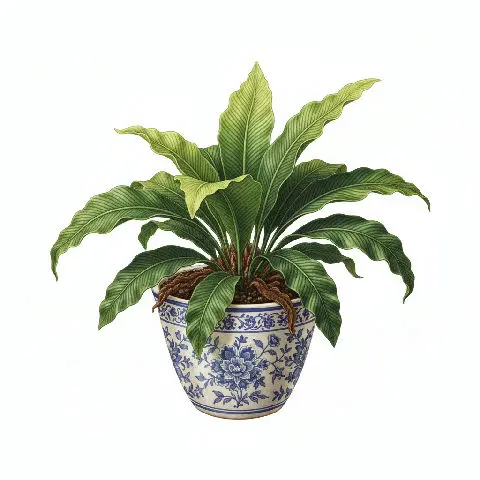
The Bird's Nest Fern, scientifically known as Asplenium nidus, is a striking epiphytic herbaceous perennial belonging to the Aspleniaceae family.
Most thin plant articles flatten everything into a summary. This guide does the opposite by following Bird Nest Fern through identification, care, handling, and the questions that real readers actually ask.
The linked plant page remains the main internal reference point for this article, but the goal here is to turn that raw data into a readable, structured, and genuinely useful guide.
- Ornamental Epiphyte — Prized for its lush, nest-like fronds and natural epiphytic growth habit.
- Tropical Native — Thrives in warm, humid rainforest understories across Asia, Australia, and the Pacific.
- Traditional Uses — Folk medicine suggests diuretic, anti-inflammatory, and general wellness benefits.
- Low Maintenance Houseplant — Adaptable to indoor environments with indirect light and consistent moisture.
- Unique Frond Structure — Features large, simple, undivided fronds with a prominent dark midrib.
- Air Purifier — Contributes to improved indoor air quality, making it a valuable home addition.
02Bird Nest Fern Botanical Profile
Bird Nest Fern should be anchored to the correct taxonomic identity before any discussion of care, use, or safety begins.
| Common name | Bird Nest Fern |
|---|---|
| Scientific name | Asplenium nidusW |
| Family | Aspleniaceae |
| Order | Polypodiales |
| Genus | Asplenium |
| Species epithet | nidus |
| Author citation | L. |
| Synonyms | Asplenium simplex Mett., Neottopteris nidus (L.) J.Sm. ex Hook., Thamnopteris nidus (L.) C.Presl, Neottopteris rigida Fée, Tarachia simplex (Mett.) C.Presl, Asplenium ellipticum (Fée) Copel., Neottopteris ovata J.Sm. ex Fée, Neottopteris stenocarpa Fée, Neottopteris elliptica Fée, Neottopteris vulgaris J.Sm., Asplenium ficifolium Goldm., Phyllitis amboinica Rumph. |
| Common names | বার্ড নেস্ট ফার্ন, অ্যাপ্লেনিয়াম নিডাস, Bird Nest Fern, बर्ड नेस्ट फर्न |
| Local names | 파초일엽, Katafa, Asplénie nid-d'oiseau, Nid d'oiseau, bird's-nest fern, ’ö’aha, ’öta’a, fågelbobräken, シマオオタニワタリ, nest fern, ’ö’aha, kökaha, Fougère nid d’oiseau |
| Origin | Tropical regions of Africa, Asia, and Australia |
| Life cycle | Perennial |
| Growth habit | Tree |
Using the accepted scientific name Asplenium nidus helps readers avoid confusion caused by old synonyms, loose common names, or inconsistent plant labels.
Family and order placement also matter because they explain recurring structural traits, likely relatives, and the kinds of mistakes readers often make when they rely on appearance alone.
03Bird Nest Fern: Physical Characteristics
A practical reading of the plant starts with visible structure:
- Leaf: Simple, undivided, oblanceolate to broadly oblong fronds originating from a central rhizome to form a rosette. Fronds are glossy, leathery, bright.
- Stem: Short, stout, erect rhizome, typically brown-scaly, from which the fronds emerge in a circular, nest-like arrangement. Not a true stem in the.
- Root: Fibrous, shallow root system, primarily anchoring the plant to its substrate (trees or rocks) and absorbing moisture and nutrients from decaying.
- Flower: As a fern, Asplenium nidus does not produce flowers. It reproduces via spores.
- Fruit: Does not produce fruit as it is a fern and does not flower.
- Seed: Does not produce seeds. Reproduces by spores, which are microscopic, dust-like, and contained within sori.
Microscopic or internal identification notes deepen the picture, especially for processed material: Trichomes are generally absent on the mature frond surfaces of Asplenium nidus, contributing to its smooth, glossy appearance, though very fine. Anomocytic stomata are characteristic, appearing irregularly scattered across the abaxial (lower) epidermis without distinct subsidiary cells. Powdered fronds reveal fragments of epidermal cells, occasional anomocytic stomata, elements of vascular tissue including tracheids, and.
In overall habit, the plant is described as Tree with a mature height around Typically 0.1-1.5 m and spread of Typically 0.2-1.5 m.
04Native Range of Bird Nest Fern
The native or historically recorded center of distribution for Bird Nest Fern is Tropical regions of Africa, Asia, and Australia. That origin is more than background trivia; it explains how the plant responds to heat, moisture, shade, and seasonal change.
Explore Our Platforms
 InfiniCore DataWorks
 Nex-Automata
The plant is associated with the following countries or range markers: Australia, China, Fiji), Hawaii, India, Japan, Malaysia, Philippines, Taiwan, Thailand, various Pacific Islands (e.g., Vietnam).
Environmental notes in the live record add more context: Natural habitat in tropical and subtropical rainforests, growing epiphytically on tree trunks or lithophytically on rocks. Thrives in USDA Hardiness Zones 10-11 for outdoor growth. Found at altitudes typically below 1200 meters. Requires annual rainfall equivalent to high humidity environments, often exceeding 1500-2000 mm distributed throughout the year.
In cultivation terms, the main ecological clues are: Bright Indirect; Weekly; Chunky, well-draining epiphytic mix (e.g., orchid bark, perlite, peat moss, charcoal); pH 6.0-7.0; Species-dependent; Perennial; Tree.
Physiology data reinforce the habitat story: Highly sensitive to drought and high light intensity, responding with physiological stress symptoms such as frond chlorosis (yellowing), necrosis. Asplenium nidus utilizes C3 photosynthesis, the most common photosynthetic pathway, optimized for environments with moderate light and CO2. Exhibits a relatively high transpiration rate in humid conditions, necessitating consistent moisture availability to maintain turgor and prevent.
05Bird Nest Fern in Tradition & Culture
Predominantly appreciated for its aesthetic value in modern culture, particularly as an indoor plant. Not extensively documented within the foundational texts of Ayurveda, TCM, or Unani as a primary medicinal plant. Its 'nest' formation has sometimes been symbolically linked to sanctuary or protection. In some indigenous cultures where it grows naturally, it might have incidental uses or be part of local folklore.
Ethnobotanical records also show how this plant has been framed across different places: Debility in Hawaii (Duke, 1992 ); Fever in Perak (Duke, 1992 ); Halitosis in Hawaii (Duke, 1992 ); Labor in Pahang (Duke, 1992 ); Sore in Hawaii (Duke, 1992 ); Asthma in Hawaii (Duke, 1992 ); Shampoo in Perak (Duke, 1992 *).
Local names help show how different communities notice and classify the plant: 파초일엽, Katafa, Asplénie nid-d'oiseau, Nid d'oiseau, bird's-nest fern, ’ö’aha, ’öta’a, fågelbobräken, シマオオタニワタリ, nest fern, ’ö’aha, kökaha, Fougère nid d’oiseau.
Traditional context matters, but it should always be separated from modern certainty. Historical use can guide questions, yet it does not automatically prove present-day clinical effectiveness.
06Medicinal Properties of Bird Nest Fern
The main benefit themes associated with the plant include:
- Diuretic Support — Traditionally, decoctions from Bird Nest Fern fronds were believed to promote urine flow, aiding in the body's fluid balance and.
- Anti-inflammatory Action — In various indigenous practices, Asplenium nidus was used to soothe inflammation, both internally and externally, based on.
- Antioxidant Potential — The presence of phenolic compounds and flavonoids suggests that Bird Nest Fern may possess antioxidant properties, helping to.
- Digestive Aid — Some folk medicine systems have historically employed ferns, including potentially Asplenium nidus, as a mild remedy for minor digestive.
- Respiratory Health — Infusions derived from the fronds were occasionally utilized in traditional remedies to address minor respiratory issues, such as.
- Skin Soothing — Topically, crushed fronds or poultices from Asplenium nidus have been applied in some traditional contexts to alleviate minor skin.
- Immune Modulatory Effects — Phytochemicals found in ferns, including potentially those in Bird Nest Fern, might subtly influence immune responses.
- General Wellness Support — As a plant known to accumulate trace elements from its environment, it could potentially offer micronutrients that support overall.
The evidence matrix gives a more careful picture of those claims: Traditional use for diuretic properties and fluid balance support. Empirical observation, folk medicine records. Traditional/Ethnobotanical. Historically used to promote urine flow based on observed effects, but lacks modern clinical validation. Possession of anti-inflammatory properties for soothing discomfort. Empirical observation, anecdotal reports. Traditional/Ethnobotanical. Applied topically or consumed for perceived anti-inflammatory effects, with limited contemporary scientific research. Potential antioxidant activity due to phytochemical composition. Hypothetical phytochemical analysis based on general fern chemistry. Inferred/Phytochemical. The presence of phenolic compounds and flavonoids suggests antioxidant potential, awaiting specific studies on A. nidus extracts.
The stored evidence confidence for this profile is traditional. That should shape how strongly any benefit statement is interpreted.
For non-medicinal or mostly ornamental contexts, the safest approach is to keep the claims modest. A plant may still be valuable ecologically, visually, or culturally without being promoted as a treatment.
- Diuretic Support — Traditionally, decoctions from Bird Nest Fern fronds were believed to promote urine flow, aiding in the body's fluid balance and.
- Anti-inflammatory Action — In various indigenous practices, Asplenium nidus was used to soothe inflammation, both internally and externally, based on.
- Antioxidant Potential — The presence of phenolic compounds and flavonoids suggests that Bird Nest Fern may possess antioxidant properties, helping to.
- Digestive Aid — Some folk medicine systems have historically employed ferns, including potentially Asplenium nidus, as a mild remedy for minor digestive.
- Respiratory Health — Infusions derived from the fronds were occasionally utilized in traditional remedies to address minor respiratory issues, such as.
- Skin Soothing — Topically, crushed fronds or poultices from Asplenium nidus have been applied in some traditional contexts to alleviate minor skin.
- Immune Modulatory Effects — Phytochemicals found in ferns, including potentially those in Bird Nest Fern, might subtly influence immune responses.
- General Wellness Support — As a plant known to accumulate trace elements from its environment, it could potentially offer micronutrients that support overall.
- Mild Analgesic Properties — Folk remedies sometimes describe the use of Bird Nest Fern for its purported mild pain-relieving effects, addressing minor aches.
07Bird Nest Fern Phytochemistry
- The broader constituent profile includes Flavonoids — Compounds like quercetin and kaempferol are anticipated, contributing to the fern's antioxidant.
- Phenolic Acids — Such as caffeic acid and ferulic acid, which are known for their strong antioxidant properties and.
- Triterpenoids — Including various fernenes and hopanes, often associated with anti-inflammatory effects and.
- Polysaccharides — Complex carbohydrates that can exhibit immunomodulatory effects, potentially enhancing immune. Steroids/Phytosterols — Plant-derived steroids like beta-sitosterol, which may influence hormone metabolism, have.
- Tannins — Astringent compounds that contribute to antioxidant activity, may offer antimicrobial benefits, and can help.
- Saponins — Glycosides that can possess diverse biological activities, including potential expectorant.
- Carotenoids — Pigments like beta-carotene, acting as powerful antioxidants and precursors to Vitamin A, crucial for.
- Fatty Acids — Essential lipids present in the fronds, vital for cell membrane integrity, energy storage, and overall.
- Trace Minerals — Accumulates various micronutrients from its natural habitat, which are essential cofactors for.
The detailed phytochemistry file adds these markers: Quercetin, Flavonoid, Fronds, Undeterminedµg/g; Kaempferol, Flavonoid, Fronds, Undeterminedµg/g; Caffeic Acid, Phenolic Acid, Fronds, Tracemg/g; Ferulic Acid, Phenolic Acid, Fronds, Tracemg/g; Asplenetin, Triterpenoid, Fronds, Undeterminedmg/g; Beta-sitosterol, Phytosterol, Fronds, Tracemg/g; Polysaccharides, Carbohydrate, Fronds, Variable%.
Compound profiles also shift with plant part, age, season, processing, and storage. The chemistry of a fresh leaf, dried root, or concentrated extract should never be treated as automatically identical.
08Bird Nest Fern Preparations & Dosage
Recorded preparation and use methods include:
- Traditional Decoction — Fronds are boiled in water to create a decoction, traditionally consumed for its purported diuretic and anti-inflammatory properties.
- Topical Poultice — Crushed or macerated fronds may be applied directly to the skin as a poultice for minor irritations, swelling, or insect bites in folk medicine. Infusion/Tea — Dried fronds can be steeped in hot water to prepare a milder infusion or tea for internal consumption or as a gargle.
- Herbal Compress — A cloth soaked in a warm decoction can be applied externally as a compress to localized areas for soothing relief.
- Environmental Enhancement — Primarily used as an ornamental houseplant to improve indoor air quality and add lush, tropical aesthetics.
- Ritualistic Use — In some indigenous cultures, certain ferns hold ceremonial significance, though specific practices for Asplenium nidus are less documented.
The plant part most closely linked to use is recorded as Fronds, rhizomes, or whole plant cited in related taxa.
Edibility and processing notes matter here as well: Only certain species and young fronds are edible; verify carefully.
For indoor readers, “how to use” usually means how the plant is placed, styled, handled, propagated, and maintained within the living space rather than how it is taken internally.
- Identify the exact species and plant part first.
- Match the preparation to the intended use.
- Check safety, interactions, and processing details before routine use or large-scale handling.
09Bird Nest Fern Side Effects & Safety
The first safety note is direct: Non-toxic. Bird's Nest Fern is generally considered non-toxic to humans and pets (cats, dogs), according to the ASPCA. No known toxic parts. No specific symptoms of overdose or first aid measures are required due to toxicity.
Specific warnings recorded for this plant include Pregnant/:
- Lactating Women — Advised to avoid internal use of Asplenium nidus due to insufficient research regarding its safety during pregnancy and.
- Children — Internal administration to children is not recommended without strict medical supervision from a qualified healthcare professional.
- Pre-existing Conditions — Individuals with kidney disease, heart conditions, or electrolyte imbalances should consult a physician before use, especially given.
- Medication Interactions — Exercise caution and seek medical advice if taking diuretics, anticoagulants, or antihypertensive drugs, as interactions are possible.
- External Use — Generally considered safe for topical application, but a patch test on a small skin area is recommended to check for sensitivity.
- Proper Identification — Crucial to ensure correct plant identification to prevent accidental consumption of potentially toxic fern species.
- Dosage Adherence — Always adhere to traditionally recommended dosages; avoid excessive or prolonged internal use.
- Gastric Upset — Ingesting large quantities of Bird Nest Fern may lead to mild stomach discomfort, nausea, or indigestion in sensitive individuals.
- Allergic Reactions — Contact dermatitis or respiratory irritation may occur in susceptible individuals when handling fronds or inhaling spores.
Quality-control notes add another warning: Low risk for whole fronds, but processed material or extracts could potentially be adulterated with less potent or unrelated fern species.
No plant should be described as universally safe. Identity, dose, plant part, preparation style, age, pregnancy status, medication use, allergies, and contamination risk all change the answer.
10Bird Nest Fern Cultivation Guide
The cultivation record emphasizes these practical steps:
- Light Requirements — Prefers partial to full shade; direct sunlight can scorch its fronds, leading to yellowing and stunted growth. Soil & Substrate — Thrives in rich, moist, porous, well-draining soil, or as an epiphyte on tree trunks or rocks with minimal growing media. Humidity & Temperature — Requires high humidity (70-80% ideal) and warm temperatures (60-70°F, 15-21°C); protect from temperatures below 40°F (4°C).
- Watering — Keep soil consistently moist but never waterlogged; allow the top inch to dry slightly between waterings, as it is not drought-tolerant.
- Fertilization — During periods of active growth (spring and summer), apply a diluted liquid fertilizer monthly, avoiding direct application into the central nest.
The broader growth environment is described like this: Natural habitat in tropical and subtropical rainforests, growing epiphytically on tree trunks or lithophytically on rocks. Thrives in USDA Hardiness Zones 10-11 for outdoor growth. Found at altitudes typically below 1200 meters. Requires annual rainfall equivalent to high humidity environments, often exceeding 1500-2000 mm distributed throughout the year.
Planning becomes easier when these traits are kept in view: Tree; Typically 0.1-1.5 m; Typically 0.2-1.5 m; Moderate; Beginner.
In practice, healthy cultivation comes from systems thinking rather than one-off tricks. Site choice, drainage, timing, spacing, pruning, feeding, and observation all reinforce one another.
11Bird Nest Fern Growing Conditions
The most useful care snapshot is this: Light: Bright Indirect; Water: Weekly; Soil: Chunky, well-draining epiphytic mix (e.g., orchid bark, perlite, peat moss, charcoal); pH 6.0-7.0; Temperature: 18-27°C; USDA zone: Species-dependent.
Indoors, the plant responds to microclimate more than many people expect. Window direction, airflow, heating, and room humidity can change the care rhythm quickly.
| Light | Bright Indirect |
|---|---|
| Water | Weekly |
| Soil | Chunky, well-draining epiphytic mix (e.g., orchid bark, perlite, peat moss, charcoal); pH 6.0-7.0 |
| Temperature | 18-27°C |
| USDA zone | Species-dependent |
Light, water, and soil should never be treated as separate checkboxes. A plant in stronger light often dries faster, soil texture changes how quickly water moves, and temperature plus humidity influence how stress appears in leaves and roots.
For Bird Nest Fern, the safest care approach is to treat Bright Indirect, Weekly, and Chunky, well-draining epiphytic mix (e.g., orchid bark, perlite, peat moss, charcoal); pH 6.0-7.0 as linked decisions rather than isolated tips. If one condition shifts, the other two usually need to be reconsidered as well.
12Bird Nest Fern Propagation Methods
Documented propagation routes include Primarily propagates by spores. To propagate by spores: Collect mature fronds with brown sori (spore cases) on the underside. Gently scrape the spores onto a. do not cover with soil. Cover the tray with clear plastic or glass to maintain high humidity and condensation. Place in warm, indirect light. Germination can.
Propagation works best when the parent stock is healthy, correctly identified, and handled in the right season. That sounds obvious, but it is exactly where many failures begin.
- Primarily propagates by spores. To propagate by spores: Collect mature fronds with brown sori (spore cases) on the underside. Gently scrape the spores onto a.
- Do not cover with soil. Cover the tray with clear plastic or glass to maintain high humidity and condensation. Place in warm, indirect light. Germination can.
Propagation works best when the reader matches method to biology. Some plants respond readily to cuttings, some to division, some to seed, and others require more patience or more exact seasonal timing.
13Managing Bird Nest Fern Problems
The recorded problem list includes Common pests: Scale insects and mealybugs, appearing as small, raised bumps or cottony masses on fronds. Fungal. overall paleness for general nutrient lack. Organic solutions: For pests, wipe with a cotton swab dipped in rubbing. remove affected parts. For nutrient deficiencies, use a balanced, diluted organic liquid fertilizer.
Indoor problems usually start quietly: mites, mealybugs, scale, root stress, weak light, or stale soil structure. Routine inspection is what keeps small issues from becoming full infestations.
The smartest response sequence is observation first, environmental correction second, and treatment only after the real pattern is clear.
- Common pests: Scale insects and mealybugs, appearing as small, raised bumps or cottony masses on fronds. Fungal.
- Overall paleness for general nutrient lack. Organic solutions: For pests, wipe with a cotton swab dipped in rubbing.
- Remove affected parts. For nutrient deficiencies, use a balanced, diluted organic liquid fertilizer.
14Bird Nest Fern: Harvest, Storage & Processing
The plant part most often associated with harvest or processing is Fronds, rhizomes, or whole plant cited in related taxa.
Storage guidance from the quality-control record reads as follows: Dried fronds should be stored in cool, dark, airtight containers to minimize degradation of active compounds and maintain stability over time.
For indoor plants, this section often translates into trimming, leaf cleanup, offset collection, occasional flower removal, and safe handling of spent growth.
Whatever the purpose, the rule is the same: harvest clean material, label it clearly, and store it in a way that preserves identity and condition.
Harvest and storage determine whether a plant's quality is preserved after it leaves the bed, pot, field, or wild source. Clean timing, correct plant part selection, and careful drying or handling all matter more than many readers expect.
For Bird Nest Fern, this means the reader should think beyond collection. Material that is poorly labeled, overheated, damp in storage, or mixed with the wrong part of the plant can quickly lose value or create confusion later.
15Companion Plants for Bird Nest Fern
Useful companions or placement partners include Orchids (Phalaenopsis); peace lilies (Spathiphyllum); ZZ plants (Zamioculcas zamiifolia); pothos (Epipremnum aureum); philodendrons (various species).
In indoor styling, Bird Nest Fern usually works best beside plants that share similar moisture expectations but offer contrast in texture, height, or silhouette.
- Orchids (Phalaenopsis)
- Peace lilies (Spathiphyllum)
- ZZ plants (Zamioculcas zamiifolia)
- Pothos (Epipremnum aureum)
- Philodendrons (various species)
Companion planting and design are not only aesthetic decisions. They affect airflow, root competition, moisture sharing, harvest access, visibility, and the general logic of the planting scheme.
With Bird Nest Fern, good placement means thinking about mature size, maintenance rhythm, and how neighboring plants change the feel and function of the space. A plant can be healthy on its own and still be poorly placed within the broader composition.
16Bird Nest Fern: Scientific Evidence
The evidence matrix points to several recurring themes: Traditional use for diuretic properties and fluid balance support. Empirical observation, folk medicine records. Traditional/Ethnobotanical. Historically used to promote urine flow based on observed effects, but lacks modern clinical validation. Possession of anti-inflammatory properties for soothing discomfort. Empirical observation, anecdotal reports. Traditional/Ethnobotanical. Applied topically or consumed for perceived anti-inflammatory effects, with limited contemporary scientific research. Potential antioxidant activity due to phytochemical composition. Hypothetical phytochemical analysis based on general fern chemistry. Inferred/Phytochemical. The presence of phenolic compounds and flavonoids suggests antioxidant potential, awaiting specific studies on A. nidus extracts.
Ethnobotanical activity records add historical reference trails: Debility — Hawaii [Duke, 1992 ]; Fever — Perak [Duke, 1992 ]; Halitosis — Hawaii [Duke, 1992 ]; Labor — Pahang [Duke, 1992 ]; Sore — Hawaii [Duke, 1992 ]; Asthma — Hawaii [Duke, 1992 ].
The compiled source count behind the live profile is 5. That does not guarantee certainty, but it does suggest the record has been cross-checked beyond a single note.
Analytical testing notes also strengthen the evidence base: Macroscopic and microscopic identification for raw material; Thin Layer Chromatography (TLC) or High-Performance Liquid Chromatography (HPLC) for chemical fingerprinting and.
A careful evidence section should say what is known, what is plausible, and what remains uncertain. Readers are better served by clear limits than by exaggerated confidence.
Evidence note: this section blends the live plant record, local ethnobotanical activity data, chemistry records, and the linked Flora Medical Global plant profile for Bird Nest Fern.
17Choosing Quality Bird Nest Fern
Quality markers worth checking include Specific flavonoids (e.g., quercetin glycosides) or phenolic acids could serve as phytochemical markers for identity and standardization of extracts.
Adulteration and substitution risk should not be ignored: Low risk for whole fronds, but processed material or extracts could potentially be adulterated with less potent or unrelated fern species.
When buying Bird Nest Fern, start with verified botanical identity. The label, scientific name, and the source page should agree before you judge price, size, or claimed benefits.
For living plants, inspect roots, stem firmness, foliage health, and early pest signs. For dried or processed material, look for batch clarity, clean aroma, absence of mold, and any sign that the product has been over-processed to disguise poor quality.
Buying advice should begin with identity. The label, scientific name, visible condition, and seller credibility should agree before price or convenience becomes the deciding factor.
18Bird Nest Fern: Frequently Asked Questions
What is Bird Nest Fern best known for?
The Bird's Nest Fern, scientifically known as Asplenium nidus, is a striking epiphytic herbaceous perennial belonging to the Aspleniaceae family.
Is Bird Nest Fern beginner-friendly?
That depends on the growing environment and the intended use. Some plants are easy to grow but not simple to use medicinally, while others are the opposite.
How much light does Bird Nest Fern need?
Bright Indirect
How often should Bird Nest Fern be watered?
Weekly
Can Bird Nest Fern be propagated at home?
Yes, but the best method depends on whether the species responds best to seed, cuttings, division, offsets, or other propagation routes.
Does Bird Nest Fern have safety concerns?
Non-toxic. Bird's Nest Fern is generally considered non-toxic to humans and pets (cats, dogs), according to the ASPCA. No known toxic parts. No specific symptoms of overdose or first aid measures are required due to toxicity.
What is the biggest mistake people make with Bird Nest Fern?
The most common mistake is applying generic advice instead of matching the plant to its real environment, identity, and limits.
Where can I verify more information about Bird Nest Fern?
Start with the Flora Medical Global plant profile: https://www.floramedicalglobal.com/indoor-plants/bird-nest-fern
Why do sources sometimes disagree about Bird Nest Fern?
Different references may use different synonyms, plant parts, cultivation conditions, or evidence standards. That is why taxonomy and source quality both matter.
19Bird Nest Fern: References & Further Reading
Authoritative sources and related guides:
- Wikipedia — background reference
- PubMed — peer-reviewed studies
- Kew POWO — botanical reference
- NCBI PMC — open-access research
- WHO — global health authority
Related on Flora Medical Global
Reviewed by the Flora Medical Global Botanical Review Panel
Multi-disciplinary editorial group · Botany · Ethnobotany · Herbal-medicine literature
Who reviewed this: This page was checked by the Flora Medical Global Botanical Review Panel — an in-house editorial group of botany graduates, ethnobotany researchers, and horticulture practitioners who collectively maintain our 7,000+ plant encyclopedia. Meet the team.
Our 4-step verification process
1. Taxonomic verification
Scientific names and synonyms cross-checked against Kew POWO, World Flora Online, and The Plant List.
2. Phytochemical & medicinal cross-reference
Active compounds, traditional uses, and reported activities are cross-referenced with PubMed, USDA Dr. Duke's database, and peer-reviewed ethnobotanical literature.
3. Conservation & distribution check
Distribution, ecology, and conservation status confirmed against GBIF occurrence records and the IUCN Red List.
4. Editorial & safety review
Every entry passes an editorial pass for clarity, originality, and safety notices (toxicity, contraindications, dosage caveats) before publication.
Last reviewed:
Explore Our Platforms
Comments (0)
No comments yet. Be the first!