Cascara Sagrada: Benefits, Uses & Safety
 Flora Medical GlobalPublished: 4/10/2026Updated: 6/16/202620 min read
Editorial Disclaimer: This article is for informational and educational purposes only. It is not a substitute for professional medical advice, diagnosis, or treatment. Always consult a qualified healthcare provider or certified herbalist before using any plant for medicinal purposes, especially if you are pregnant, nursing, taking medication, or have a medical condition.
01What is Cascara Sagrada?
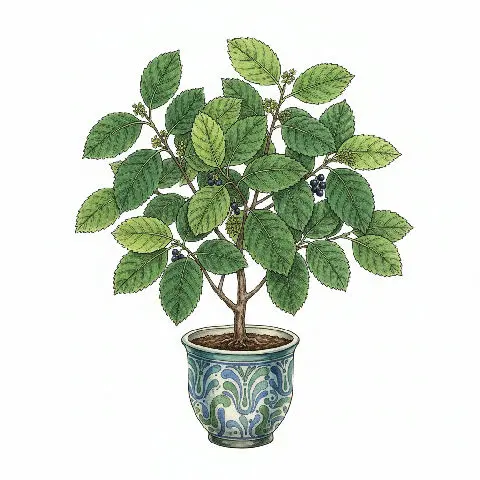
Cascara Sagrada, officially known as Rhamnus purshiana, is a distinguished deciduous shrub or small tree belonging to the Rhamnaceae family, which also includes other significant species like buckthorn and jujube.
A good article on Cascara Sagrada should not stop at one-line claims. Readers need taxonomy, habitat, safety, cultivation, and evidence in the same place so they can make sound decisions.
Use this guide as a practical reference, then compare it with the detailed plant profile at https://www.floramedicalglobal.com/plant/cascara-sagrada-rhamnus whenever you want to confirm the source page itself.
- Primary use: stimulant laxative for occasional constipation.
- Source: Aged bark of Rhamnus purshiana, a Pacific Northwest native.
- Active compounds: Anthraquinone glycosides, primarily cascarosides.
- Key caution: Strictly for short-term use (less than one week) to avoid dehydration and electrolyte imbalance.
- Bark requires aging for at least one year before medicinal use.
- Not recommended for pregnant/breastfeeding individuals or children.
02Cascara Sagrada: Taxonomy & Classification
Cascara Sagrada should be anchored to the correct taxonomic identity before any discussion of care, use, or safety begins.
| Common name | Cascara Sagrada |
|---|---|
| Scientific name | Rhamnus purshianaW |
| Family | Rhamnaceae |
| Order | Rosales |
| Genus | Rhamnus |
| Species epithet | purshiana |
| Author citation | DC. |
| Common names | কাসকারা সাগ্রাদা, বিয়ারবেরি, চিত্তাম বার্ক, Cascara Sagrada, Bearberry, Chittam Bark, कैस्कारा सग्राड़ा, बीयरबेरी |
| Origin | Pacific Northwest |
| Life cycle | Likely annual or perennial depending on species |
| Growth habit | Variable herb, shrub, tree, climber, or graminoid |
Using the accepted scientific name Rhamnus purshiana helps readers avoid confusion caused by old synonyms, loose common names, or inconsistent plant labels.
Family and order placement also matter because they explain recurring structural traits, likely relatives, and the kinds of mistakes readers often make when they rely on appearance alone.
Correct naming is not a small detail. A plant can collect multiple common names, outdated synonyms, and marketing labels over time, so using Rhamnus purshiana consistently reduces the risk of confusion, bad care advice, and even safety mistakes.
03Identifying Cascara Sagrada
A practical reading of the plant starts with visible structure:
- Leaf: Cascara Sagrada has simple, alternate leaves, measuring 5-10 cm long and 2-5 cm wide. They are elliptical to ovate with entire to slightly serrated.
- Stem: The stems are woody, slender, and can grow up to 5 m tall. They have a smooth texture, initially green, turning to a brownish hue with maturity, and.
- Root: The root system is fibrous, spreading shallowly but can also develop a taproot that penetrates deeper into the soil profile, often leading to.
- Flower: Flowers are small, greenish-yellow, about 5-10 mm in size, arranged in clusters in leaf axils. They bloom in late spring, typically from May to June.
- Fruit: The fruit of Cascara Sagrada is a small, berry-like drupe, around 6-10 mm in diameter, initially green and turning to black upon ripening; it is not.
- Seed: Seeds are small, about 3-5 mm long, flat, with a hard seed coat, dispersed by birds or water flows.
Microscopic or internal identification notes deepen the picture, especially for processed material: Non-glandular, unicellular or multicellular trichomes may be sparsely present on young bark or leaves, providing minor protective functions against. Stomata, when present on young stems or leaves, are commonly anomocytic, characterized by irregular subsidiary cells surrounding the guard cells. Powdered bark reveals characteristic lignified fibers, stone cells (sclereids), fragments of cork cells, calcium oxalate crystal druses, and.
In overall habit, the plant is described as Variable herb, shrub, tree, climber, or graminoid with a mature height around Typically 0.2-10 m depending on species and spread of Typically 0.2-5 m depending on species.
04Cascara Sagrada: Habitat & Distribution
The native or historically recorded center of distribution for Cascara Sagrada is Pacific Northwest. That origin is more than background trivia; it explains how the plant responds to heat, moisture, shade, and seasonal change.
Environmental notes in the live record add more context: Cascara sagrada prefers cool, temperate climates with consistent moisture. Ideal growing conditions include partial to full shade, as it naturally grows under the canopy of larger trees in forested areas. The plant flourishes in well-drained, loamy soils rich in organic material, with a pH range of 5.0 to 7.0. Cascara sagrada is quite adaptable, tolerating.
In cultivation terms, the main ecological clues are: Usually full sun to partial shade; Moderate; Generally well-drained preferred; Species-dependent; Likely annual or perennial depending on species; Variable herb, shrub, tree, climber, or graminoid.
Physiology data reinforce the habitat story: Rhamnus purshiana demonstrates resilience to cold temperatures and moderate drought stress, reflecting its adaptation to the variable climate of the. Cascara Sagrada utilizes the C3 photosynthetic pathway, typical for most temperate deciduous trees and shrubs, efficiently converting light energy. The plant maintains moderate transpiration rates, adapted to its moist forest understory habitat, displaying efficient water use during drier.
05Cascara Sagrada in Tradition & Culture
Cascara Sagrada, scientifically known as Rhamnus purshiana, holds a profound place in the ethnobotanical landscape of the Pacific Northwest, particularly among Indigenous peoples. Its name itself, "sacred bark" in Spanish, hints at its esteemed status. For millennia, the Indigenous communities of this region, including the Coast Salish, Chinook, and others, recognized the potent medicinal properties of its dried.
Explore Our Platforms
 InfiniCore DataWorks
 Nex-Automata
Ethnobotanical records also show how this plant has been framed across different places: Aperient in Elsewhere (ANON. 1978. List of Plants. Kyoto Herbal Garden, Parmacognostic Research Lab., Central Research Division, Takeda Chem. Industries, Ltd., Ichijoji, Sakyoku, Kyoto, Japan.); Bilious in Canada(Kwakiutl) (Duke, 1992 ); Laxative in US(Amerindian) (Krochmal, Arnold and Connie. 1973. A guide to the medicinal plants of the United States. Quadrangle/The N.Y. Times Book Co.); Laxative in Canada(Kwakiutl) (Duke, 1992 ); Purgative in US(Flathead) (Hart, J.A. 1979. The ethnobotany of the Flathead Indians of Western Montana. Botanical Museum Leaflet 27(10). Harvard University.); Tonic in US(Amerindian) (Krochmal, Arnold and Connie. 1973. A guide to the medicinal plants of the United States. Quadrangle/The N.Y. Times Book Co.); Laxative in US (Duke, 1992 *); Laxative in US(Flathead) (Hart, J.A. 1979. The ethnobotany of the Flathead Indians of Western Montana. Botanical Museum Leaflet 27(10). Harvard University.).
Traditional context matters, but it should always be separated from modern certainty. Historical use can guide questions, yet it does not automatically prove present-day clinical effectiveness.
06Cascara Sagrada Health Benefits
The main benefit themes associated with the plant include:
- Constipation Relief — Cascara Sagrada bark is renowned for its stimulant laxative properties, effectively alleviating occasional constipation by stimulating.
- Bowel Regularity — Regular, short-term use can help re-establish healthy bowel movements, particularly useful for atonic constipation where intestinal muscles.
- Digestive Support — By promoting efficient waste elimination, it indirectly supports overall digestive health and can reduce feelings of sluggishness.
- Detoxification Aid — In traditional herbalism, promoting regular bowel movements is considered a key aspect of detoxification, helping the body expel.
- Hemorrhoid Management — By softening stools and easing passage, Cascara Sagrada can help reduce straining, which is beneficial for individuals suffering from. Liver Support (Traditional) — Historically, some traditions linked its purgative action to stimulating bile flow, thereby indirectly supporting liver. Antiparasitic Properties (Traditional) — In some traditional practices, strong laxatives like Cascara Sagrada were occasionally used as part of protocols to.
- Post-Surgical Bowel Movement Facilitation — Under medical supervision, it can sometimes be used to gently encourage initial bowel movements after certain.
The evidence matrix gives a more careful picture of those claims: Relief of occasional constipation. Historical use, some clinical observations, traditional medicine. Moderate. Its efficacy is largely attributed to anthraquinone glycosides that stimulate intestinal peristalsis, promoting bowel movements. Bowel preparation before colonoscopy. Clinical studies. Insufficient/Possibly Ineffective. Modern research indicates it does not significantly improve bowel cleansing for this specific medical procedure compared to standard methods. Support for general digestive health. Traditional use, anecdotal evidence. Low. Indirectly contributes to digestive health by promoting regular and efficient bowel movements, which is a traditional concept of gut wellness.
The stored evidence confidence for this profile is traditional. That should shape how strongly any benefit statement is interpreted.
For medicinal content, the key discipline is to distinguish traditional use, mechanism-based plausibility, and human clinical support. Those are related ideas, but they are not the same thing.
- Constipation Relief — Cascara Sagrada bark is renowned for its stimulant laxative properties, effectively alleviating occasional constipation by stimulating.
- Bowel Regularity — Regular, short-term use can help re-establish healthy bowel movements, particularly useful for atonic constipation where intestinal muscles.
- Digestive Support — By promoting efficient waste elimination, it indirectly supports overall digestive health and can reduce feelings of sluggishness.
- Detoxification Aid — In traditional herbalism, promoting regular bowel movements is considered a key aspect of detoxification, helping the body expel.
- Hemorrhoid Management — By softening stools and easing passage, Cascara Sagrada can help reduce straining, which is beneficial for individuals suffering from.
- Liver Support (Traditional) — Historically, some traditions linked its purgative action to stimulating bile flow, thereby indirectly supporting liver.
- Antiparasitic Properties (Traditional) — In some traditional practices, strong laxatives like Cascara Sagrada were occasionally used as part of protocols to.
- Post-Surgical Bowel Movement Facilitation — Under medical supervision, it can sometimes be used to gently encourage initial bowel movements after certain.
07Cascara Sagrada: Chemical Constituents
The broader constituent profile includes:
- Anthraquinone Glycosides — Cascarosides A, B, C, and D are the primary active compounds, responsible for the stimulant.
- O-Glycosides — Includes aloin and barbaloin, which are precursors to the active anthraquinones, requiring bacterial.
- C-Glycosides — A type of anthraquinone glycoside, unique in their carbon-carbon bond between sugar and aglycone.
- Free Anthraquinones — Such as emodin, aloe-emodin, and chrysophanol, which are the active metabolites after hydrolysis.
- Resins — Contribute to the overall therapeutic profile, potentially offering mild anti-inflammatory or protective.
- Tannins — Possess astringent properties, which can help balance the strong laxative effect and contribute to gut.
- Bitter Principles — Stimulate digestive secretions and can enhance overall digestive function, contributing to the.
- Volatile Oils — Present in small quantities, contributing to the plant's characteristic aroma and potentially offering.
The detailed phytochemistry file adds these markers: Cascaroside A, Anthraquinone Glycoside, Aged Bark, 3-7% (typical range in dried bark)% w/w; Cascaroside B, Anthraquinone Glycoside, Aged Bark, 2-5% (typical range in dried bark)% w/w; Emodin, Free Anthraquinone, Aged Bark, <0.1% (trace amounts)% w/w; Aloe-emodin, Free Anthraquinone, Aged Bark, <0.1% (trace amounts)% w/w; Barbaloin, Anthrone C-Glycoside, Aged Bark, Variable (converted during aging)% w/w; Tannins, Polyphenols, Aged Bark, 1-3%% w/w.
Local chemistry records also support the profile: in reported plant parts.
Compound profiles also shift with plant part, age, season, processing, and storage. The chemistry of a fresh leaf, dried root, or concentrated extract should never be treated as automatically identical.
08Using Cascara Sagrada: Methods & Dosage
Recorded preparation and use methods include:
- Decoction — Prepare by simmering aged, dried Cascara Sagrada bark in water for 10-15 minutes, then straining; traditionally consumed warm for its laxative effect.
- Tincture — A concentrated alcoholic extract of the aged bark, typically taken in drops mixed with water, offering a convenient and potent form for precise dosing.
- Encapsulated Powder — Dried and powdered bark is encapsulated for precise dosing and ease of consumption, often preferred for its convenience and to mask the bitter taste.
- Liquid Extract — A non-alcoholic or glycerine-based extract providing a more palatable alternative to tinctures, suitable for those avoiding alcohol or with taste sensitivities.
- Cold Infusion — Some prefer a cold infusion to minimize extraction of bitter compounds; soak bark in cold water for several hours or overnight, then strain and drink.
- Syrups — Commercial preparations sometimes incorporate Cascara Sagrada into sweetened syrups, particularly for palatability, though professional guidance is crucial for proper use.
The plant part most closely linked to use is recorded as Leaves, roots, bark, seeds, flowers, or whole plant cited in related taxa.
Edibility and processing notes matter here as well: Species- and plant-part-dependent; verify before use.
Preparation defines the outcome. Tea, decoction, tincture, powder, fresh plant material, cooked food use, and concentrated extract cannot be discussed as if they were interchangeable.
- Identify the exact species and plant part first.
- Match the preparation to the intended use.
- Check safety, interactions, and processing details before routine use or large-scale handling.
09Cascara Sagrada Side Effects & Safety
The first safety note is direct: Species- and plant-part-dependent; verify before use
Specific warnings recorded for this plant include:
- Short-Term Use Only — Generally considered possibly safe for use lasting less than one week; prolonged use is strongly discouraged due to significant health risks and potential for dependence. Pregnancy & Breastfeeding Contraindicated — Avoid use during pregnancy due to insufficient safety data and during breastfeeding as active compounds can pass.
- Not for Children — Children are more susceptible to severe side effects like dehydration and low potassium; therefore, use in pediatric populations is strictly contraindicated.
- Gastrointestinal Contraindications — Avoid if suffering from intestinal obstruction, Crohn's disease, ulcerative colitis, appendicitis, stomach ulcers, or.
- Hydration — Maintain adequate fluid intake when using Cascara Sagrada to mitigate the risk of dehydration associated with its potent laxative effects.
- Electrolyte Monitoring — Long-term use, if somehow deemed necessary, necessitates careful monitoring of electrolyte levels, especially potassium, to prevent.
- Consultation Required — Always consult a healthcare professional before use, especially if on other medications or having pre-existing health conditions, to.
- Stomach Discomfort — Common with initial use or high doses, manifesting as mild abdominal pain, nausea, or an upset stomach.
Quality-control notes add another warning: Risk includes substitution with other Rhamnus species (e.g., R. frangula) or even non-laxative barks, requiring careful botanical verification and chemical profiling.
No plant should be described as universally safe. Identity, dose, plant part, preparation style, age, pregnancy status, medication use, allergies, and contamination risk all change the answer.
10Growing Cascara Sagrada Successfully
The cultivation record emphasizes these practical steps:
- Climate Preference — Thrives in temperate climates, specifically the moist conditions of the Pacific Northwest, tolerating cool temperatures and moderate rainfall.
- Soil Requirements — Prefers well-drained, fertile, slightly acidic to neutral soils rich in organic matter, often found in forest understories and along stream banks.
- Light Exposure — Best grown in partial shade to full sun, though young plants benefit from some protection from intense afternoon sun to prevent leaf scorch.
- Propagation — Primarily propagated from seeds, which require cold stratification for successful germination, or from semi-hardwood cuttings taken in late summer.
- Watering — Requires consistent moisture, especially during dry periods, but avoids waterlogging; mimics its natural habitat near streams and damp forest floors.
- Harvesting — Bark is harvested from mature trees (typically 10-20 years old) in spring or early summer, ensuring sustainable practices like strip-barking or rotational.
- Post-Harvest Treatment — Freshly harvested bark must be aged for at least one year before use to allow for oxidation of irritating compounds and conversion of active.
The broader growth environment is described like this: Cascara sagrada prefers cool, temperate climates with consistent moisture. Ideal growing conditions include partial to full shade, as it naturally grows under the canopy of larger trees in forested areas. The plant flourishes in well-drained, loamy soils rich in organic material, with a pH range of 5.0 to 7.0. Cascara sagrada is quite adaptable, tolerating.
Planning becomes easier when these traits are kept in view: Variable herb, shrub, tree, climber, or graminoid; Typically 0.2-10 m depending on species; Typically 0.2-5 m depending on species.
In practice, healthy cultivation comes from systems thinking rather than one-off tricks. Site choice, drainage, timing, spacing, pruning, feeding, and observation all reinforce one another.
11Cascara Sagrada Growing Conditions
The most useful care snapshot is this: Light: Usually full sun to partial shade; Water: Moderate; Soil: Generally well-drained preferred; USDA zone: Species-dependent.
Outdoors, light, water, and soil must be read together. The same watering schedule can be too much in dense clay and too little in a porous sandy bed.
| Light | Usually full sun to partial shade |
|---|---|
| Water | Moderate |
| Soil | Generally well-drained preferred |
| USDA zone | Species-dependent |
Light, water, and soil should never be treated as separate checkboxes. A plant in stronger light often dries faster, soil texture changes how quickly water moves, and temperature plus humidity influence how stress appears in leaves and roots.
For Cascara Sagrada, the safest care approach is to treat Usually full sun to partial shade, Moderate, and Generally well-drained preferred as linked decisions rather than isolated tips. If one condition shifts, the other two usually need to be reconsidered as well.
Microclimate matters too. Indoors, room placement and airflow can matter as much as window exposure. Outdoors, reflected heat, slope, mulch, and nearby plants can change how the temperature rhythm described for the species and humidity that matches the plant type are actually experienced at plant level.
12Propagating Cascara Sagrada
Documented propagation routes include Cascara Sagrada can be propagated via seeds or cuttings. For seed propagation, collect seeds from mature fruits and stratify them for 30 days, then sow them. dip in rooting hormone and plant in well-draining soil, maintaining moisture levels. Rooting success for cuttings can be around 50-60%.
Propagation works best when the parent stock is healthy, correctly identified, and handled in the right season. That sounds obvious, but it is exactly where many failures begin.
- Cascara Sagrada can be propagated via seeds or cuttings. For seed propagation, collect seeds from mature fruits and stratify them for 30 days, then sow them.
- Dip in rooting hormone and plant in well-draining soil, maintaining moisture levels. Rooting success for cuttings can be around 50-60%.
Propagation works best when the reader matches method to biology. Some plants respond readily to cuttings, some to division, some to seed, and others require more patience or more exact seasonal timing.
13Cascara Sagrada Pests & Diseases
For medicinal species, pest pressure is not only a horticultural issue. It also affects harvest cleanliness, storage stability, and confidence in the final material.
The smartest response sequence is observation first, environmental correction second, and treatment only after the real pattern is clear.
Pest and disease management is strongest when it begins before visible damage becomes severe. Routine observation, clean handling, sensible spacing, air movement, and balanced watering reduce many problems before treatment is even needed.
When symptoms do appear on Cascara Sagrada, the most reliable response is diagnostic rather than reactive. Yellowing, spots, wilt, chewing, and stunting can all have multiple causes, so a rushed treatment can waste time or worsen the problem.
Good troubleshooting also includes environmental correction. Pests and disease often reveal a deeper issue such as root stress, poor airflow, inconsistent watering, weak light, or exhausted soil structure.
14How to Harvest Cascara Sagrada
The plant part most often associated with harvest or processing is Leaves, roots, bark, seeds, flowers, or whole plant cited in related taxa.
Storage guidance from the quality-control record reads as follows: Aged bark should be stored in airtight containers in a cool, dry, dark place to prevent degradation of active compounds and maintain potency for several years, ideally up to 2-3.
For medicinal plants, harvesting cannot be separated from processing. The right plant part, the right timing, and the right drying conditions all shape quality and safety.
Whatever the purpose, the rule is the same: harvest clean material, label it clearly, and store it in a way that preserves identity and condition.
Harvest and storage determine whether a plant's quality is preserved after it leaves the bed, pot, field, or wild source. Clean timing, correct plant part selection, and careful drying or handling all matter more than many readers expect.
15Companion Plants for Cascara Sagrada
In a home herb garden or medicinal bed, Cascara Sagrada should be placed where harvesting is easy, labeling remains clear, and neighboring plants do not create confusion at collection time.
Companion planting and design are not only aesthetic decisions. They affect airflow, root competition, moisture sharing, harvest access, visibility, and the general logic of the planting scheme.
With Cascara Sagrada, good placement means thinking about mature size, maintenance rhythm, and how neighboring plants change the feel and function of the space. A plant can be healthy on its own and still be poorly placed within the broader composition.
That is why the best design advice combines biology with usability. The planting should look coherent, but it should also make watering, pruning, harvest, and pest observation easier rather than harder.
16Cascara Sagrada: Scientific Evidence
The evidence matrix points to several recurring themes: Relief of occasional constipation. Historical use, some clinical observations, traditional medicine. Moderate. Its efficacy is largely attributed to anthraquinone glycosides that stimulate intestinal peristalsis, promoting bowel movements. Bowel preparation before colonoscopy. Clinical studies. Insufficient/Possibly Ineffective. Modern research indicates it does not significantly improve bowel cleansing for this specific medical procedure compared to standard methods. Support for general digestive health. Traditional use, anecdotal evidence. Low. Indirectly contributes to digestive health by promoting regular and efficient bowel movements, which is a traditional concept of gut wellness.
Ethnobotanical activity records add historical reference trails: Aperient — Elsewhere [ANON. 1978. List of Plants. Kyoto Herbal Garden, Parmacognostic Research Lab., Central Research Division, Takeda Chem. Industries, Ltd., Ichijoji, Sakyoku, Kyoto, Japan.]; Bilious — Canada(Kwakiutl) [Duke, 1992 ]; Laxative — US(Amerindian) [Krochmal, Arnold and Connie. 1973. A guide to the medicinal plants of the United States. Quadrangle/The N.Y. Times Book Co.]; Laxative — Canada(Kwakiutl) [Duke, 1992 ]; Purgative — US(Flathead) [Hart, J.A. 1979. The ethnobotany of the Flathead Indians of Western Montana. Botanical Museum Leaflet 27(10). Harvard University.]; Tonic — US(Amerindian) [Krochmal, Arnold and Connie. 1973. A guide to the medicinal plants of the United States. Quadrangle/The N.Y. Times Book Co.].
The compiled source count behind the live profile is 8. That does not guarantee certainty, but it does suggest the record has been cross-checked beyond a single note.
Analytical testing notes also strengthen the evidence base: High-Performance Liquid Chromatography (HPLC) and Thin-Layer Chromatography (TLC) are used for qualitative and quantitative analysis of active constituents and to detect.
A careful evidence section should say what is known, what is plausible, and what remains uncertain. Readers are better served by clear limits than by exaggerated confidence.
Evidence note: this section blends the live plant record, local ethnobotanical activity data, chemistry records, and the linked Flora Medical Global plant profile for Cascara Sagrada.
17Choosing Quality Cascara Sagrada
Quality markers worth checking include Cascarosides A, B, C, and D are primary marker compounds for identification and standardization, quantifying the active anthraquinone glycoside content in the bark.
Adulteration and substitution risk should not be ignored: Risk includes substitution with other Rhamnus species (e.g., R. frangula) or even non-laxative barks, requiring careful botanical verification and chemical profiling.
When buying Cascara Sagrada, start with verified botanical identity. The label, scientific name, and the source page should agree before you judge price, size, or claimed benefits.
For living plants, inspect roots, stem firmness, foliage health, and early pest signs. For dried or processed material, look for batch clarity, clean aroma, absence of mold, and any sign that the product has been over-processed to disguise poor quality.
Buying advice should begin with identity. The label, scientific name, visible condition, and seller credibility should agree before price or convenience becomes the deciding factor.
18Cascara Sagrada FAQ
What is Cascara Sagrada best known for?
Cascara Sagrada, officially known as Rhamnus purshiana, is a distinguished deciduous shrub or small tree belonging to the Rhamnaceae family, which also includes other significant species like buckthorn and jujube.
Is Cascara Sagrada beginner-friendly?
That depends on the growing environment and the intended use. Some plants are easy to grow but not simple to use medicinally, while others are the opposite.
How much light does Cascara Sagrada need?
Usually full sun to partial shade
How often should Cascara Sagrada be watered?
Moderate
Can Cascara Sagrada be propagated at home?
Yes, but the best method depends on whether the species responds best to seed, cuttings, division, offsets, or other propagation routes.
Does Cascara Sagrada have safety concerns?
Species- and plant-part-dependent; verify before use
What is the biggest mistake people make with Cascara Sagrada?
The most common mistake is applying generic advice instead of matching the plant to its real environment, identity, and limits.
Where can I verify more information about Cascara Sagrada?
Start with the Flora Medical Global plant profile: https://www.floramedicalglobal.com/plant/cascara-sagrada-rhamnus
Why do sources sometimes disagree about Cascara Sagrada?
Different references may use different synonyms, plant parts, cultivation conditions, or evidence standards. That is why taxonomy and source quality both matter.
19Sources & Further Reading on Cascara Sagrada
Authoritative sources and related guides:
- Wikipedia — background reference
- PubMed — peer-reviewed studies
- Kew POWO — botanical reference
- NCBI PMC — open-access research
- WHO — global health authority
Related on Flora Medical Global
Reviewed by the Flora Medical Global Botanical Review Panel
Multi-disciplinary editorial group · Botany · Ethnobotany · Herbal-medicine literature
Who reviewed this: This page was checked by the Flora Medical Global Botanical Review Panel — an in-house editorial group of botany graduates, ethnobotany researchers, and horticulture practitioners who collectively maintain our 7,000+ plant encyclopedia. Meet the team.
Our 4-step verification process
1. Taxonomic verification
Scientific names and synonyms cross-checked against Kew POWO, World Flora Online, and The Plant List.
2. Phytochemical & medicinal cross-reference
Active compounds, traditional uses, and reported activities are cross-referenced with PubMed, USDA Dr. Duke's database, and peer-reviewed ethnobotanical literature.
3. Conservation & distribution check
Distribution, ecology, and conservation status confirmed against GBIF occurrence records and the IUCN Red List.
4. Editorial & safety review
Every entry passes an editorial pass for clarity, originality, and safety notices (toxicity, contraindications, dosage caveats) before publication.
Last reviewed:
Important medical disclaimer: This content is for educational and research purposes only. It is not medical advice and is not a substitute for consultation with a licensed healthcare provider. Do not use any herb to self-treat a medical condition without professional guidance.
Explore Our Platforms
Comments (0)
No comments yet. Be the first!