Cotyledon Orbiculata: Care, Light & Styling Tips
 Flora Medical GlobalPublished: 4/10/2026Updated: 6/16/202620 min read
Editorial Disclaimer: This article is for informational and educational purposes only. It is not a substitute for professional medical advice, diagnosis, or treatment. Always consult a qualified healthcare provider or certified herbalist before using any plant for medicinal purposes, especially if you are pregnant, nursing, taking medication, or have a medical condition.
01Cotyledon Orbiculata: An Overview
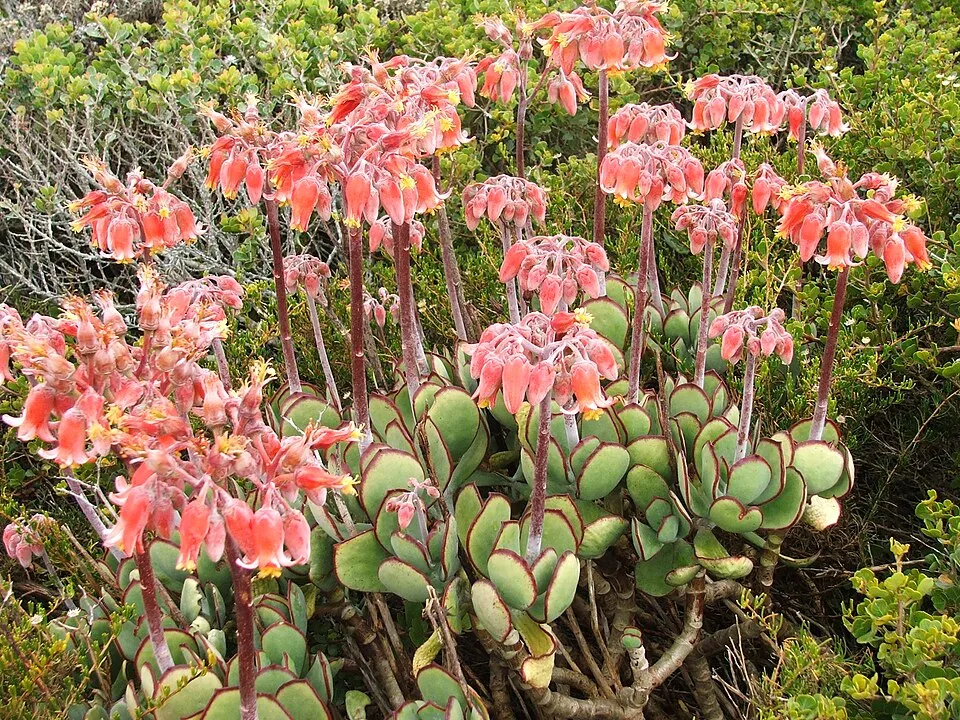
Cotyledon orbiculata, commonly known as Pig’s Ear or Round-leaf Cotyledon, is a remarkably resilient and ornamental succulent shrublet belonging to the Crassulaceae family.
Most thin plant articles flatten everything into a summary. This guide does the opposite by following Cotyledon Orbiculata through identification, care, handling, and the questions that real readers actually ask.
The linked plant page remains the main internal reference point for this article, but the goal here is to turn that raw data into a readable, structured, and genuinely useful guide.
- Cotyledon orbiculata is a South African succulent with traditional medicinal uses, primarily external.
- It contains highly toxic bufadienolide cardiac glycosides, posing significant risks if ingested.
- Traditionally used topically for warts, boils, skin eruptions, and for ear/toothache relief.
- Internal use (oral or enema) is strongly cautioned against due to potential cardiac toxicity.
- An ornamental, drought-tolerant plant, it requires careful handling due to its potent compounds.
02Cotyledon Orbiculata: Taxonomy & Classification
Cotyledon Orbiculata should be anchored to the correct taxonomic identity before any discussion of care, use, or safety begins.
| Common name | Cotyledon Orbiculata |
|---|---|
| Scientific name | Cotyledon orbiculataW |
| Family | Crassulaceae |
| Order | Saxifragales |
| Genus | Cotyledon |
| Species epithet | orbiculata |
| Author citation | L. |
| Synonyms | Cotyledon canaliculata (Hook.fil.) Baker, Cotyledon fourcadii Schönland ex Poelln., Cotyledon mucronata Lam., Cotyledon engleri Berger & Dinter, Cotyledon flanaganii var. karroensis Schönland & Baker fil., Cotyledon orbiculata BurttDavy, Cotyledon decussata Sims, Cotyledon ambigua Salisb., Adromischus mucronatus Lem., Cotyledon orbiculata var. ausana (Dinter) H.Jacobsen, Cotyledon fourcadii Schönland, Cotyledon ergleri Dinter & A.Berger |
| Common names | কটিলেডোন অরবিকুলাটা, পিগ'স ইয়ার, Pig's Ear, Round Leafed Navelwort, Plakkie, पिग्स इयर |
| Local names | orelha-de-porco, vaxökenklocka, planta-ovo, bálsamo, cotilédon, Cotylédon orbiculaire, Nombril de Vénus, Oreille-de-cochon |
| Origin | Southern Africa (South Africa, Namibia, Botswana) |
| Life cycle | Perennial |
| Growth habit | Tree |
Using the accepted scientific name Cotyledon orbiculata helps readers avoid confusion caused by old synonyms, loose common names, or inconsistent plant labels.
Family and order placement also matter because they explain recurring structural traits, likely relatives, and the kinds of mistakes readers often make when they rely on appearance alone.
03Cotyledon Orbiculata: Physical Characteristics
A practical reading of the plant starts with visible structure:
- Leaf: Thick, fleshy, ovate to nearly orbicular, glaucous-grey to bluish-green due to a waxy pruina, often with a distinct reddish margin, 5-13 cm long and.
- Stem: Erect or decumbent, stout, fleshy, branched, greyish, often becoming woody at the base, reaching up to 1 meter in height.
- Root: Fibrous, shallow, and spreading root system adapted for efficient water absorption from superficial soil layers.
- Flower: Pendulous, bell-shaped, tubular, with 5 petals fused at the base. Color varies from orange, red, or yellowish-orange, often with yellow tips.
- Fruit: A group of 5 (rarely 4 or 6) sub-follicular dry capsules enclosed within the persistent calyx.
- Seed: Minute, ellipsoid to oblong, yellowish-brown seeds, dispersed by wind.
Microscopic or internal identification notes deepen the picture, especially for processed material: The plant can be glabrous or hairy depending on the variety, though specific trichome types were not detailed in the provided microscopy description. The leaf epidermis is characterized by the presence of actinocytic stomata, which are specialized pores for gas exchange. Key features include large, thin-walled mesophyll cells containing abundant calcium oxalate crystal sand, and a distinct layer of colourless.
In overall habit, the plant is described as Tree with a mature height around Typically 0.1-3 m and spread of Typically 0.2-2 m.
04Native Range of Cotyledon Orbiculata
The native or historically recorded center of distribution for Cotyledon Orbiculata is Southern Africa (South Africa, Namibia, Botswana). That origin is more than background trivia; it explains how the plant responds to heat, moisture, shade, and seasonal change.
The plant is associated with the following countries or range markers: Free State, KwaZulu-Natal, Limpopo), Northern Cape, South Africa (Eastern Cape, Western Cape).
Environmental notes in the live record add more context: Natural habitat: Arid and semi-arid regions of South Africa, particularly on rocky slopes, sandy flats, and in open karroid veld. Climate zones: USDA Hardiness Zones 9-11 (can be grown as a houseplant in colder zones). Altitude range: From sea level up to 2000 meters. Annual rainfall needs: Thrives in areas receiving 200-500 mm of annual rainfall.
In cultivation terms, the main ecological clues are: Full Sun; Bi-weekly (during growing season, less in winter); Well-draining succulent or cactus mix (sandy loam with perlite/grit); pH 6.0-7.0; Species-dependent; many warm-climate taxa 8-11; Perennial; Tree.
Physiology data reinforce the habitat story: Exhibits high tolerance to drought, intense solar radiation, and nutrient-poor soils, reflecting its adaptation to harsh semi-arid habitats. Presumed Crassulacean Acid Metabolism (CAM) due to its succulent nature and adaptation to arid environments, optimizing water use efficiency. Minimizes water loss through a thick cuticle, a protective waxy pruina on its leaves, and its CAM photosynthetic pathway.
05Cotyledon Orbiculata in Tradition & Culture
While not primarily rooted in Ayurveda, TCM, or Unani, Cotyledon orbiculata holds significant traditional medicinal and cultural value among indigenous communities in South Africa. The Khoisan and Xhosa people, among others, have historically used it for generations. Folklore often describes it as a ‘healing plant’ for external ailments. It is not mentioned in religious texts or specific ceremonies, but its.
Ethnobotanical records also show how this plant has been framed across different places: Boil in Lesotho (Guillarmod, A.J. 1971. Flora of Lesotho (Basutoland). Verlag von J. Cramer, 3301 Lehre, Germany.); Charm in Lesotho (Guillarmod, A.J. 1971. Flora of Lesotho (Basutoland). Verlag von J. Cramer, 3301 Lehre, Germany.); Medicine in Lesotho (Guillarmod, A.J. 1971. Flora of Lesotho (Basutoland). Verlag von J. Cramer, 3301 Lehre, Germany.); Poison in Elsewhere (Uphof, J.C. Th. 1968. Dictionary of economic plants. 2nd ed. Verlag von J. Cramer.); Corn in South Africa (Hartwell, J.L. 1967-71. Plants used against cancer. A survey. Lloydia 30-34.); Epilepsy in Elsewhere (Uphof, J.C. Th. 1968. Dictionary of economic plants. 2nd ed. Verlag von J. Cramer.).
Local names help show how different communities notice and classify the plant: orelha-de-porco, vaxökenklocka, planta-ovo, bálsamo, cotilédon, Cotylédon orbiculaire, Nombril de Vénus, Oreille-de-cochon.
Traditional context matters, but it should always be separated from modern certainty. Historical use can guide questions, yet it does not automatically prove present-day clinical effectiveness.
06Cotyledon Orbiculata Health Benefits
The main benefit themes associated with the plant include:
- Wound Healing — Traditionally, peeled leaves are applied as a poultice to soften hard tissues like warts, corns, and plantar warts, facilitating their removal.
- Anti-inflammatory Action — Used topically for boils, abscesses, and skin eruptions, the plant's compounds are believed to reduce inflammation and aid in the.
- Pain Relief for Earache — Fresh leaf juice, warmed slightly, is traditionally instilled into the ear to alleviate pain and discomfort associated with earaches.
- Toothache Management — Local application of fresh leaf juice to a painful tooth or gum area is a historical remedy for temporary toothache relief.
- Acne Treatment — Leaf juice prepared as a lotion has been applied to the skin to help manage acne and other minor skin blemishes. Emetic Properties (Traditional) — Historically, leaf preparations were used to induce vomiting, though this practice is highly cautioned due to toxicity. Syphilis Treatment (Traditional) — A leaf decoction was traditionally administered as an enema for syphilis, but this internal use is strongly discouraged due.
- Softening Skin Growths — The succulence and certain compounds in the leaf help to break down keratinized tissue, making it effective for topical applications.
The evidence matrix gives a more careful picture of those claims: Topical application for softening warts and corns. Anecdotal, historical use. Traditional/Ethnobotanical. Peeled leaf is applied to soften hard tissue, aiding in its removal after several days of treatment. Internal use for conditions like epilepsy and syphilis. Historical use, folk remedy. Traditional/Ethnobotanical. These internal uses are strongly advised against due to the severe potential for cardiac toxicity and lack of modern safety validation. Cardiotoxicity due to bufadienolide compounds. In vivo animal studies, phytochemical analysis. Scientific research (animal studies), chemical isolation. Bufadienolides (e.g., orbicusides) are identified as digitalis-like principles responsible for livestock poisoning ('krimpsiekte') and potential cardiac effects in humans.
The stored evidence confidence for this profile is traditional. That should shape how strongly any benefit statement is interpreted.
For non-medicinal or mostly ornamental contexts, the safest approach is to keep the claims modest. A plant may still be valuable ecologically, visually, or culturally without being promoted as a treatment.
- Wound Healing — Traditionally, peeled leaves are applied as a poultice to soften hard tissues like warts, corns, and plantar warts, facilitating their removal.
- Anti-inflammatory Action — Used topically for boils, abscesses, and skin eruptions, the plant's compounds are believed to reduce inflammation and aid in the.
- Pain Relief for Earache — Fresh leaf juice, warmed slightly, is traditionally instilled into the ear to alleviate pain and discomfort associated with earaches.
- Toothache Management — Local application of fresh leaf juice to a painful tooth or gum area is a historical remedy for temporary toothache relief.
- Acne Treatment — Leaf juice prepared as a lotion has been applied to the skin to help manage acne and other minor skin blemishes.
- Emetic Properties (Traditional) — Historically, leaf preparations were used to induce vomiting, though this practice is highly cautioned due to toxicity.
- Syphilis Treatment (Traditional) — A leaf decoction was traditionally administered as an enema for syphilis, but this internal use is strongly discouraged due.
- Softening Skin Growths — The succulence and certain compounds in the leaf help to break down keratinized tissue, making it effective for topical applications.
- Local Irritation Reduction — When extracts are neutralized, they show less local irritation on skin and mucous membranes, improving their topical tolerability.
07Cotyledon Orbiculata Phytochemistry
The broader constituent profile includes:
- Bufadienolide Glucosides — This is the primary class of active compounds, including novel orbicusides A-C and.
- Cardiac Glycosides — These compounds, specifically the bufadienolides, are responsible for the plant's effects on the. Plant Waxes (Pruina) — A protective, powdery waxy bloom on the leaf surface, composed of cuticular waxes, helps reduce.
- Calcium Oxalate — Present as crystal sand within the mesophyll cells, this compound can contribute to mechanical.
- Organic Acids — Succulent plants often contain various organic acids, which contribute to the initially acidic nature.
- Flavonoids and Phenolics — While not explicitly identified as major active compounds in the provided source for *C.
The detailed phytochemistry file adds these markers: Orbicuside A, Bufadienolide glucoside, Overground parts, Not specifiedN/A; Orbicuside B, Bufadienolide glucoside, Overground parts, Not specifiedN/A; Orbicuside C, Bufadienolide glucoside, Overground parts, Not specifiedN/A; Tyledoside D, Bufadienolide glucoside, Overground parts, Not specifiedN/A; Calcium Oxalate, Inorganic salt, Mesophyll cells, Present (crystal sand)N/A; Plant Waxes (Pruina), Cuticular waxes, Leaf surface, PresentN/A.
Compound profiles also shift with plant part, age, season, processing, and storage. The chemistry of a fresh leaf, dried root, or concentrated extract should never be treated as automatically identical.
08Cotyledon Orbiculata Preparations & Dosage
Recorded preparation and use methods include:
- Topical Poultice — Peeled, fresh leaf is applied directly to warts, corns, boils, or abscesses and secured, often warmed to enhance efficacy.
- Fresh Leaf Juice Application — Juice extracted from fresh leaves can be applied topically to skin eruptions, acne, or as a lotion.
- Ear Instillation — Warm, fresh leaf juice is traditionally instilled into the ear for the symptomatic relief of earache.
- Toothache Relief — A small amount of fresh leaf juice can be applied locally to a painful tooth or gum for temporary alleviation of discomfort.
- Neutralized Preparations — For external applications, neutralizing the initially acidic leaf extract is recommended to minimize local skin irritation. Traditional Enema (Cautioned) — Historically, a leaf decoction was used as an enema for certain conditions, but this internal route is strongly advised against due to toxicity. Traditional Oral Intake (Cautioned) — Fresh leaf juice was traditionally taken orally for conditions like epilepsy, a practice now considered unsafe due to severe cardiac risks.
The plant part most closely linked to use is recorded as Leaves, sap, stems, or flowers cited in related taxa.
Edibility and processing notes matter here as well: Some taxa are edible; others are not; verify carefully.
For indoor readers, “how to use” usually means how the plant is placed, styled, handled, propagated, and maintained within the living space rather than how it is taken internally.
- Identify the exact species and plant part first.
- Match the preparation to the intended use.
- Check safety, interactions, and processing details before routine use or large-scale handling.
09Cotyledon Orbiculata Side Effects & Safety
The first safety note is direct: Toxicity classification: Highly toxic if ingested. Toxic parts: All parts of the plant, especially the leaves and sap, contain cardiotoxic bufadienolides. Symptoms of overdose: Nausea, vomiting, diarrhea, severe abdominal pain, cardiac.
Specific warnings recorded for this plant include:
- Internal Use Contraindicated — Due to the presence of potent bufadienolide cardiac glycosides, internal consumption (including oral intake and enemas) is.
- Cardiac Conditions Precaution — Individuals with known or suspected cardiac issues must absolutely avoid any internal preparations of Cotyledon orbiculata.
- External Application with Caution — While generally safer, external preparations should ideally be neutralized to prevent skin irritation.
- Avoid During Pregnancy and Lactation — The plant's toxicity poses significant risks to pregnant or nursing individuals and their infants.
- Keep Away from Children — All parts of the plant should be kept out of reach of children due to the risk of accidental poisoning.
- Livestock Hazard — Ensure grazing animals do not consume the plant to prevent 'krimpsiekte' and other forms of poisoning.
- Professional Consultation — Always consult a qualified healthcare professional or medical herbalist before considering any medicinal use of this plant.
- Cardiac Toxicity — Internal use, including enemas, can lead to severe cardiac effects due to bufadienolide glucosides, mimicking digitalis poisoning.
- Gastrointestinal Distress — Oral ingestion may cause nausea, vomiting, and other gastrointestinal disturbances due to its emetic properties and toxicity.
- Skin Irritation — Applying fresh, unneutralized leaf extract topically can cause local irritation or allergic reactions due to its acidic nature.
Quality-control notes add another warning: Moderate, primarily due to the existence of five distinct varieties with potential differences in active compound concentration and geographical distribution.
No plant should be described as universally safe. Identity, dose, plant part, preparation style, age, pregnancy status, medication use, allergies, and contamination risk all change the answer.
10How to Grow Cotyledon Orbiculata
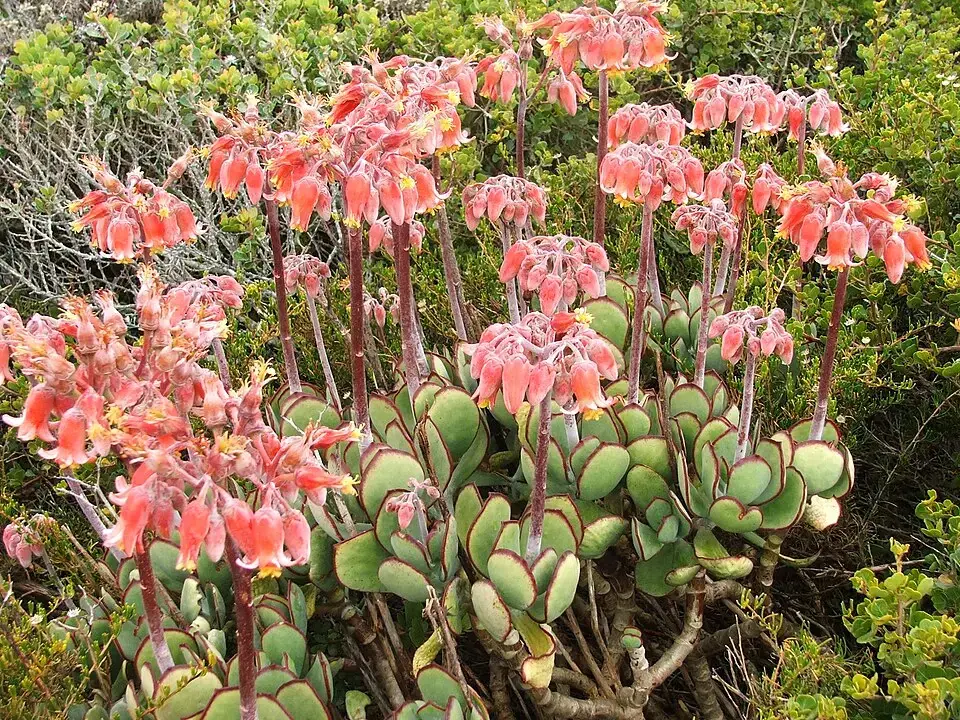
The cultivation record emphasizes these practical steps:
- Well-Draining Soil — Requires sandy or rocky, well-draining soil to prevent root rot, typical of its arid native habitat.
- Full Sun Exposure — Thrives in bright, direct sunlight for most of the day; insufficient light can lead to leggy growth.
- Minimal Watering — Water sparingly, allowing the soil to dry out completely between waterings, especially during dormant periods.
- Frost Protection — Sensitive to frost; in colder climates, it should be grown in containers that can be moved indoors or protected.
- Propagation — Easily propagated from stem or leaf cuttings, which should be allowed to callus before planting, or from seeds.
- Low Maintenance — Generally pest-resistant and requires little fertilization, making it an excellent choice for xeriscaping.
The broader growth environment is described like this: Natural habitat: Arid and semi-arid regions of South Africa, particularly on rocky slopes, sandy flats, and in open karroid veld. Climate zones: USDA Hardiness Zones 9-11 (can be grown as a houseplant in colder zones). Altitude range: From sea level up to 2000 meters. Annual rainfall needs: Thrives in areas receiving 200-500 mm of annual rainfall.
Planning becomes easier when these traits are kept in view: Tree; Typically 0.1-3 m; Typically 0.2-2 m; Moderate; Beginner.
In practice, healthy cultivation comes from systems thinking rather than one-off tricks. Site choice, drainage, timing, spacing, pruning, feeding, and observation all reinforce one another.
11Cotyledon Orbiculata Growing Conditions
The most useful care snapshot is this: Light: Full Sun; Water: Bi-weekly (during growing season, less in winter); Soil: Well-draining succulent or cactus mix (sandy loam with perlite/grit); pH 6.0-7.0; Temperature: -4-35°C; USDA zone: Species-dependent; many warm-climate taxa 8-11.
Indoors, the plant responds to microclimate more than many people expect. Window direction, airflow, heating, and room humidity can change the care rhythm quickly.
| Light | Full Sun |
|---|---|
| Water | Bi-weekly (during growing season, less in winter) |
| Soil | Well-draining succulent or cactus mix (sandy loam with perlite/grit); pH 6.0-7.0 |
| Temperature | -4-35°C |
| USDA zone | Species-dependent; many warm-climate taxa 8-11 |
Light, water, and soil should never be treated as separate checkboxes. A plant in stronger light often dries faster, soil texture changes how quickly water moves, and temperature plus humidity influence how stress appears in leaves and roots.
For Cotyledon Orbiculata, the safest care approach is to treat Full Sun, Bi-weekly (during growing season, less in winter), and Well-draining succulent or cactus mix (sandy loam with perlite/grit); pH 6.0-7.0 as linked decisions rather than isolated tips. If one condition shifts, the other two usually need to be reconsidered as well.
12How to Propagate Cotyledon Orbiculata
Documented propagation routes include Seeds: Sow fresh seeds in well-draining soil mix in spring, covering lightly. Keep moist until germination. Cuttings: Take stem or leaf cuttings in spring or.
Propagation works best when the parent stock is healthy, correctly identified, and handled in the right season. That sounds obvious, but it is exactly where many failures begin.
- Seeds: Sow fresh seeds in well-draining soil mix in spring, covering lightly. Keep moist until germination. Cuttings: Take stem or leaf cuttings in spring or.
Propagation works best when the reader matches method to biology. Some plants respond readily to cuttings, some to division, some to seed, and others require more patience or more exact seasonal timing.
A successful propagation guide therefore starts with healthy parent material and realistic expectations. Weak stock, rushed handling, and poor aftercare can make even a technically correct method fail.
13Protecting Cotyledon Orbiculata from Pests & Disease
The recorded problem list includes Common pests: Mealybugs and scale insects are common; treat with insecticidal soap or neem oil. Fungal diseases: Root rot is the most common issue, caused by overwatering; ensure well-draining soil and proper watering. Nutrient deficiencies: Seldom an issue in proper succulent mix; yellowing leaves can indicate overwatering or lack of light. Organic solutions: Diluted neem oil for pests, improving.
Indoor problems usually start quietly: mites, mealybugs, scale, root stress, weak light, or stale soil structure. Routine inspection is what keeps small issues from becoming full infestations.
The smartest response sequence is observation first, environmental correction second, and treatment only after the real pattern is clear.
- Common pests: Mealybugs and scale insects are common
- Treat with insecticidal soap or neem oil. Fungal diseases: Root rot is the most common issue, caused by overwatering
- Ensure well-draining soil and proper watering. Nutrient deficiencies: Seldom an issue in proper succulent mix
- Yellowing leaves can indicate overwatering or lack of light. Organic solutions: Diluted neem oil for pests, improving.
14Cotyledon Orbiculata: Harvest, Storage & Processing
The plant part most often associated with harvest or processing is Leaves, sap, stems, or flowers cited in related taxa.
Storage guidance from the quality-control record reads as follows: Best used fresh as the crude drug; specific data on the stability of active compounds in dried or stored preparations is not extensively detailed.
For indoor plants, this section often translates into trimming, leaf cleanup, offset collection, occasional flower removal, and safe handling of spent growth.
Whatever the purpose, the rule is the same: harvest clean material, label it clearly, and store it in a way that preserves identity and condition.
Harvest and storage determine whether a plant's quality is preserved after it leaves the bed, pot, field, or wild source. Clean timing, correct plant part selection, and careful drying or handling all matter more than many readers expect.
For Cotyledon Orbiculata, this means the reader should think beyond collection. Material that is poorly labeled, overheated, damp in storage, or mixed with the wrong part of the plant can quickly lose value or create confusion later.
15Cotyledon Orbiculata in Garden Design
Useful companions or placement partners include Crassula ovata; Sedum morganianum; Echeveria spp. Kalanchoe thyrsiflora.
In indoor styling, Cotyledon Orbiculata usually works best beside plants that share similar moisture expectations but offer contrast in texture, height, or silhouette.
- Crassula ovata
- Sedum morganianum
- Echeveria spp.
- Kalanchoe thyrsiflora
Companion planting and design are not only aesthetic decisions. They affect airflow, root competition, moisture sharing, harvest access, visibility, and the general logic of the planting scheme.
With Cotyledon Orbiculata, good placement means thinking about mature size, maintenance rhythm, and how neighboring plants change the feel and function of the space. A plant can be healthy on its own and still be poorly placed within the broader composition.
That is why the best design advice combines biology with usability. The planting should look coherent, but it should also make watering, pruning, harvest, and pest observation easier rather than harder.
16Research on Cotyledon Orbiculata
The evidence matrix points to several recurring themes: Topical application for softening warts and corns. Anecdotal, historical use. Traditional/Ethnobotanical. Peeled leaf is applied to soften hard tissue, aiding in its removal after several days of treatment. Internal use for conditions like epilepsy and syphilis. Historical use, folk remedy. Traditional/Ethnobotanical. These internal uses are strongly advised against due to the severe potential for cardiac toxicity and lack of modern safety validation. Cardiotoxicity due to bufadienolide compounds. In vivo animal studies, phytochemical analysis. Scientific research (animal studies), chemical isolation. Bufadienolides (e.g., orbicusides) are identified as digitalis-like principles responsible for livestock poisoning ('krimpsiekte') and potential cardiac effects in humans.
Ethnobotanical activity records add historical reference trails: Boil — Lesotho [Guillarmod, A.J. 1971. Flora of Lesotho (Basutoland). Verlag von J. Cramer, 3301 Lehre, Germany.]; Charm — Lesotho [Guillarmod, A.J. 1971. Flora of Lesotho (Basutoland). Verlag von J. Cramer, 3301 Lehre, Germany.]; Medicine — Lesotho [Guillarmod, A.J. 1971. Flora of Lesotho (Basutoland). Verlag von J. Cramer, 3301 Lehre, Germany.]; Poison — Elsewhere [Uphof, J.C. Th. 1968. Dictionary of economic plants. 2nd ed. Verlag von J. Cramer.]; Corn — South Africa [Hartwell, J.L. 1967-71. Plants used against cancer. A survey. Lloydia 30-34.]; Epilepsy — Elsewhere [Uphof, J.C. Th. 1968. Dictionary of economic plants. 2nd ed. Verlag von J. Cramer.].
The compiled source count behind the live profile is 7. That does not guarantee certainty, but it does suggest the record has been cross-checked beyond a single note.
Analytical testing notes also strengthen the evidence base: Identity tests include Thin Layer Chromatography (TLC) using specific solvent systems and High-Performance Liquid Chromatography (HPLC) on C18 columns; total ash content is also.
A careful evidence section should say what is known, what is plausible, and what remains uncertain. Readers are better served by clear limits than by exaggerated confidence.
Evidence note: this section blends the live plant record, local ethnobotanical activity data, chemistry records, and the linked Flora Medical Global plant profile for Cotyledon Orbiculata.
17Buying Cotyledon Orbiculata: Expert Tips
Quality markers worth checking include Bufadienolide glucosides, specifically orbicusides A-C and tyledoside D, serve as key chemical markers for identity and potential toxicity.
Adulteration and substitution risk should not be ignored: Moderate, primarily due to the existence of five distinct varieties with potential differences in active compound concentration and geographical distribution.
When buying Cotyledon Orbiculata, start with verified botanical identity. The label, scientific name, and the source page should agree before you judge price, size, or claimed benefits.
For living plants, inspect roots, stem firmness, foliage health, and early pest signs. For dried or processed material, look for batch clarity, clean aroma, absence of mold, and any sign that the product has been over-processed to disguise poor quality.
Buying advice should begin with identity. The label, scientific name, visible condition, and seller credibility should agree before price or convenience becomes the deciding factor.
18Common Questions About Cotyledon Orbiculata
What is Cotyledon Orbiculata best known for?
Cotyledon orbiculata, commonly known as Pig’s Ear or Round-leaf Cotyledon, is a remarkably resilient and ornamental succulent shrublet belonging to the Crassulaceae family.
Is Cotyledon Orbiculata beginner-friendly?
That depends on the growing environment and the intended use. Some plants are easy to grow but not simple to use medicinally, while others are the opposite.
How much light does Cotyledon Orbiculata need?
Full Sun
How often should Cotyledon Orbiculata be watered?
Bi-weekly (during growing season, less in winter)
Can Cotyledon Orbiculata be propagated at home?
Yes, but the best method depends on whether the species responds best to seed, cuttings, division, offsets, or other propagation routes.
Does Cotyledon Orbiculata have safety concerns?
Toxicity classification: Highly toxic if ingested. Toxic parts: All parts of the plant, especially the leaves and sap, contain cardiotoxic bufadienolides. Symptoms of overdose: Nausea, vomiting, diarrhea, severe abdominal pain, cardiac.
What is the biggest mistake people make with Cotyledon Orbiculata?
The most common mistake is applying generic advice instead of matching the plant to its real environment, identity, and limits.
Where can I verify more information about Cotyledon Orbiculata?
Start with the Flora Medical Global plant profile: https://www.floramedicalglobal.com/indoor-plants/cotyledon-orbiculata
Why do sources sometimes disagree about Cotyledon Orbiculata?
Different references may use different synonyms, plant parts, cultivation conditions, or evidence standards. That is why taxonomy and source quality both matter.
19Cotyledon Orbiculata: References & Further Reading
Authoritative sources and related guides:
- Wikipedia — background reference
- PubMed — peer-reviewed studies
- Kew POWO — botanical reference
- NCBI PMC — open-access research
- WHO — global health authority
Related on Flora Medical Global
Reviewed by the Flora Medical Global Botanical Review Panel
Multi-disciplinary editorial group · Botany · Ethnobotany · Herbal-medicine literature
Who reviewed this: This page was checked by the Flora Medical Global Botanical Review Panel — an in-house editorial group of botany graduates, ethnobotany researchers, and horticulture practitioners who collectively maintain our 7,000+ plant encyclopedia. Meet the team.
Our 4-step verification process
1. Taxonomic verification
Scientific names and synonyms cross-checked against Kew POWO, World Flora Online, and The Plant List.
2. Phytochemical & medicinal cross-reference
Active compounds, traditional uses, and reported activities are cross-referenced with PubMed, USDA Dr. Duke's database, and peer-reviewed ethnobotanical literature.
3. Conservation & distribution check
Distribution, ecology, and conservation status confirmed against GBIF occurrence records and the IUCN Red List.
4. Editorial & safety review
Every entry passes an editorial pass for clarity, originality, and safety notices (toxicity, contraindications, dosage caveats) before publication.
Last reviewed:
Explore Our Platforms
 InfiniCore DataWorks
 Nex-Automata
Comments (0)
No comments yet. Be the first!